
The cryptocurrency market is renowned for its volatility, but few assets have sparked as much debate, loyalty, and speculation as XRP. As the native token of the XRP Ledger (XRPL), XRP has long been positioned as the bridge currency for the future of global finance. However, for many investors, the performance of the asset has been a source of both anticipation and frustration. The question of “when will XRP go up” is not merely a matter of checking charts; it is a complex puzzle involving regulatory clarity, institutional adoption, and macroeconomic shifts.
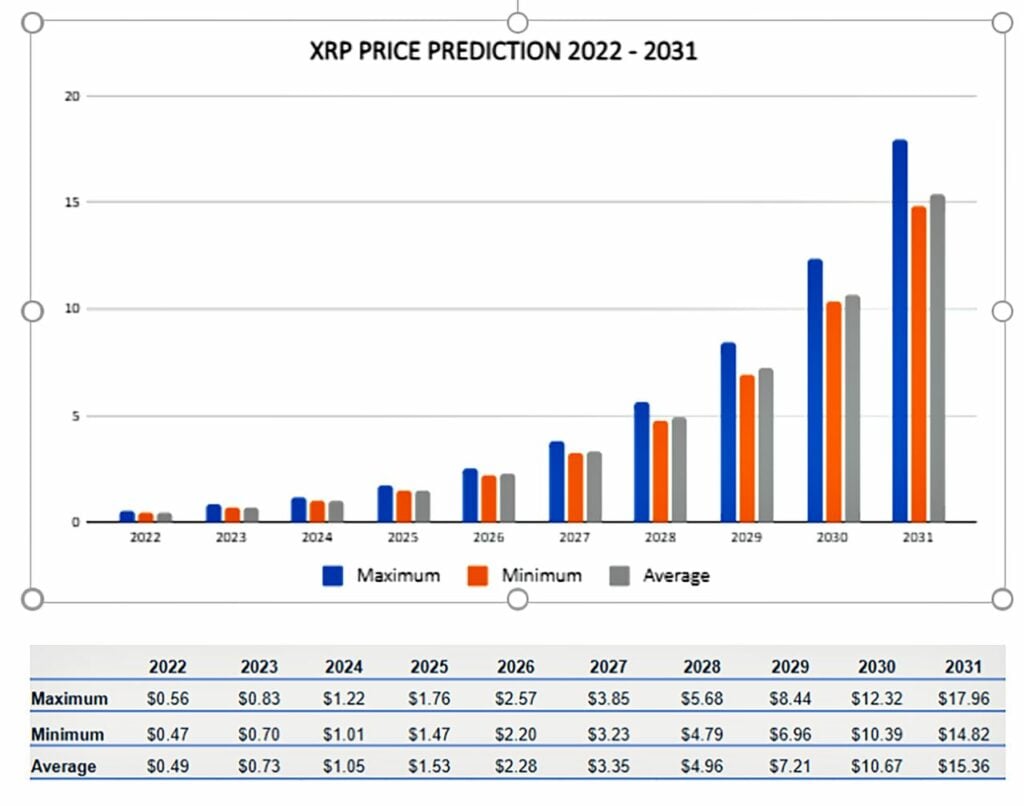
To understand the potential for XRP’s price appreciation, one must look beyond the daily price fluctuations and examine the structural drivers that influence its valuation within the broader “Money” and investment niche.
The SEC v. Ripple Saga: A Decisive Factor in Price Performance
For nearly four years, the primary weight on XRP’s valuation has been the legal battle between Ripple Labs and the U.S. Securities and Exchange Commission (SEC). This litigation created a cloud of “regulatory uncertainty” that discouraged institutional investment in the United States and led to several major exchanges delisting the token in 2020.
The Legal Precedent and XRP’s Non-Security Status
A significant turning point occurred in July 2023 when Judge Analisa Torres ruled that XRP, in and of itself, is not a security. This was a landmark moment for the entire digital asset industry. From an investment perspective, this ruling provided the “legal clarity” that many institutional players require before allocating capital. When we ask when XRP will go up, we must first recognize that the removal of the “security” label was the first major hurdle. However, the market’s reaction was somewhat muted over the long term due to ongoing appeals and the “remedies” phase of the trial.
How Settlement or Final Appeals Impact Investor Sentiment
The market hates uncertainty. Even with the initial ruling in Ripple’s favor, the lingering possibility of appeals or massive fines continues to act as a psychological barrier for investors. A final, definitive end to the litigation—whether through a settlement or a final court mandate—would likely serve as a massive catalyst. In the world of finance, “clarity is currency.” Once the legal risk is fully accounted for, XRP can be valued based on its utility and market demand rather than its legal liabilities.
Global Institutional Adoption and the Utility of the XRP Ledger
Unlike many cryptocurrencies that serve as speculative “memecoins,” XRP was designed with a specific financial use case: facilitating cross-border payments. In the traditional banking system, sending money internationally via the SWIFT network can take days and incur high fees. XRP aims to settle these transactions in seconds for a fraction of a cent.
Real-Time Gross Settlement and Cross-Border Liquidity
The value of XRP is intrinsically linked to its utility. Ripple’s “On-Demand Liquidity” (ODL) service, now often referred to simply as “Ripple Payments,” uses XRP as a bridge between two fiat currencies. For example, to send money from the U.S. to Mexico, USD is converted to XRP, moved across the ledger, and converted to MXN instantly.
As more financial institutions and payment providers adopt this technology, the demand for XRP as a liquidity tool increases. From a supply-and-demand investment perspective, increased utility leads to higher transaction volume on the ledger. If the global volume of cross-border payments moving through the XRPL grows, the organic demand for the token should, theoretically, drive the price upward.
Strategic Partnerships with Central Banks and Financial Institutions
Ripple has been actively engaging with central banks around the world to assist in the development of Central Bank Digital Currencies (CBDCs). While CBDCs are separate from XRP, the XRP Ledger can be used as a neutral bridge to provide interoperability between different national digital currencies. If XRP becomes the standard “interoperability layer” for global digital finance, the institutional “buy-in” would be unprecedented. For the individual investor, tracking these high-level partnerships is a more reliable indicator of long-term value than short-term social media hype.
Macroeconomic Trends and the Broader Crypto Market Cycle
XRP does not exist in a vacuum. It is part of a broader financial ecosystem that is currently influenced by global liquidity, inflation rates, and the performance of Bitcoin.

Bitcoin’s Dominance and the “Altseason” Phenomenon
Historically, the cryptocurrency market moves in cycles led by Bitcoin. When Bitcoin reaches new all-time highs and then begins to consolidate, capital often flows into “altcoins” (alternative coins) like XRP. This is known in the investment community as “Altseason.”
For XRP to see a significant move up, it often requires a “risk-on” environment where investors are willing to move away from the relative safety of Bitcoin and into higher-beta assets. Observing the “Bitcoin Dominance” chart is a vital tool for any XRP investor. When dominance drops, it usually signals that the time for XRP and other major utility tokens to rally is approaching.
Inflation, Interest Rates, and Risk-On Assets
On a macro level, the Federal Reserve’s monetary policy plays a massive role in the valuation of all speculative assets. When interest rates are high, investors tend to stick to “safe” yields like Treasury bonds. When rates begin to fall and global liquidity increases, “Money” flows back into the stock market and the crypto market.
XRP is often viewed as a “high-upside” play in a low-interest-rate environment. If the global economy shifts toward a period of monetary easing, the influx of capital into the digital asset space could provide the necessary tailwinds for XRP to break through its multi-year resistance levels.
Technical Analysis and Future Price Projections
While fundamental factors like law and utility provide the “why,” technical analysis often provides the “when.” Traders look at historical price patterns to predict future movements, and XRP has developed some of the most famous patterns in the crypto world.
Key Support and Resistance Levels for XRP
For several years, XRP has traded within a large “triangular” consolidation pattern on the monthly charts. In technical terms, the longer an asset consolidates, the more explosive the eventual breakout tends to be. Investors are currently watching the $0.75 and $0.90 resistance levels. A sustained break above these points, backed by high trading volume, would signal to the market that the long-term downtrend has ended.
Conversely, maintaining “support” levels—prices where buyers historically step in—is crucial. For XRP, the $0.40 to $0.50 range has proven to be a solid floor. As long as this floor holds, the structural integrity of a future bull run remains intact.
The Role of Scarcity and Escrow Releases
A common point of discussion in the XRP community is the Ripple escrow. Ripple holds a significant portion of the total XRP supply in escrow, releasing 1 billion tokens each month to sell to institutional partners, with the unused portion being returned to escrow.
While some investors fear this “inflationary” pressure, others argue that it provides the necessary supply for institutional adoption. As the total supply becomes more distributed and the “circulating supply” stabilizes, the impact of these releases diminishes. From a financial planning perspective, understanding the supply dynamics is essential for setting realistic price targets. XRP is a high-supply asset, meaning that for it to reach prices like $10 or $100, the total market capitalization would need to rival some of the world’s largest corporations or even certain fiat currencies.

Conclusion: The Path Forward for XRP Investors
Predicting exactly “when” XRP will go up requires a synthesis of legal, fundamental, and technical analysis. The asset is uniquely positioned at the intersection of traditional finance and blockchain technology. Its potential for growth is tethered to its ability to solve real-world problems in the trillion-dollar cross-border payment industry.
For the disciplined investor, the focus should remain on the following catalysts:
- Full Legal Resolution: A final conclusion to the SEC vs. Ripple case in the U.S.
- Increased ODL Volume: Evidence that more financial institutions are actively using XRP for liquidity.
- Market Cycle Maturity: A shift in capital from Bitcoin to high-utility altcoins during a “risk-on” economic phase.
- Institutional Infrastructure: The launch of XRP-based exchange-traded funds (ETFs) or other regulated investment vehicles.
While the wait has been long for many, the underlying infrastructure of the XRP Ledger continues to expand. In the world of investing, price eventually follows value. If XRP continues to cement itself as the “liquidity layer” of the internet of value, the question will no longer be if it will go up, but how high its utility will drive it.
aViewFromTheCave is a participant in the Amazon Services LLC Associates Program, an affiliate advertising program designed to provide a means for sites to earn advertising fees by advertising and linking to Amazon.com. Amazon, the Amazon logo, AmazonSupply, and the AmazonSupply logo are trademarks of Amazon.com, Inc. or its affiliates. As an Amazon Associate we earn affiliate commissions from qualifying purchases.