
In the landscape of personal finance, few tools are as potent or as essential as the Individual Retirement Account, commonly known as the IRA. While the concept of saving for the “golden years” is universal, the mechanisms provided by the tax code to facilitate that saving can often seem labyrinthine. At its core, an IRA is not an investment itself, but rather a tax-advantaged vessel—a specialized bucket—in which you hold various investments like stocks, bonds, mutual funds, or ETFs.
Understanding the nuances of the IRA is critical for anyone looking to build long-term wealth. Unlike employer-sponsored plans like the 401(k), the IRA offers a level of autonomy and flexibility that puts the investor firmly in the driver’s seat. This guide explores the foundational principles of IRAs, the various types available to different earners, and the strategic advantages they offer for your financial legacy.

Understanding the Fundamentals of the Individual Retirement Account (IRA)
To appreciate the value of an IRA, one must first understand its primary purpose: to provide a tax-incentivized way for individuals to save for retirement independently of their employers. Created by the Employee Retirement Income Security Act (ERISA) in 1974, the IRA was designed to ensure that even those without access to corporate pensions or 401(k) plans could participate in the growth of the financial markets while minimizing their tax burden.
Definition and Purpose
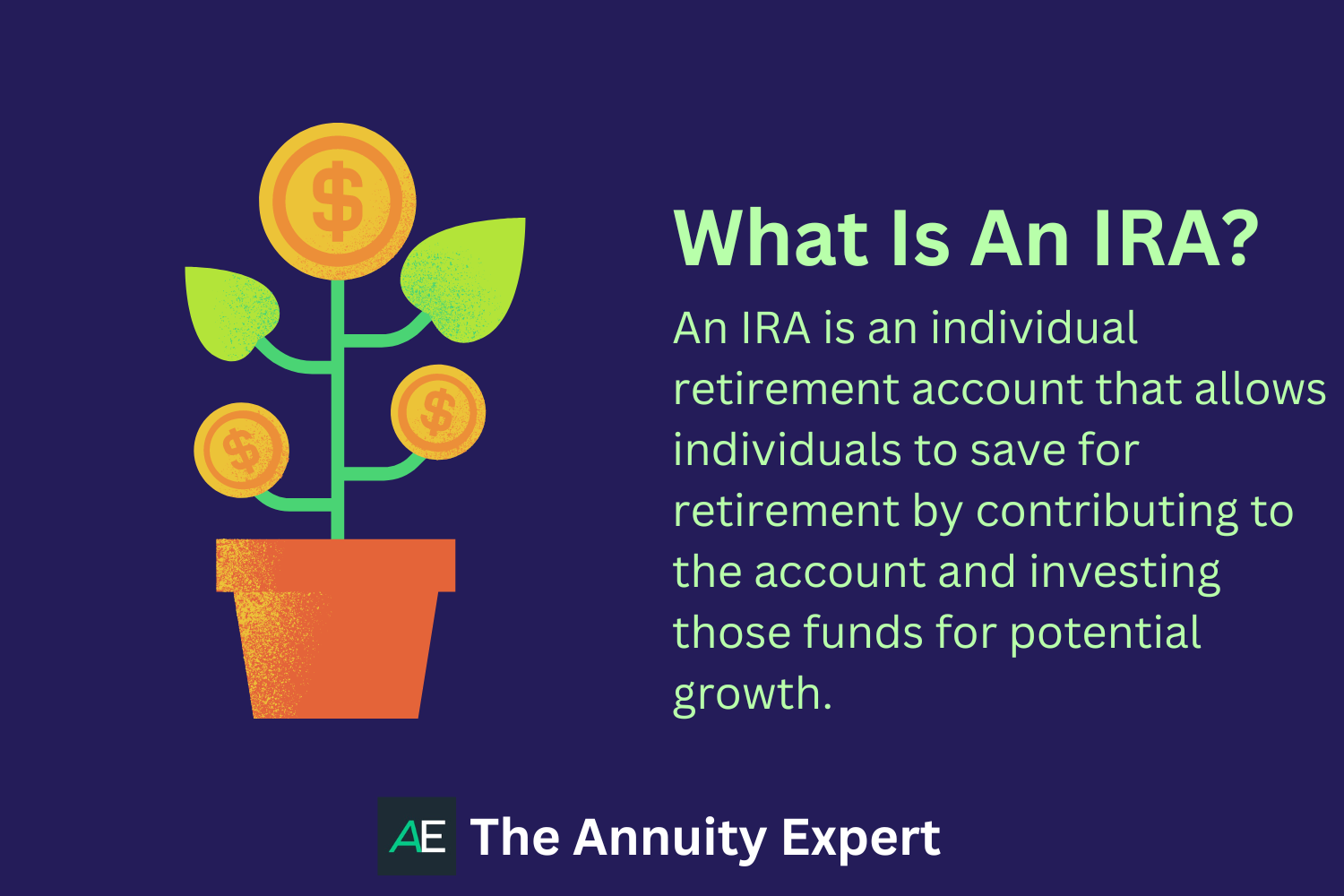
An Individual Retirement Account is a personal savings plan that offers specific tax advantages for setting aside money for retirement. The primary “hook” of an IRA is its tax treatment. Depending on the type of account you choose, you either get a tax break today (by deducting contributions from your current taxable income) or a tax break in the future (by withdrawing the money tax-free during retirement). By shielding your investments from the annual friction of capital gains taxes and dividend taxes, the IRA allows your wealth to compound much more efficiently than it would in a standard brokerage account.
How IRAs Differ from 401(k)s
While both IRAs and 401(k)s are designed for retirement, they serve different niches in a financial portfolio. A 401(k) is an employer-sponsored plan, meaning your company chooses the provider and the investment menu. Conversely, an IRA is opened by you at a financial institution of your choice, such as a brokerage, bank, or credit union.
The IRA typically offers a much broader range of investment options. While a 401(k) might limit you to a dozen mutual funds, an IRA allows you to invest in almost any publicly traded security. Furthermore, an IRA stays with you regardless of your employment status, making it a common destination for “rollovers” when individuals leave a job and want to consolidate their old 401(k) funds into a single, manageable account.
Navigating the Different Types of IRAs
Not all IRAs are created equal. The Internal Revenue Service (IRS) has established different categories of accounts to suit various income levels, employment statuses, and tax preferences. Choosing the right one is often a matter of predicting your current versus future tax bracket.
The Traditional IRA: Tax-Deductible Contributions
The Traditional IRA is the original version of the account. Its primary appeal is the “upfront” tax break. Contributions to a Traditional IRA are often tax-deductible, meaning if you earn $60,000 a year and contribute $7,000 to your IRA, the IRS only taxes you as if you earned $53,000.
The trade-off for this immediate gratification occurs in the future. When you reach retirement age and begin withdrawing funds, those distributions are taxed as ordinary income at your then-current tax rate. This account is generally favored by those who believe they are in a higher tax bracket now than they will be during retirement.
The Roth IRA: Tax-Free Growth and Withdrawals
Introduced in the late 1990s, the Roth IRA flipped the tax script. With a Roth IRA, you contribute “after-tax” dollars—meaning there is no immediate tax deduction. However, the benefits are significant: the money grows tax-free, and more importantly, qualified withdrawals in retirement are entirely tax-free.
Because you have already paid taxes on the principal, and the growth is shielded, the Roth IRA is one of the most powerful wealth-building tools in existence. It is particularly popular among younger investors who have decades of compounding ahead of them and those who expect to be in a higher tax bracket later in life. Additionally, Roth IRAs offer unique flexibility; you can withdraw your original contributions (but not the earnings) at any time without penalty.
Specialized Options: SEP and SIMPLE IRAs for Entrepreneurs
For the self-employed, freelancers, and small business owners, the standard IRA limits may feel restrictive. To address this, the IRS offers the SEP IRA (Simplified Employee Pension) and the SIMPLE IRA (Savings Incentive Match Plan for Employees).
- SEP IRA: This allows business owners to contribute a significant percentage of their income (up to 25% of net earnings) into a retirement account. It is easy to set up and has much higher contribution limits than traditional or Roth IRAs.
- SIMPLE IRA: This is designed for small businesses with fewer than 100 employees. It functions similarly to a 401(k), allowing for employee salary deferrals and requiring an employer match.

Contribution Limits, Eligibility, and the Power of Compounding
The benefits of an IRA are so substantial that the government places strict limits on how much you can contribute annually. These limits are adjusted periodically for inflation and are crucial to understand to avoid over-contribution penalties.
Annual Contribution Caps and Catch-Up Provisions
For 2024, the total contribution limit for Traditional and Roth IRAs is $7,000 for those under age 50. Recognizing that many people realize the importance of retirement savings later in life, the IRS allows for “catch-up” contributions. Investors aged 50 and older can contribute an additional $1,000, bringing their annual total to $8,000. It is important to note that this limit applies across all your IRAs; you cannot put $7,000 into a Traditional IRA and another $7,000 into a Roth in the same year.
Income Phase-Outs and Tax Deductibility
While anyone with “earned income” can contribute to a Traditional IRA, your ability to deduct those contributions from your taxes may be limited if you or your spouse have access to a retirement plan at work and your income exceeds certain thresholds (phase-outs).
Roth IRAs have even stricter eligibility rules. If your Modified Adjusted Gross Income (MAGI) is too high, you are legally barred from contributing directly to a Roth IRA. In these cases, high earners often utilize a strategy known as the “Backdoor Roth IRA,” which involves contributing to a Traditional IRA and then converting it to a Roth.
The Math Behind Long-Term Wealth Accumulation
The true magic of the IRA is found in compound interest. Because taxes are not being “leaked” out of the account every year to pay for dividends or capital gains, 100% of your earnings stay in the account to generate their own earnings. Over 30 or 40 years, the difference between a taxable brokerage account and a tax-advantaged IRA can amount to hundreds of thousands of dollars in additional wealth, even with identical investment performance.
Strategic Distribution: Managing Withdrawals and Penalties
An IRA is a long-term commitment. Because the government provides tax breaks to encourage retirement savings, they discourage using the money for pre-retirement spending through a series of rules and penalties.
The 59½ Rule and Early Withdrawal Exceptions
Generally, if you withdraw funds from an IRA before you reach age 59½, you will face a 10% early distribution penalty from the IRS, in addition to any regular income taxes owed. However, the IRS does allow for “hardship” exceptions. You may be able to withdraw funds penalty-free for specific reasons, such as:
- A first-time home purchase (up to a lifetime limit of $10,000).
- Qualified higher education expenses.
- Certain unreimbursed medical expenses.
- Birth or adoption expenses (up to $5,000).
Required Minimum Distributions (RMDs)
The government eventually wants its tax revenue. For Traditional IRAs, you must begin taking Required Minimum Distributions (RMDs) once you reach age 73 (this age has increased recently due to the SECURE Act 2.0). If you fail to take your RMD, the penalty is a staggering 25% of the amount that should have been withdrawn.
Notably, Roth IRAs do not require RMDs during the original owner’s lifetime. This makes the Roth IRA a superior tool for estate planning, as you can leave the entire account to grow untouched for your heirs.
How to Set Up and Optimize Your IRA
Starting an IRA is a straightforward process, but the decisions you make at the outset will dictate your long-term success.
Choosing the Right Custodian
The “custodian” is the financial institution that holds your IRA. When choosing a custodian, look for three things: low fees, a wide range of investment options, and a user-friendly platform. Major brokerages like Vanguard, Fidelity, and Charles Schwab are popular choices because they offer $0 commission trades on stocks and ETFs, as well as low-cost index funds.
For those who prefer a “hands-off” approach, Robo-advisors use algorithms to manage your IRA based on your risk tolerance and time horizon. While they charge a small management fee (usually around 0.25%), they handle the rebalancing and tax-loss harvesting for you.
Selecting Your Investment Portfolio
Once the account is funded, you must choose your investments. A common mistake is opening an IRA, transferring cash into it, and forgetting to actually buy assets. To optimize your IRA, consider the following:
- Asset Allocation: Balance your portfolio between stocks (for growth) and bonds (for stability) based on how many years you have until retirement.
- Low-Cost Index Funds: Instead of trying to “beat the market” by picking individual stocks, many experts recommend low-cost index funds or ETFs that track the S&P 500 or the Total Stock Market.
- Target Date Funds: These are “all-in-one” funds that automatically become more conservative as you approach your target retirement year.
In conclusion, the Individual Retirement Account is more than just a savings account; it is a sophisticated vehicle designed to accelerate your journey toward financial independence. By selecting the right type of account, staying consistent with contributions, and respecting the IRS’s regulatory framework, you can ensure that your future self is well-provided for. Whether you choose the immediate tax relief of a Traditional IRA or the long-term tax-free bounty of a Roth, the best time to start is today.
aViewFromTheCave is a participant in the Amazon Services LLC Associates Program, an affiliate advertising program designed to provide a means for sites to earn advertising fees by advertising and linking to Amazon.com. Amazon, the Amazon logo, AmazonSupply, and the AmazonSupply logo are trademarks of Amazon.com, Inc. or its affiliates. As an Amazon Associate we earn affiliate commissions from qualifying purchases.