
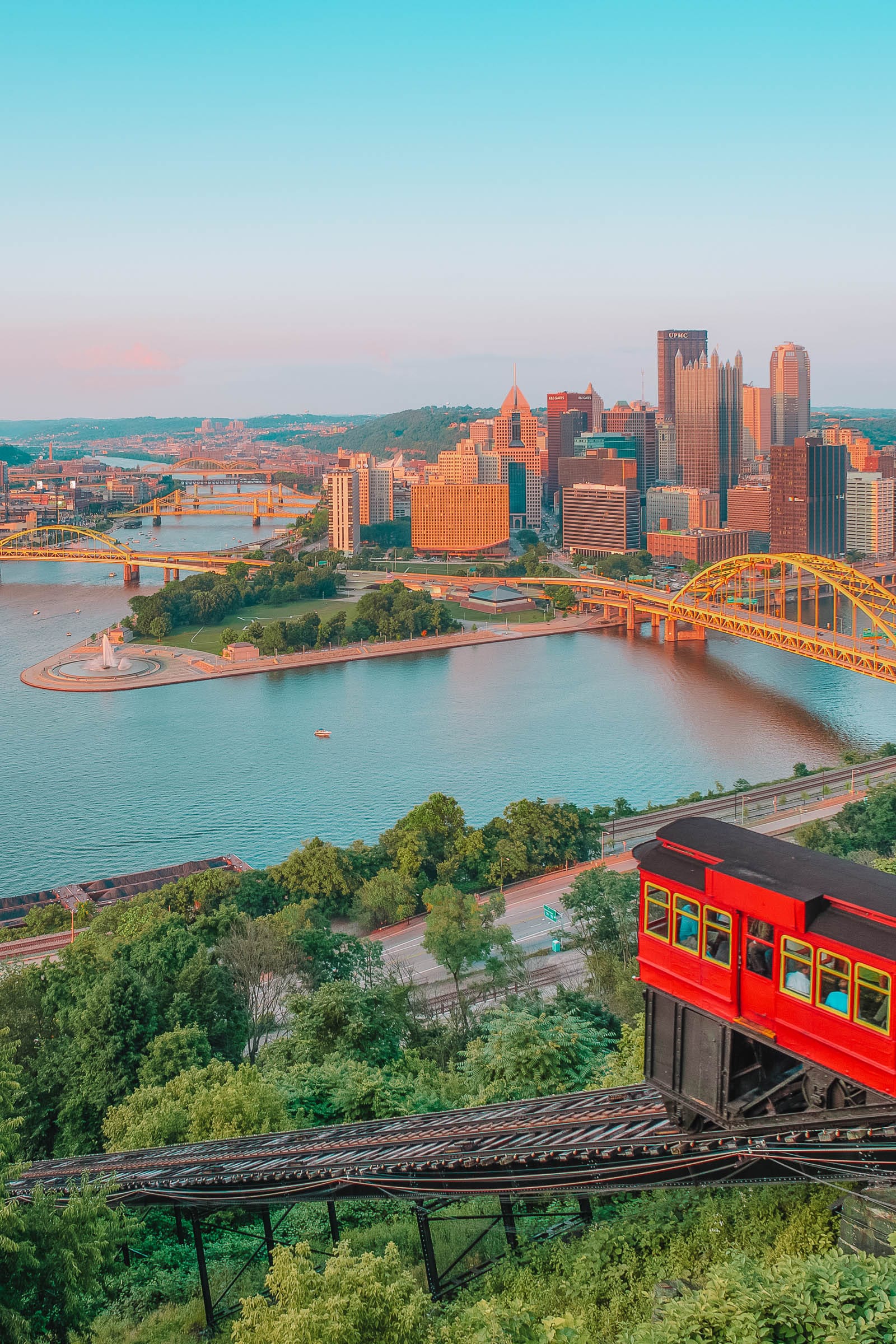
Pittsburgh, Pennsylvania, once defined by the rhythmic clanging of steel mills and the orange glow of blast furnaces, has undergone one of the most remarkable economic transformations in American history. Today, the “Steel City” has successfully rebranded itself as a global powerhouse in the technology sector. For professionals, investors, and tech enthusiasts wondering what to do in Pittsburgh, the answer lies within a sophisticated landscape of robotics, artificial intelligence, and biotechnology.
This guide explores the high-tech corridors of Pittsburgh, offering a roadmap for navigating its innovation hubs, research institutions, and the burgeoning startup culture that has earned it the moniker “The Silicon Valley of the East.”

1. Navigating Robotics Row and the Autonomous Systems Hub
If you are looking for the heart of Pittsburgh’s tech scene, your journey must begin in the Strip District and Lawrenceville, a stretch of land now globally recognized as “Robotics Row.” This area serves as the physical manifestation of the city’s leadership in autonomous systems and industrial automation.
The Legacy of Carnegie Mellon University (CMU)
The gravitational pull of Pittsburgh’s tech sector is centered on Carnegie Mellon University, specifically its Robotics Institute. As the first of its kind in the world, the institute has been a fountain of innovation for decades. For those visiting the city with a professional interest in tech, touring the campus and engaging with the National Robotics Engineering Center (NREC) is essential. NREC acts as a bridge between academic research and commercial application, transforming theoretical robotics into functional solutions for defense, agriculture, and manufacturing.
Self-Driving Innovation and Mobility
Pittsburgh is arguably the most important testing ground for autonomous vehicles (AVs) in the United States. The city’s unique topography—characterized by steep hills, 446 bridges, and unpredictable weather—provides the perfect “stress test” for AI drivers. Companies like Aurora Innovation and Motional have established significant footprints here. To truly experience the tech culture, one should observe the fleet of sensor-laden vehicles navigating the streets of the Strip District, which serves as a live laboratory for the future of transportation.
Industrial Automation and Warehouse Robotics
Beyond self-driving cars, Pittsburgh is a leader in logistical robotics. Companies like Seegrid and IAM Robotics are headquartered here, focusing on automating the supply chain. These entities represent the “what to do” for B2B tech consultants and industrial investors visiting the area, providing a glimpse into how computer vision and machine learning are optimizing global commerce.
2. Immersing in the AI and Machine Learning Ecosystem
While robotics provides the “body” of Pittsburgh’s tech industry, Artificial Intelligence (AI) and Machine Learning (ML) provide the “brain.” The city has become a magnet for “Big Tech” firms looking to tap into the local talent pool.
The Influence of Big Tech Outposts
For a tech professional in Pittsburgh, visiting the Bakery Square development is a must. This repurposed Nabisco factory is now the regional headquarters for Google. The presence of Google, along with Amazon, Apple, and Meta, underscores Pittsburgh’s status as a critical node in the global digital economy. These offices are not merely satellite outposts; they are deeply integrated into the city’s AI research infrastructure, often collaborating with local universities on complex algorithmic challenges.
The Startup Scene and Tech Networking
Pittsburgh’s tech ecosystem is supported by a robust network of incubators and accelerators. Innovation Works, one of the most active early-stage investors in the country, is a central figure here. For those looking to network, attending events at the “AlphaLab” or “AlphaLab Gear” accelerators provides insight into the next generation of software-as-a-service (SaaS) and hardware startups. These spaces are where the “what to do” involves engaging with founders who are leveraging AI to solve problems in cybersecurity, language processing (Duolingo is a Pittsburgh native), and predictive analytics.
Specialized AI Research Centers
The Pittsburgh Supercomputing Center (PSC) and the various AI-focused labs at the University of Pittsburgh offer a more academic but equally vital perspective. These centers are pushing the boundaries of what is possible in data science, providing the computational power necessary for large-scale simulations and deep learning projects that are too resource-intensive for the average private lab.
3. Exploring Digital Health and Biotech Innovations
The intersection of technology and healthcare is perhaps where Pittsburgh’s impact is most felt on a human level. Driven by the University of Pittsburgh Medical Center (UPMC), the city is a premier destination for HealthTech and Life Sciences.
Healthcare Data Analytics and UPMC Enterprises
UPMC Enterprises serves as the venture capital and commercialization arm of the massive UPMC health system. For tech-focused visitors, understanding the work done here is crucial. They focus on utilizing Big Data to improve patient outcomes, streamlining hospital management through software, and developing digital tools for personalized medicine. This sector offers a unique look at how technology is applied within a strictly regulated, high-stakes environment.
Bio-Robotics and Prosthetics
Pittsburgh is at the forefront of the “Cyborg” era, where robotics meets biology. The Human Engineering Research Laboratories (HERL) are world leaders in assistive technology. For those interested in the ethical and functional applications of tech, exploring the developments in neural-controlled prosthetic limbs and advanced mobility devices for veterans and the disabled is both inspiring and technologically profound.
Genomic Research and Computational Biology
The city’s biotech sector also delves deep into the microscopic. Using advanced computational biology, researchers in Pittsburgh are mapping genomes to find cures for rare diseases. The synergy between the computer science experts at CMU and the medical experts at Pitt has created a “Biotech Alley” that rivals established hubs like Boston and San Francisco.
4. The Future of Urban Tech and Smart Infrastructure
A city that once struggled with environmental degradation from the steel industry is now a leader in sustainable “Smart City” technology. Pittsburgh serves as a blueprint for how legacy cities can use tech to modernize their infrastructure.
Smart City Initiatives and IoT
The City of Pittsburgh has partnered with local tech firms to implement smart traffic signaling systems. Using AI, these signals communicate with each other to reduce idling time and emissions. For urban planners and IoT (Internet of Things) enthusiasts, observing these systems in action in neighborhoods like East Liberty provides a practical demonstration of how data can improve urban livability.
Sustainable Energy Technology
The “Energy Innovation Center” is a key site for anyone interested in the future of the grid. Located in a former trade school, this center brings together corporations and researchers to develop clean energy solutions. From microgrids to advanced battery storage, the tech being developed here is aimed at making the industrial world more sustainable.
The Digital Security Landscape
As a hub for heavy industry and advanced research, Pittsburgh is also a focal point for cybersecurity. The presence of the FBI’s Cyber Division and the CERT Coordination Center (the world’s first computer security incident response team) makes the city a critical location for digital security professionals. Understanding the interplay between government security and private sector innovation is a key part of the Pittsburgh tech narrative.
5. Career and Educational Pathways in the Digital Age
To truly understand what to do in Pittsburgh, one must look at how the city prepares its workforce for a tech-driven future. The educational infrastructure is the bedrock upon which the entire ecosystem is built.
Upskilling at Local Institutions
Beyond the major universities, Pittsburgh offers a variety of “bootcamps” and technical training centers, such as Academy PGH. These institutions are vital for maintaining a pipeline of developers, designers, and data scientists. They represent a democratized version of the tech scene, where career switchers and local residents can gain the skills needed to participate in the city’s high-growth economy.
Venture Capital and the Funding Funnel
For those on the business side of tech, Pittsburgh’s venture capital landscape is increasingly sophisticated. Firms like Birchmere Ventures and Magarac Ventures specialize in identifying “rust-belt” grit combined with “high-tech” brains. Navigating the funding rounds of local companies provides a clear indicator of which technologies—be it edge computing or autonomous flight—are poised for the next big breakthrough.

The Tech Council and Community Engagement
The Pittsburgh Technology Council is one of the oldest and largest trade associations of its kind in the US. For any professional visiting the city, checking their calendar for “Business as Unusual” events or tech tours is the best way to get a curated experience of the local industry. These gatherings are the “watercoolers” of the city’s tech scene, where deals are made and partnerships are forged.
In conclusion, Pittsburgh, PA, is no longer a city of the past; it is a laboratory for the future. Whether you are exploring the autonomous vehicle testing grounds of Robotics Row, investigating the AI breakthroughs at Bakery Square, or observing the life-saving innovations in HealthTech, the city offers a professional and intellectual experience unlike any other. For the tech-savvy individual, what to do in Pittsburgh is simple: witness the rebirth of an American icon through the lens of innovation and digital transformation.
aViewFromTheCave is a participant in the Amazon Services LLC Associates Program, an affiliate advertising program designed to provide a means for sites to earn advertising fees by advertising and linking to Amazon.com. Amazon, the Amazon logo, AmazonSupply, and the AmazonSupply logo are trademarks of Amazon.com, Inc. or its affiliates. As an Amazon Associate we earn affiliate commissions from qualifying purchases.