
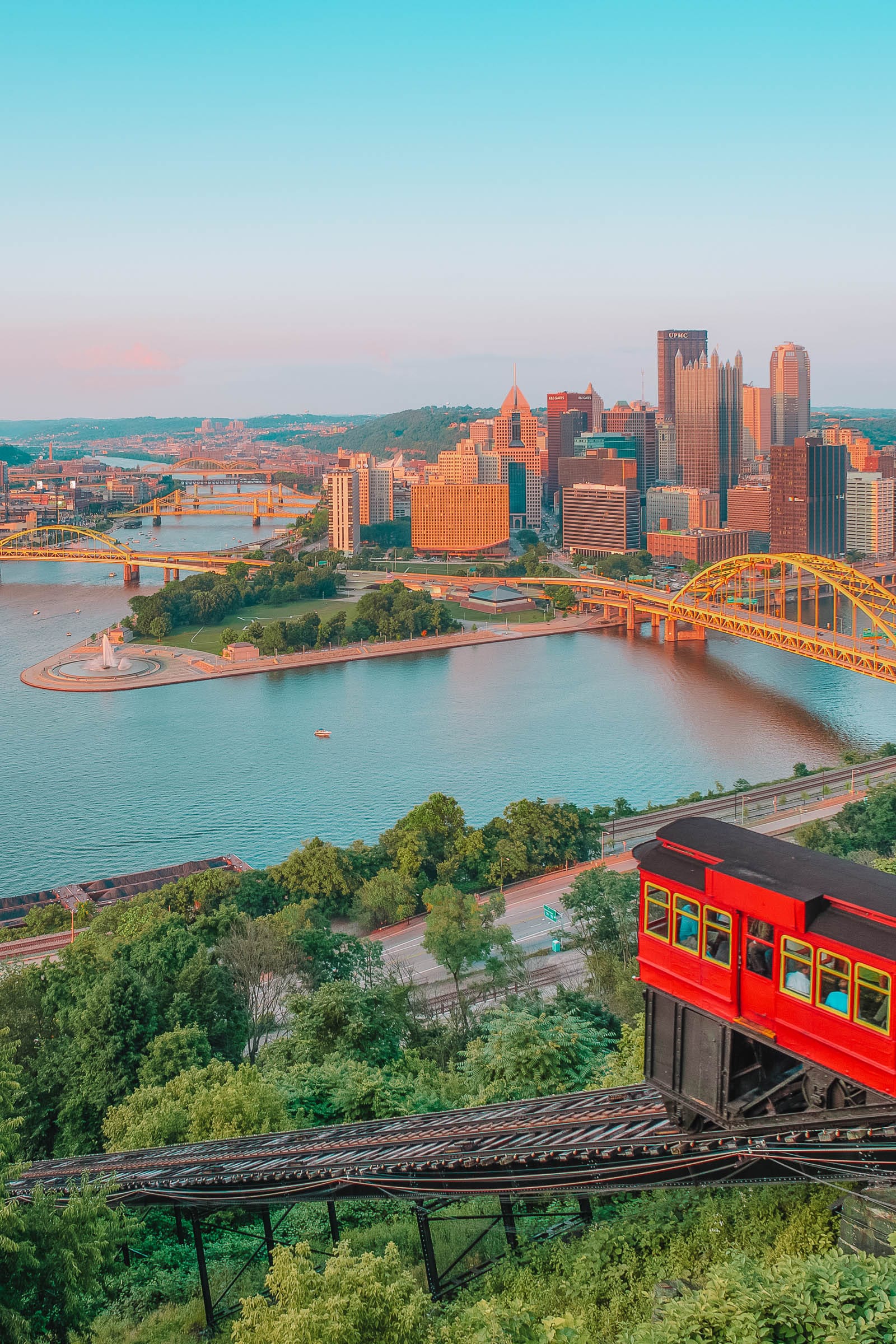
For decades, the mention of Pittsburgh, Pennsylvania, conjured images of towering blast furnaces, soot-covered skylines, and the industrial grit of the American steel industry. However, the 21st century has seen a radical transformation. Today, if you ask “what is there to see in Pittsburgh, PA,” the answer isn’t just found in its historic bridges or sports stadiums, but in its status as a premier global technology hub.
Often referred to as the “Silicon Valley of the Rust Belt,” Pittsburgh has successfully pivoted from manufacturing steel to manufacturing intelligence. This evolution is visible in every corner of the city, from the autonomous vehicles navigating the narrow streets of the Strip District to the world-renowned research labs perched on the hills of Oakland. For the tech enthusiast, the digital nomad, or the industry professional, Pittsburgh offers a unique urban laboratory where history and high-tech innovation collide.
Robotics Row and the Autonomous Vehicle Revolution
If there is one thing that defines the “seeable” tech culture of Pittsburgh, it is the density of robotics companies concentrated along a stretch of the Allegheny River known as “Robotics Row.” This area, primarily encompassing the Strip District and Lawrenceville, has become the world’s unofficial capital for autonomous systems.
The Strip District: A Living Lab for Self-Driving Innovation
Walking through the Strip District today, you are more likely to see a LiDAR-equipped SUV than a traditional delivery truck. This neighborhood serves as the testing ground for some of the world’s most advanced autonomous vehicle (AV) software. Companies like Aurora Innovation and Motional have established significant footprints here. Visitors can observe the fleet operations centers where these vehicles are calibrated and deployed, offering a glimpse into a future where human error is removed from the driving equation. The presence of these vehicles isn’t just a novelty; it represents billions of dollars in R&D investment flowing directly into the city’s infrastructure.
Carnegie Mellon’s National Robotics Engineering Center (NREC)
Located in Lawrenceville, the NREC is a massive facility that bridges the gap between academic research and commercial application. While not a traditional tourist museum, its presence is a landmark of the tech landscape. The NREC works on everything from autonomous agricultural equipment to defense-related robotics. Seeing the facility from the outside—and occasionally catching a glimpse of a specialized robot being tested in the yard—reminds visitors that the “Pittsburgh Model” of tech is rooted in solving heavy-duty, real-world problems.
From Argo AI to the Legacy of Local Startups
The Pittsburgh tech scene is also a story of resilience and pivot. The legacy of Argo AI, which was once a cornerstone of the city’s AV scene, has birthed a new generation of startups. As talent redistributed throughout the city, new ventures in computer vision and machine learning emerged. This ecosystem of “alumni” from major firms makes the Strip District a dense networking hub where the next big breakthrough in AI is likely being discussed over coffee at local favorites like La Prima Espresso.
Academic Powerhouses: Where Theory Meets Reality
The primary driver behind Pittsburgh’s tech renaissance is its world-class academic institutions. Unlike some tech hubs that rely solely on venture capital, Pittsburgh’s growth is anchored by the deep-tech research coming out of Carnegie Mellon University (CMU) and the University of Pittsburgh (Pitt).
Carnegie Mellon University: The Epicenter of Artificial Intelligence
CMU is consistently ranked as the top computer science school in the world, and its campus is a “must-see” for anyone interested in the origins of modern AI. The Gates and Hillman Centers are architectural marvels that symbolize the transparency and connectivity of the tech world. It was here that the first “smiley” emoticon was created, and more importantly, where the foundational work for the Mars Rovers and self-driving cars was performed. The campus acts as a magnet for recruiters from Google, Apple, and Microsoft, all of whom have established offices nearby to capture the steady stream of elite talent.
The University of Pittsburgh: Biotech and Health-Tech Breakthroughs
While CMU dominates the software and robotics conversation, the University of Pittsburgh (Pitt) is a powerhouse in biotechnology and medical technology. The UPMC (University of Pittsburgh Medical Center) system is one of the most technologically advanced healthcare networks in the nation. Visitors to the Oakland neighborhood can see the massive complex of the “Innovation District,” where researchers are using AI to sequence genomes, develop personalized medicine, and engineer prosthetic limbs that can be controlled by the human mind. The intersection of data science and life sciences is perhaps Pittsburgh’s most significant contribution to the current tech era.

Collaborative Ecosystems: The Pittsburgh Innovation District
The space between CMU and Pitt has been branded as the Pittsburgh Innovation District. This is a physical and digital corridor designed to foster “collisions” between researchers, entrepreneurs, and investors. It’s a place where a student project can become a multi-million dollar startup in a matter of months. Seeing the sheer volume of incubators, like Innovation Works and the Swartz Center for Entrepreneurship, provides a clear picture of how the city supports its burgeoning tech workforce.
Corporate Tech Giants and the Architecture of Innovation
The physical skyline of Pittsburgh has been redefined by the arrival of “Big Tech.” These companies haven’t just rented office space; they have integrated themselves into the city’s fabric, often repurposing industrial ruins into sleek, digital-first workplaces.
Google’s Penthouse Presence in Bakery Square
One of the most iconic sights in the Pittsburgh tech scene is Google’s office in Bakery Square. Housed in a former Nabisco biscuit factory, the office is a testament to the city’s ability to reinvent itself. The giant “Google” sign atop the building serves as a beacon for the East Liberty neighborhood, which has transformed into a trendy tech corridor. This office is not just a satellite sales branch; it is a core engineering hub where critical work on Google Shopping and internal infrastructure is conducted.
Duolingo: A Global Brand Rooted in East Liberty
Perhaps no company represents the “homegrown” success of Pittsburgh better than Duolingo. Founded by CMU professor Luis von Ahn and his student Severin Hacker, the world’s most popular language-learning app is headquartered in a striking building in East Liberty. The presence of the “Green Owl” in the neighborhood is a point of local pride. Duolingo’s success has proven that a consumer-facing tech giant can be built and scaled in Pittsburgh, challenging the notion that one must be in California to achieve global reach.
The Satellite Office Boom: Apple, Meta, and Amazon
Beyond Google and Duolingo, the city is home to significant engineering outposts for Apple, Meta (Facebook), and Amazon. Apple’s presence in the Strip District and Meta’s Reality Labs focus on the future of augmented and virtual reality. These offices are often tucked away in renovated warehouses, maintaining a low profile but housing some of the brightest minds in hardware and software engineering. For a tech-focused visitor, spotting these corporate logos in the wild provides a sense of the sheer scale of the local industry.
The Future of Urban Tech Infrastructure
Pittsburgh isn’t just a place where tech is made; it’s a place where tech is lived. The city itself is becoming a “Smart City,” utilizing the Internet of Things (IoT) and sustainable technology to improve urban life.
Smart City Initiatives and IoT Integration
As you navigate Pittsburgh, you are interacting with tech you might not even notice. The city has pioneered “Surtrac,” an AI-driven traffic signal system developed at CMU. This system uses sensors to monitor traffic flow in real-time, reducing idling time by over 40% and significantly cutting vehicle emissions. Seeing these smart intersections in action is a lesson in how AI can be applied to civil engineering to create more livable urban environments.
Sustainable Tech: The Phipps Center for Sustainable Landscapes
Tech isn’t always about screens and code; it’s also about engineering a sustainable future. The Phipps Center for Sustainable Landscapes is one of the “greenest” buildings in the world. It utilizes sophisticated building management systems to generate all of its own energy and treat all of its own water on-site. For tech enthusiasts interested in “PropTech” (Property Technology) and green energy, Phipps is a masterclass in how integrated sensors and sustainable engineering can work in harmony.

Incubators and Makerspaces: The Grassroots Tech Scene
Finally, to see the true heart of Pittsburgh tech, one must look at its makerspaces and incubators. Places like Prototype PGH and various community labs offer the public access to 3D printers, laser cutters, and CNC machines. These spaces ensure that the tech revolution isn’t just for those with computer science degrees but is accessible to artists, hobbyists, and local entrepreneurs. They represent the democratization of technology, a fitting tribute to a city that was built on the backs of makers and laborers.
In conclusion, “what is there to see in Pittsburgh” is a question with a multi-layered answer. It is a city where you can see the past in the rusted iron of its bridges and the future in the flashing lights of a self-driving car. Pittsburgh has successfully branded itself as a destination for those who want to see how technology can transform a community, revitalize an economy, and solve the world’s most complex problems. Whether you are touring the labs of CMU or walking the halls of a repurposed factory in Bakery Square, the message is clear: the future is being coded in the Steel City.
aViewFromTheCave is a participant in the Amazon Services LLC Associates Program, an affiliate advertising program designed to provide a means for sites to earn advertising fees by advertising and linking to Amazon.com. Amazon, the Amazon logo, AmazonSupply, and the AmazonSupply logo are trademarks of Amazon.com, Inc. or its affiliates. As an Amazon Associate we earn affiliate commissions from qualifying purchases.