
As tax season approaches, the hunt for documentation becomes a top priority for independent contractors, freelancers, and business owners alike. The 1099 form is a cornerstone of the United States tax system, specifically designed to report non-employee compensation and various other types of income. Unlike the standard W-2 form, which is provided to traditional employees, the 1099 ecosystem is vast and decentralized. Knowing exactly where to find these forms—whether you are the recipient who needs to report income or the payer who needs to issue them—is critical for financial compliance and avoiding IRS penalties.
Navigating the 1099 Landscape: Identifying the Correct Form
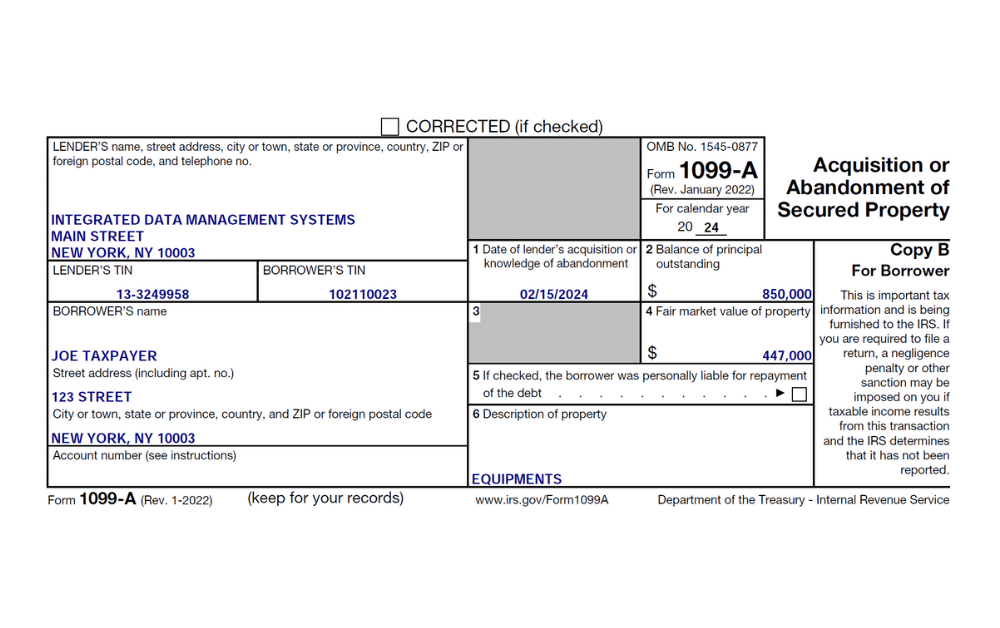
Before searching for a form, you must understand which version of the 1099 you need. The IRS uses the 1099 series to track income that doesn’t come from a regular salary. For most professionals in the gig economy or small business sector, the search begins with identifying the specific sub-type.
The Rise of the 1099-NEC
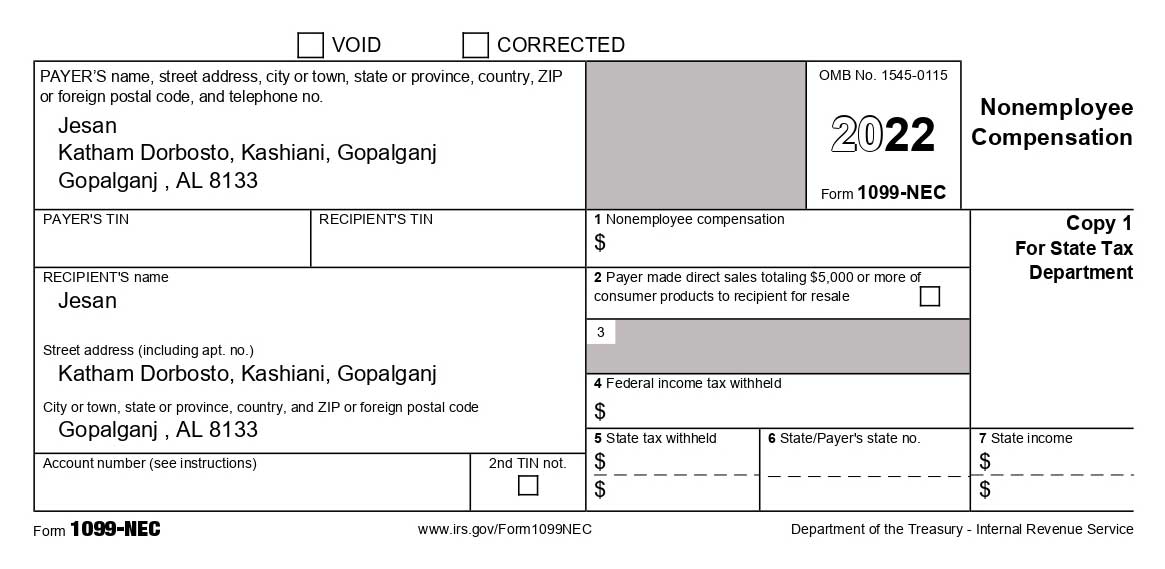
In recent years, the IRS reintroduced the 1099-NEC (Non-Employee Compensation). If you are a freelancer or a business that paid a contractor more than $600 for services rendered, this is the primary form you will need. It has largely replaced the 1099-MISC for reporting independent contractor pay. Finding this form is the first step in ensuring that your business expenses are properly documented or that your personal income is accurately reported to the federal government.
1099-MISC and Other Variations
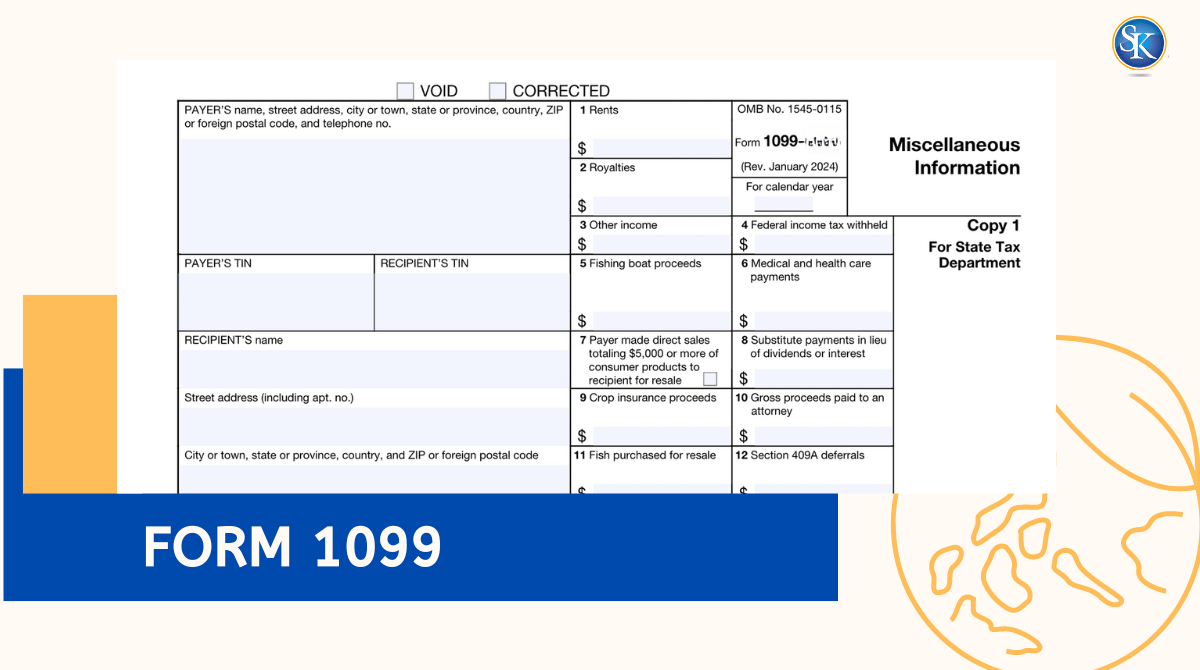
While the 1099-NEC covers service-based work, the 1099-MISC is still used for “miscellaneous” income such as rent, royalties, or prizes. Beyond these, you may need to locate a 1099-INT for interest earned in a savings account, or a 1099-DIV for dividends received from investments. For those involved in online sales or payment processing, the 1099-K is the standard form issued by third-party settlement organizations like PayPal, Venmo, or Stripe. Understanding these distinctions ensures you are looking for the right document in the right place.
Deadlines and Documentation Requirements
The IRS generally requires that 1099 forms be sent to recipients by January 31st of each year. Knowing this timeline is essential for your financial planning. If you are a business owner, you must have these forms ready to mail or transmit by this date. If you are an individual, you should begin checking your physical and digital mailboxes during the final week of January and the first week of February.
Digital Hubs: Where to Retrieve 1099s Electronically
In the modern financial era, the vast majority of 1099 forms are distributed digitally. If you are a recipient of 1099 income, your first stop should be the online portals of the entities that paid you.
Freelance Platforms and Client Portals
If you work through platforms like Upwork, Fiverr, or Toptal, these companies typically host a dedicated “Tax Forms” section within your account settings. Usually located under “Reports” or “Billing & Earnings,” these platforms allow you to download a PDF version of your 1099-K or 1099-NEC. Similarly, large corporate clients often use payroll portals like Gusto, ADP, or Workday. If you provided services to a major firm, check your login for these services to see if a digital copy has been uploaded.
Financial Institutions and Brokerages
For 1099-INT, 1099-DIV, and 1099-B (Proceeds from Broker and Barter Exchange Transactions), your online banking or investment dashboard is the primary source. Most major banks (such as Chase, Bank of America, or Wells Fargo) and brokerages (like Fidelity, Charles Schwab, or Vanguard) provide a “Tax Documents” library. These are often available earlier than paper copies, allowing you to start your tax preparation sooner. It is a best practice to download these and save them in a secure, encrypted folder for your records.
The IRS Online Account
A frequently overlooked resource is the IRS itself. By creating an “IRS Online Account,” you can access transcripts of your tax records. While the IRS might not provide the original stylized form from your client, you can request a “Wage and Income Transcript.” This document displays the data reported to the IRS by your payers. This is an excellent fallback if you have lost a form or if a client has failed to provide one, though it may take until mid-summer for the transcript to be fully updated with the current year’s data.
Sourcing Physical Forms for Business Compliance
If you are a business owner or a payer, “finding” a 1099 form means obtaining the official documents required to report payments to the IRS and your contractors. It is important to note that you cannot simply print a 1099-NEC or 1099-MISC from a standard website and mail it to the IRS, as the “Copy A” (the red-ink version) is printed on special scannable paper.
Ordering Directly from the IRS
The most reliable way to get official, scannable 1099 forms is to order them directly from the IRS website (IRS.gov). The IRS provides these forms for free, but they are delivered via the U.S. Postal Service, which can take 10 to 15 business days. Business owners should plan ahead and order their forms in December or very early January to ensure they arrive before the filing deadline.
Local Outlets: Libraries and Post Offices
Historically, local public libraries and post offices were the go-to locations for tax forms. While many locations still carry basic forms like the 1040, their stock of 1099 forms has dwindled as filing has moved online. However, in many jurisdictions, central libraries still maintain a supply of common tax documents. It is always advisable to call ahead before making the trip to ensure they have the specific 1099 variant you require.
Office Supply Stores and Retailers
For those in an immediate rush, office supply stores such as Staples, Office Depot, or Amazon sell 1099 tax kits. These kits typically include the scannable Copy A, the recipient copies, and the 1096 transmittal form. While this is a paid option, it provides the convenience of immediate availability and often includes compatible envelopes, making it a viable solution for small businesses that missed the IRS ordering window.
Leveraging Financial Software for Automated Retrieval
For both individuals and businesses, the most efficient way to “find” and manage 1099 forms is through integrated financial and accounting software. These tools act as a central repository, pulling data from various sources to streamline the reporting process.
Accounting Software Integration
Platforms like QuickBooks, Xero, and FreshBooks have built-in 1099 management modules. For a business owner, these systems track payments to vendors throughout the year. When January arrives, the software identifies which vendors exceed the $600 threshold and provides an interface to “find” and generate the necessary forms. Many of these services offer “e-filing,” which eliminates the need to find physical red-ink forms entirely, as the software transmits the data directly to the IRS and emails a digital copy to the contractor.
Tax Preparation Software
For the individual taxpayer, software such as TurboTax, H&R Block, or TaxAct provides tools to import 1099 data directly from financial institutions. By logging into your bank or brokerage through the tax software, the 1099 information is automatically “found” and populated into your return. This reduces the risk of manual entry errors and ensures that every reported dollar is accounted for.
Specialized E-Filing Services
There are several third-party services, such as Track1099 or efile4Biz, specifically designed for the purpose of handling 1099s. These services are excellent for business owners who do not use full-scale accounting software but need a digital way to locate, fill out, and file forms. These platforms often store your historical 1099 data, making it easy to find forms from previous years if you are ever audited or need to apply for a business loan.
Proactive Steps for Missing or Delayed 1099 Forms
What happens if you have searched all the usual locations and your 1099 form is still nowhere to be found? This is a common scenario in the world of personal finance and business operations, and it requires a methodical approach to resolve.
Contacting the Payer
The first step is always to reach out to the individual or company that issued the payment. Often, forms are sent to an old address or caught in a spam filter. Confirm the mailing address or email they have on file. Most businesses are happy to re-send a digital copy. If you are a contractor, keeping a log of your clients’ contact information throughout the year makes this process significantly easier when January 31st passes without a form in sight.
Reporting Income Without the Form
A common misconception in personal finance is that if you don’t receive a 1099, you don’t have to report the income. This is false. The IRS expects you to report all earned income, regardless of whether a form was issued. If you cannot find the 1099, use your own accounting records, bank statements, and invoices to calculate your total earnings. If the form arrives later and the numbers differ, you can file an amended return.
Handling Errors and Corrections
If you find your 1099 form but notice that the Social Security Number or the income amount is incorrect, you must act quickly. Contact the issuer and request a “Corrected” 1099. They will need to file a new form with the “Corrected” box checked at the top. Finding the error early is vital, as it prevents the IRS from flagging your return for a mismatch between what you reported and what the payer reported.
By understanding the digital, physical, and software-based avenues for locating 1099 forms, you can transform tax season from a period of stress into a streamlined financial routine. Whether you are downloading a 1099-INT from your bank or ordering 1099-NEC forms for your growing business, being proactive and organized is the key to maintaining financial health and compliance.
aViewFromTheCave is a participant in the Amazon Services LLC Associates Program, an affiliate advertising program designed to provide a means for sites to earn advertising fees by advertising and linking to Amazon.com. Amazon, the Amazon logo, AmazonSupply, and the AmazonSupply logo are trademarks of Amazon.com, Inc. or its affiliates. As an Amazon Associate we earn affiliate commissions from qualifying purchases.