
Tax season often arrives with a mix of anticipation and anxiety. Whether you are expecting a significant refund or concerned about a potential liability, the key to a smooth filing process lies in preparation. For many taxpayers, the most daunting part of the process isn’t the math—it is the gathering of disparate pieces of paper and digital records that represent a year’s worth of financial activity.
Navigating the landscape of personal finance requires a structured approach to documentation. Having your records organized not only ensures that you report your income accurately to the IRS but also helps you maximize your deductions and credits, ultimately keeping more money in your pocket. This guide provides a comprehensive breakdown of the essential tax documents you need to file your taxes efficiently and accurately.

1. Income Documentation: Tracking Your Inflows
The foundation of any tax return is the reporting of your total income. The IRS receives copies of most of the forms you receive, so ensuring your records match theirs is the first step in avoiding audits or processing delays.
Employment Income (Form W-2)
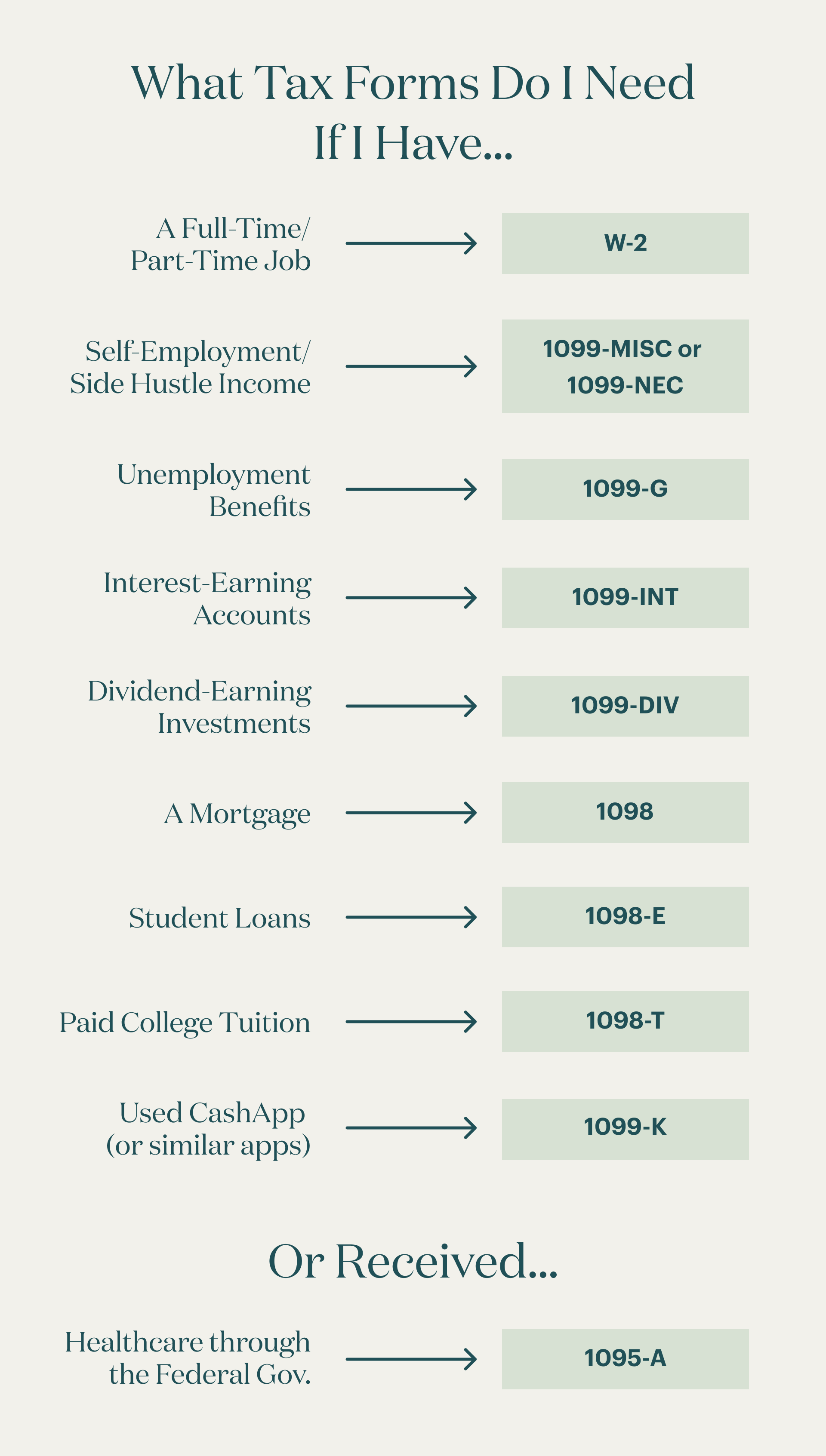
For most Americans, the W-2 is the most critical document. If you are an employee, your employer is required to send you a W-2 by January 31st. This form details your total earnings, federal and state taxes withheld, Social Security and Medicare contributions, and any contributions to retirement plans like a 401(k). If you worked multiple jobs throughout the year, ensure you have a W-2 from every single employer.
Self-Employment and Gig Economy Income (Form 1099-NEC and 1099-K)
In the modern financial landscape, side hustles and freelance work have become staples of personal income. If you performed contract work and earned $600 or more from a single client, they should issue you a Form 1099-NEC (Non-employee Compensation). Additionally, if you sell goods or services through third-party platforms like Etsy, eBay, or Uber, you may receive a 1099-K if you meet specific transaction thresholds. It is vital to track your own gross receipts as well, as you are responsible for reporting all income, even if it falls below the 1099 reporting threshold.
Investment and Passive Income (1099-INT, 1099-DIV, and 1099-B)
Your money working for you also generates taxable events.
- 1099-INT: Issued by banks or credit unions for interest earned on savings accounts or CDs.
- 1099-DIV: Reports dividends and distributions from stocks or mutual funds.
- 1099-B: This form is essential for those who sold stocks, bonds, or cryptocurrency. It details the “basis” (what you paid) and the “proceeds” (what you sold it for), allowing you to calculate capital gains or losses.
Miscellaneous Income
Other forms of income must also be accounted for to ensure full compliance. This includes Form 1099-G for unemployment compensation, Form 1099-R for distributions from pensions, annuities, or IRAs, and records of gambling winnings (W-2G). If you received jury duty pay or won a prize in a contest, these are also considered taxable income.
2. Adjustments and Deductions: Reducing Your Taxable Base
Once you have established your total income, the next step is to identify “adjustments” and “deductions.” These are the mechanisms the tax code provides to lower your Adjusted Gross Income (AGI) and your overall taxable income.
The Choice Between Standard and Itemized Deductions
The majority of taxpayers take the “Standard Deduction,” which is a flat dollar amount based on your filing status. However, if your specific expenses—such as mortgage interest, state and local taxes, and charitable contributions—exceed the standard deduction amount, you should “itemize” using Schedule A. To do this, you will need receipts for all charitable donations, records of medical expenses that exceed 7.5% of your AGI, and Form 1098 for mortgage interest.
Education-Related Deductions
Investing in your future through education provides several tax advantages.
- Form 1098-T: This tuition statement from your college or university is necessary to claim education credits.
- Form 1098-E: If you are paying back student loans, the interest you pay is often deductible (up to $2,500), even if you do not itemize. This form summarizes the interest paid during the year.
Health Savings and Retirement Contributions
Contributions to a traditional IRA or a Health Savings Account (HSA) are often tax-deductible and can significantly lower your tax bill. While your W-2 might show employer-sponsored contributions, you will need Form 5498-SA for HSA contributions made outside of payroll. These “above-the-line” deductions are powerful because they reduce your AGI directly, which can make you eligible for other income-restricted credits.
Homeownership and State Taxes
For those who itemize, the 1098 Mortgage Interest Statement is paramount. It lists the interest paid on your home loan, which remains one of the largest deductions for homeowners. Additionally, keep records of real estate taxes paid and personal property taxes (such as those paid during vehicle registration in certain states). Under current law, the deduction for State and Local Taxes (SALT) is capped at $10,000, so keeping precise records is essential to hitting that limit without exceeding it unnecessarily.
3. Tax Credits: Direct Dollar-for-Dollar Reductions
While deductions lower the amount of income you are taxed on, credits are even more valuable because they reduce your tax bill dollar-for-dollar. Some credits are even “refundable,” meaning they can result in a check from the IRS even if you owe zero taxes.
Family and Dependent Credits
The Child Tax Credit and the Credit for Other Dependents require specific documentation. You will need the Social Security numbers and dates of birth for all dependents. If you paid for childcare so you could work, you must have the name, address, and Taxpayer Identification Number (TIN) or Social Security number of the care provider to claim the Child and Dependent Care Credit.
The Earned Income Tax Credit (EITC)
The EITC is a significant credit for low-to-moderate-income working individuals and couples, particularly those with children. Eligibility depends on your income level and filing status. If you believe you qualify, ensure you have all income statements (W-2s and 1099s) ready, as the IRS scrutinizes these claims closely to ensure accuracy.
Energy-Efficiency and Sustainable Investments
In recent years, the government has incentivized “green” spending. If you made energy-efficient home improvements—such as installing solar panels, energy-efficient windows, or a heat pump—you may qualify for the Residential Clean Energy Credit. You will need the manufacturer’s certification and receipts for the equipment and installation. Similarly, if you purchased a qualifying electric vehicle (EV), you will need the vehicle’s VIN and purchase contract to claim the Clean Vehicle Credit.
4. Record-Keeping and Financial Tools for Success
The process of filing taxes is significantly easier when you utilize modern financial tools and maintain a disciplined record-keeping habit throughout the year. Waiting until April to find a receipt from the previous January is a recipe for stress.
Utilizing Tax Preparation Software and Apps
Financial technology has revolutionized tax filing. Modern software packages can often import your W-2 and 1099 data directly from employers and financial institutions, minimizing manual entry errors. Furthermore, these tools often feature “logic checks” that flag missing documents based on the information you provided in previous years. Using these tools ensures that your digital “paper trail” is consolidated in one place.
Organizing Digital Receipts and Cloud Storage
Moving toward a paperless system is one of the best ways to stay organized. Using a dedicated folder in a cloud storage service (like Google Drive, Dropbox, or OneDrive) to save PDFs of your financial statements as they arrive throughout the year prevents last-minute scrambles. For physical receipts, many personal finance apps allow you to snap a photo and categorize the expense immediately, which is particularly beneficial for small business owners and freelancers tracking deductible expenses.
How Long Should You Keep These Documents?
A common question in personal finance is how long one must retain tax records. Generally, the IRS recommends keeping your returns and supporting documentation for three years from the date you filed the original return. However, if you underreport income by more than 25%, the statute of limitations extends to six years. For records relating to real estate or investment cost basis, you should keep those for as long as you own the asset plus three years after you sell it.
Conclusion: Preparation as a Financial Strategy
Filing your taxes is more than just a legal obligation; it is an annual check-up on your financial health. By gathering your income statements, identifying your deductions, and maximizing your credits, you are engaging in proactive wealth management.
While the list of forms—W-2s, 1099s, 1098s—may seem overwhelming at first, they are simply the pieces of your financial puzzle. When organized correctly, they provide a clear picture of your year’s earnings and expenses. Starting early and maintaining a robust filing system ensures that you can submit your return with confidence, avoid the stress of the deadline, and ensure that you are making the most of the financial opportunities provided by the tax code. Whether you file yourself or work with a professional, having your documents ready is the single most important step toward a successful tax season.
aViewFromTheCave is a participant in the Amazon Services LLC Associates Program, an affiliate advertising program designed to provide a means for sites to earn advertising fees by advertising and linking to Amazon.com. Amazon, the Amazon logo, AmazonSupply, and the AmazonSupply logo are trademarks of Amazon.com, Inc. or its affiliates. As an Amazon Associate we earn affiliate commissions from qualifying purchases.