
The financial services industry offers a unique blend of stability, scalability, and income potential, and few roles within this sector are as accessible yet vital as that of a tax preparer. Every year, millions of individuals and businesses look for professional assistance to navigate the complexities of the tax code, ensure compliance, and maximize their financial returns. Whether you are looking for a profitable side hustle during the first quarter of the year or a full-time career in business finance, becoming a tax preparer is a strategic move toward financial independence.
In this guide, we will explore the roadmap to entering this field, the regulatory requirements you must meet, and the strategies you can use to turn tax preparation into a high-revenue professional practice.
Understanding the Financial Landscape and the Role of a Tax Preparer
Before diving into the “how,” it is essential to understand the “why” and the “what” of the tax preparation industry. At its core, tax preparation is about managing a client’s financial liability to the government. It is a fundamental pillar of personal and business finance.
The Growing Demand for Tax Professionals
Despite the rise of DIY tax software, the demand for professional human oversight remains high. Tax laws are famously volatile; they change with every new administration and economic policy shift. For the average small business owner or high-net-worth individual, the risk of an audit or a missed deduction far outweighs the cost of hiring a professional. As a tax preparer, you are not just “filling out forms”; you are providing a service that protects a client’s capital and optimizes their cash flow.
Revenue Models: Side Hustle vs. Full-Time Firm
One of the most attractive aspects of tax preparation is its flexibility as a business model.
- The Seasonal Side Hustle: Many professionals work in unrelated fields and spend January through April preparing taxes to supplement their income. With a modest client base of 50 to 100 clients, a preparer can earn a significant secondary income in just a few months.
- The Year-Round Financial Business: Advanced preparers often expand their services into bookkeeping, financial consulting, and quarterly tax planning. This shifts the revenue model from a seasonal spike to a consistent, monthly recurring revenue stream, providing stability and long-term business growth.
Earning Potential and Fee Structures
How much a tax preparer earns depends heavily on their expertise and the complexity of the returns they handle. Basic individual returns (Form 1040) have lower fees, while business returns (S-Corps, Partnerships, and C-Corps) command much higher prices. By specializing in specific financial niches—such as cryptocurrency investors, real estate moguls, or e-commerce entrepreneurs—you can implement value-based pricing that reflects the thousands of dollars you save your clients in tax liabilities.
Navigating Legal Requirements and Professional Credentials
Becoming a tax preparer does not necessarily require a degree in accounting, but it does require strict adherence to IRS regulations and state laws. To operate legally and professionally, you must secure the proper credentials.
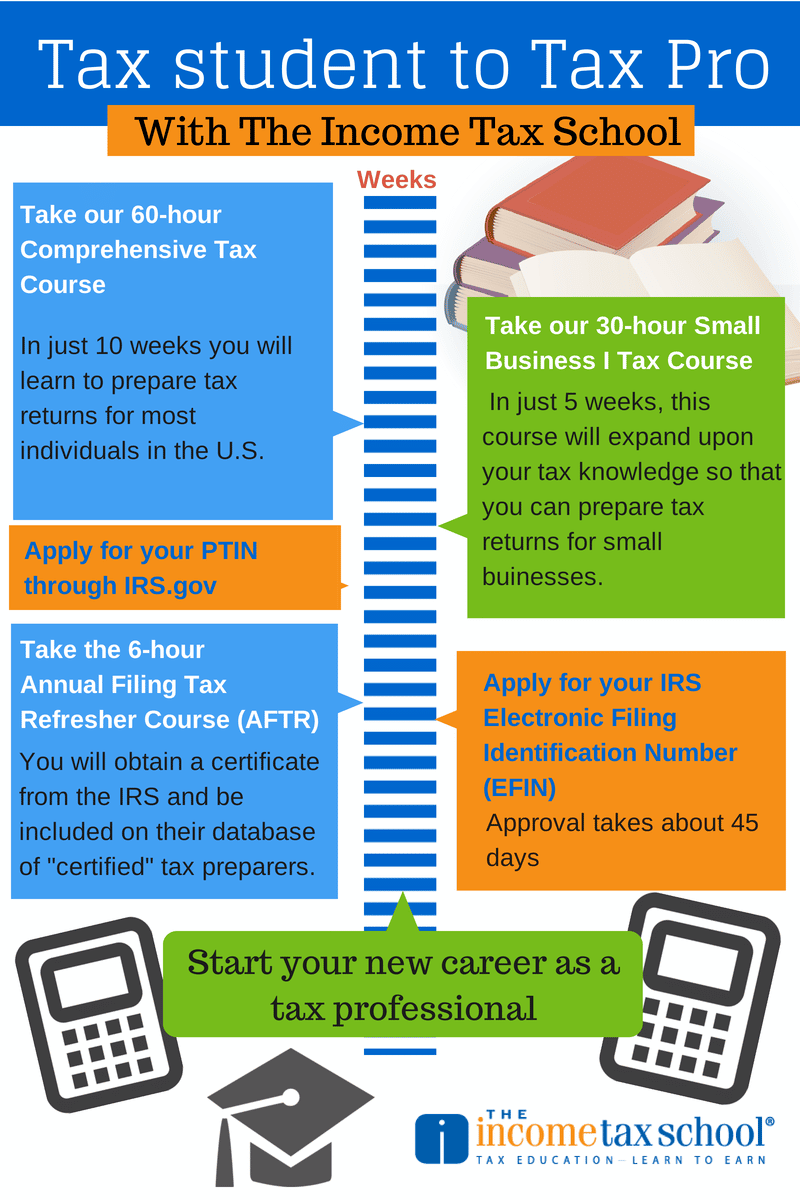
Obtaining Your PTIN (Preparer Tax Identification Number)
The first and most critical step is obtaining a PTIN from the IRS. Anyone who prepares or assists in preparing federal tax returns for compensation must have a valid PTIN. The process is straightforward:
- Create an account on the IRS website.
- Provide your personal information and business details.
- Pay the required fee (which varies by year).
Without a PTIN, you cannot legally sign a tax return as a paid preparer, and failure to have one can result in significant financial penalties.
The Electronic Filing Identification Number (EFIN)
If you intend to open your own practice rather than working for an established firm, you will need an EFIN. This allows you to “e-file” returns, which is the industry standard. The application process for an EFIN involves a suitability check, which may include a credit check and a fingerprint background check. This ensures that the individuals handling sensitive financial data are trustworthy and fiscally responsible.
State-Specific Regulations
While federal requirements are uniform, state requirements vary wildly. States like California, Oregon, and Maryland have their own specific board requirements, including mandatory education hours and additional registration fees. Before launching your business, research the “Board of Tax Practitioners” or the equivalent agency in your state to ensure you are fully compliant with local financial regulations.

The Annual Filing Season Program (AFSP)
For those who are not CPAs (Certified Public Accountants) or Enrolled Agents (EAs), the IRS offers the Annual Filing Season Program. By completing a specific number of continuing education credits, you receive a “Record of Completion.” This credential adds a layer of professional credibility to your practice and allows you to be included in the IRS public directory of qualified preparers, which serves as a powerful marketing tool for your growing business.
Education, Software, and Technical Proficiency
Knowledge is your primary asset in the world of finance. To serve your clients effectively, you must develop a deep understanding of the tax code and the tools used to navigate it.
Mastering the Tax Code
You do not need to memorize the entire Internal Revenue Code, but you must be proficient in the areas that affect your target market.
- Individual Taxation: Understanding credits (like the Earned Income Tax Credit), deductions, and filing statuses.
- Business Taxation: Mastering Schedule C for sole proprietors, as well as the nuances of depreciation and home office deductions.
- Capital Gains and Investments: Knowing how to report the sale of stocks, real estate, and digital assets.
There are numerous courses available through organizations like the National Association of Tax Professionals (NATP) and various accredited online platforms that focus specifically on these financial concepts.
Selecting the Right Professional Software
In modern tax preparation, your software is your most important investment. Professional-grade software does more than just print forms; it includes diagnostic tools that flag potential errors and “what-if” scenarios that help you advise clients on future financial decisions. Brands like Drake Software, Intuit ProConnect, and Wolters Kluwer offer various tiers of software based on the volume of returns you plan to file. Choosing the right software can significantly increase your hourly efficiency and, by extension, your profit margins.
Continuing Professional Education (CPE)
The financial world never stands still. Inflation adjustments, new tax credits for green energy, and changes to standard deductions happen annually. To remain competitive and protect your clients’ wealth, you must commit to annual continuing education. This not only keeps you compliant with IRS standards but also positions you as an expert who is up-to-date on the latest financial strategies.
Building and Scaling Your Tax Preparation Business
Once you have your credentials and education, the focus shifts to business development. Transitioning from a knowledgeable individual to a successful business owner requires a focus on marketing, client retention, and financial scaling.
Identifying a Profitable Niche
The most successful tax preparers do not try to help “everyone.” Instead, they specialize. When you specialize, you can charge premium rates because your knowledge is specific and rare.
- The Gig Economy Niche: Helping Uber drivers, freelancers, and consultants manage their estimated quarterly payments.
- The Real Estate Niche: Focusing on investors who deal with 1031 exchanges, rental income, and property depreciation.
- The High-Net-Worth Niche: Assisting individuals with complex portfolios, foreign accounts, and estate planning.
Marketing and Client Acquisition
In the financial services industry, trust is the primary currency. Your marketing should reflect this.
- Referral Programs: Encourage your current clients to refer friends and colleagues by offering a discount on next year’s filing or a small referral fee.
- Content Marketing: Write articles or post videos explaining common tax pitfalls. This establishes your authority and helps potential clients solve small problems before they hire you to solve big ones.
- Networking with Complementary Businesses: Build relationships with real estate agents, mortgage brokers, and financial planners. They often work with clients who are in immediate need of professional tax advice.
Transitioning into Financial Consulting
The highest-earning tax preparers eventually move beyond “tax preparation” (looking at the past) and into “tax planning” (looking at the future). By offering year-round consulting, you help clients structure their businesses and investments in a way that minimizes their tax burden before the year even ends. This shift moves you from a commodity service provider to a strategic financial partner, allowing you to command significantly higher fees and build a more robust, recession-proof business.
Conclusion: The Path to Financial Professionalism
Becoming a tax preparer is an excellent entry point into the world of professional finance. It offers a clear path to generating online or local income, requires relatively low overhead to start, and provides a service that is perpetually in demand. By securing your PTIN, committing to continuous education, and identifying a lucrative niche, you can build a practice that not only provides for your own financial future but also helps your clients protect and grow their wealth. In the intersection of law, math, and business, the tax preparer stands as a vital guardian of financial health.
aViewFromTheCave is a participant in the Amazon Services LLC Associates Program, an affiliate advertising program designed to provide a means for sites to earn advertising fees by advertising and linking to Amazon.com. Amazon, the Amazon logo, AmazonSupply, and the AmazonSupply logo are trademarks of Amazon.com, Inc. or its affiliates. As an Amazon Associate we earn affiliate commissions from qualifying purchases.