
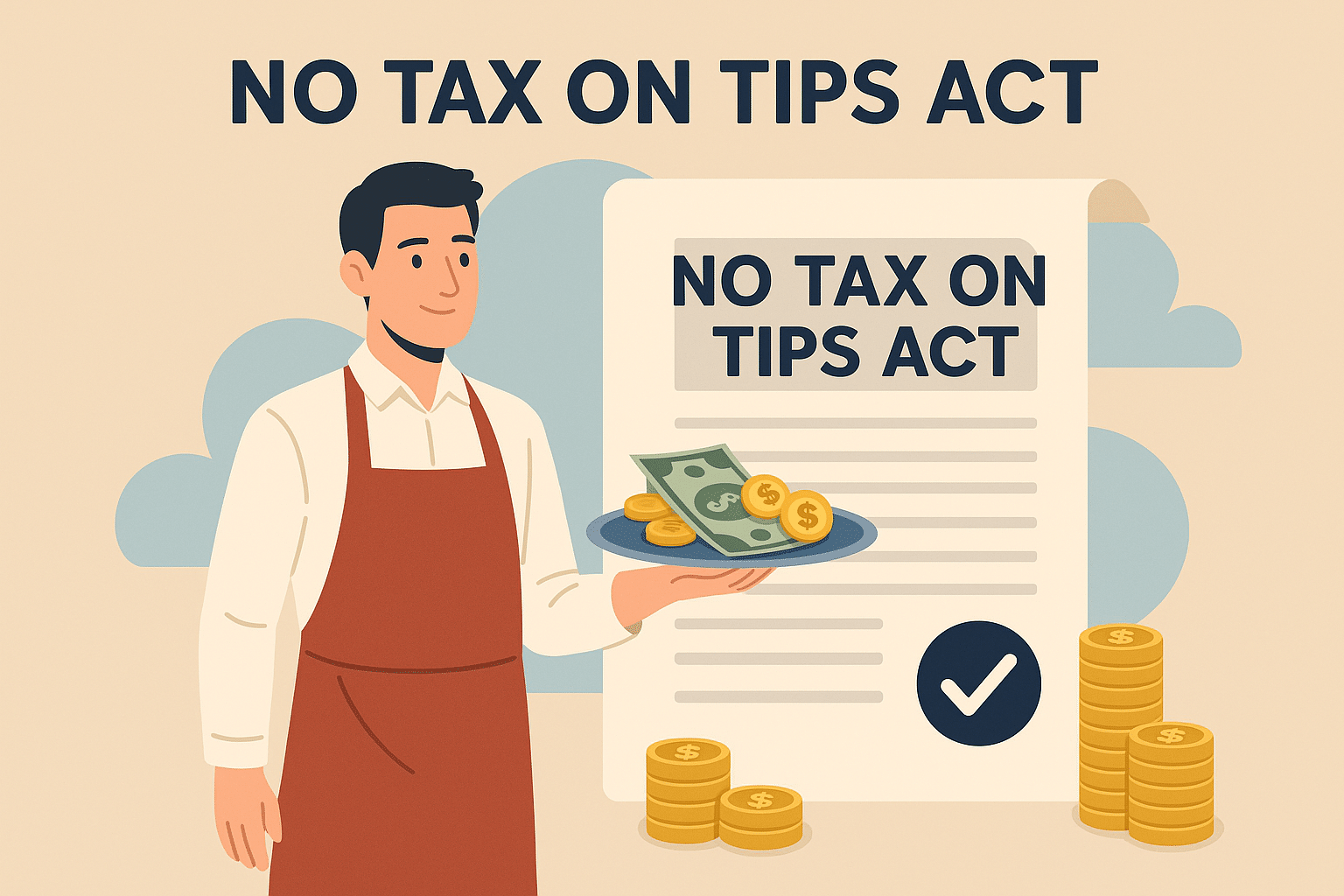
In the evolving landscape of American fiscal policy, few proposals have captured the public imagination—and the attention of the service industry—as quickly as the “No Tax on Tips” initiative. At its core, the concept is a significant shift in how the Internal Revenue Service (IRS) and the federal government view gratuities earned by service workers. Traditionally, tips have been treated as taxable income, subject to the same federal oversight as a standard hourly wage or a corporate salary. However, as economic pressures mount and the “side hustle” or service economy grows, the financial community is closely scrutinizing what a total tax exemption on tips would actually mean for the individual earner, the business owner, and the national economy.
Understanding the Current Taxation of Gratuities
To understand the magnitude of a “No Tax on Tips” policy, one must first grasp the current financial obligations placed upon tipped employees. Under existing law, the IRS considers all tips—whether received in cash, through credit card payments, or via tip-splitting arrangements—as taxable income.
The IRS Definition of Tip Income
From a personal finance perspective, a tip is not a gift; it is a payment made by a customer for a service rendered. The IRS maintains strict guidelines on what constitutes a tip: the payment must be made free from compulsion, the customer must have the unrestricted right to determine the amount, and the recipient must be the person the customer intended to tip. For the average worker in the hospitality, beauty, or transportation sectors, this means that every dollar earned above their base wage is subject to federal income tax.
Reporting Obligations for Employees and Employers
The current financial workflow for tipped workers is often cumbersome. Employees are required to keep a daily record of tips and report them to their employer if they exceed $20 in a month. Employers, in turn, use these reports to calculate withholding for federal income tax, Social Security, and Medicare. This reporting ensures that the worker’s total compensation is documented, which is a critical component for those looking to qualify for mortgages, car loans, or other financial products that require proof of steady income.
The Impact of Payroll Taxes (Social Security and Medicare)
Perhaps the most significant aspect of tip taxation is the Federal Insurance Contributions Act (FICA) tax. Currently, both the employee and the employer pay a percentage (7.65% each) toward Social Security and Medicare based on the reported tips. This means that for every $100 in tips, $7.65 is immediately deducted from the worker’s potential take-home pay to fund future social safety nets. Understanding this is vital because “No Tax on Tips” proposals often differ on whether they mean eliminating income tax, payroll tax, or both.
Decoding the “No Tax on Tips” Proposal
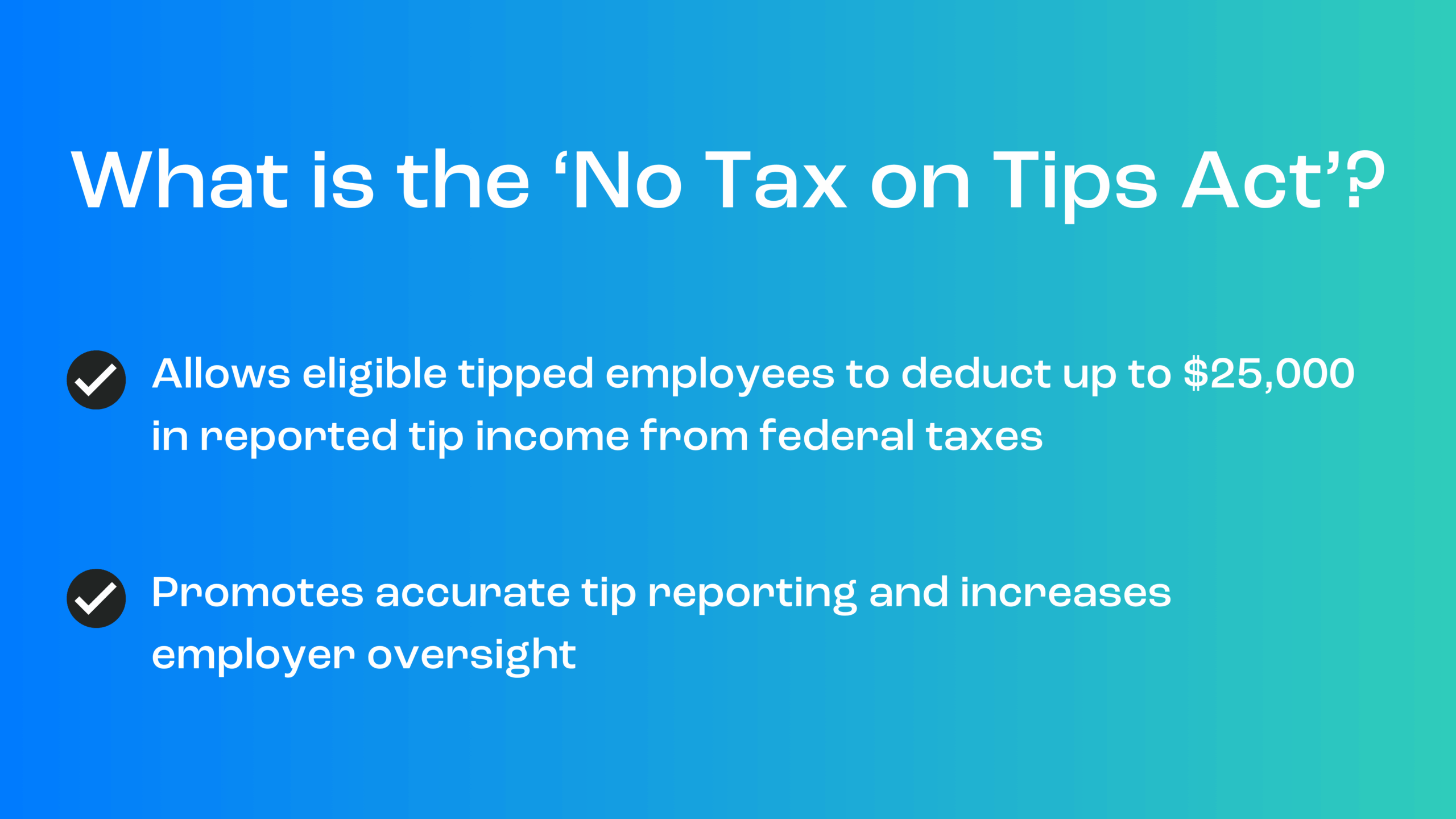
When politicians and economists discuss “No Tax on Tips,” they are proposing a fundamental change to the tax code that would categorize gratuities as non-taxable revenue for the individual. While the specific legislative language varies, the intent is generally to provide immediate relief to low- and middle-income earners in the service sector.
Federal vs. State Tax Implications
A primary point of interest for financial planners is whether such a policy would apply only at the federal level or if states would follow suit. Currently, most states that collect income tax use the federal “Adjusted Gross Income” (AGI) as their starting point. If tips are removed from federal taxable income, it would likely lead to a secondary windfall for workers in states with high income taxes, as their state-level tax liability would also plummet.
Income Tax Exemptions vs. Payroll Tax Exemptions
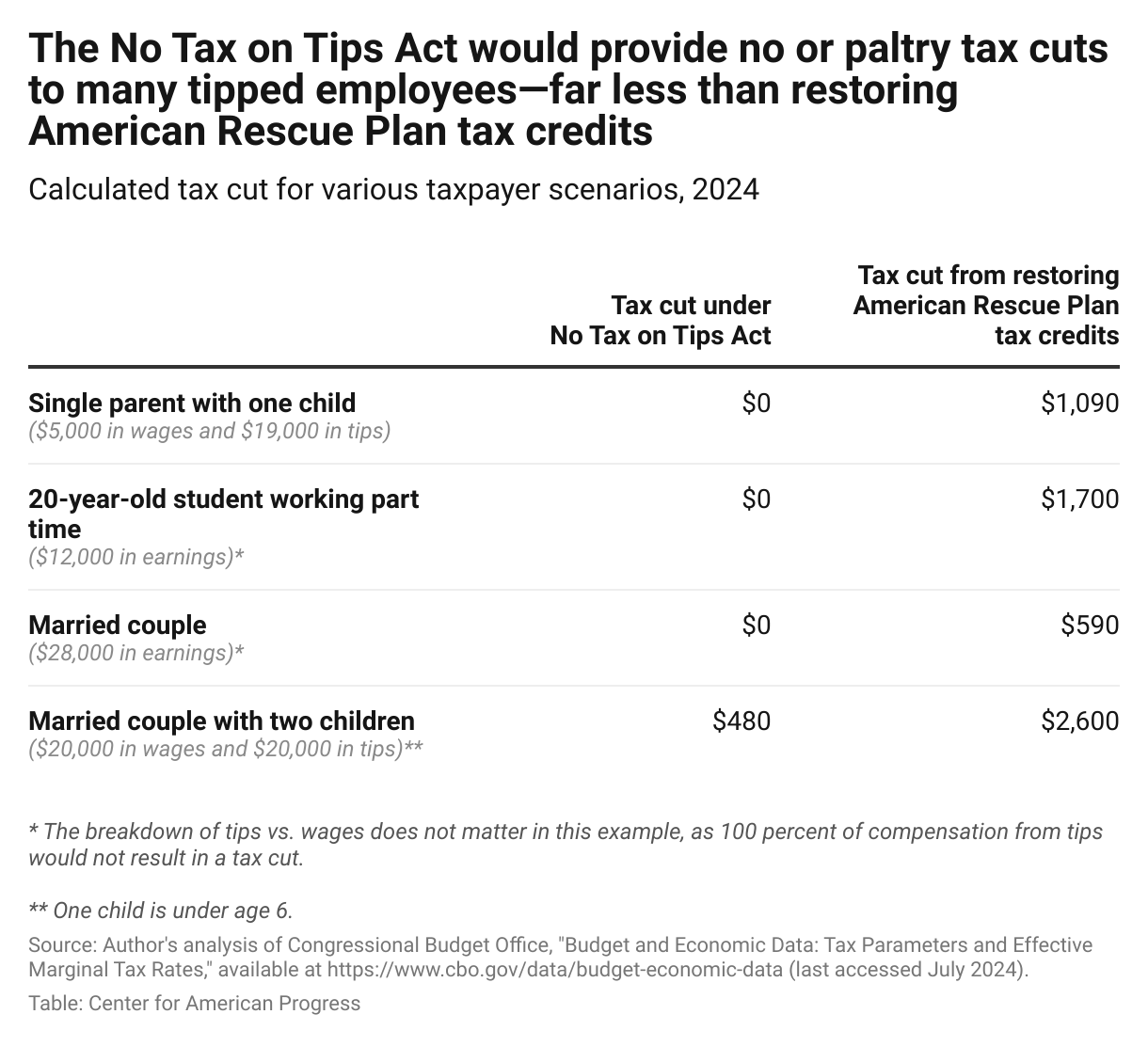
The “Money” niche distinguishes sharply between these two. If the proposal only eliminates federal income tax on tips, many low-wage workers may see a limited benefit, as they already fall into the lowest tax brackets or receive enough deductions to owe zero income tax. However, if the proposal eliminates payroll taxes (FICA) on tips, the impact would be immediate and universal for every tipped worker, regardless of their total annual earnings. This distinction is the difference between a minor tax refund and a significant increase in weekly liquidity.
Who Qualifies? Defining “Tipped Workers”
From a business finance perspective, the definition of a “tipped worker” becomes a critical variable. Would this policy only apply to traditional roles like waiters and bartenders, or would it extend to the burgeoning gig economy, including rideshare drivers, delivery personnel, and even freelance consultants who receive “bonuses” or “gratuities”? The broader the definition, the more significant the impact on the national labor market and the more likely we are to see a shift in how various industries structure their compensation models.
The Financial Benefit for the Individual Earner
For the individual service worker, the primary allure of “No Tax on Tips” is the promise of increased take-home pay. In an era of high inflation and rising housing costs, an extra 10% to 20% of income remaining in one’s pocket can be transformative for personal cash flow.
Increasing Net Take-Home Pay
If a server earns $30,000 a year in tips and $20,000 in base wages, their current tax liability is calculated on the full $50,000. By removing tips from the equation, their taxable income drops to $20,000. In many cases, this would move the individual into a zero-percent effective tax bracket. The immediate increase in disposable income allows for better debt management, higher savings rates, and increased participation in the consumer economy.
The Hidden Cost: Future Social Security Benefits
One of the more nuanced financial considerations involves the long-term trade-off. Social Security benefits are calculated based on your highest 35 years of taxed earnings. If tips are no longer taxed under FICA, they are no longer “credited” toward your Social Security record. For a career service worker, this could lead to a significantly lower monthly benefit during retirement. Financial advisors suggest that if such a policy were enacted, workers would need to be diligent about redirecting their tax savings into private retirement vehicles like Roth IRAs or 401(k)s to compensate for the reduction in public retirement credits.
Budgeting and Financial Planning in a Tax-Free Tip Environment
Eliminating taxes on tips simplifies the “gross-to-net” calculation for workers. It provides more predictable cash flow, which is often the biggest hurdle for tipped employees trying to create a rigorous budget. Without the “tax bite” taken out of the paycheck at the end of the pay period, workers can more accurately project their ability to cover fixed costs like rent and insurance.
Broader Economic Consequences and Business Finance
While the individual benefits are clear, the “No Tax on Tips” policy carries broader implications for the economy and how businesses manage their finances. Critics and proponents alike point to several “second-order” effects that could reshape the labor market.
Potential for “Wage Shifting” and Tax Loopholes
A significant concern for tax experts is the potential for “wage shifting.” If tips are tax-free but wages are taxed, both employers and employees have a massive financial incentive to reclassify as much income as possible as “tips.” We might see law firms, medical offices, or tech companies moving toward a “base-plus-gratuity” model to lower their payroll tax burden and increase their employees’ take-home pay. This could lead to a “hollowing out” of the traditional income tax base, forcing the government to find alternative revenue sources.
Impact on the Federal Deficit and Public Funding
From a macro-finance perspective, the federal government relies heavily on income and payroll taxes to fund everything from infrastructure to national defense. Estimates suggest that exempting tips from taxation could result in a revenue loss of several hundred billion dollars over a decade. For those focused on the national debt and fiscal responsibility, this policy presents a challenge: how to provide relief to workers without ballooning the deficit or cutting essential services.
Competitive Advantages in the Hospitality and Service Sectors
For business owners in the hospitality sector, “No Tax on Tips” could serve as a powerful recruiting tool. In a tight labor market, the ability to offer a “tax-free” income stream makes service roles significantly more attractive than comparable entry-level roles in retail or manufacturing where income is fully taxed. This could lead to a migration of labor toward tipped industries, potentially forcing non-tipped industries to raise their base wages to remain competitive, thereby driving up labor costs across the board.
Conclusion: The Future of Personal Finance in the Service Sector
What does “No Tax on Tips” mean? It means a potential paradigm shift in the American philosophy of labor and taxation. For the individual, it represents a direct path to higher liquidity and a simpler financial life, albeit with new responsibilities for long-term retirement planning. For the business owner, it offers a way to attract talent without necessarily increasing the direct wage expense, though it introduces new complexities in accounting and compliance.
As this proposal continues to be debated in the halls of government and on the floors of restaurants across the country, its success will depend on the details. Will it include FICA taxes? How will it prevent high-earners in other industries from exploiting the “tip” classification? Regardless of the eventual outcome, the conversation itself highlights a growing recognition of the financial challenges faced by the service class and the need for innovative personal finance solutions in a changing economy. For now, tipped workers and financial planners should keep a close eye on the legislative fine print, as the shift from taxable to tax-free tips would be one of the most significant changes to individual wealth management in decades.
aViewFromTheCave is a participant in the Amazon Services LLC Associates Program, an affiliate advertising program designed to provide a means for sites to earn advertising fees by advertising and linking to Amazon.com. Amazon, the Amazon logo, AmazonSupply, and the AmazonSupply logo are trademarks of Amazon.com, Inc. or its affiliates. As an Amazon Associate we earn affiliate commissions from qualifying purchases.