
For the majority of households, a vehicle represents the second-largest financial investment after a home. However, unlike real estate, which generally appreciates over time, a car is a depreciating asset. Understanding the financial intricacies of “trade-in value” is not merely a matter of curiosity; it is a vital component of personal finance management. When you ask, “How much is my car worth?” you are essentially asking for a valuation of your equity in a mobile asset.
Navigating the transition from one vehicle to the next requires a strategic approach to ensure you are not leaving thousands of dollars on the table. This guide explores the financial mechanics of trade-in valuations, the economic factors that influence them, and how to leverage this knowledge to improve your overall net worth.

1. The Financial Mechanics of Vehicle Valuation
The trade-in value of a vehicle is the amount a dealership is willing to credit toward the purchase of a new car in exchange for your current one. From a financial perspective, this is a “wholesale” transaction. To maximize your financial outcome, you must first understand the variables that dictate this number.
The Impact of Depreciation Curves
Depreciation is the silent killer of automotive wealth. Most vehicles lose roughly 20% of their value in the first year and approximately 60% by the end of year five. Understanding where your car sits on this curve is essential. For instance, trading in a car at the three-year mark—just as the steepest part of the depreciation curve begins to level off—often strikes a balance between high residual value and avoiding the looming costs of out-of-warranty repairs.
Market Demand and Liquidity
In finance, liquidity refers to how quickly an asset can be converted into cash. Dealerships prioritize “liquid” vehicles—cars that are in high demand and easy to resell. If you own a silver mid-sized SUV, its trade-in value will likely be higher relative to its original MSRP than a neon-green manual sports car. Market trends, such as the current shift toward fuel efficiency or the surging demand for all-wheel-drive vehicles in specific climates, directly influence the “money” offered for your trade-in.
The Role of Mileage and Condition
Mileage is a primary metric for mechanical “life expectancy.” Crossing major psychological thresholds—such as 36,000 miles (end of bumper-to-bumper warranty) or 100,000 miles (perceived end of reliability)—can cause a sharp drop in valuation. From a financial standpoint, every mile driven is a cent of equity consumed. Maintaining the vehicle’s physical condition is equally important; a car that requires $2,000 in reconditioning to reach “retail-ready” status will see that $2,000 deducted directly from your trade-in offer.
2. Navigating the Trade-In vs. Private Sale Dilemma
When liquidating a vehicle, you face a fundamental choice: sell it privately for a higher price or trade it in for convenience and potential tax benefits. This decision should be viewed through the lens of “Return on Investment” (ROI) regarding both your money and your time.
The Convenience Premium and Opportunity Cost
Selling a car privately usually yields 10% to 20% more than a dealer’s trade-in offer. On a $20,000 car, that is a $4,000 difference. However, private sales involve listing fees, detailing, meeting strangers for test drives, and handling complex paperwork. If you spend 40 hours of your time to make an extra $2,000, your effective hourly rate is $50. For some, this is a wise financial move; for others, the opportunity cost of that time makes the trade-in more attractive.
The Strategic Advantage of Tax Credits
One of the most overlooked financial benefits of a trade-in is the sales tax credit. In many jurisdictions, you only pay sales tax on the difference between your new car’s price and your trade-in value.
- Example: If you buy a $40,000 car and have a $20,000 trade-in, and your local sales tax is 8%, you only pay tax on the remaining $20,000. This saves you $1,600 in taxes.
When calculating your car’s worth, you must add this tax savings back into the dealer’s offer to find the “true” financial value of the trade-in.
Risk Mitigation in Transactions
Private sales carry financial risks, including fraudulent payments or post-sale liability disputes. A dealership trade-in is a clean, legally protected financial break. Once the papers are signed, the dealer assumes all future risks associated with the vehicle’s mechanical integrity. For risk-averse investors, this peace of mind has a quantifiable financial value.
3. Strategic Timing: When to Liquidate Your Automotive Asset

Market timing is as relevant in the automotive world as it is in the stock market. Knowing when to sell can result in a valuation swing of several thousand dollars.
The 100,000-Mile Psychological Barrier
From a personal finance perspective, there is a “sweet spot” for trade-ins. Once a vehicle hits 100,000 miles, many financial institutions refuse to provide traditional financing to the next buyer. This makes the car harder for a dealer to sell, which causes them to offer you significantly less. Trading in at 90,000 to 95,000 miles preserves a significant portion of the car’s remaining equity compared to waiting until 105,000 miles.
Seasonal Trends and Economic Cycles
Convertibles sell for more in the spring; 4×4 trucks sell for more in the late autumn. Beyond seasonality, broader economic factors like interest rates play a role. When interest rates are low, consumer buying power increases, driving up the demand—and thus the trade-in value—of used cars. Conversely, in a high-interest-rate environment, used car values often soften as monthly payments become less affordable for the average consumer.
The Impact of New Model Releases
When a manufacturer releases a new “generation” of a vehicle, the previous generation immediately becomes “dated.” This technological and aesthetic obsolescence leads to an immediate hit in trade-in value. If you are tracking your car’s worth, aim to trade it in before the new model hits the showroom floors to capture the highest possible residual value.
4. Leveraging Data for Better Negotiations
In the realm of personal finance, information is power. You should never walk into a dealership without a firm grasp of your vehicle’s market data.
Utilizing Valuation Benchmarks
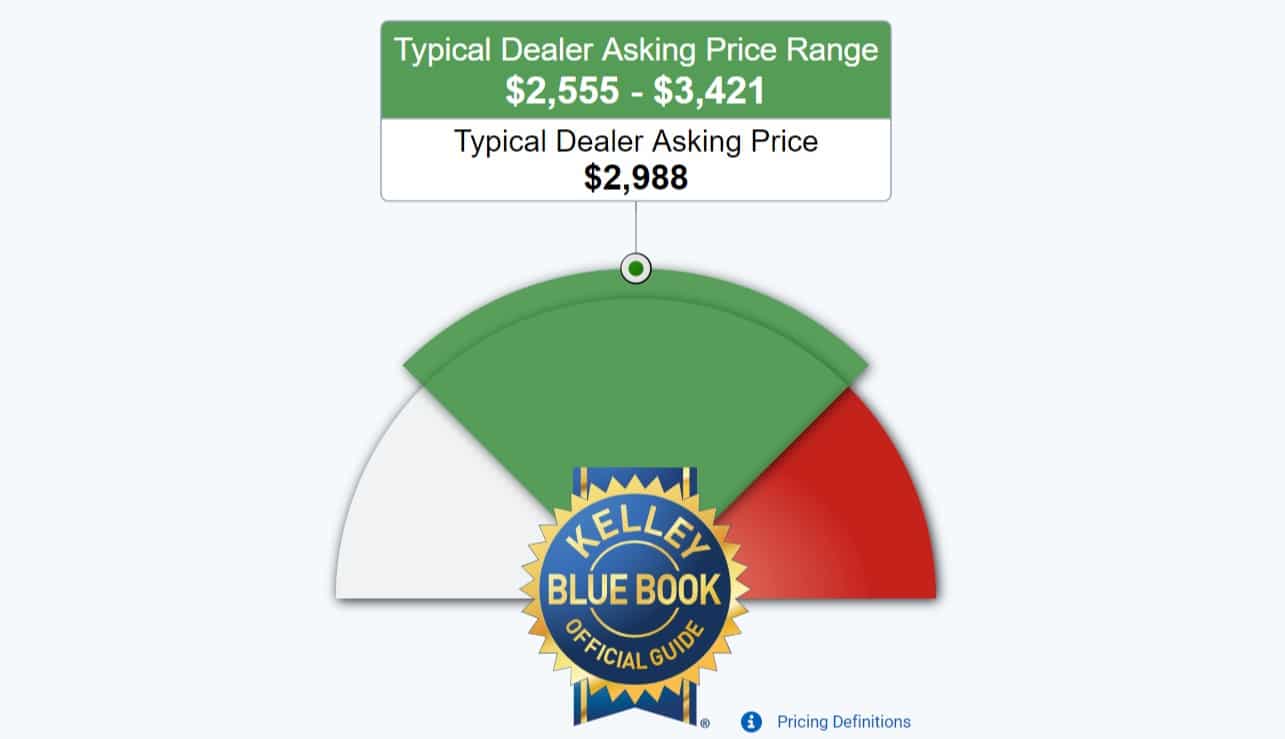
Tools like Kelley Blue Book (KBB), Edmunds, and NADA provide a baseline for what your car is worth. However, it is important to look at the “Instant Cash Offer” or “Trade-In” values rather than “Retail” values. Dealers use these same data sets to hedge their bets. By presenting documented third-party valuations, you move the conversation from an emotional one to a data-driven financial negotiation.
The Power of Multiple Quotes
Just as you would seek multiple quotes for a home renovation or a business loan, you should seek multiple bids for your car. Services that provide instant cash offers allow you to establish a “floor” price. If Dealer A offers you $15,000, but you have a certified online offer for $17,000, you have immediate leverage. This simple act of price discovery can be the most profitable hour you spend in the entire car-buying process.
Separating the Trade-In from the Purchase
A common mistake in car buying is “bundling” the price of the new car, the interest rate of the loan, and the trade-in value into one monthly payment. This allows the dealer to hide a low trade-in offer within a “discounted” new car price. Financially savvy consumers treat the trade-in as a completely separate transaction. Negotiate the price of the new car first, and only once that is finalized, introduce the trade-in to ensure you are getting the full market value for your asset.
5. Enhancing Equity: Preparing for the Appraisal
Finally, you can actively influence the financial outcome of your trade-in by how you present the asset.
Maintenance Documentation as an Asset
A vehicle with a documented service history is worth more than one without it. Keeping a folder of every oil change, brake job, and tire rotation proves to the dealer that the car has been maintained, reducing their perceived risk of hidden mechanical issues. This documentation can often bridge the gap between a “Fair” and “Excellent” condition rating, which can mean a difference of $1,000 or more.
The ROI of Minor Reconditioning
Before an appraisal, spend $150 on a professional detail. While it doesn’t change the mechanical reality of the car, first impressions dictate the “anchor” price in a dealer’s mind. However, avoid major mechanical repairs. If your car needs $1,000 in tires, the dealer—who buys tires at wholesale—might only deduct $600 from your trade-in value. In this case, it is financially smarter to let the dealer handle the repair.
Transparency and Professionalism
Being transparent about the vehicle’s history builds trust, which can lead to a smoother financial transaction. Disclosing minor issues upfront can prevent the dealer from “finding” them during the inspection and using them as a high-pressure tactic to slash the offer at the last minute. Treat the trade-in process like a professional business liquidation, and you will likely see a more professional financial return.
By understanding the financial levers of depreciation, tax credits, and market timing, you transform the question of “How much is my car worth?” into a strategic financial decision. Managing your vehicle equity with the same discipline you apply to your savings and investments ensures that you maintain your upward mobility in the automotive market.
aViewFromTheCave is a participant in the Amazon Services LLC Associates Program, an affiliate advertising program designed to provide a means for sites to earn advertising fees by advertising and linking to Amazon.com. Amazon, the Amazon logo, AmazonSupply, and the AmazonSupply logo are trademarks of Amazon.com, Inc. or its affiliates. As an Amazon Associate we earn affiliate commissions from qualifying purchases.