
For many market participants, Alphabet Inc. (NASDAQ: GOOG, GOOGL)—the parent company of Google—is considered a cornerstone of the modern investment portfolio. As a member of the “Magnificent Seven,” its performance often dictates the direction of the broader S&P 500 and Nasdaq Composite. However, even the most dominant tech giants are not immune to volatility. When Google stock experiences a downturn, it sends ripples through the financial world, prompting investors to ask whether the dip is a temporary buying opportunity or a signal of fundamental shifts in the digital economy.
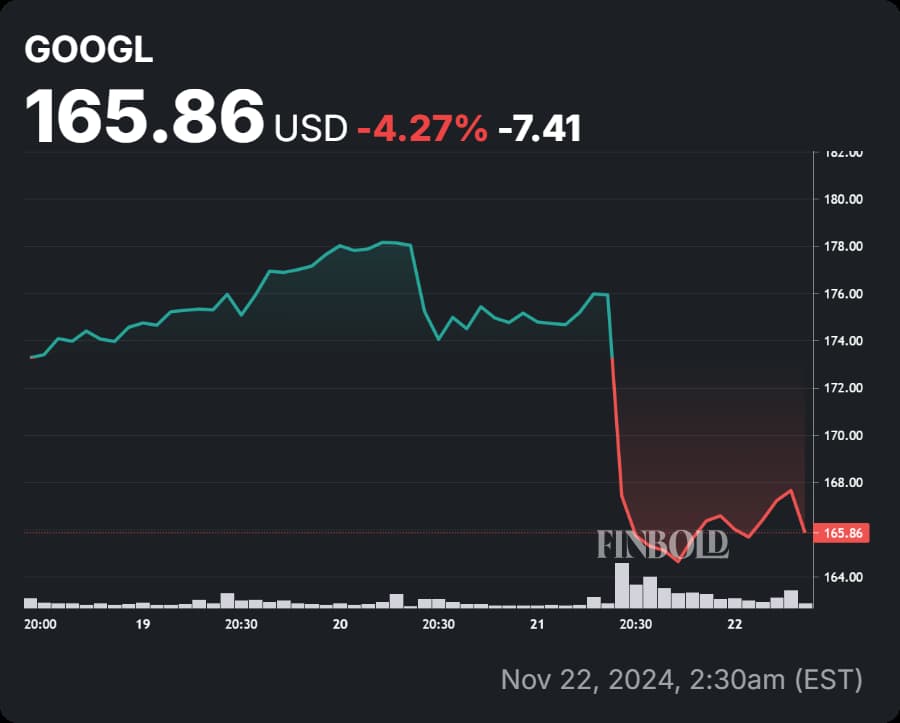
Understanding why Google stock is down today requires a multidimensional analysis of financial performance, macroeconomic conditions, and the shifting competitive landscape of the technology sector. This article explores the primary drivers behind the current price action from a strictly financial and investment perspective.
1. Analyzing the Quarterly Financial Performance and Guidance
Stock prices are ultimately a reflection of a company’s future cash flows discounted to the present. When Google’s stock drops, the most immediate culprit is often found within its quarterly earnings report or the forward-looking guidance provided by management.
Revenue Misses in Core Advertising
Google’s primary engine of growth remains its advertising business, which includes Google Search, YouTube Ads, and the Google Network. For investors, any sign of deceleration in these segments is a red flag. If the stock is down, it may be because the most recent quarterly data showed that advertising revenue fell short of analyst estimates. This is often tied to a “softness” in the digital ad market, where enterprises may be tightening their marketing budgets due to economic uncertainty. Because Search is a high-margin business, even a slight miss can lead to a significant contraction in the stock’s valuation.
The Cost of Scaling Infrastructure for AI
While revenue is critical, the “bottom line”—net income—is what determines earnings per share (EPS). In recent quarters, Alphabet has significantly increased its Capital Expenditures (CapEx). This money is being funneled into data centers and specialized hardware, such as Tensor Processing Units (TPUs) and GPUs, to support the generative AI revolution. For the value-conscious investor, these massive outlays are a double-edged sword. While necessary for long-term survival, the immediate impact on free cash flow and operating margins can cause short-term-oriented investors to sell off the stock, fearing that the return on investment (ROI) for AI is still too far in the future.
2. Macroeconomic Pressures and Market Sentiment
No company operates in a vacuum. Google’s stock performance is deeply intertwined with global macroeconomic trends and the shifting sentiment of institutional investors who manage billions in assets.
Interest Rates and the Growth Stock Sell-off
The Federal Reserve’s monetary policy plays a massive role in Google’s valuation. Alphabet is classified as a “growth stock,” meaning much of its perceived value is based on earnings expected years down the line. When interest rates are high or the “higher for longer” narrative persists, the discount rate applied to those future earnings increases. This mathematically lowers the current fair value of the stock. Today’s downturn could be a reaction to inflation data or a hawkish stance from the Fed, leading investors to rotate out of high-valuation tech stocks and into “safer” assets like Treasury bonds or value-oriented sectors.
Regulatory Risks and Antitrust Headwinds
From a business finance perspective, regulatory risk is a “non-systemic” risk that can devalue a company overnight. Google is currently embroiled in several high-stakes antitrust lawsuits, particularly concerning its dominance in search and advertising technology. Investors hate uncertainty. If a court ruling suggests that Google may have to break up its business or change its lucrative default search agreements (such as the multi-billion dollar deal with Apple), the market will price in that risk immediately. A drop today could be a delayed reaction to legal developments that threaten Google’s “moat”—the competitive advantage that allows it to generate outsized profits.
3. The Competitive Landscape: AI and Search Dominance
In the world of investing, “moats” are everything. For decades, Google had an impenetrable moat in the search market. Today, that moat is being challenged, and the stock market is reacting to the perceived threat of disruption.
Perceived Threats to the Search Monopoly
The rise of generative AI platforms has introduced a new form of competition that Google has not faced in twenty years. Financial analysts are closely watching to see if users are shifting their behavior away from traditional search queries toward conversational AI. If the market believes that Google’s “Query Volume” is at risk, the stock’s Price-to-Earnings (P/E) multiple will likely compress. Investors are currently debating whether AI will be “accretive” (adding to profits) or “cannibalistic” (replacing high-margin search ads with lower-margin AI responses). Any news favoring the latter scenario often leads to a sell-off.
Capital Expenditures (CapEx) Concerns
During earnings calls, analysts focus heavily on “CapEx” (Capital Expenditure). Recently, Alphabet’s management has signaled that they would rather “over-invest” in AI infrastructure than “under-invest.” To a conservative investor, this sounds like a potential drain on resources. If Google is spending $12 billion per quarter on infrastructure with no clear timeline for when that investment will translate into accelerated revenue growth, the stock may suffer. The market is currently in a “show me the money” phase regarding AI, and until Google demonstrates a clear path to monetizing these expensive models beyond traditional search, the stock may face downward pressure.
4. Investor Strategy: Evaluating the Long-Term Thesis
When a blue-chip stock like Google is down, it provides a moment for investors to reassess their thesis. Is the drop a fundamental breakdown of the business model, or is it a market overreaction?
Valuations and Price-to-Earnings (P/E) Metrics
One of the most effective ways to analyze a stock drop is by looking at the P/E ratio relative to historical averages. Often, Google trades at a more reasonable valuation than its peers like Microsoft or Nvidia. If the stock is down today, it may actually be trading at a “discounted” P/E ratio. For a value investor, a drop in price while earnings remain relatively stable represents a shrinking of the P/E multiple, which can be seen as an attractive entry point. Institutional “whale” investors often wait for these specific technical levels to build larger positions, which eventually provides a floor for the stock price.
Buy, Hold, or Sell? Navigating Volatility
Managing a portfolio requires a balance between risk and reward. For long-term investors, today’s volatility may be “noise.” Google still maintains a massive cash reserve—one of the largest in corporate history—giving it the “dry powder” needed to acquire competitors, buy back shares, or pivot its business model.
- The Bull Case: Google’s integration of AI into its existing ecosystem (Workspace, Cloud, and Android) will eventually lead to new revenue streams that the market is currently underestimating.
- The Bear Case: The cost of maintaining search dominance in an AI-first world will permanently lower Google’s operating margins, making it a less profitable business than it was in the 2010s.
Navigating a downturn in Google stock requires looking past the daily ticker and focusing on the underlying “Money” fundamentals: cash flow, debt-to-equity ratios, and the sustainability of its advertising monopoly.
Conclusion: The Financial Outlook
In summary, Google stock being down today is rarely the result of a single factor. It is usually a confluence of earnings expectations, macroeconomic shifts, and competitive anxiety. For the disciplined investor, these moments of red on the screen are part of the price of admission for owning a high-growth technology leader.
Whether the decline is driven by a missed revenue target in the YouTube segment, a hawkish Federal Reserve, or fears of AI disruption, the key for any stakeholder is to monitor Alphabet’s ability to convert its technological prowess into bottom-line profit. As long as Google continues to generate significant free cash flow and maintains its position as the gateway to the internet, many financial analysts will view these dips not as a reason to exit, but as a strategic moment to re-evaluate the intrinsic value of one of the world’s most profitable enterprises.
aViewFromTheCave is a participant in the Amazon Services LLC Associates Program, an affiliate advertising program designed to provide a means for sites to earn advertising fees by advertising and linking to Amazon.com. Amazon, the Amazon logo, AmazonSupply, and the AmazonSupply logo are trademarks of Amazon.com, Inc. or its affiliates. As an Amazon Associate we earn affiliate commissions from qualifying purchases.