
For the modern traveler, airfare is often the single largest variable expense in a personal or business budget. Unlike a fixed mortgage payment or a standard grocery bill, the price of a flight to the same destination can fluctuate by hundreds, sometimes thousands, of dollars within a single twenty-four-hour window. This volatility has birthed a global obsession with timing: what is the absolute cheapest day to buy airline tickets?
From a personal finance perspective, mastering the art of the “buy” is not just about saving a few dollars; it is about travel arbitrage and maximizing the purchasing power of your hard-earned income. To navigate this complex marketplace, one must move beyond urban legends and look at the hard data of revenue management, financial planning, and strategic booking windows.

Understanding the Economics of Airline Pricing Models
To find the cheapest day to buy, one must first understand why prices change at all. Airlines do not use “flat pricing.” Instead, they utilize a sophisticated financial mechanism known as Dynamic Pricing and Revenue Management. This system is designed to extract the maximum amount of money each passenger is willing to pay based on timing, demand, and consumer profile.
The Myth of the “Magic Tuesday”
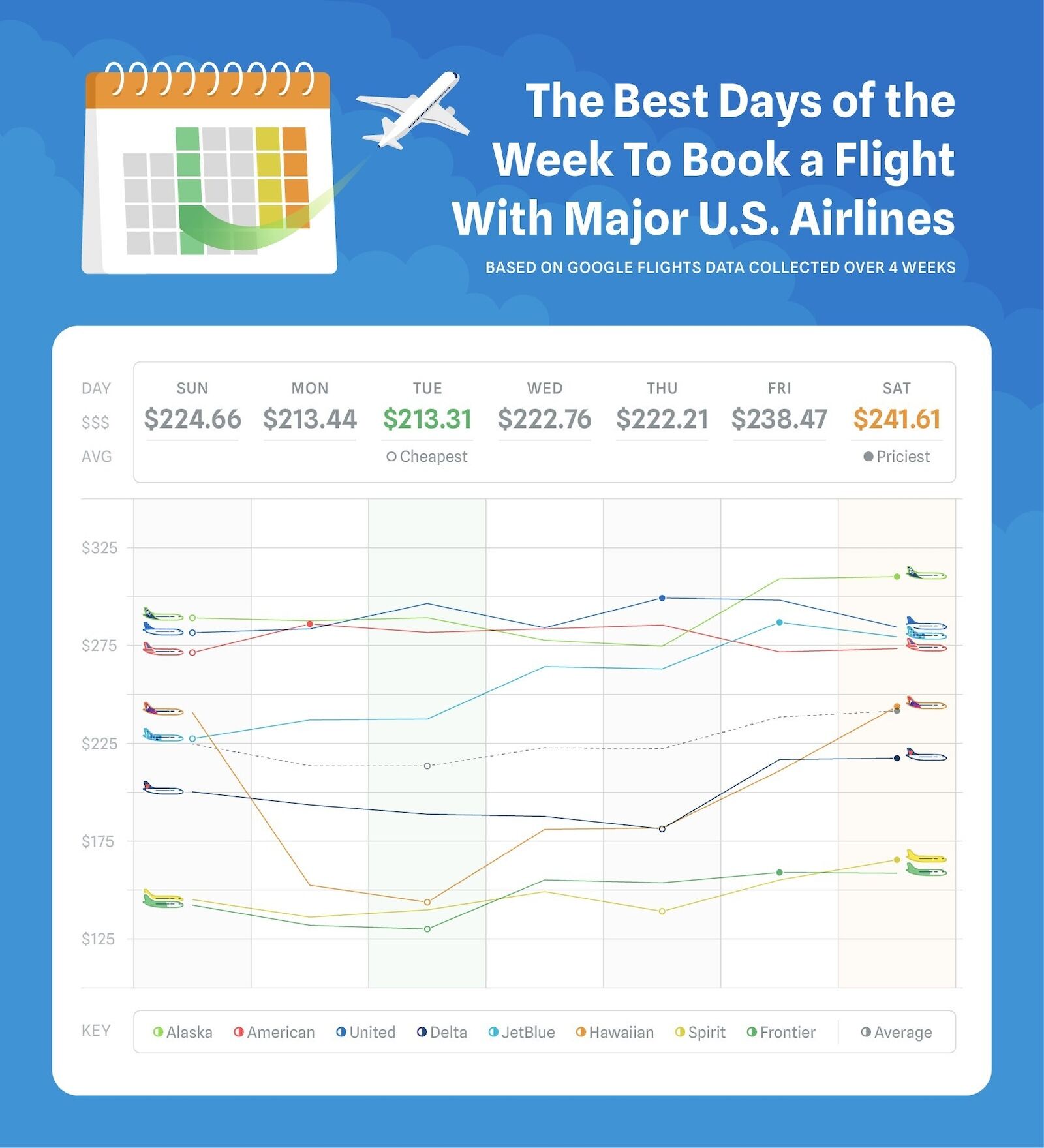
For years, the conventional wisdom in personal finance circles was that booking on a Tuesday at 3:00 PM EST was the golden rule for savings. This was rooted in a historical reality: decades ago, airlines would manually push out fare sales on Monday nights, and competitors would scramble to match those prices by Tuesday morning.
In the modern era of high-frequency algorithmic trading and AI-driven pricing, this “Magic Tuesday” rule is largely a relic. While some sales still launch early in the week, the “cheapest day to buy” is no longer a fixed point on the calendar but rather a fluctuating target determined by real-time supply and demand. From a financial strategy standpoint, waiting specifically for Tuesday might actually cause you to miss a price drop that occurred on a Sunday or a Thursday.
Dynamic Pricing and Revenue Management Systems
Airlines employ thousands of analysts and sophisticated software to monitor “load factors”—the percentage of seats filled on a plane. If a flight is filling up faster than expected, the algorithm automatically bumps the remaining seats into a higher fare bucket. Conversely, if a flight is empty, prices may drop to stimulate demand.
For the budget-conscious consumer, the goal is to intervene when the algorithm is in a “stimulus” phase. This requires understanding that the price you see is not a reflection of the flight’s value, but a reflection of the airline’s current financial risk regarding that specific route.
Strategic Timing: When to Book for Maximum Savings
While the day of the week you purchase the ticket is less impactful than it used to be, the day of the week you fly and the length of your “booking window” remain the two most critical financial levers you can pull.
The Booking Window: Finding the Sweet Spot
Financial planning involves managing lead times. If you buy too early, the airline hasn’t released its promotional fares yet. If you buy too late, you are categorized as a “distressed” traveler (often a business traveler) who is willing to pay a premium for a last-minute seat.
Data across the travel industry suggests that for domestic flights, the “sweet spot” for the lowest price is typically between 28 and 60 days before departure. For international travel, the window expands to 3 to 6 months. Within these windows, prices are at their most stable before they begin their exponential climb in the final 21 days before takeoff. Treating airfare like a commodity investment—buying when the price hits your predetermined “strike price”—is far more effective than trying to time the market to the exact second.
The Financial Advantage of Mid-Week Travel
If your goal is to minimize expenditure, the day you choose to fly is far more important than the day you click “purchase.” From a supply-and-demand perspective, Friday and Sunday are the most expensive days to fly because they cater to weekend vacationers and business travelers returning home.
By shifting your travel dates to Tuesday or Wednesday, you are often looking at a 20% to 40% reduction in cost. In the world of personal finance, this is an incredible Return on Investment (ROI) for the simple sacrifice of a little scheduling flexibility. If a $500 ticket can be had for $320 by moving the trip by 24 hours, you have effectively “earned” $180 for a few hours of adjustment.
Maximizing Financial Tools and Travel Arbitrage
Finding the cheapest day to buy is only half the battle. The other half is using the right financial instruments to lower the “net cost” of the flight. Smart money management involves looking at the total cost of acquisition, which includes fees, interest, and opportunity costs.
Leveraging Credit Card Rewards and Points
In the niche of personal finance, travel is often subsidized by “points-hacking.” The cheapest day to buy a ticket might actually be the day you have enough points to cover the fare, regardless of the cash price. By using high-yield travel reward cards, consumers can earn between 2% and 5% back on every dollar spent.
Furthermore, many premium financial cards offer “protected pricing” or “travel insurance.” If you book a flight and the price drops significantly later, or if the flight is canceled, these financial tools provide a safety net that protects your capital. When calculating the “cheapest” flight, always factor in the value of the points earned and the protections provided by your payment method.
Using Fare Tracking Tools to Automate Savings
You do not have to manually check prices every day to find the best deal. Financial efficiency is about automating mundane tasks. Tools like Google Flights, Hopper, and Skyscanner allow you to set price alerts. These tools use historical data to “predict” whether a price will go up or down.
From a business finance perspective, this is a form of market monitoring. Instead of guessing if Tuesday is the cheapest day, you let the software alert you when the price hits your “buy” zone. This removes the emotional component of the purchase and ensures you are buying based on data rather than intuition.
Behavioral Shifts for the Budget-Conscious Traveler
The quest for the cheapest ticket often fails because travelers are too rigid in their parameters. To truly save money, one must adopt a “flexibility-first” financial mindset.
The Cost of Convenience vs. The Value of Flexibility
In personal finance, convenience is a luxury good. Direct flights, prime-time departures, and specific airport preferences all come with a “convenience tax.” If you are willing to fly into a secondary airport (e.g., flying into Oakland instead of San Francisco, or London Stansted instead of Heathrow), the savings can be substantial.
The “cheapest day” might be any day of the week if you are willing to take a 6:00 AM flight or a long layover. You must weigh the value of your time against the cash savings. For a high-earner, a $50 saving might not be worth a 5-hour layover. For a student or someone building a side hustle, that $50 represents capital that can be deployed elsewhere.
Analyzing Total Trip Cost: Beyond the Ticket Price
A common financial pitfall is finding a “cheap” ticket on a specific day, only to realize that the auxiliary costs negate the savings. Ultra-low-cost carriers (ULCCs) often show the lowest “sticker price” on Tuesdays or Wednesdays. However, once you add fees for carry-on bags, seat assignments, and even printing a boarding pass, the “cheap” ticket can become more expensive than a legacy carrier’s fare.
A sophisticated financial approach requires looking at the “All-In Cost.” Before celebrating a cheap find, calculate the total outlay. Sometimes, paying $50 more for a ticket on a Saturday that includes a checked bag and a meal is a better financial decision than a “cheap” Tuesday ticket that nickels-and-dimes you for every basic necessity.

Conclusion: The New Rule of Airfare Finance
The answer to “what is the cheapest day to buy airline tickets” is no longer a simple day of the week. Instead, it is a combination of timing, tool usage, and tactical flexibility.
To optimize your travel budget:
- Ignore the Tuesday Myth: Look for deals daily using automated tracking tools.
- Focus on the Window: Aim for the 1–3 month “sweet spot” for domestic and 3–6 months for international.
- Fly Mid-Week: Prioritize Tuesday and Wednesday departures to take advantage of lower demand.
- Use Financial Leverage: Book with rewards-heavy credit cards and consider the “all-in” cost including fees.
By treating airfare as a strategic financial acquisition rather than a random expense, you can significantly lower your cost of travel, allowing you to reallocate those funds toward investments, savings, or more frequent adventures. In the modern economy, the cheapest day to buy is the day you are most prepared.
aViewFromTheCave is a participant in the Amazon Services LLC Associates Program, an affiliate advertising program designed to provide a means for sites to earn advertising fees by advertising and linking to Amazon.com. Amazon, the Amazon logo, AmazonSupply, and the AmazonSupply logo are trademarks of Amazon.com, Inc. or its affiliates. As an Amazon Associate we earn affiliate commissions from qualifying purchases.