
In the realm of personal finance, travel is often categorized as a discretionary expense—a luxury that sits at the mercy of fluctuating markets and seasonal inflation. However, for the financially savvy individual, securing a cheap flight ticket is not merely a matter of luck; it is an exercise in market analysis, arbitrage, and the strategic use of financial tools. As global mobility becomes an essential component of both professional growth and personal enrichment, understanding the underlying economics of the aviation industry is paramount.
To truly master the art of the “cheap flight,” one must move beyond simple search queries and adopt a professional financial mindset. This involves leveraging credit card ecosystems, understanding dynamic pricing algorithms, and managing travel as a high-ROI investment. By viewing flight procurement through the lens of cost optimization and financial strategy, travelers can redirect significant capital toward their savings, investments, or high-value experiences.
The Financial Mechanics of Airline Pricing Models
The first step in optimizing travel expenditure is understanding the sophisticated financial engines that dictate ticket prices. Airlines utilize “Revenue Management Systems” (RMS) that employ complex algorithms to maximize the “Yield” per seat. From a financial perspective, a seat on a plane is a perishable asset; if it is not sold by the time the cabin door closes, its value drops to zero.
Understanding Dynamic Pricing and Volatility
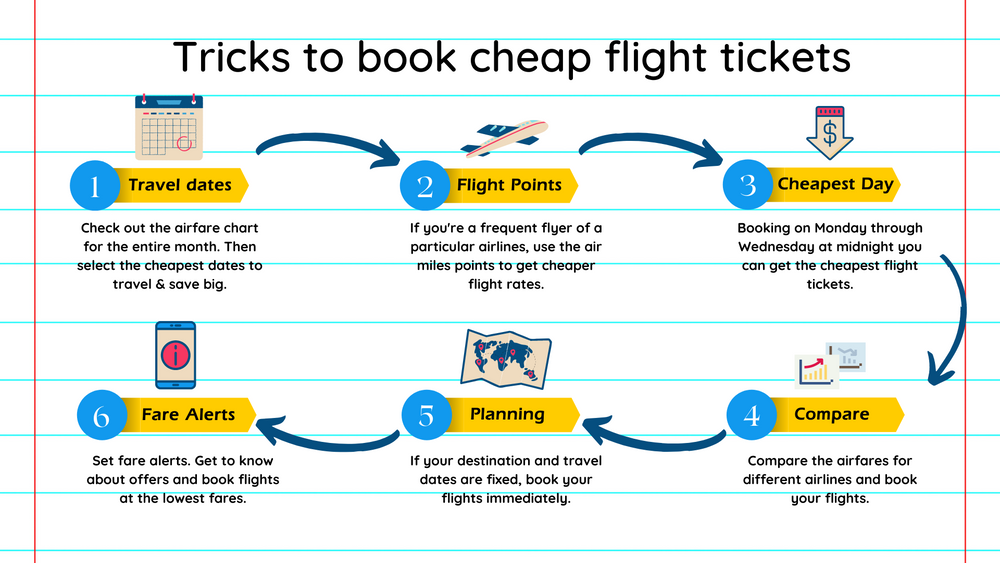
Airlines do not have a fixed price for their product. Instead, they use dynamic pricing, which adjusts in real-time based on demand forecasts, competitor pricing, and historical data. For the consumer, this creates high market volatility. To capitalize on this, a financially disciplined traveler must act as a market timer. Data suggests that the “sweet spot” for domestic booking is often 1 to 3 months in advance, while international routes require a 2 to 8-month lead time. Booking too early can be as financially inefficient as booking too late, as airlines often release lower-priced fare buckets once they have established a baseline of high-paying corporate bookings.
The Impact of Route Economics and Hub Arbitrage
The price of a ticket is rarely determined by the distance flown, but rather by the competition on a specific route. This leads to opportunities for “arbitrage.” For instance, flying into a secondary airport or a major hub and taking a low-cost carrier for the final leg can significantly reduce the total cost of ownership (TCO) of the trip. Savvy financial planners also look for “Hidden City” opportunities—where a flight with a layover in the desired destination is cheaper than a direct flight to that destination—though this requires a deep understanding of the contractual risks involved with airline “Conditions of Carriage.”
Maximizing ROI through Credit Card Rewards and Point Arbitrage
In the modern financial landscape, the most effective way to secure “cheap” or even “free” flights is through the strategic accumulation and redemption of transferable loyalty points. This is often referred to as travel hacking, but in professional terms, it is the management of a non-traditional currency asset.
Leveraging Sign-Up Bonuses for High-Value Liquidity
For those with strong credit profiles, credit card sign-up bonuses represent the highest return on investment available in the travel space. By strategically opening a new card and meeting the minimum spend requirement through existing organic expenses (like rent, groceries, or business costs), a consumer can acquire 60,000 to 100,000 points. In the world of premium travel, these points can often be redeemed for 2 to 5 cents per point, effectively generating thousands of dollars in travel value for a minimal initial investment.
The Power of Transfer Partners and Point Valuation
The mistake many casual travelers make is redeeming points directly through a bank’s travel portal at a fixed rate (e.g., 1 cent per point). To optimize the financial outcome, one must understand “Point Arbitrage”—transferring points to airline partners where the redemption value is decoupled from the cash price. For example, a business class flight that costs $4,000 might only cost 60,000 points. By calculating the “Cents Per Point” (CPP), a traveler can ensure they are getting the maximum utility out of their financial assets. This level of analysis transforms travel from a drain on capital into a highly efficient use of rewards-based currency.
Leveraging Financial Tools and Data-Driven Comparison Engines

In the digital age, information asymmetry is the enemy of the budget-conscious traveler. To find the lowest prices, one must utilize financial tools designed to aggregate data and predict market movements. These tools serve as the “Bloomberg Terminal” for the airline industry.
Utilizing Meta-Search Engines for Market Transparency
Aggregators like Google Flights, Skyscanner, and Kayak are essential for auditing the market. Unlike traditional travel agencies, these tools provide a holistic view of the global inventory. A key financial tactic is to use the “Explore” or “Everywhere” features, which allow the traveler to remain destination-agnostic. By letting the price dictate the destination rather than the inverse, a traveler can capture massive savings by choosing markets where supply currently exceeds demand.
Tracking Price Protection and Automated Alerts
Just as an investor sets “buy” or “sell” alerts for stocks, a traveler should set price alerts for specific routes. Tools like Hopper use predictive analytics to advise whether to “Buy Now” or “Wait,” boasting a high accuracy rate based on trillions of historical price points. Furthermore, certain high-end credit cards and services offer “Price Protection,” which can refund the difference if a flight price drops after purchase. Utilizing these automated financial safeguards ensures that you never overpay for a seat in a fluctuating market.
Tactical Budgeting: Managing the Total Cost of Travel
A “cheap” flight ticket can quickly become an expensive liability if one does not account for the ancillary costs and the “Total Cost of Ownership.” In the Money niche, we look at the bottom line—not just the headline price.
Accounting for Ancillary Fees and “Unbundling”
Low-cost carriers (LCCs) like Spirit, Ryanair, or AirAsia use an “unbundled” pricing model. The base fare may be $20, but baggage fees, seat selection, and even check-in fees can escalate the price beyond that of a legacy carrier. When comparing flights, it is vital to conduct a “Net Present Value” style analysis: calculate the total cost including all fees. Often, a $150 ticket on a full-service airline is more financially sound than a $50 ticket on an LCC once the “hidden” costs are integrated.
Currency Exchange and International Transaction Optimization
For international travel, the cost of the ticket is often influenced by the currency in which it is priced. Sometimes, booking on the local version of an airline’s website (e.g., using the .com.mx version for a Mexican airline) and paying in the local currency can result in a lower price due to favorable exchange rates. However, this tactic only works if the traveler uses a financial tool—specifically a credit card—with zero foreign transaction fees. Otherwise, the 3% bank surcharge will negate any gains made through currency arbitrage.
Long-Term Financial Planning for Global Mobility
Securing cheap flights is not just a series of one-off wins; it is a lifestyle of financial preparedness. By integrating travel costs into a broader financial plan, individuals can ensure they have the liquidity to strike when a “mistake fare” or a flash sale occurs.
Building a “Travel Opportunity Fund”
The best flight deals are often ephemeral, lasting only a few hours. To capitalize on these, one must have a dedicated “Opportunity Fund”—a liquid savings account earmarked specifically for travel. This prevents the need to dip into emergency funds or utilize high-interest debt to book a deal. This proactive cash management ensures that when the market offers an anomaly—such as a $300 round-trip flight from New York to Tokyo—the traveler is financially positioned to execute the trade immediately.

The Opportunity Cost of Time and Flexibility
Finally, any professional financial analysis must consider the “Opportunity Cost.” A flight that is $200 cheaper but includes two 10-hour layovers may actually be more “expensive” when you factor in the value of your time and the cost of airport subsistence. In the Money niche, we recognize that time is a non-renewable resource. Finding the equilibrium between monetary savings and time efficiency is the ultimate goal of the financially literate traveler.
By applying these principles of market timing, asset management, and data analysis, “getting a cheap flight” ceases to be a mystery. It becomes a repeatable, strategic financial process that allows individuals to explore the world without compromising their long-term wealth-building goals. In the intersection of personal finance and travel, the informed consumer always flies at a discount.
aViewFromTheCave is a participant in the Amazon Services LLC Associates Program, an affiliate advertising program designed to provide a means for sites to earn advertising fees by advertising and linking to Amazon.com. Amazon, the Amazon logo, AmazonSupply, and the AmazonSupply logo are trademarks of Amazon.com, Inc. or its affiliates. As an Amazon Associate we earn affiliate commissions from qualifying purchases.