
In the realm of personal finance, travel is often viewed through the lens of a luxury or a significant discretionary expense. However, for the financially savvy individual, travel is not merely a cost to be managed—it is an exercise in resource allocation, market analysis, and arbitrage. Finding the cheapest flights is less about “luck” and more about understanding the underlying economics of the aviation industry and leveraging financial tools to minimize capital outflow.
When we ask, “How do I find the cheapest flights?” we are essentially asking how to optimize a high-volatility purchase within a personal budget. This guide treats travel procurement as a strategic financial operation, focusing on data-driven decision-making and wealth-preservation techniques.
Integrating Travel Costs into Your Personal Finance Framework
To find the cheapest flights, one must first stop viewing airfare as an isolated purchase. In a sophisticated financial plan, travel should be treated as a variable expense that can be mitigated through proactive budgeting and strategic timing.
The Concept of the “Travel Sinking Fund”
A “sinking fund” is a strategic way to save for a specific expense by setting aside small amounts of money over time. By establishing a dedicated travel fund, you decouple the emotional desire to travel from the financial stress of booking. This allows you to strike when the “market” (airfare prices) is at its lowest. Instead of waiting for a vacation window to buy a ticket at whatever price the airline demands, a sinking fund allows you to act as a liquidity provider—buying the asset (the ticket) when the price is objectively low, rather than when your need is high.
Analyzing the ROI of Low-Cost vs. Full-Service Carriers
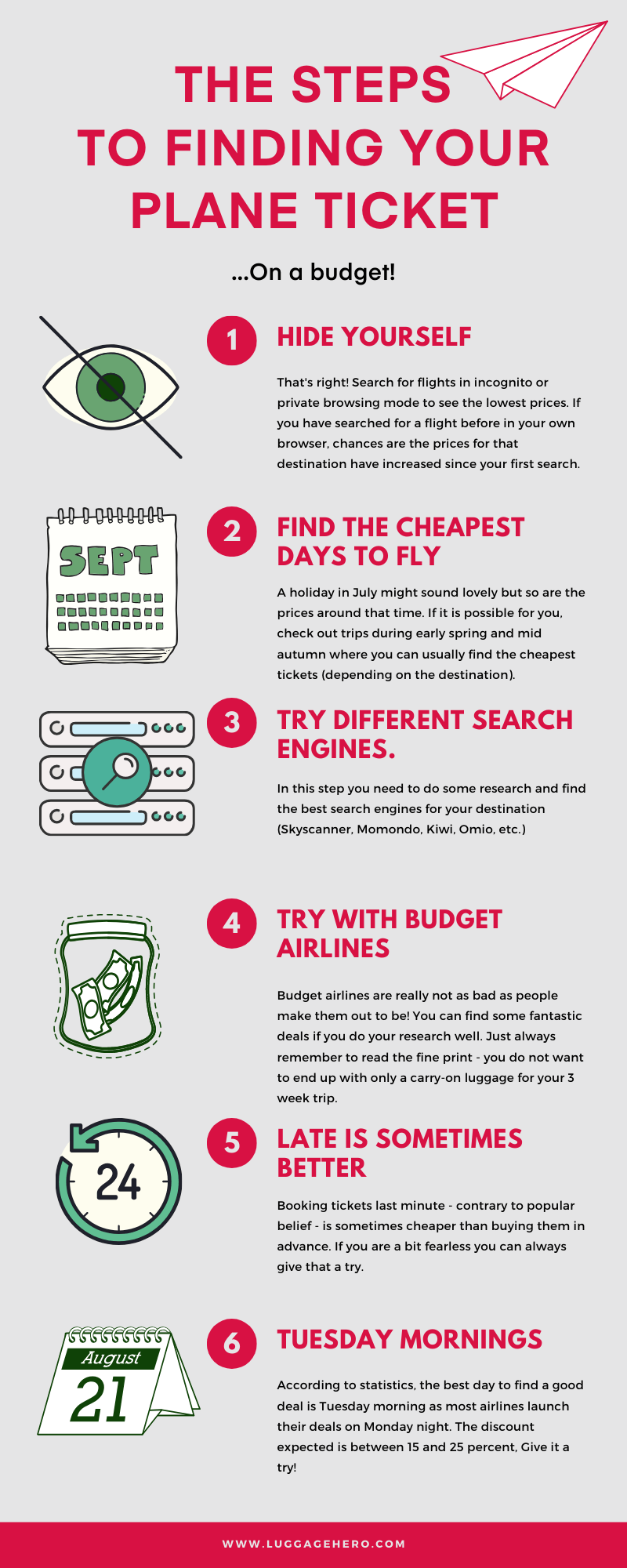
From a business finance perspective, the “cheapest” flight is not always the one with the lowest sticker price. It is essential to perform a Total Cost of Ownership (TCO) analysis. A $400 ticket on a full-service carrier may include a checked bag, a meal, and better seat selection, whereas a $250 ticket on a budget airline may eventually cost $450 after “unbundled” fees are applied. To optimize your finances, calculate the all-in cost before clicking “purchase.” If you can travel with only a personal item, the budget carrier wins. If you require infrastructure (luggage, flexibility), the legacy carrier often provides better financial value.
The Opportunity Cost of Time and Layovers
In the world of money, time is a currency. A flight that is $100 cheaper but includes two 10-hour layovers may actually be a poor financial decision. If those 20 hours could be spent generating income through a side hustle or improving your professional skills, the “cheap” flight is actually an expensive loss. Financial optimization requires valuing your hourly rate against the savings offered by indirect routes.
Maximizing Travel Rewards and Credit Card Arbitrage
One of the most powerful ways to find the cheapest flights—sometimes even reducing the cost to near zero—is through the strategic use of financial instruments, specifically rewards credit cards. This is known in the personal finance community as “travel hacking,” but it is effectively a form of rebate optimization.
Understanding Point Valuations and Redemption Ratios
Points and miles are an alternative currency. To find the “cheapest” flight, you must understand the “cents per point” (CPP) value. If a flight costs $500 or 50,000 miles, you are getting 1 cent per mile. If you can find a flight for 20,000 miles that would have cost $600, you are getting 3 cents per mile. The goal is to maximize the redemption ratio. By focusing on high-value transfers from flexible currency cards (like those from major banking institutions) to airline partners, you can often secure international business class seats for less than the cost of a domestic economy ticket.
Strategic Spend Management for Sign-up Bonuses
The fastest way to accumulate the capital necessary for “free” flights is through Sign-up Bonuses (SUBs). By timing your large, necessary purchases (such as insurance premiums, home repairs, or business expenses) with the opening of a new credit card, you can meet the spending requirements to trigger a massive influx of points. This is not “spending for the sake of points,” which is a poor financial move, but rather “diverting necessary spend” to maximize returns.
Leveraging Companion Passes and Airline Status
For those who travel frequently for business or have a high household spend, certain financial products offer “Companion Passes.” This is essentially a 100% discount on a second ticket (minus taxes). From a budget perspective, this effectively halves your travel expenses for a year or more. When combined with elite status—which provides free upgrades and waived fees—the financial footprint of travel is significantly reduced.

Utilizing Financial Tools and Predictive Analytics
The aviation market is a masterpiece of dynamic pricing. Airlines use complex algorithms to change prices thousands of times a day based on demand, competition, and historical data. To find the cheapest flights, you must use your own set of financial tools to combat these algorithms.
Price Tracking as a Passive Income Strategy
Think of airfare tracking like stock market alerts. Tools that monitor price fluctuations allow you to set a “buy price.” By using automated tracking services, you remove the emotional labor of checking prices daily. This is a form of passive financial management. When the tool alerts you that a price has dropped below its historical average, you execute the trade. This ensures you are buying in the bottom 10% of the price range for that specific route.
Leveraging Currency Fluctuations and Regional Pricing
One of the more advanced financial maneuvers in flight booking is “Point of Sale” (POS) arbitrage. Airlines often charge different prices for the same flight depending on which country you are booking from or which currency you are using. By using a VPN or local versions of travel sites, a savvy traveler can sometimes find that a flight priced in a weaker currency or on a localized site is significantly cheaper than the version advertised in their home market. However, ensure you use a credit card with no foreign transaction fees to avoid wiping out your gains.
The Mathematics of “Hidden City” Ticketing
In some market inefficiencies, a flight from Point A to Point C with a layover in Point B is cheaper than a direct flight from Point A to Point B. Some travelers engage in “hidden city” ticketing, where they book the flight to Point C but exit the airport at Point B. From a purely mathematical standpoint, this offers a lower cost. However, from a risk management perspective, one must be aware that airlines frown upon this practice and may invalidate return tickets or frequent flyer miles. It is a high-risk, high-reward financial tactic.
The Behavioral Economics of Flight Booking
Finding the cheapest flight is often a battle against your own psychology. Marketing tactics are designed to create urgency (e.g., “Only 2 seats left at this price!”) and push you into sub-optimal financial decisions.
Timing the Market: The Reality of Volatility
There is a common myth in personal finance that “Tuesday at 3 PM” is the cheapest time to buy a flight. In reality, modern pricing is far too sophisticated for such simple rules. Instead, focus on the “Goldilocks Window”—generally 1 to 3 months for domestic flights and 2 to 8 months for international flights. Booking too early means you miss out on promotional sales; booking too late means you are hit by “close-in” pricing, where airlines gouge business travelers who have no choice but to pay.
Avoiding the Sunk Cost Fallacy in Add-on Fees
Airlines are masters of “choice architecture.” They present a low base fare and then hit you with a series of incremental costs: seat selection, priority boarding, and insurance. From a behavioral finance perspective, it is easy to fall for the sunk cost fallacy—thinking that because you’ve already committed to the $200 flight, another $30 for a seat doesn’t matter. To maintain financial discipline, set a “hard cap” on the total price you are willing to pay for the journey and stick to it regardless of the psychological pressure at checkout.
Flexibility as a Financial Asset
In the world of investing, liquidity and flexibility are assets. The same applies to travel. If your dates and destinations are rigid, you are a “price taker.” If you are flexible—willing to fly on a Wednesday instead of a Friday, or willing to go to Portugal because the flights are 50% cheaper than to Spain—you become a “price maker.” Using “explore” tools on flight search engines allows you to see where the market is currently undervalued, allowing you to maximize your travel experiences per dollar spent.

Conclusion: Travel as a Component of Wealth Management
Finding the cheapest flights is not about being “cheap”; it is about being financially efficient. By applying the principles of sinking funds, credit card arbitrage, market analysis, and behavioral economics, you can significantly reduce one of life’s largest expenses.
When you optimize your travel spending, you are not just saving money for a single trip; you are preserving capital that can be redirected toward your retirement accounts, your mortgage, or your investment portfolio. In the long run, the person who masters the art of finding the cheapest flights is the person who understands that every dollar saved on a depreciating service like airfare is a dollar that can be put to work in an appreciating asset. True financial freedom is the ability to see the world without compromising your financial future.
aViewFromTheCave is a participant in the Amazon Services LLC Associates Program, an affiliate advertising program designed to provide a means for sites to earn advertising fees by advertising and linking to Amazon.com. Amazon, the Amazon logo, AmazonSupply, and the AmazonSupply logo are trademarks of Amazon.com, Inc. or its affiliates. As an Amazon Associate we earn affiliate commissions from qualifying purchases.