
In the intricate world of personal and business finance, understanding the fundamental components of your financial tools is paramount. While digital transactions increasingly dominate, the humble paper check remains a cornerstone of financial operations for many, serving as a tangible link between your bank account and various payments or deposits. Yet, for all its familiarity, a common question often arises, especially for those new to managing their finances or needing specific details for an online setup: “Where on your check is your account number?”
This seemingly simple query unlocks a deeper understanding of financial mechanics, security protocols, and the essential information required to navigate today’s diverse financial landscape. Your account number is more than just a sequence of digits; it’s your unique financial identifier, critical for everything from setting up direct deposit to paying bills and safeguarding your assets. This article will meticulously guide you through the anatomy of a check, demystifying the crucial numbers printed on it, and explaining why knowing and protecting your account number is indispensable in the realm of personal and business finance.

Decoding the Check: The Trifecta of Numbers
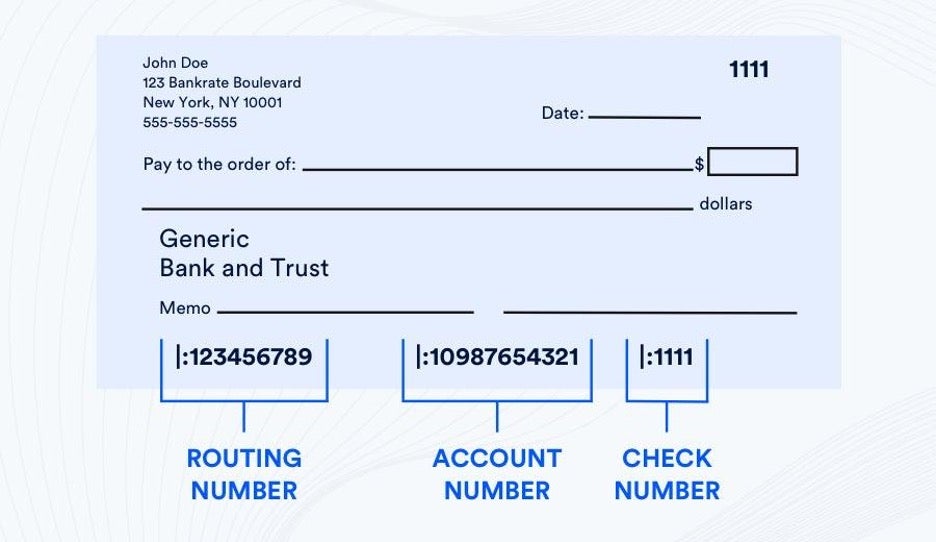
A standard paper check is a carefully designed financial instrument, embedded with specific numerical codes that facilitate its journey through the banking system. These numbers, often printed in a distinctive magnetic ink for machine readability (Magnetic Ink Character Recognition or MICR line), serve distinct purposes, each vital for the accurate processing of your transactions. Understanding these components is the first step in pinpointing your account number and grasping its significance.
The Routing Number: Your Bank’s Unique Identifier
The routing number is typically the first nine-digit number printed on the far left of the MICR line at the bottom of your check. This number is sometimes referred to as an ABA (American Bankers Association) routing number or a routing transit number. Its primary purpose is to identify the financial institution (your bank or credit union) that holds the account from which the funds are being drawn.
Think of the routing number as the postal code for your bank. When you write a check, set up direct deposit, or initiate a wire transfer, this number tells the receiving bank exactly where to send the transaction for processing. Different banks have different routing numbers, and some larger banks may even have multiple routing numbers for different regions or types of transactions. It’s a critical identifier that ensures your funds are directed to the correct financial institution.
The Account Number: Your Personal Financial Address
Nestled typically in the middle section of the MICR line, immediately following the routing number, is your bank account number. This is the star of our discussion. Your account number is a unique string of digits—the length of which can vary between banks (usually 10 to 12 digits, but sometimes more or less)—that specifically identifies your individual checking account at your financial institution.
If the routing number directs funds to the correct bank, the account number acts as the specific street address to your personal or business financial dwelling within that bank. It ensures that any funds deposited or withdrawn are accurately attributed to your specific account, distinguishing it from all other accounts held at the same institution. This number is paramount for any transaction that requires direct interaction with your specific fund balance, making it an incredibly sensitive piece of financial information.
The Check Number: For Your Records
The third and often final set of numbers on the MICR line, usually found on the far right, is the check number. This number serves as a sequential identifier for each individual check within your checkbook. You’ll also typically find this number printed in the top right corner of the check.
The check number is primarily for your personal record-keeping and reconciliation purposes. When you write a check, noting its number in your check register helps you track your expenditures and verify which checks have cleared your bank. It’s also useful for your bank to identify a specific transaction if there’s a discrepancy or inquiry. While important for tracking, the check number is not used for routing funds; its role is purely administrative for both you and your financial institution.
The Critical Role of Your Account Number in Modern Finance
Knowing your account number is not merely an academic exercise; it’s a practical necessity for navigating a wide array of personal and business financial activities. From routine transactions to setting up essential financial services, this unique identifier is frequently requested and utilized.
Setting Up Direct Deposit
Perhaps one of the most common reasons individuals need their account number is for direct deposit. Employers require this number, along with your bank’s routing number, to electronically deposit your paycheck directly into your bank account. Similarly, government agencies use it for direct deposit of benefits like social security, tax refunds, or unemployment compensation. Direct deposit offers convenience, speed, and security, eliminating the need for physical checks and significantly reducing processing times.
Streamlining Bill Payments
Your account number is frequently used to set up automatic bill payments, particularly for larger or recurring expenses like mortgages, car loans, utilities, or insurance premiums. By providing your account and routing numbers to service providers, you authorize them to directly debit your account for due amounts, ensuring timely payments and avoiding late fees. This system simplifies personal finance management and helps maintain a good credit history.
Facilitating Electronic Funds Transfers (EFTs)
Beyond direct deposit and automated bill payments, your account number is central to various other electronic funds transfers (EFTs). This includes initiating or receiving wire transfers for larger sums, making person-to-person payments through certain platforms, or even linking external financial accounts, such as brokerage or investment accounts, for easy fund transfers. The account number acts as the specific destination for these digital movements of money, ensuring accuracy and efficiency.
Account Linking and Verification
In an increasingly interconnected financial ecosystem, your account number is often required to link different financial services. This could involve connecting your bank account to a third-party budgeting app, an online payment platform (like PayPal or Venmo), or a digital wallet. Financial institutions use a verification process, often involving small deposits or withdrawals, to confirm that you are the legitimate owner of the linked account, leveraging your account number for this critical step.
Safeguarding Your Account Number: A Cornerstone of Financial Security
Given its importance in identifying your specific funds, your account number is a sensitive piece of information. Just as you wouldn’t freely share your home address or social security number, protecting your account number is crucial for maintaining your financial security and preventing fraud.
Understanding the Risks of Exposure
If your account number falls into the wrong hands, it could potentially be used for unauthorized transactions. Fraudsters might attempt to create fake checks, initiate unauthorized debits, or even attempt to gain further access to your financial information through phishing scams. While banks have robust fraud detection systems, vigilance on your part is an essential first line of defense against identity theft and financial malfeasance.
Best Practices for Physical Checks
Even in the digital age, handling physical checks responsibly is vital. Store unused checks in a secure location, preferably under lock and key, to prevent theft. When disposing of old checks or statements containing your account number, always shred them thoroughly. Avoid pre-signing checks, and be cautious about whom you provide a blank check to. When mailing checks, ensure mailboxes are secure and try to drop them off directly at a post office rather than leaving them in unsecured residential mailboxes, where they could be intercepted.
Navigating Digital Security
When accessing your account number through online banking or providing it to trusted digital services, prioritize secure practices. Always ensure you are on a secure website (indicated by “https://” in the URL and a padlock icon). Use strong, unique passwords for your online banking accounts and enable two-factor authentication (2FA) whenever possible. Be wary of unsolicited emails or calls asking for your account number; legitimate institutions typically won’t ask for this sensitive information via insecure channels.
What to Do if Your Information is Compromised
Despite all precautions, financial information can sometimes be compromised. If you suspect your account number has been stolen or used fraudulently, act immediately. Contact your bank or credit union without delay to report the potential breach. They can advise you on next steps, which may include closing the compromised account, issuing a new one, or placing fraud alerts. Regularly monitor your bank statements for any suspicious activity, and consider signing up for identity theft protection services.
Beyond the Paper: Alternative Ways to Find Your Account Number
While your check is the most direct source for finding your account number, there are several other reliable methods to retrieve this information, especially if you don’t have a physical checkbook readily available. These alternatives are increasingly relevant as more people manage their finances digitally.
Online Banking Portals
Virtually all modern financial institutions offer comprehensive online banking portals or mobile apps. Once you log in securely, you can typically navigate to your checking account details, where your full account number (often masked for security, requiring an extra click to reveal) will be displayed. The exact location varies by bank, but generally, it’s found under “Account Summary,” “Account Details,” or similar sections. This is often the quickest and most convenient method for many.
Bank Statements
Whether you receive paper statements in the mail or access them electronically through your online banking portal, your account number is almost always printed prominently on your bank statement. It’s usually located near the top of the statement, alongside your name, address, and the routing number. Reviewing past statements is a reliable way to confirm your account number.
Calling Your Bank Directly
If you prefer a more direct approach or are unable to access your online banking, calling your bank’s customer service line is a secure option. After verifying your identity (which will typically involve answering security questions or providing personal details), a representative will be able to provide you with your account number. Be prepared to confirm your identity thoroughly, as banks prioritize security when disclosing such sensitive information over the phone.
Visiting a Branch
For those who prefer face-to-face interaction or need assistance with other banking matters, visiting a local branch is an excellent way to retrieve your account number. A bank teller or customer service representative can provide you with the information after verifying your identity, usually requiring a valid photo ID. This method offers the highest level of personal security and allows for any questions to be answered directly.

Conclusion
Understanding “where on your check is your account number” is far more than just locating a series of digits; it’s about grasping a fundamental aspect of financial literacy and security. Your account number is a powerful identifier, enabling a myriad of personal and business financial transactions, from receiving your paycheck to paying your bills. It bridges the gap between your funds and the systems that manage them, both traditional and digital.
By knowing the anatomy of a check, appreciating the crucial role of each number, and diligently practicing security measures, you empower yourself to manage your finances more effectively and protect your assets from potential threats. Whether you access it from a physical check, through an online portal, or directly from your bank, having a clear understanding of your account number and its implications is an indispensable skill in today’s complex financial world. Always remember: knowing your numbers is the first step towards mastering your money.
aViewFromTheCave is a participant in the Amazon Services LLC Associates Program, an affiliate advertising program designed to provide a means for sites to earn advertising fees by advertising and linking to Amazon.com. Amazon, the Amazon logo, AmazonSupply, and the AmazonSupply logo are trademarks of Amazon.com, Inc. or its affiliates. As an Amazon Associate we earn affiliate commissions from qualifying purchases.