
In an increasingly digital financial world, the physical check might seem like a relic of the past. Yet, for many transactions—from paying rent to receiving payments from certain businesses, or simply as a backup method—checks remain a vital component of personal finance. Understanding the various components of a check, particularly how to locate your account number, is not just about nostalgia; it’s a fundamental aspect of financial literacy and security in managing your money. This article will meticulously dissect the anatomy of a check, guiding you to precisely where your account number resides, and illuminating the significance of other critical details that empower you to manage your finances with confidence and insight.

Deconstructing the Anatomy of a Check
Before diving into the specifics of finding your account number, it’s crucial to understand the entire landscape of a standard check. Each element serves a distinct purpose, contributing to the secure and accurate transfer of funds.
The Visual Layout: Front and Center
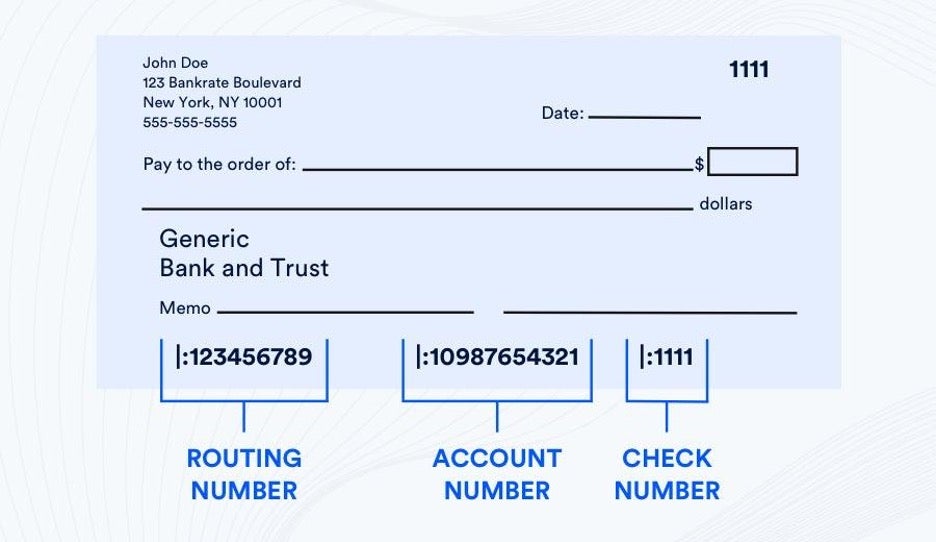
A typical personal check is a meticulously designed document, with various fields for both static information and transaction-specific details. At the top left, you’ll find your name and address, identifying the account holder. Below this, often in the center or top right, is the date line, where you specify when the check is written. The payee line, usually starting with “Pay to the Order of,” is where you write the name of the person or entity receiving the funds. To its right, the amount in numbers box (often preceded by a dollar sign) is for the numerical value of the payment. Immediately below this, the amount in words line provides a written representation of the same value, serving as a safeguard against alterations to the numerical amount. The signature line, typically in the bottom right, is where you authorize the payment. Finally, the memo line in the bottom left is for optional notes, such as “June Rent” or “Utility Bill,” aiding in record-keeping. While these fields are for your input, they are part of the check’s essential structure, facilitating its primary function as a financial instrument.
The Routing and Account Numbers: The MICR Line
The most critical information for the processing of a check is found along its bottom edge, printed in a special, magnetic ink. This is known as the Magnetic Ink Character Recognition (MICR) line. The MICR line contains three distinct sets of numbers, each serving a unique, indispensable function in the journey of your funds from your account to the recipient’s. Understanding these three sets is paramount for anyone managing their personal finances.
From left to right, these numbers typically appear in a standardized sequence:
- The Routing Number (ABA Transit Number): This is a nine-digit code that uniquely identifies your bank or financial institution. It’s like a bank’s street address in the financial system.
- Your Account Number: This is the specific identifier for your individual checking account within that bank.
- The Check Number: This number identifies the specific check document itself, usually matching the smaller check number printed in the top right corner of the check.
These numbers are not just randomly placed; their precise order and magnetic ink enable automated processing, ensuring speed and accuracy in countless financial transactions daily.
Pinpointing Your Account Number
Among the vital numbers on a check, your account number holds a singular importance. It is the direct link to your personal funds, distinguishing your account from the millions of others within the vast banking network.
The Central Identifier
Your account number is the unique numerical code assigned by your bank to your specific checking account. While a routing number identifies the bank, the account number points to your particular financial holding within that institution. It’s the primary way your bank differentiates your money from everyone else’s. This number is a private identifier and should be safeguarded, as it’s the key to initiating transactions involving your funds.
Typical Placement and Format
As identified in the MICR line discussion, your account number is almost always the middle set of numbers printed at the bottom of your check. Its length can vary depending on your bank, but it commonly ranges from 8 to 12 digits. It’s crucial not to confuse it with the routing number (the first set of numbers) or the check number (the last set of numbers). A quick way to confirm you have the correct number is often by comparing it to the account number found on your bank statements or in your online banking portal, which we’ll discuss later. Accuracy here is paramount, as an incorrect account number can lead to failed transactions, delays, or even funds being sent to the wrong destination.
When You Might Need Your Account Number
Understanding where to find your account number is not merely an academic exercise; it has practical implications for managing your personal finances effectively. You’ll frequently encounter situations where this number is required:
- Setting Up Direct Deposit: To have your paycheck, government benefits, or other recurring income deposited directly into your account, your employer or payer will need both your routing and account numbers.
- Automated Bill Payments or Direct Debits: For recurring expenses like mortgages, utilities, or loan payments, you might authorize companies to directly debit your account. This requires providing your account number.
- Linking External Accounts: When connecting your checking account to investment platforms, other bank accounts (for transfers), or third-party financial apps, your account number serves as the primary identifier.
- Wire Transfers: While often requiring additional security measures, both routing and account numbers are fundamental for sending or receiving wire transfers.
- Reordering Checks: To ensure your new checks are linked to the correct account, you’ll need to provide your account number (though often just logging into your bank’s website will suffice).
- International Transactions: For some international transfers, your account number, along with a SWIFT/BIC code, will be necessary.
Beyond the Account Number: Other Essential Check Details
While the account number is a focal point, a check is a tapestry of information, each thread contributing to its functionality and your financial management.
The Routing Number: Your Bank’s Unique ID
The routing number, also known as the ABA (American Bankers Association) Transit Number, is a nine-digit code that acts as a unique identifier for your specific financial institution. It tells other banks where to send money to and from. On the MICR line, it’s the first set of numbers from the left. For any electronic funds transfer (EFT), whether it’s direct deposit, an ACH payment, or a wire transfer, both your routing number and account number are indispensable. If you don’t have a physical check handy, you can usually find your bank’s routing number on their official website, through your online banking portal, or by using the ABA’s official routing number lookup tool. Be aware that some banks have different routing numbers for different states or for different types of transactions (e.g., wire transfers vs. ACH payments), so always double-check.
The Check Number: Keeping Track of Transactions
The check number serves a dual purpose: it identifies the individual physical check document, and it’s crucial for your personal record-keeping. You’ll typically find it in two places: in the top right corner of the check and as the last set of numbers on the MICR line. As you write checks, recording the check number, date, payee, and amount in a check register or spreadsheet allows you to reconcile your bank statements and track your spending accurately. This helps prevent fraud, identify errors, and maintain a clear picture of your cash flow—a cornerstone of effective personal finance.
Your Bank’s Information
At the top of the check, usually under your name and address, you’ll find your bank’s name and logo. Often, the bank’s address is also printed here. This information serves as another layer of identification, confirming which financial institution holds your account. While less frequently needed for routine transactions, it can be useful for direct communication with your branch or for specific legal or financial documentation.
Your Personal Information
Your name and address are prominently displayed in the top left corner of the check. This personal information verifies you as the account holder and is part of the security framework of the check. However, it also highlights the importance of protecting your checks, as this information, coupled with your account details, could potentially be exploited by fraudsters if it falls into the wrong hands. Always ensure your personal information is accurate and up-to-date with your bank.
The Evolving Role of Checks in Modern Personal Finance
In an era dominated by digital payments, the physical check’s role has shifted, yet it remains a relevant financial tool for specific scenarios.
Checks in a Digital Age: Still Relevant?
While electronic transfers via ACH, Zelle, Venmo, and card payments have streamlined many transactions, checks haven’t entirely faded. They are still commonly used for:
- Rent Payments: Many landlords, especially private ones, prefer or require checks.
- Contractors and Small Businesses: For certain services, a physical check might be the preferred method of payment.
- Gifts: A check can be a personal and traditional way to give money.
- Situations Without Digital Access: For individuals or businesses without robust online banking setups, checks offer a reliable alternative.
- Proof of Payment: A cancelled check can serve as clear legal proof of payment.
However, the convenience and speed of digital alternatives often make them more popular. Understanding when and why to use a check, versus a digital payment method, is a key aspect of modern personal finance.
Security Considerations for Checks
The physical nature of checks also introduces specific security risks that users must be aware of:
- Safeguarding Blank Checks: Treat blank checks like cash. Keep them in a secure location to prevent theft and unauthorized use.
- Risk of Fraud: Checks can be vulnerable to fraud, including forgery (someone signing your name), alteration (changing the payee or amount), and check washing (erasing ink to rewrite details).
- Never Sharing Account Numbers Indiscriminately: While your account number is on your check, avoid sharing it over unsecured channels or with unverified parties. Only provide it to trusted entities for legitimate financial transactions.
- Remote Deposit Capture Risks: While convenient, using mobile apps to deposit checks requires you to properly void and destroy the physical check afterward to prevent double-depositing or misuse.
- Importance of Shredding: Old checks, voided checks, and check carbons should always be shredded before disposal to prevent fraudsters from gleaning your sensitive financial information.
Responsible handling of checks is a crucial element of protecting your financial identity and assets.
Financial Tools and Digital Alternatives
Navigating your finances in the 21st century means leveraging a blend of traditional understanding and modern digital tools.
Online Banking Portals
Your bank’s online portal is an invaluable resource for managing your checking account. Here, you can usually find your routing and account numbers without needing a physical check. Most portals offer secure access to:
- Account Statements: Digital statements clearly list your account number and often your bank’s routing number.
- Account Details Section: Many banks have a dedicated “Account Details” or “Summary” section where this information is readily available.
- Transaction History: Reviewing your transactions helps you reconcile your account and spot any unauthorized activity.
- Setting Up Alerts: You can set up alerts for low balances, large transactions, or direct deposits, providing an extra layer of financial oversight.
Mobile Banking Apps
Mobile banking apps have revolutionized convenience, allowing you to manage much of your banking on the go. While you might not always find your full account number displayed for security reasons, these apps often provide:
- Balances and Transaction History: Quick access to your current financial status.
- Mobile Deposit: Conveniently deposit checks by taking a photo.
- Transfers: Easily move money between your own accounts or to others (via services like Zelle).
- Bill Pay: Schedule and execute payments directly from your phone.
- Security Features: Biometric login (fingerprint/face ID) and encryption help keep your financial data secure.

Electronic Fund Transfers (EFTs)
EFTs are the backbone of digital money movement, and understanding them reinforces the importance of your routing and account numbers:
- ACH (Automated Clearing House) Payments: This network facilitates electronic credit and debit transactions, like direct deposit of paychecks, automatic bill payments, and person-to-person transfers. It’s a cost-effective and efficient way to move money, all reliant on accurate routing and account numbers.
- Wire Transfers: Used for larger, time-sensitive, or international transactions, wire transfers move money directly from one bank to another, typically incurring higher fees. These also require precise routing (or SWIFT/BIC) and account numbers.
Grasping the mechanics of these digital financial tools is essential for modern money management, demonstrating how foundational knowledge of check details extends into the digital realm.
In conclusion, while checks may be used less frequently than in decades past, the information they contain—particularly your account number—remains fundamental to personal finance. Understanding where this critical identifier, along with your routing and check numbers, is located empowers you to confidently manage direct deposits, set up bill payments, link accounts, and safeguard your financial information. In a world increasingly reliant on digital transactions, this foundational knowledge acts as a bridge, ensuring you are well-equipped to navigate both traditional and modern financial landscapes with insight and security.
aViewFromTheCave is a participant in the Amazon Services LLC Associates Program, an affiliate advertising program designed to provide a means for sites to earn advertising fees by advertising and linking to Amazon.com. Amazon, the Amazon logo, AmazonSupply, and the AmazonSupply logo are trademarks of Amazon.com, Inc. or its affiliates. As an Amazon Associate we earn affiliate commissions from qualifying purchases.