
In the modern financial landscape, your bank account number is the primary key to your fiscal identity. Whether you are setting up a direct deposit for a new job, authorizing an automated bill payment, or initiating a high-value wire transfer, knowing exactly where to find and how to verify this number is a fundamental skill in personal finance. While it might seem like a simple string of digits, your account number is the cornerstone of the Automated Clearing House (ACH) network and the global banking system.
Understanding how to locate this information quickly and securely is essential for maintaining smooth financial operations. This guide explores the various methods to retrieve your account number, the critical differences between various banking codes, and the best practices for keeping this sensitive data secure.
The Architecture of Banking Identifiers: Account vs. Routing Numbers
Before diving into where to find your account number, it is crucial to understand what it is and, perhaps more importantly, what it is not. In the United States and many other banking jurisdictions, a financial transaction requires two distinct pieces of information: the routing transit number (RTN) and the individual account number.
Understanding the Routing Number
The routing number is a nine-digit code that identifies the specific financial institution. Think of the routing number as the “address” of the bank building. It tells the financial system which bank should receive the money. Every customer at a specific bank (or within a specific region for larger banks) usually shares the same routing number.
The Role of the Account Number
The account number, by contrast, is unique to you. If the routing number is the address of the building, the account number is your specific apartment number within that building. It usually ranges from 8 to 12 digits, though this varies by institution. This number distinguishes your checking account from your savings account, or your account from that of another customer at the same bank.
The Security Aspect of Financial Codes
From a personal finance perspective, your account number is significantly more sensitive than your routing number. While routing numbers are public information easily found on a bank’s website, your account number is private. Access to both your routing and account numbers is often all a bad actor needs to initiate unauthorized ACH withdrawals. Therefore, treating this number with the same level of security as a Social Security number is a hallmark of sound financial management.
Practical Methods to Locate Your Account Number
In an era of omnichannel banking, there are multiple ways to retrieve your account number, ranging from traditional paper-based methods to instantaneous digital access.
Utilizing Personal Checks
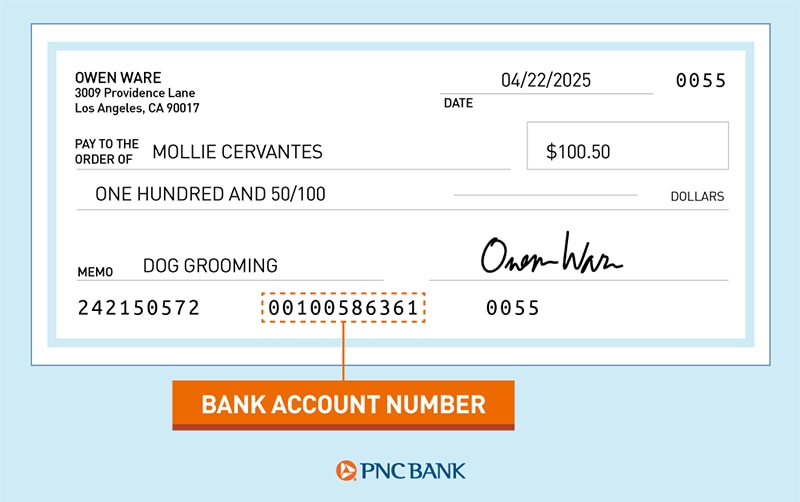
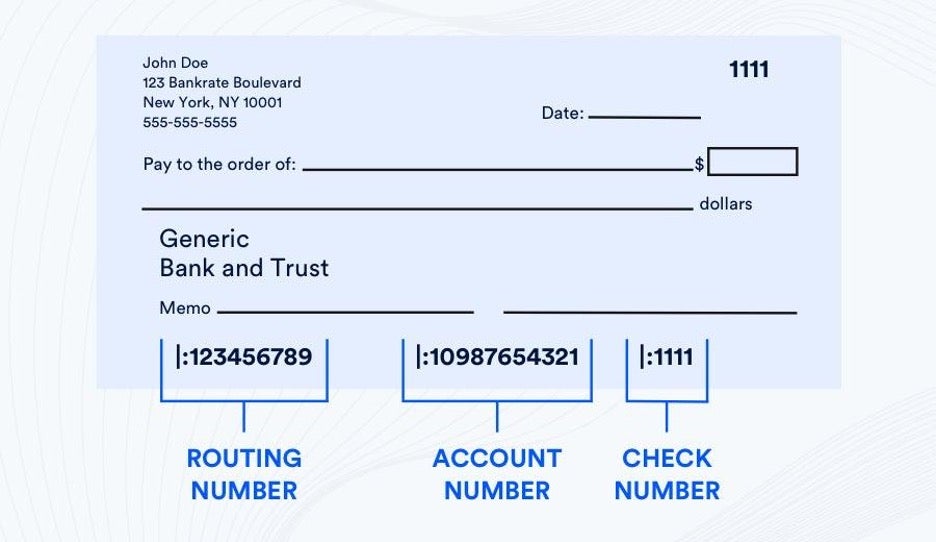
The most traditional method for finding your account number is by looking at a physical check. At the bottom of every check is a string of numbers printed in a special font known as MICR (Magnetic Ink Character Recognition). This line typically contains three sets of numbers:
- The Routing Number: Usually the first nine digits on the left.
- The Account Number: Usually the middle set of numbers.
- The Check Number: Usually the last set of numbers on the right, matching the number in the top-right corner of the check.
Note that some banks may flip the order of the account and check numbers, but the account number is almost always the longest string of digits following the initial nine-digit routing code.
Navigating Online Banking Portals and Mobile Apps
For those who have moved away from physical checks, online banking is the most efficient retrieval method. Upon logging into your bank’s secure portal or mobile application, your accounts are usually listed on a dashboard. However, for security reasons, most banks “mask” the account number, showing only the last four digits (e.g., ****6789).
To find the full number:
- Click on the specific account (Checking or Savings).
- Look for a link or tab labeled “Account Details,” “Details,” or “Settings.”
- You may need to click an “eye” icon or a “Show” button to unmask the full number. Many apps require a secondary biometric scan (FaceID or fingerprint) or a one-time passcode (OTP) before revealing these digits.
Reviewing Monthly Bank Statements
Your monthly statement is a legal document that contains a comprehensive summary of your financial activity. It also explicitly lists your full account number. Whether you receive your statements via physical mail or as a PDF “e-Statement” through your online portal, the account number is typically located at the top of the first page, often near your name and address. This is often the most reliable source if you need to provide proof of account ownership for a mortgage application or a business contract.

Finding Account Numbers Across Different Financial Assets
While checking and savings accounts are the most common focus, you may need to find account numbers for other types of financial vehicles to manage your broader portfolio.
Brokerage and Investment Accounts
Finding your account number for a brokerage account (like those held at Vanguard, Fidelity, or Charles Schwab) follows a similar logic to bank accounts but with slight UI differences. Because brokerage accounts often handle high-value trades and transfers, the account numbers are usually prominently displayed on your “Positions” or “Account Summary” page. These numbers are vital when performing an ACATS (Automated Customer Account Transfer Service) transfer to move assets between firms.
Credit Card Account Numbers vs. Card Numbers
A common point of confusion in personal finance is the difference between the 16-digit number on your physical credit card and your internal “credit card account number.” In many cases, these numbers are identical. However, if your card is lost or stolen and a replacement is issued, your card number will change, but your underlying account history remains the same. When setting up “Bill Pay” from your bank to pay your credit card, you should always use the number printed on your most recent statement to ensure the payment is credited correctly.
Retirement and Savings Vehicles
For 401(k) plans or IRAs, the account number is often referred to as a “Plan Number” or “Participant ID.” These are found on your quarterly benefit statements. If you are rolling over a 401(k) into an IRA, having the correct plan account number is essential to ensure the funds are moved as a direct rollover, avoiding unintended tax penalties and withholdings.
Troubleshooting: What to Do If You Can’t Find Your Number
Occasionally, digital tools fail, or physical documents are misplaced. In these instances, there are professional protocols to follow to retrieve your information without compromising security.
Contacting Customer Support Safely
If you cannot find your account number through digital or physical means, calling the bank’s customer service line is a viable option. However, be prepared for a rigorous identity verification process. A bank representative will never ask for your password, but they will likely ask for your Social Security number, date of birth, and details about recent transactions (e.g., “What was the approximate amount of your last deposit?”).
In-Branch Verification
For the highest level of security, visiting a physical branch with a government-issued photo ID (such as a driver’s license or passport) is the most foolproof method. A personal banker can print an “Account Verification Letter” or a “Direct Deposit Authorization Form” that contains your routing and account numbers officially. This is often required by employers who need a “voided check” that you may not have.
Dealing with “Invisible” Accounts
In some fintech apps or “neobanks,” the account number may not be readily apparent because the app uses a different backend structure. In these cases, look for a “Direct Deposit” section in the app settings; this area almost always generates a standardized form containing the necessary numbers for external transfers.
Best Practices for Financial Security and Information Management
Once you have located your account number, the focus shifts to stewardship. Managing this information responsibly is a key component of financial literacy and identity protection.
Safe Storage Solutions
Never store your bank account numbers in unencrypted files on your computer or in a plain text note on your phone. If you must keep a digital record, use a reputable password manager that offers encrypted “Secure Notes.” Password managers use AES-256 encryption, making it nearly impossible for hackers to access your data even if they breach your device.
The Dangers of Phishing
Be wary of any email or text message asking for your account number. Legitimate financial institutions will never reach out via an unsolicited message to ask for your full account number or login credentials. Always navigate directly to the bank’s official website by typing the URL into your browser rather than clicking a link in an email.
Monitoring and Masking
Many modern financial tools allow you to use “virtual account numbers” or third-party aggregators like Plaid to link accounts without manually entering your account and routing numbers into every new app. Utilizing these services adds a layer of abstraction that protects your actual account number from being stored on multiple, potentially less-secure servers.
In conclusion, your bank account number is a vital piece of your financial infrastructure. By understanding how to locate it through checks, statements, and digital portals—and by recognizing its unique role alongside routing numbers—you empower yourself to navigate the world of personal finance with confidence and security. Treat this number with the respect it deserves, and you will ensure that your financial “address” remains both accessible to you and protected from others.
aViewFromTheCave is a participant in the Amazon Services LLC Associates Program, an affiliate advertising program designed to provide a means for sites to earn advertising fees by advertising and linking to Amazon.com. Amazon, the Amazon logo, AmazonSupply, and the AmazonSupply logo are trademarks of Amazon.com, Inc. or its affiliates. As an Amazon Associate we earn affiliate commissions from qualifying purchases.