
For many households and small business owners, the annual decision to renew or initiate a Costco membership is more than just a grocery choice; it is a calculated financial move. In an era of fluctuating inflation and rising consumer costs, understanding the specific price points and the underlying value proposition of a warehouse club is essential for sound personal finance management.
As of September 1, 2024, Costco implemented its first membership fee increase in over seven years. This shift has led many to re-evaluate whether the upfront cost aligns with their annual spending habits. This guide explores the current pricing structure, the mathematical “break-even” points for each tier, and strategic ways to ensure your membership acts as a high-yield asset in your financial portfolio.

Understanding the Costco Membership Tiers: Costs and Core Features
Costco operates on a tiered membership model designed to cater to different levels of consumer spending and business needs. Choosing the right tier is the first step in optimizing your household budget.
The Gold Star Membership: The Entry-Point for Household Savings
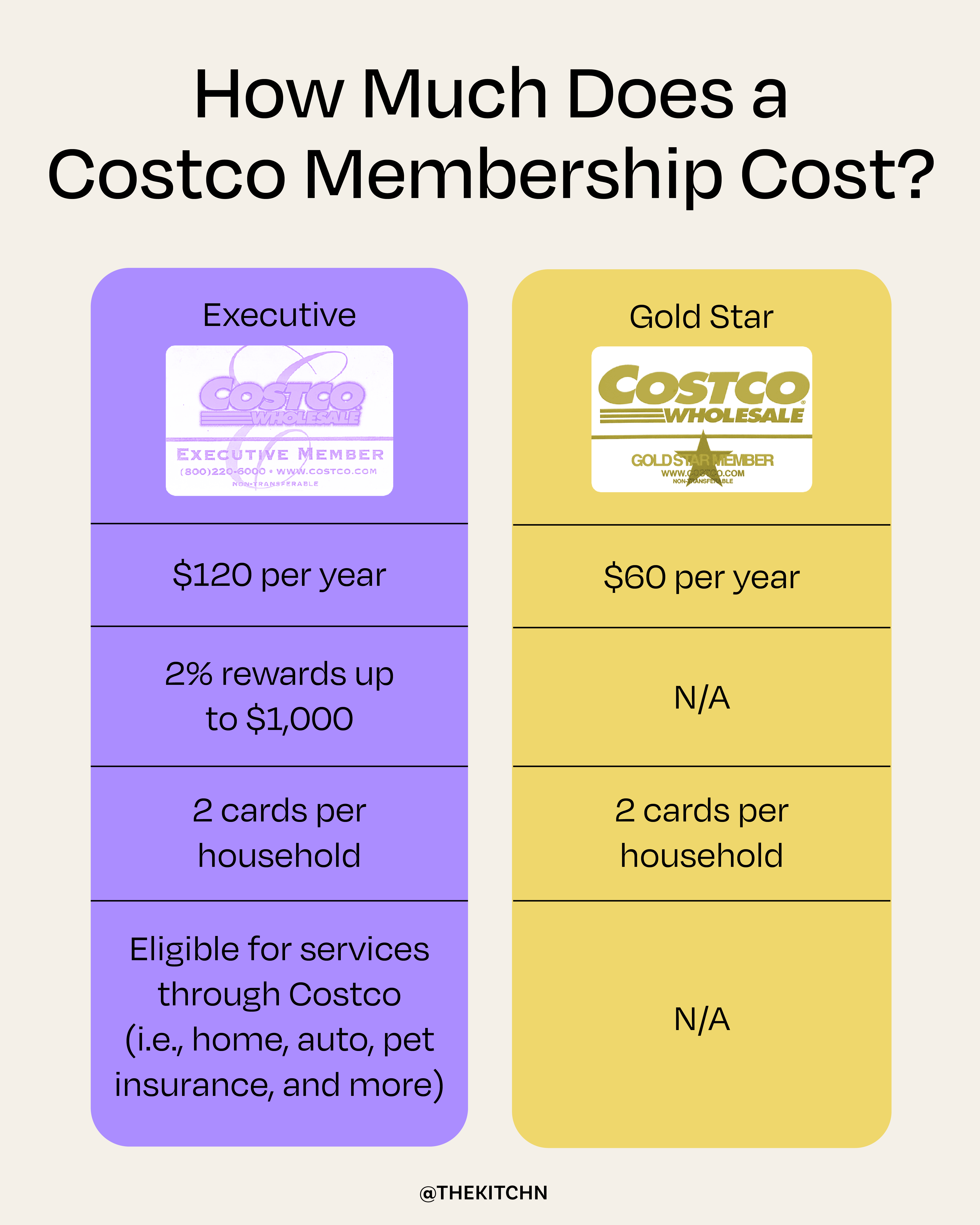
The Gold Star Membership is the standard individual tier, currently priced at $65 per year (up from the previous $60). This tier is designed for individuals and families who want access to Costco’s bulk pricing, Kirkland Signature products, and specialty services like the pharmacy, optical center, and gas stations.
While it lacks a cash-back component, the financial benefit of a Gold Star membership is found in the “unit price” savings. By purchasing non-perishables, household staples, and high-quality proteins in bulk, members can often reduce their monthly grocery expenditures by 10% to 20% compared to traditional supermarkets.
The Executive Membership: Investing in Long-Term Returns
The Executive Membership is the premium tier, now priced at $130 per year ($65 for the base membership plus a $65 upgrade fee). While the triple-digit price tag can be intimidating, the Executive level is essentially a financial investment.
The primary feature of this tier is the annual 2% Reward on qualified Costco purchases. For high-spending households, this reward can not only cover the cost of the upgrade but potentially pay for the entire membership itself. Additionally, Executive members receive greater discounts on Costco Services, such as check printing, identity protection, and travel packages.
The Business Membership: Scaling Solutions for Small Enterprises
Priced identically to the Gold Star level at $65 per year, the Business Membership is available to individuals who own or operate a business. From a business finance perspective, this tier is invaluable because it allows for the purchase of goods for resale and provides the ability to add “Affiliate” members for an additional fee.
Business members must provide resale certificates or other professional documentation, but the ability to source office supplies, breakroom snacks, and even commercial-grade equipment at wholesale prices can significantly lower a company’s overhead costs.
The Math of Membership: Is the Annual Fee a Sound Financial Investment?
To determine if a Costco membership is “worth it,” one must move beyond the sticker price and look at the internal rate of return on the annual fee.
Calculating the Break-Even Point for Executive Members
For those considering the $130 Executive Membership, the “break-even” math is straightforward. To recoup the $65 upgrade fee through the 2% reward, a member needs to spend $3,250 annually at Costco (approximately $271 per month).
If your household spends more than $542 per month ($6,500 per year) at Costco, the 2% reward will reach $130, effectively making your membership free. For large families or those making significant one-time purchases (like appliances or electronics), the Executive tier is almost always the more fiscally responsible choice.
Hidden Savings: Gas, Pharmacy, and Optical Services
When calculating the value of the membership, many overlook the “ancillary” services. Costco Gasoline is frequently priced 10 to 30 cents lower per gallon than nearby competitors. For a commuter filling up a 15-gallon tank once a week, the savings on fuel alone can exceed $150 per year—more than covering the cost of even an Executive membership.
Similarly, the Costco Pharmacy and Optical departments often offer the lowest prices in the industry for generic prescriptions and high-quality lenses. For individuals without robust private insurance, these savings represent a vital component of a personal health finance strategy.
Opportunity Cost: Costco vs. Standard Grocery Chains
A rigorous financial analysis must also consider opportunity cost. Shopping at Costco requires a larger “upfront” cash outlay because of bulk packaging. However, the reduction in the number of trips to the store saves on fuel and, more importantly, reduces “impulse buy” opportunities associated with frequent visits to traditional retailers. By consolidating shopping into one or two monthly trips, consumers can better manage their cash flow and adhere to a strict grocery budget.
Strategic Spending: Maximizing Your Return on Investment (ROI)
Simply having a card is not enough; to truly leverage Costco as a financial tool, one must utilize the ecosystem of rewards and services available to members.
Utilizing the 2% Reward Program Effectively
The 2% Reward is capped at $1,250 annually, which corresponds to a spend of $62,500. While few households reach that limit, the key to maximizing this return is to funnel all major life purchases through Costco. Buying a new MacBook, a set of Bridgestone tires, or a living room sofa at Costco ensures that you are capturing that 2% return on high-ticket items that you would have purchased elsewhere anyway.
Costco Services: Insurance, Auto, and Travel Portfolios
Costco’s “Services” division is one of the most underutilized perks of membership. Through partnerships, Costco offers competitive rates on:
- Term Life Insurance: Often lower premiums for members.
- Auto & Home Insurance: Members report significant savings when switching through the Costco portal.
- Costco Travel: The value found in Costco Travel packages—which often include rental cars, resort credits, and airport transfers—can save a family thousands of dollars on a single vacation, providing an ROI that dwarfs the annual membership fee.
The Costco Anywhere Visa® Card: Boosting Your Cashback
To maximize the “Money” aspect of a membership, many financial experts recommend the Costco Anywhere Visa® Card by Citi. This card carries no annual fee (provided you have a paid membership) and offers:
- 4% back on gas (up to $7,000 per year).
- 3% back on restaurants and eligible travel.
- 2% back on all Costco purchases.
- 1% back on everything else.
By stacking the 2% Executive Reward with the 2% back from the Visa card, members effectively receive 4% back on every dollar spent at Costco, a return rate that rivals some of the best high-yield savings accounts or dividend stocks.
Comparative Market Analysis: Costco vs. The Competition
A sound financial strategy requires shopping the market. How does Costco’s pricing stack up against its main rivals, Sam’s Club and BJ’s Wholesale?
Membership Cost Comparison: Sam’s Club and BJ’s
Currently, Sam’s Club offers a base membership for $50 and a “Plus” membership for $110. BJ’s Wholesale Club follows a similar structure, with fees around $55 and $110 respectively. While Costco is now the most expensive of the three at $65/$130, the financial justification for the premium lies in product curation and quality control.
Quality vs. Quantity: The Unit Price Advantage
Costco’s private label, Kirkland Signature, is legendary in the retail world for maintaining quality that often exceeds national brands while priced significantly lower. From a budgetary perspective, buying a “premium” product at a “wholesale” price is a more effective use of capital than buying a “budget” product that may need to be replaced sooner or offers less utility.
Financial Best Practices for Costco Shoppers
To ensure that a Costco membership remains a benefit rather than a burden on your personal finances, certain habits should be maintained.
Avoiding the “Bulk Buy” Trap: Managing Cash Flow
The biggest risk to a Costco member’s budget is the “bulk buy” trap—purchasing items simply because they are a bargain, even if they won’t be consumed before they expire. Financially, a 40% discount on a gallon of mayonnaise is a 100% loss if half of it is thrown away. Successful Costco shoppers treat their trips like a business procurement process: use a list, stick to a budget, and focus on items with long shelf lives or high consumption rates.

Refund Policies and Risk Mitigation
One of the strongest financial protections Costco offers is its “Risk-Free 100% Satisfaction Guarantee.” This applies to both the membership itself and the products sold. If at any point you feel the membership is not providing value, Costco will refund the fee in full. This eliminates the financial risk of “testing” the warehouse model for a year. Furthermore, their generous electronics and general merchandise return policies act as a form of consumer insurance, protecting your hard-earned money from defective or unsatisfactory products.
In conclusion, while the cost of a Costco membership has risen, the potential for significant financial gain remains high for the disciplined consumer. By choosing the correct tier, leveraging cashback rewards, and utilizing ancillary services like gas and travel, the annual fee becomes a small entry price for a powerful suite of financial savings tools.
aViewFromTheCave is a participant in the Amazon Services LLC Associates Program, an affiliate advertising program designed to provide a means for sites to earn advertising fees by advertising and linking to Amazon.com. Amazon, the Amazon logo, AmazonSupply, and the AmazonSupply logo are trademarks of Amazon.com, Inc. or its affiliates. As an Amazon Associate we earn affiliate commissions from qualifying purchases.