
In the landscape of American retail, few names command as much respect from both consumers and Wall Street analysts as Costco Wholesale Corporation. To the casual shopper, Costco is a destination for bulk groceries and a legendary $1.50 hot dog combo. However, to the astute investor and business professional, the number of Costco stores in the U.S. is a vital metric that signals the health of the broader economy, the resilience of the subscription-based business model, and the company’s strategic approach to domestic expansion.
As of early 2024, Costco operates approximately 600 warehouses in the United States and Puerto Rico. This figure represents roughly 70% of its global footprint, which totals over 870 locations. While the raw number is impressive, the financial narrative behind these storefronts is even more compelling. The distribution of these stores, the revenue generated per square foot, and the company’s disciplined approach to real estate are masterclasses in business finance.
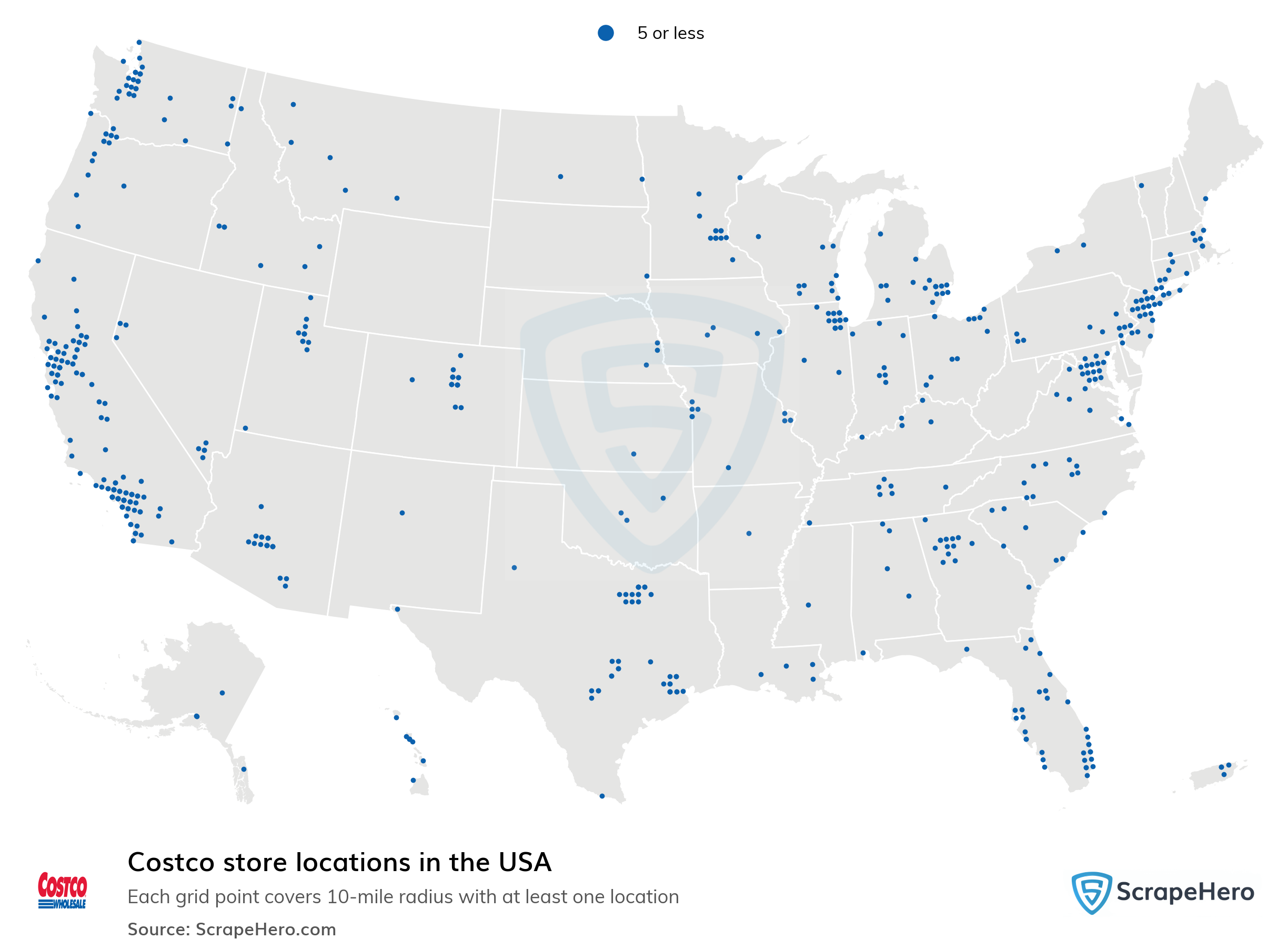
The Quantitative Landscape: Assessing the Store Count and Regional Dominance
The number of Costco stores in the U.S. is not just a statistic; it is a map of American economic power. Costco’s expansion strategy is notoriously selective, focusing on high-income demographics and regions with robust population growth. This selective “scarcity” model ensures that each new warehouse is a high-performing asset from day one.
The Latest Store Count and Regional Distribution
Of the 600 locations currently operating in the U.S., the distribution is heavily skewed toward high-population coastal states and burgeoning Sun Belt metros. California remains the company’s largest domestic market, housing over 130 warehouses. This is followed by Texas, Florida, and Washington state.
From a business finance perspective, this concentration is intentional. By clustering warehouses in affluent regions, Costco maximizes its supply chain efficiency. A distribution center in California can service dozens of warehouses within a tight radius, significantly lowering the logistics costs that plague traditional retailers. For investors, this regional density translates into higher operating margins and a faster return on invested capital (ROIC) for each new location opened.
How Store Density Correlates with Demographic Wealth
Costco does not simply “open stores”; it harvests demographics. The typical Costco member has an average household income exceeding $100,000—well above the national average. When analyzing why there are only 600 stores in a country of 330 million people, the answer lies in the company’s “Money” philosophy: quality of membership over quantity of locations.
By maintaining a lower store-to-population ratio than competitors like Walmart or Target, Costco creates a “destination” effect. This ensures that the foot traffic per store remains extraordinarily high. In financial terms, this results in Costco generating significantly more revenue per square foot than almost any other major retailer. This high density of affluent shoppers allows the company to turn its inventory over 12 to 13 times a year, which is a gold standard in retail finance.
The Economics of the Warehouse Model: Why Store Count Matters to Investors
To understand the financial weight of the 600 U.S. stores, one must look past the physical goods and into the membership-based revenue model. Unlike traditional retail, where profit is derived from the “markup” on products, Costco’s bottom line is almost entirely fueled by annual membership fees.
The Membership Fee Engine
In the most recent fiscal years, Costco’s membership fees accounted for roughly 75% to 80% of its total net income. This is the “secret sauce” of their financial model. With roughly 128 million cardholders globally, a significant portion of whom are tied to those 600 U.S. locations, the company enjoys a predictable, recurring revenue stream.
For the investor, the number of stores acts as a lead indicator for membership growth. Every time a new warehouse opens in a U.S. suburb, it represents a “land grab” of 50,000 to 70,000 new paid memberships. Because these fees are paid upfront and have a renewal rate of over 92% in the U.S. and Canada, they provide a massive cash float that the company can use to fund further expansion without taking on significant debt.
Low Margins vs. High Volume: The Financial Balancing Act
The physical stores are essentially “loss leaders” or break-even operations designed to provide value to the member. Costco famously caps its markup on name-brand goods at 14% and its Kirkland Signature private label at 15%. In comparison, traditional supermarkets and department stores often mark up goods by 25% to 50%.
This low-margin strategy is only sustainable because of the massive volume moved through those 600 locations. The business finance logic is simple: keep prices so low that members feel they “earn back” their membership fee in savings, ensuring they renew the following year. This creates a virtuous cycle of loyalty and capital efficiency that is incredibly difficult for competitors to replicate.

Expansion Strategy: Forecasting Future Growth and Market Saturation
A common question among financial analysts is whether Costco is nearing saturation in the United States. With 600 stores already established in the choice markets, where does the next phase of growth come from? The company’s conservative growth rate—usually adding 20 to 30 net new warehouses globally per year—suggests they are prioritizing long-term stability over short-term spikes.
Domestic Growth Levers: The “Business Center” Pivot
While the traditional warehouse model is the flagship, Costco is increasingly looking toward “Costco Business Centers” to expand its U.S. footprint. These locations are specifically designed to serve small businesses, restaurants, and convenience stores, carrying items not found in regular warehouses.
From a business finance standpoint, Business Centers are a brilliant way to increase store count in markets that might already have a standard warehouse. They tap into a different segment of capital: B2B (business-to-business) spending. By diversifying the types of stores in the U.S., Costco can continue to grow its domestic footprint without cannibalizing its existing consumer base.
Assessing the Risk of Cannibalization in Saturated Markets
Cannibalization occurs when a new store opens so close to an existing one that it steals its customers rather than finding new ones. Costco’s management is famously cautious about this. They use advanced data analytics to track member zip codes and spending habits before approving a new site.
However, in many high-density areas, Costco actually embraces a degree of cannibalization to relieve pressure on overcrowded stores. If a warehouse in Seattle or San Diego is doing $300 million in annual sales (well above the company average), opening a second location nearby might “steal” 20% of its business, but it improves the member experience by reducing wait times and parking frustration. This protectively guards the 92% renewal rate, which is the company’s most valuable financial asset.
Costco as a Stock Asset: Evaluating the ROI of Physical Expansion
When evaluating Costco (NASDAQ: COST) as an investment, the U.S. store count is a primary driver of the company’s valuation. The market rewards Costco with a premium Price-to-Earnings (P/E) ratio because of its consistent execution and the “moat” created by its physical infrastructure.
Comparing Revenue Per Square Foot to Competitors
To understand the financial efficiency of these 600 stores, one should compare them to their nearest rival, Sam’s Club (owned by Walmart). While Sam’s Club has a similar number of locations in the U.S., Costco consistently generates significantly higher revenue per warehouse.
On average, a single Costco warehouse generates over $250 million in annual sales. Some high-performing locations exceed $400 million. This level of productivity per square foot allows Costco to pay higher wages and offer better benefits than its competitors while still maintaining a healthy balance sheet. For the business-minded observer, this is a clear indication of superior operational finance.
Dividend Growth and Long-Term Capital Appreciation
The cash generated by these 600 stores doesn’t just go into opening new ones. Costco has a history of being exceptionally shareholder-friendly. Beyond its regular quarterly dividend, the company is known for its “Special Dividends”—large, one-time cash payments to shareholders. In late 2023, the company announced a $15 per share special dividend, fueled by the massive cash reserves generated by its domestic operations.
This ability to return capital to shareholders while simultaneously funding a multi-billion dollar expansion plan is a testament to the strength of the warehouse model. As long as the U.S. store count continues its slow and steady climb, the company’s ability to generate “excess” cash remains robust.

Conclusion: The Financial Significance of 600 Stores
The question “how many Costco stores are there in the U.S.” is more than a query about geography; it is a query about the scale of a financial juggernaut. With approximately 600 locations, Costco has managed to capture the spending power of the American upper-middle class, turning the act of bulk shopping into a high-margin, recurring revenue business.
For the personal finance enthusiast or the professional investor, these stores represent a fortress of stability. Each warehouse is a hub of high-velocity commerce, backed by a membership model that defies traditional retail gravity. As Costco continues to strategically dot the American map with new locations, it reinforces its position not just as a retailer, but as one of the most efficient cash-flow engines in the history of modern business. The expansion is far from over, but the discipline with which it is handled ensures that each new store is a calculated contribution to an already formidable bottom line.
aViewFromTheCave is a participant in the Amazon Services LLC Associates Program, an affiliate advertising program designed to provide a means for sites to earn advertising fees by advertising and linking to Amazon.com. Amazon, the Amazon logo, AmazonSupply, and the AmazonSupply logo are trademarks of Amazon.com, Inc. or its affiliates. As an Amazon Associate we earn affiliate commissions from qualifying purchases.