
In the realm of finance, numbers are the language of success, but percentages are the grammar that gives those numbers meaning. Whether you are analyzing a stock portfolio, managing a corporate budget, or calculating the interest on a high-yield savings account, understanding how to find the percentage of something is perhaps the most fundamental skill a professional can possess.
At its core, a percentage is a way to express a number as a fraction of 100. However, in a financial context, it represents much more: it is a measure of efficiency, growth, risk, and value. This guide will walk you through the essential methodologies for calculating percentages within the “Money” niche, moving from basic formulas to complex financial metrics that drive global markets.

The Fundamentals of Financial Percentages
Before diving into complex ROI calculations or debt-to-equity ratios, one must master the basic mechanics of percentage calculation. In finance, accuracy is not just a preference; it is a requirement. A misplaced decimal point in a percentage calculation can lead to significant fiscal discrepancies.
The Basic Formula and Its Financial Context
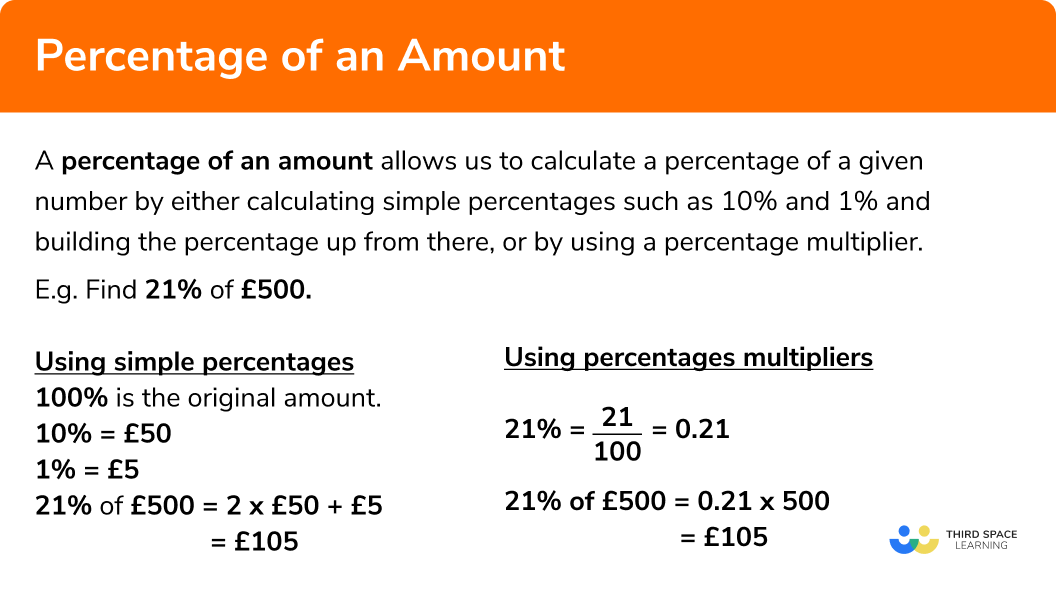
To find the percentage of a specific value relative to a total, the formula is:
(Part / Whole) × 100 = Percentage
In a personal finance setting, imagine you want to determine what percentage of your $5,000 monthly income is being spent on housing ($1,500). By dividing 1,500 by 5,000, you get 0.3. Multiplying by 100 results in 30%. This simple calculation allows an individual to benchmark their spending against financial standards, such as the common recommendation that housing costs should not exceed 30% of gross income.
Percentage Increase and Decrease
In the world of investing, we rarely look at static numbers. We look at movement. Understanding the percentage change is vital for tracking market volatility or portfolio growth. The formula for percentage change is:
[(New Value – Old Value) / Old Value] × 100
If a share of stock rises from $150 to $180, the “New Value” minus the “Old Value” is $30. Dividing that $30 by the original $150 gives you 0.2, or a 20% increase. Conversely, if the stock drops, the resulting negative number indicates a percentage loss. Professional investors use these figures to set “stop-loss” orders and “take-profit” targets.
Calculating Returns and Growth
Once you have mastered the basic arithmetic, you must apply these percentages to evaluate the performance of capital. In the “Money” niche, the two most critical percentage-based metrics are Return on Investment (ROI) and Compound Annual Growth Rate (CAGR).
Measuring Success with Return on Investment (ROI)
ROI is the ultimate barometer for any financial endeavor. It answers the fundamental question: “For every dollar I put in, how much did I get back?” To calculate the ROI percentage, you take the net profit from an investment, divide it by the original cost, and multiply by 100.
For instance, if a business owner invests $10,000 into a marketing campaign and generates $15,000 in additional sales, the net profit is $5,000. The ROI is ($5,000 / $10,000) × 100, which equals 50%. In high-stakes venture capital or private equity, ROI percentages are the primary data points used to justify further funding or exits.
The Power of Compound Annual Growth Rate (CAGR)
While simple percentage growth is useful for short-term analysis, long-term investing requires a more nuanced approach. CAGR provides a constant rate of return over a specific time period, smoothing out the “noise” of annual fluctuations. It is calculated by taking the nth root of the total percentage growth, where ‘n’ is the number of years.
Understanding CAGR is essential for retirement planning. If a retirement fund grows from $100,000 to $250,000 over ten years, the total growth is 150%, but the CAGR—the steady annual percentage required to reach that goal—is approximately 9.6%. This allows investors to compare the performance of different asset classes, such as real estate versus the S&P 500, over identical time horizons.
Understanding Percentages in Business Operations
For entrepreneurs and corporate executives, percentages are the tools used to diagnose the health of a company. Revenue figures are often “vanity metrics,” whereas percentage margins reveal the actual viability of the business model.

Gross and Net Profit Margins
A company might generate millions in revenue, but if its margins are thin, it remains in a precarious position. The Gross Profit Margin is calculated by subtracting the Cost of Goods Sold (COGS) from Total Revenue, then dividing that result by the Total Revenue.
(Revenue – COGS) / Revenue × 100 = Gross Margin %
This percentage tells a business how efficiently it is producing its core product. Following this, the Net Profit Margin takes into account all other expenses—taxes, interest, and operating costs. A high net profit margin percentage indicates a “moat” or a competitive advantage, allowing the business to weather economic downturns more effectively than competitors with lower margins.
Tax Implications and VAT Calculations
In both corporate and personal finance, calculating the percentage of tax owed is a non-negotiable task. Whether dealing with corporate income tax or Value Added Tax (VAT), the math remains consistent. To find the tax amount on a purchase or income bracket:
Total Amount × Tax Rate (as a decimal) = Tax Owed
In many jurisdictions, businesses must also calculate “tax-inclusive” and “tax-exclusive” prices. If a product costs $120 including a 20% tax, finding the original price requires dividing the total by 1.20 (the base of 1 + the tax rate). This reveals the pre-tax price of $100. Mastering these nuances ensures compliance and prevents costly audits.
Personal Finance and Portfolio Allocation
On an individual level, percentages are the building blocks of a sound financial plan. They help in moving away from arbitrary dollar amounts and toward a scalable strategy that grows alongside your income.
Debt-to-Income (DTI) Ratios
Lenders use the DTI percentage to determine your creditworthiness. This is the percentage of your gross monthly income that goes toward paying debts.
(Total Monthly Debt Payments / Gross Monthly Income) × 100 = DTI %
Financial institutions typically look for a DTI of 36% or less. If your DTI climbs toward 50%, you are considered “overleveraged,” and the percentage of your income available for investing or emergency savings becomes dangerously low. Monitoring this percentage is the first step toward achieving debt freedom.
The 50/30/20 Budgeting Rule
One of the most popular personal finance frameworks is the 50/30/20 rule, which dictates how to allocate your after-tax income:
- 50% to Needs: Housing, groceries, utilities, and insurance.
- 30% to Wants: Dining out, hobbies, and travel.
- 20% to Financial Goals: Debt repayment, emergency funds, and retirement accounts.
By viewing a budget through the lens of percentages rather than fixed dollar amounts, the strategy remains valid whether you are earning $40,000 a year or $400,000. It allows for a balanced lifestyle while ensuring that a consistent percentage of wealth is being built over time.
Advanced Financial Modeling and Digital Tools
While mental math is a valuable skill, professional financial analysis often requires the precision of digital tools. Modern software has transformed how we calculate and visualize percentages in complex datasets.
Leveraging Excel and Google Sheets
In spreadsheet software, calculating percentages is automated through specific cell formatting. To find a percentage in Excel, you simply divide one cell by another and click the “Percent Style” button. However, the true power lies in “Percentage of Total” and “Year-over-Year (YoY)” formulas used in financial modeling.
Professional analysts use these tools to perform “Sensitivity Analysis.” By changing a single percentage—such as a projected interest rate or a churn rate—they can see how it cascades through a 10-year financial projection. This “what-if” modeling is crucial for risk management and strategic planning.
Yields and Interest Rates in a Digital Economy
In the modern era of FinTech and decentralized finance (DeFi), percentages are often expressed as APY (Annual Percentage Yield) or APR (Annual Percentage Rate). The difference between the two lies in compounding.
- APR is the simple interest rate over a year.
- APY reflects the real rate of return by taking into account the effect of compounding interest.
When you see an investment offering a 5% APY, the calculation accounts for the fact that the interest earned each month (or day) starts earning its own interest. For anyone looking to maximize their “Money,” understanding the math behind compounding percentages is the closest thing to a financial superpower. It is the mechanism by which small, consistent contributions grow into substantial wealth over decades.
In conclusion, finding the percentage of something is not merely a middle-school math exercise; it is the fundamental framework of the financial world. From the micro-calculations of a household budget to the macro-analysis of corporate margins and investment yields, percentages provide the clarity needed to make informed, professional decisions. By mastering these formulas and understanding their applications, you gain the ability to navigate the complexities of money with confidence and precision.
aViewFromTheCave is a participant in the Amazon Services LLC Associates Program, an affiliate advertising program designed to provide a means for sites to earn advertising fees by advertising and linking to Amazon.com. Amazon, the Amazon logo, AmazonSupply, and the AmazonSupply logo are trademarks of Amazon.com, Inc. or its affiliates. As an Amazon Associate we earn affiliate commissions from qualifying purchases.