
The landscape of personal finance has undergone a seismic shift over the last decade. The transition from physical leather wallets to digital ecosystems has redefined how we perceive liquidity, speed, and accessibility. At the forefront of this revolution is Cash App, a financial services platform that has evolved from a simple peer-to-peer (P2P) payment tool into a comprehensive hub for banking, investing, and wealth management.
Understanding how to effectively “add” to your Cash App ecosystem—whether that means depositing physical currency, linking traditional banking rails, or diversifying into digital assets—is the first step in mastering modern financial management. This guide explores the strategic nuances of funding your account and leveraging the platform to optimize your personal economy.
1. The Strategic Foundations of Digital Liquidity
Before diving into the technical steps of adding funds, it is essential to understand why a centralized digital wallet is a cornerstone of modern personal finance. In an era where traditional banking can often feel bogged down by “settlement periods” and “business days,” Cash App offers a layer of immediacy that allows for agile financial decision-making.
The Shift Toward Peer-to-Peer Financial Management
The traditional banking model often acts as a silo. Money goes in via a paycheck and stays there until a bill is paid. However, the modern gig economy and the rise of freelance culture demand a more fluid approach. By adding funds to a digital wallet like Cash App, you are essentially creating a “hot” pool of capital that is ready for instant deployment—whether for splitting a dinner bill, paying a contractor, or seizing a market dip in the stock or crypto sectors.
Why Liquidity Management Matters
Liquidity refers to how quickly you can convert an asset into spendable cash. For many, the “Add Cash” feature on an app isn’t just a technical necessity; it is a tactical move. Maintaining a balance within the Cash App ecosystem allows you to bypass the 1–3 day delay typically associated with ACH transfers from legacy banks. This ensures that your money is working for you the moment you need it.
2. Essential Methods for Adding Money to Your Cash App Balance
To use Cash App as a primary financial tool, you must first bridge the gap between your existing assets and the platform. There are three primary “rails” through which you can add value to your account: digital banking links, physical cash deposits, and direct income streams.
Linking Your Traditional Bank Account and Debit Card
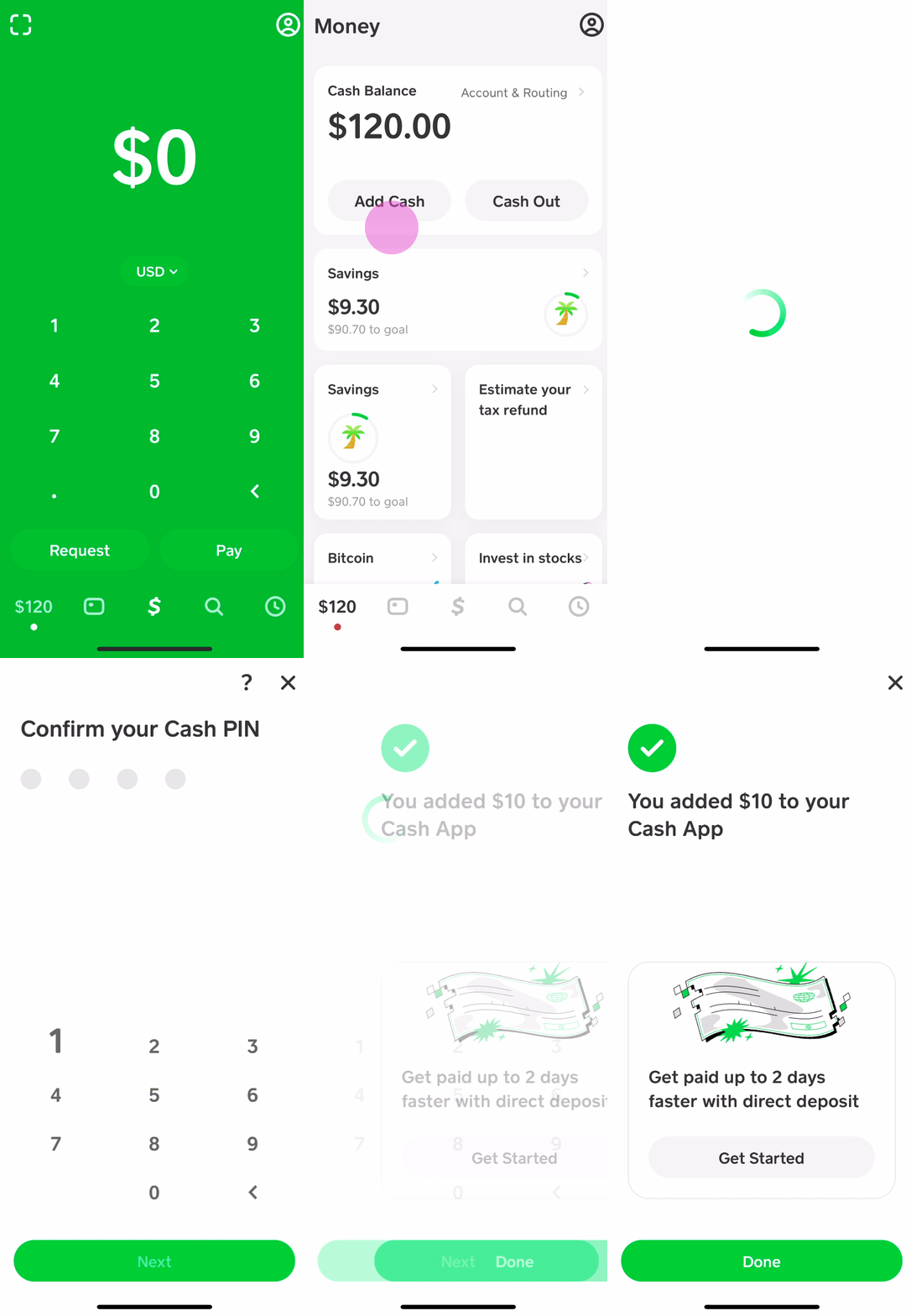
The most common way to add funds is by linking a supported debit card or bank account. This creates a bi-directional highway for your capital. To do this, you navigate to the “Banking” tab and follow the prompts to link your credentials via encrypted third-party services like Plaid.
Once linked, the “Add Cash” function becomes your primary tool. You simply select the amount—ranging from a few dollars to several thousand, depending on your account limits—and the transfer occurs almost instantaneously. From a financial planning perspective, this allows you to move “dormant” savings from a low-yield savings account into an “active” environment where it can be used for immediate transactions or investments.
The Paper Money Deposit: Bridging the Gap Between Cash and Digital
One of the most innovative features of Cash App is the ability to deposit physical paper currency into your digital balance. This is a critical feature for those who work in cash-heavy industries, such as hospitality or trade services.
By utilizing the “Paper Money” feature, the app generates a unique barcode. You can take this code to participating retail partners—such as Walgreens, 7-Eleven, or Walmart—and hand physical cash to the cashier. Once scanned, the funds are added to your digital balance. This effectively digitizes your physical wealth without the need to visit a traditional bank branch, which are becoming increasingly scarce in many regions.
Direct Deposit: Streamlining Your Monthly Income
For those looking to transition fully into the digital banking space, Cash App offers a routing and account number, allowing for the direct deposit of paychecks. This is a powerful financial move because Cash App often makes these funds available up to two days earlier than traditional banks. By adding your income directly to the platform, you eliminate the “middleman” of a traditional checking account, allowing for automated budgeting and immediate allocation into different “buckets” of your financial life.

3. Expanding Your Portfolio: Adding Assets Beyond Cash
“Adding” to Cash App isn’t limited to USD. The platform has positioned itself as a gateway to wealth building by allowing users to add Bitcoin and fractional shares of stocks to their portfolios.
Integrating Bitcoin: Digital Gold in Your Pocket
As the world’s premier cryptocurrency, Bitcoin represents a new asset class for many investors. Cash App has made “adding” Bitcoin to your life remarkably simple. You can purchase Bitcoin directly using your cash balance. Furthermore, the platform allows you to “add” Bitcoin from external wallets. By generating a unique Bitcoin deposit address, you can transfer BTC from other exchanges or cold storage into your Cash App, allowing you to sell it for USD or hold it as part of a diversified investment strategy.
Stock Market Entry: Fractional Investing Made Simple
The barrier to entry for the stock market used to be the price of a single share. If a blue-chip company’s stock was trading at $3,000, many retail investors were locked out. Cash App changed this by allowing users to “add” stocks to their portfolio using fractional shares. You can invest as little as $1 in major companies. This democratizes the process of wealth accumulation, allowing you to build a diversified portfolio of equities alongside your liquid cash balance.
4. Optimizing Financial Security and Transaction Limits
When managing significant sums of money on a digital platform, security and volume limits become paramount. To truly “add” value to your experience, you must ensure your account is verified and protected.
Identity Verification and Its Impact on Transaction Volumes
When you first download Cash App, your ability to add and send money is restricted by basic limits. To unlock the full potential of the platform, you must complete the identity verification process. This involves providing your full legal name, date of birth, and the last four digits of your Social Security Number (SSN).
From a financial standpoint, this is a “Know Your Customer” (KYC) requirement that protects the ecosystem from fraud. Once verified, your limits for adding and sending cash increase significantly, allowing the app to function as a high-volume financial tool rather than just a casual payment app.
Safeguarding Your Digital Assets
Adding funds to your account is only half the battle; keeping them secure is the other. High-level financial management requires the use of two-factor authentication (2FA), biometric locks (FaceID or TouchID), and the “Security Lock” feature, which requires a PIN for every transfer. In the digital money niche, security is the foundation of trust. Treating your Cash App balance with the same level of scrutiny as a traditional brokerage account is essential for long-term financial health.
5. The Strategic Role of Cash App in a Diversified Financial Plan
Ultimately, knowing how to add money to Cash App is a technical skill that serves a larger financial purpose. The app should be viewed as one component of a broader financial strategy that includes budgeting, saving, and investing.
Budgeting and Expense Tracking within the Ecosystem
Because Cash App provides a dedicated “Cash Card” (a Visa debit card linked to your balance), it serves as an excellent tool for discretionary spending. Many financial advisors suggest “adding” a set weekly allowance to your Cash App balance. By spending only what is available in the app, you create a natural firewall that prevents you from overspending from your main savings or checking accounts.
The Power of “Boosts” and Micro-Savings
When you add money to your Cash App and spend it via the Cash Card, you gain access to “Boosts”—instant discounts at specific merchants. From a money-management perspective, these boosts represent immediate returns on your spending. Whether it’s 5% off groceries or $1 off a coffee, these micro-savings, when reinvested back into the “Add Cash” cycle, contribute to a more efficient and rewarding financial life.
In conclusion, “adding” on Cash App is more than just a button click; it is an entry point into a sophisticated financial ecosystem. By leveraging the various methods of funding—from bank links to retail cash deposits—and utilizing the platform’s investment features, you can transform a simple app into a powerful engine for personal wealth and liquidity management. In the modern world of money, those who master their digital tools are the ones who stay ahead of the curve.
aViewFromTheCave is a participant in the Amazon Services LLC Associates Program, an affiliate advertising program designed to provide a means for sites to earn advertising fees by advertising and linking to Amazon.com. Amazon, the Amazon logo, AmazonSupply, and the AmazonSupply logo are trademarks of Amazon.com, Inc. or its affiliates. As an Amazon Associate we earn affiliate commissions from qualifying purchases.