
In the contemporary landscape of education and professional development, the mastery of algebra remains a foundational pillar for STEM careers. However, the methodology of solving algebraic formulas has undergone a radical transformation. No longer confined to the static pages of a textbook or the graphite smudges of a notebook, solving for “X” has become an integrated digital experience. By leveraging sophisticated software, artificial intelligence, and algorithmic logic, students and professionals alike can deconstruct complex equations with unprecedented precision. This guide explores the intersection of traditional algebraic logic and modern technology, providing a roadmap for mastering formulas in the digital age.

The Evolution of Mathematical Problem Solving: From Manual Calculation to AI
The journey of algebraic computation has transitioned from manual arithmetic to the era of high-speed processing. Understanding how to solve formulas today requires an appreciation of the technological tools that facilitate these operations.
The Rise of Symbolic Computation
Symbolic computation, or computer algebra, refers to the development of algorithms and software for manipulating mathematical expressions in their symbolic form. Unlike a standard calculator that provides a numerical approximation (e.g., 1.414 for the square root of 2), symbolic computation systems (CAS) maintain the integrity of the formula. This technology allows users to solve for variables without losing precision, providing exact solutions that are critical in fields like aerospace engineering and cryptography.
How Artificial Intelligence is Redefining “Solving for X”
Artificial Intelligence (AI) has introduced a heuristic layer to mathematical problem-solving. Large Language Models (LLMs) and specialized neural networks are now capable of interpreting natural language queries and converting them into solvable algebraic structures. When a user asks an AI to “find the rate of change in this quadratic formula,” the technology isn’t just looking up an answer; it is logically parsing the syntax of the formula and applying algebraic rules in real-time. This “cognitive” approach to math helps users understand the why behind the how.
Essential Software Tools for Algebraic Formula Analysis
To solve formulas efficiently, one must choose the right tool for the task. The current tech market offers a variety of platforms designed to handle everything from basic linear equations to complex multivariable calculus.
WolframAlpha: The Computational Intelligence Engine
WolframAlpha stands as a titan in the world of mathematical technology. Unlike a traditional search engine, it uses a massive knowledge base and specialized algorithms to compute answers. To solve a formula in WolframAlpha, a user simply inputs the equation. The engine then provides the step-by-step derivation, the visual plot, and the alternate forms of the equation. This tool is essential for verifying manual work and exploring the deeper properties of a formula.
Photomath and Mobile OCR Technology
Optical Character Recognition (OCR) has revolutionized how students interact with algebra. Apps like Photomath allow users to scan a handwritten formula with their smartphone camera. The software identifies the characters, recognizes the mathematical structure, and solves it instantly. This technology is powered by advanced computer vision, which can distinguish between similar-looking variables (like ‘s’ and ‘5’) and understand the spatial hierarchy of exponents and fractions.
MATLAB and Python: Algebra in Programming
For those in data science and engineering, solving formulas often happens within a coding environment. Python, specifically through the SymPy library, allows for powerful algebraic manipulation.
- SymPy: A Python library for symbolic mathematics that can simplify expressions, solve equations, and perform calculus.
- MATLAB: A high-level language and interactive environment used by millions of engineers and scientists to analyze data, develop algorithms, and solve algebraic models.
Using these tools, solving a formula becomes a repeatable script, allowing for the automation of complex mathematical workflows.
Step-by-Step Methodology: Integrating Digital Tools into the Workflow
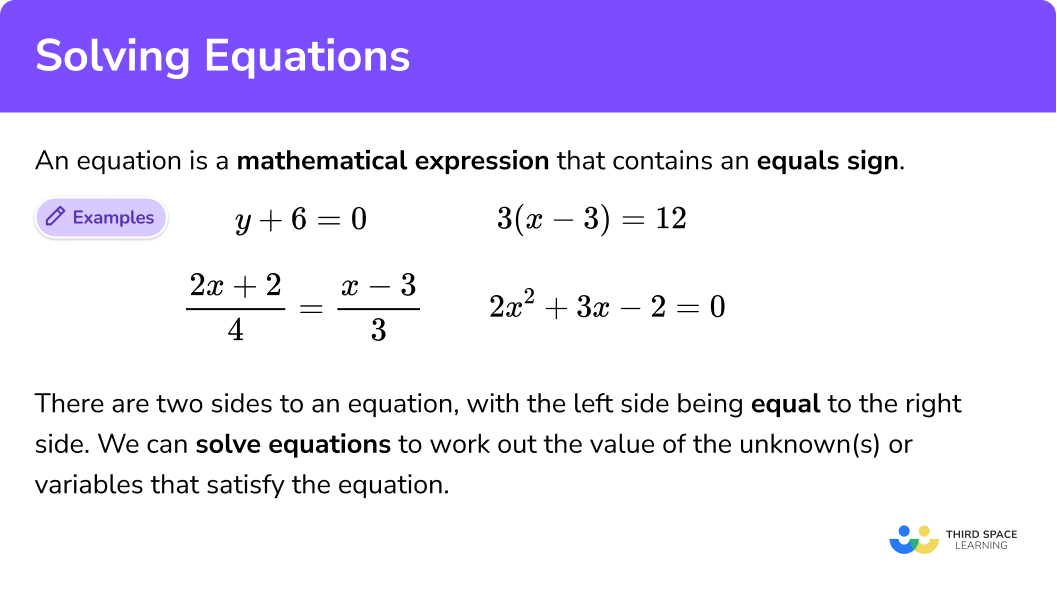
Solving an algebraic formula is a logical process that can be optimized by following a structured, tech-enhanced workflow. Whether you are using a dedicated app or a programming language, the core principles remain the same.
Defining Variables and Constants in a Digital Environment
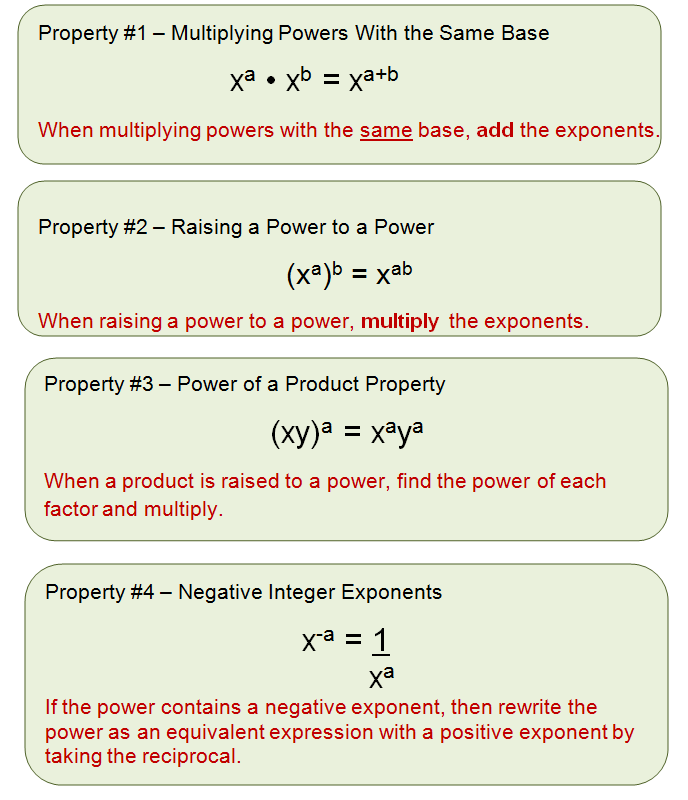
The first step in any algebraic solution is the clear definition of parameters. In a digital interface, this involves “declaring” your variables. Most tech tools require you to specify which symbols represent unknown values and which represent known constants. This precision prevents errors in computation and ensures that the software’s logic engine applies the correct rules of operation, such as the distributive property or the laws of exponents.
Isolate and Simplify: The Algorithmic Approach
The goal of solving a formula is usually to isolate a specific variable. Modern software uses a process called “reduction” to achieve this.
- Clear Fractions and Parentheses: Using digital “expand” functions to remove complexities.
- Combine Like Terms: Software can instantaneously scan an expression to group variables.
- Inverse Operations: The tech applies the inverse of addition, subtraction, multiplication, and division to move terms across the equals sign.
By watching a digital tool perform these steps, users can internalize the algorithmic nature of algebra, making manual solving more intuitive.
Verification and Graphing through UI-driven Tools
One of the greatest advantages of tech-based math is the ability to visualize the solution. A formula is not just a string of characters; it represents a relationship between values. Tools like Desmos or GeoGebra allow users to graph their formulas instantly. Seeing a linear equation as a line or a quadratic as a parabola provides a “sanity check.” If the solution to the formula doesn’t align with the visual data on the graph, the user can quickly identify where the logical break occurred.
Digital Security and Ethics in Automated Algebra
As we rely more heavily on apps and cloud-based software to solve mathematical problems, we must consider the technological implications regarding security and academic integrity.
Understanding Data Privacy in EdTech Apps
Many popular algebra-solving apps require users to upload photos of their work or sync their data with the cloud. It is crucial to evaluate the digital security of these platforms. Users should look for end-to-end encryption and clear privacy policies that state how their data (and their mathematical queries) are stored. In the tech world, “data is the new oil,” and even your math homework can be used to train commercial AI models if the platform isn’t secure.
Maintaining Academic Integrity in the Age of AI
The ease with which tech can solve formulas raises questions about learning. Using a tool to find an answer is different from using a tool to understand an answer. Educators and professionals are now focusing on “process-oriented” solving. This means using technology to handle the tedious calculations while the human focus remains on setting up the initial formula and interpreting the results. Ethical use of math-tech involves using software as a tutor, not a shortcut.
Future Trends: The Intersection of Quantum Computing and Complex Formulas
The future of algebraic computation lies in the realm of quantum technology. As we move beyond the capabilities of classical computers, the way we solve formulas will change again.
Beyond Linear Equations: Handling Multi-Dimensional Data
In the near future, quantum algorithms like Shor’s algorithm will change how we approach algebraic structures related to prime factorization and cryptography. We are moving toward a period where “formulas” will involve thousands of variables processed simultaneously in a quantum state. For the average user, this means that software will become even more adept at solving multi-dimensional problems that are currently impossible for the human mind to visualize.
The Personal AI Tutor: Hyper-Personalized Learning
We are entering an era of hyper-personalized educational technology. Future algebra tools will not just solve a formula; they will analyze a user’s previous mistakes and tailor the explanation to their specific learning style. If a user consistently struggles with the quadratic formula, the AI will detect the pattern and provide specialized interactive modules. This evolution marks the transition of algebra software from a simple calculator to a sophisticated intellectual partner.
In conclusion, solving formulas in algebra is no longer a solitary task involving a pencil and paper. It is a sophisticated technological process that utilizes symbolic computation, artificial intelligence, and interactive visualization. By mastering these digital tools—ranging from WolframAlpha to Python-based libraries—individuals can solve complex equations with greater speed and accuracy. However, the key to success remains the synergy between human logic and technological power. Technology provides the “how,” but the human mind must still provide the “why.” As we continue to integrate advanced software into our mathematical workflows, the ability to solve algebraic formulas will remain one of the most valuable skills in the modern tech-driven world.
aViewFromTheCave is a participant in the Amazon Services LLC Associates Program, an affiliate advertising program designed to provide a means for sites to earn advertising fees by advertising and linking to Amazon.com. Amazon, the Amazon logo, AmazonSupply, and the AmazonSupply logo are trademarks of Amazon.com, Inc. or its affiliates. As an Amazon Associate we earn affiliate commissions from qualifying purchases.