
The age-old question of “how many calories should I eat?” has shifted from the back of cereal boxes and dusty medical textbooks into the palm of our hands. What was once a guessing game based on generic height-and-weight charts has evolved into a sophisticated data science challenge. Today, determining your caloric needs is less about basic arithmetic and more about leveraging a complex ecosystem of wearable sensors, machine learning algorithms, and integrated software platforms.
In this technological era, “precision nutrition” is the new standard. To truly understand your body’s requirements, you must understand the technology that deciphers your metabolic rate. This article explores the software, hardware, and algorithmic trends that are redefining how we calculate energy balance.

The Evolution of Metabolic Algorithms: From Static Formulas to AI
At the core of every calorie-tracking app lies a mathematical formula. Historically, these were static equations developed in clinical settings, but the tech industry has transformed them into dynamic, learning models.
From Mifflin-St Jeor to Machine Learning
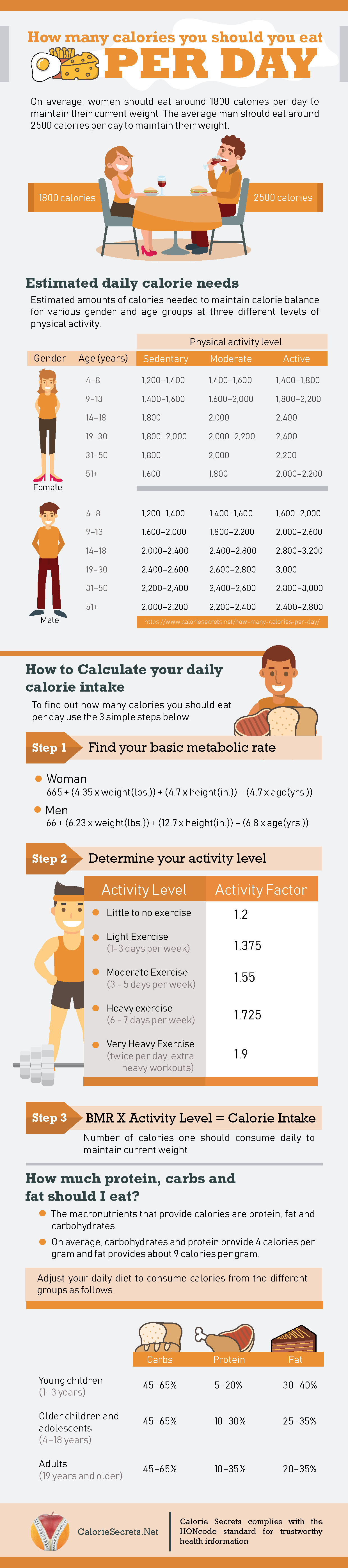
For decades, the Mifflin-St Jeor and Harris-Benedict equations were the gold standard for calculating Basal Metabolic Rate (BMR). These formulas rely on four primary variables: age, gender, weight, and height. However, in the world of modern software, these are viewed as “dumb” inputs.
Current health-tech platforms are moving toward machine learning (ML) models that incorporate thousands of data points. By analyzing historical data from millions of users, AI can identify patterns that a simple formula cannot. For instance, an AI-driven app might notice that your metabolism responds differently to high-protein intake compared to a peer with the same physical profile, adjusting your daily caloric recommendations in real-time based on your weight-loss velocity and activity logs.
Why Static Formulas Are Becoming Obsolete
The primary limitation of traditional formulas is their inability to account for body composition (muscle mass vs. fat mass). A 200-pound athlete and a 200-pound sedentary individual have vastly different caloric needs, yet a basic calculator treats them the same.
Modern tech solves this through “Bioelectrical Impedance Analysis” (BIA) integration. Smart scales now sync directly with nutrition software via Bluetooth or Wi-Fi, feeding body fat percentages into the algorithm. This allows the software to utilize the Katch-McArdle formula—a much more accurate metric that bases caloric needs on Lean Body Mass (LBM). This shift from static to dynamic data is the foundation of digital metabolic tracking.
The Role of Wearable Tech in Real-Time Energy Expenditure
Calculating how many calories to eat is only half the battle; you must also know how many you are burning. This is where wearable hardware has revolutionized the field, moving us away from “estimated activity levels” toward granular, real-time tracking.
Photoplethysmography (PPG) and Heart Rate Variability
Most modern wearables—from the Apple Watch to the Oura Ring—utilize Photoplethysmography (PPG). This technology uses green LED lights to measure blood flow at the wrist or finger. By tracking heart rate and Heart Rate Variability (HRV), these devices can estimate the intensity of physical exertion.
From a technical standpoint, these devices translate heart rate data into Metabolic Equivalents (METs). When your heart rate rises, the device’s firmware references a database of activities to estimate oxygen consumption (VO2), which is directly proportional to caloric burn. This data is then pushed via API to your primary nutrition app, which adjusts your “calories remaining” for the day with surgical precision.
The Accuracy Gap in Smartwatch Burn Estimates
While wearables are impressive, the tech community remains transparent about the “accuracy gap.” Sensors are excellent at measuring duration and heart rate, but they often struggle with the “Thermic Effect of Exercise” (TEE).
Current software developers are working to bridge this gap through “multi-sensor fusion.” By combining accelerometer data (which tracks movement), PPG (heart rate), and even skin temperature sensors, wearables are becoming better at distinguishing between a high-stress meeting (high heart rate, low movement) and a brisk walk (moderate heart rate, high movement). This distinction is critical for anyone trying to figure out their exact caloric “maintenance” level without overestimating their burn.

AI-Driven Nutritional Analysis and Computer Vision
The most significant friction point in figuring out caloric intake has always been the manual logging of food. Technology is solving this through computer vision and deep learning, making the “input” side of the equation as automated as the “output” side.
Image Recognition for Calorie Logging
The next generation of nutrition apps, such as Snap calorie or Google’s experimental health tools, utilize computer vision to estimate caloric content from a photograph. By employing “convolutional neural networks” (CNNs), these apps can identify the food items on a plate, estimate their volume, and cross-reference them against a nutritional database.
While not yet 100% accurate, this tech utilizes “depth-sensing” cameras found in modern smartphones to calculate the three-dimensional size of a portion. If the AI identifies a 6-ounce steak and a cup of broccoli, it can provide a caloric estimate that is often more accurate than a human’s “guesstimate.” This reduces user error, which is the leading cause of failed caloric strategies.
Predictive Analytics for Weight Management
Beyond just logging what you have eaten, AI is moving into predictive analytics. Some advanced platforms now offer “metabolic forecasting.” By analyzing your caloric intake trends and your weight fluctuations over a 30-day period, the software can calculate your “True TDEE” (Total Daily Energy Expenditure).
This is a game-changer. Instead of relying on a theoretical number from a website, the software looks at the hard data: “You ate X calories, and your weight did Y; therefore, your actual maintenance level is Z.” This feedback loop is the pinnacle of personalized tech-driven nutrition.
Integrating Health Data Ecosystems for Precision Nutrition
The future of determining caloric needs lies in the “Health Stack”—the seamless integration of various hardware and software components into a single, cohesive ecosystem.
API Connectivity Between Apps and Hardware
The silos between different tech companies are breaking down. Through frameworks like Apple HealthKit and Google Fit, data flows freely between devices. Your smart scale (Withings) talks to your workout tracker (Strava), which talks to your nutrition logger (Cronometer).
This interoperability allows for a “Master Dashboard” view of your metabolism. For a professional or a tech-savvy enthusiast, this means that the question of “how many calories to eat” is answered by a consolidated report of sleep quality, recovery scores, active calories, and hormonal markers. If your Oura ring detects a lack of sleep, your nutrition app might suggest a slight caloric increase to manage cortisol levels and prevent metabolic slowdown.
The Future of Continuous Glucose Monitors (CGM)
Perhaps the most exciting frontier in this niche is the migration of Continuous Glucose Monitors (CGMs) from the medical world (for diabetics) to the wellness tech market (for the general public). Companies like Levels and Nutrisense are using CGM hardware to show users in real-time how their blood sugar responds to specific caloric loads.
By seeing the “glucose spike” following a meal, users can determine not just how many calories to eat, but which calories their body processes most efficiently. This represents the shift from “quantity” to “quality” through data. If a 500-calorie bowl of pasta causes a massive glucose excursion and a subsequent crash, the tech suggests that those calories are less optimal for your specific metabolic profile than a 500-calorie meal with a flatter glucose response.
Conclusion: The Data-Driven Approach to Energy Balance
Figuring out how many calories to eat is no longer a matter of opinion or basic math; it is an exercise in data management. By leveraging the latest in AI-driven algorithms, wearable sensor technology, and integrated health ecosystems, individuals can move past the era of trial and error.
The “Tech” of nutrition provides us with a digital twin of our own metabolism. As machine learning continues to refine BMR formulas and computer vision simplifies food logging, the precision of our caloric tracking will only increase. For those looking to optimize their health, the instruction is clear: stop guessing, start tracking, and let the data lead the way. Through the lens of technology, your ideal caloric intake is a number waiting to be discovered by the right set of tools.
aViewFromTheCave is a participant in the Amazon Services LLC Associates Program, an affiliate advertising program designed to provide a means for sites to earn advertising fees by advertising and linking to Amazon.com. Amazon, the Amazon logo, AmazonSupply, and the AmazonSupply logo are trademarks of Amazon.com, Inc. or its affiliates. As an Amazon Associate we earn affiliate commissions from qualifying purchases.