
In the early days of nutrition science, determining how many calories to eat was a matter of guesswork and manual mathematics. We relied on generalized formulas like the Harris-Benedict equation, developed in 1919, which used broad strokes to estimate metabolic needs. Today, we are in the midst of a “Precision Health” revolution. We no longer need to rely on static averages; instead, we have a sophisticated ecosystem of software, wearable hardware, and AI-driven algorithms that can calculate metabolic requirements with surgical precision.
By leveraging the “Quantified Self” movement, technology has transformed calorie counting from a chore into a data-driven science. This article explores the technological landscape used to determine caloric needs, focusing on the algorithms, devices, and AI tools that are redefining human performance and longevity.

The Evolution of Metabolic Tracking: From Static Formulas to Dynamic Algorithms
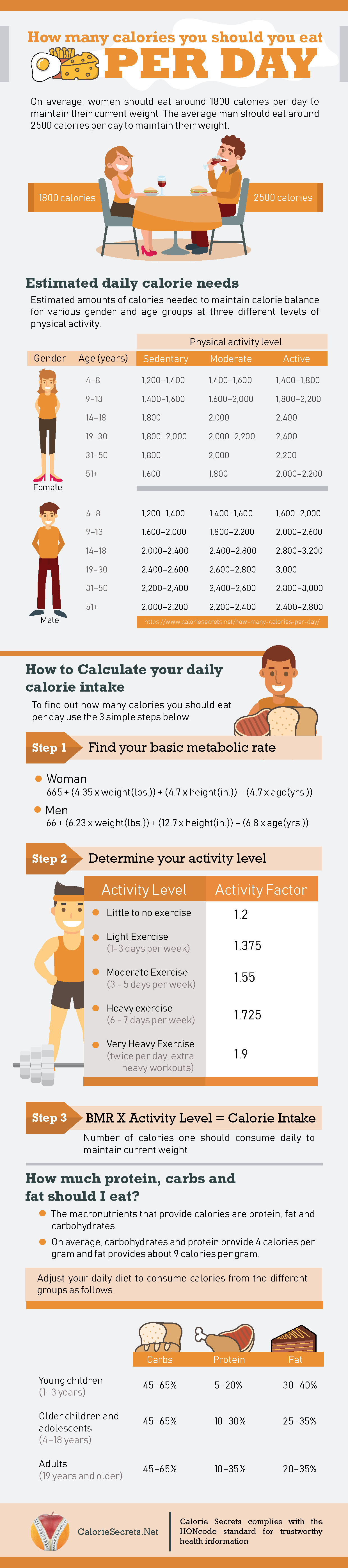
The foundation of determining caloric intake starts with calculating Basal Metabolic Rate (BMR) and Total Daily Energy Expenditure (TDEE). While these concepts are biological, the methods used to calculate them have become purely digital.
The Shift from Mifflin-St Jeor to Machine Learning
For decades, the Mifflin-St Jeor equation was the gold standard for digital calorie calculators. While effective, it is a “one-size-fits-all” model that often fails to account for individual metabolic nuances, such as muscle mass density or hormonal fluctuations. Modern tech platforms are moving away from these static equations in favor of machine learning models. These algorithms take into account thousands of data points from diverse populations to provide a more personalized “metabolic fingerprint.”
Real-Time Data Integration and API Connectivity
The most significant tech advancement in calorie determination is the ability to sync data across platforms via APIs (Application Programming Interfaces). In the past, you would calculate your calories on a website and then manually adjust for your workout. Today, your smart scale (measuring body fat percentage) talks to your fitness tracker (measuring active burn), which then feeds into a nutrition app. This interconnected web allows for a “Rolling TDEE,” where your caloric target adjusts dynamically throughout the day based on real-world energy expenditure.
Wearable Technology and the Quantified Self
Determining how many calories to eat is an equation with two sides: “Energy In” and “Energy Out.” Wearable technology has mastered the latter, providing the most accurate data ever available to the general consumer regarding thermogenesis.
Biometric Sensors and the Heart Rate Variable
Modern wearables—such as the Apple Watch, Garmin, and WHOOP—utilize photoplethysmography (PPG) sensors to measure heart rate and heart rate variability (HRV). Sophisticated firmware then translates these pulses into caloric burn estimates. High-end devices now include multi-wavelength sensors that can better distinguish between skin types and sweat levels, reducing the “noise” in the data and providing a more granular look at how many calories an individual is burning during both high-intensity intervals and periods of rest.
Smart Rings and the Future of Passive Tracking
The rise of the smart ring, led by companies like Oura and Samsung, represents a leap in “invisible” tech. These devices focus heavily on recovery and sleep architecture. Why does this matter for calorie determination? Because metabolic rate is heavily influenced by sleep quality and circadian rhythms. By analyzing sleep stages through infrared sensors, these devices can help algorithms predict metabolic slowdowns due to fatigue, advising the user to adjust their caloric intake to prevent fat storage during periods of low recovery.
AI-Powered Nutrition Apps: Moving Beyond Manual Entry

The “Energy In” side of the equation has historically been the “leaky bucket” of calorie tracking. Humans are notoriously bad at estimating portion sizes. Technology is solving this through computer vision and predictive analytics.
Computer Vision and Image Recognition in Food Logs
Apps like SnapCalorie and MyFitnessPal are increasingly integrating computer vision. Instead of searching a database for “medium apple,” users can take a photo of their plate. AI models, trained on millions of food images, use depth-sensing technology and object recognition to estimate volume and macronutrient density. This reduces human error—the single biggest hurdle in determining an accurate caloric intake—and provides a more objective data set for the underlying algorithms to work with.
Predictive Analytics for Weight Management
The most advanced nutrition software now uses “Adaptive TDEE” algorithms. These tools don’t just track what you eat; they observe how your weight responds to what you eat over time. By using a “Trend Weight” algorithm, the software can filter out daily water weight fluctuations to find the true metabolic rate. If you eat 2,500 calories and your trend weight remains stable for 14 days, the AI confirms your maintenance level with far more accuracy than any manual formula ever could.
The Role of Smart Bio-Gadgets in Metabolic Precision
Beyond the wrist and the smartphone, a new category of “bio-gadgets” is entering the consumer market, bringing clinical-grade metabolic testing into the home.
Continuous Glucose Monitors (CGM) for the Non-Diabetic
Originally designed for diabetics, CGMs (like those from Levels or Nutrisense) are being adopted by tech-savvy biohackers to determine caloric needs. By monitoring blood glucose levels in real-time via a subcutaneous sensor, users can see exactly how their body responds to specific caloric loads. If a certain calorie level causes persistent glucose spikes and insulin resistance, the user knows they need to adjust their “fuel” type and quantity, moving beyond simple calorie counting into “metabolic flexibility.”
Smart Scales and Bioelectrical Impedance Analysis (BIA)
A calorie is not just a calorie when it comes to body composition. Modern smart scales use multi-frequency BIA to send a small, painless electrical current through the body. This measures the resistance of different tissues, estimating lean muscle mass versus fat mass. Because muscle is more metabolically active than fat, these scales sync with nutrition apps to increase or decrease caloric targets based on the user’s changing body composition. This ensures that the determined caloric intake supports muscle retention rather than just arbitrary weight loss.
Digital Security and the Ethics of Metabolic Data
As we move toward a future where our caloric needs are determined by a suite of interconnected devices, the conversation must include the security of the data being generated.
Securing Your Metabolic Profile
Health data is some of the most sensitive information a person can own. When we use tech to determine our caloric needs, we are uploading our age, weight, heart rate, and even glucose levels to the cloud. Leading tech firms are now implementing “Differential Privacy” and end-to-end encryption to ensure that your metabolic data isn’t sold to insurance companies or third-party advertisers. As the niche grows, the integration of blockchain technology for decentralized health records may become the standard for “owning” one’s metabolic identity.
The Algorithmic Bias in Nutrition
A final tech consideration is the inherent bias in algorithms. Many early calorie-tracking tools were built using data from specific demographics, often overlooking variations in ethnicity, age-related metabolic shifts, and hormonal cycles. The next generation of “Calorie Tech” is focused on “Inclusive AI,” which uses more diverse datasets to ensure that the caloric recommendations provided are as accurate for a 60-year-old woman in Tokyo as they are for a 20-year-old athlete in New York.
In conclusion, determining how many calories to eat is no longer a matter of reading the back of a food label and doing long division. It is a sophisticated technological process involving wearable sensors, AI-driven computer vision, and cloud-based predictive analytics. By building a “Health Tech Stack”—consisting of a reliable wearable, an AI-powered logging app, and perhaps a smart scale—individuals can now move past the era of “estimation” and into the era of “metabolic certainty.” As these technologies continue to converge, the precision with which we fuel our bodies will only increase, leading to optimized performance and a longer healthspan.
aViewFromTheCave is a participant in the Amazon Services LLC Associates Program, an affiliate advertising program designed to provide a means for sites to earn advertising fees by advertising and linking to Amazon.com. Amazon, the Amazon logo, AmazonSupply, and the AmazonSupply logo are trademarks of Amazon.com, Inc. or its affiliates. As an Amazon Associate we earn affiliate commissions from qualifying purchases.