
Negotiating or receiving a salary increase is one of the most pivotal moments in a professional’s financial journey. Whether it is a reward for a year of hard work, a cost-of-living adjustment, or a significant jump following a promotion, understanding the mechanics behind these numbers is essential. Salary increases are not just about a higher number on a paycheck; they are about maintaining purchasing power against inflation, reflecting your market value, and accelerating your long-term wealth-building goals.
In the world of personal finance, knowing how to calculate and evaluate a raise is a fundamental skill. This guide explores the mathematical formulas, the economic context, and the strategic planning required to ensure your compensation keeps pace with your contribution and the broader economy.
The Mathematics of Pay Raises: Understanding the Formulas
Before you can evaluate the impact of a raise on your financial life, you must understand the basic arithmetic used by HR departments and payroll systems. Salary increases are typically presented in one of three ways: a percentage, a flat dollar amount, or a cost-of-living adjustment.
Percentage-Based Increases
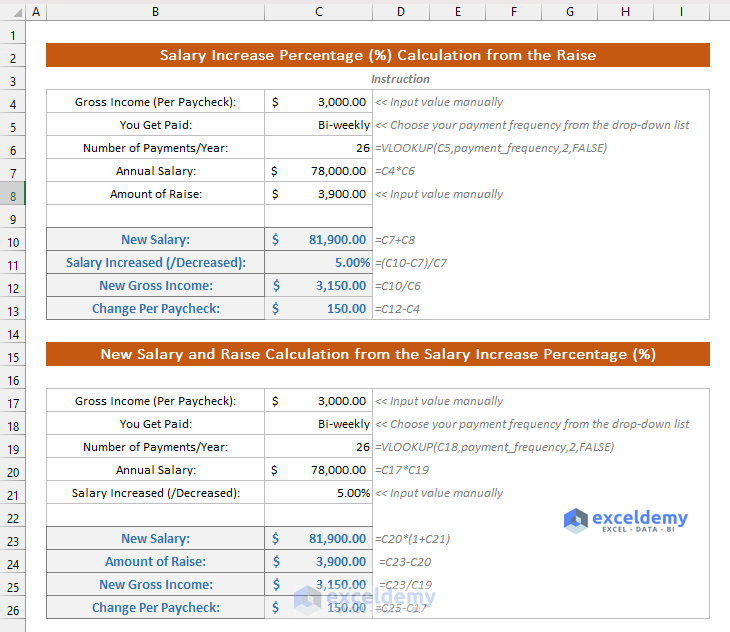
The most common method for awarding raises is the percentage-based increase. This method ensures that the raise is proportional to your current level of responsibility and experience. To calculate a percentage-based increase, use the following formula:
Formula: (New Salary – Old Salary) / Old Salary × 100 = Percentage Increase
For example, if you were earning $75,000 per year and your new salary is $81,000, the calculation would be:
($81,000 – $75,000) / $75,000 = 0.08. Multiply by 100 to get an 8% increase.
Flat Rate or Lump Sum Increases
Sometimes, an employer may offer a flat dollar increase rather than a percentage. This is often common in unionized environments or for entry-level roles. While the math is simpler, it is still vital to convert this amount into a percentage to compare it against inflation or market benchmarks.
If you receive a $5,000 raise on a $50,000 salary, that is a 10% increase. However, if you receive that same $5,000 on a $100,000 salary, it is only a 5% increase. Understanding the percentage helps you maintain a clear view of your career trajectory.
Cost-of-Living Adjustments (COLA)
A COLA is not necessarily a “raise” in terms of increased value; rather, it is a defensive adjustment designed to keep your standard of living stable. Employers often use the Consumer Price Index (CPI) to determine these adjustments. If inflation is at 4% and your company gives you a 4% COLA, your “real” income has not increased—you have simply maintained your ability to buy the same amount of goods and services as the previous year.
Evaluating the Real Value of Your Raise
A common mistake in personal finance is looking only at the “top-line” or gross number of a salary increase. To truly understand how a raise changes your financial standing, you must look deeper into taxes, inflation, and total compensation packages.
Gross vs. Net Income: The Tax Impact
In many tax systems, particularly progressive ones, a significant raise can push a portion of your income into a higher tax bracket. While you never lose money by moving into a higher bracket (only the income within that bracket is taxed at the higher rate), your net “take-home” pay may not increase as much as the gross percentage suggests.
When calculating your raise, always use a net pay calculator to estimate your post-tax earnings. An 8% gross increase might only feel like a 5% increase in your bank account after federal, state, and payroll taxes are deducted.
Real Wage Growth vs. Inflation
To determine if you are actually moving forward financially, you must calculate your “real wage growth.” This is the difference between your salary increase and the rate of inflation.
- Positive Real Growth: Your raise is 6%, and inflation is 3%. You have a 3% increase in purchasing power.
- Stagnant Real Growth: Your raise is 3%, and inflation is 3%. Your lifestyle remains the same.
- Negative Real Growth: Your raise is 2%, and inflation is 5%. Despite “making more money,” you are actually getting poorer in terms of what you can afford.
Total Compensation: Benefits and Bonuses
Salary is only one component of your financial reward. When calculating an increase, consider changes to your total compensation package. Does the new role come with a higher 401(k) match? Are the health insurance premiums lower? Is there a performance-based bonus structure? Sometimes, a modest 3% salary increase combined with an improved bonus structure or better stock options can be more valuable than a 7% base salary bump.
Strategic Preparation for Your Next Review

Calculating a salary increase is a retroactive activity; negotiating one is proactive. To ensure you receive a raise that reflects your worth, you must approach the discussion with data and a business-minded strategy.
Benchmarking Your Market Value
You cannot know if a salary increase is “fair” without external data. Use financial tools and salary aggregators to benchmark your role within your specific industry and geographic location. Pay scales vary wildly between a software engineer in San Francisco and one in Indianapolis.
Gather data from at least three sources to create a “market range.” If your current salary is at the bottom 25th percentile but your performance is in the top 10%, you have a strong financial case for a substantial market adjustment.
Documenting Your Performance Metrics
In business finance, decisions are made based on Return on Investment (ROI). To get a significant raise, you must prove that you provide more value than you cost. Throughout the year, maintain a “brag sheet” or a performance log.
Quantify your achievements:
- Did you increase revenue by a certain percentage?
- Did you save the company money by streamlining a process?
- Did you manage a budget that resulted in a surplus?
Hard numbers are much harder for a manager to ignore than vague statements about “working hard.”
Mastering the Art of Negotiation
Negotiation is a financial transaction. When you enter a salary discussion, have a specific number in mind based on your calculations. It is often recommended to ask for slightly more than your target to allow for a “counter-offer” that still lands within your desired range. Furthermore, timing is key. The best time to negotiate a raise is often three to four months before the annual budget is finalized, not during the review itself when the numbers may already be set in stone.
Budgeting and Wealth Building Post-Raise
Once the calculation is done and the increase is reflected in your bank account, the most critical personal finance step begins: managing the “new” money. How you handle a raise often determines whether you will achieve financial independence or remain in a cycle of living paycheck to paycheck.
Avoiding “Lifestyle Creep”
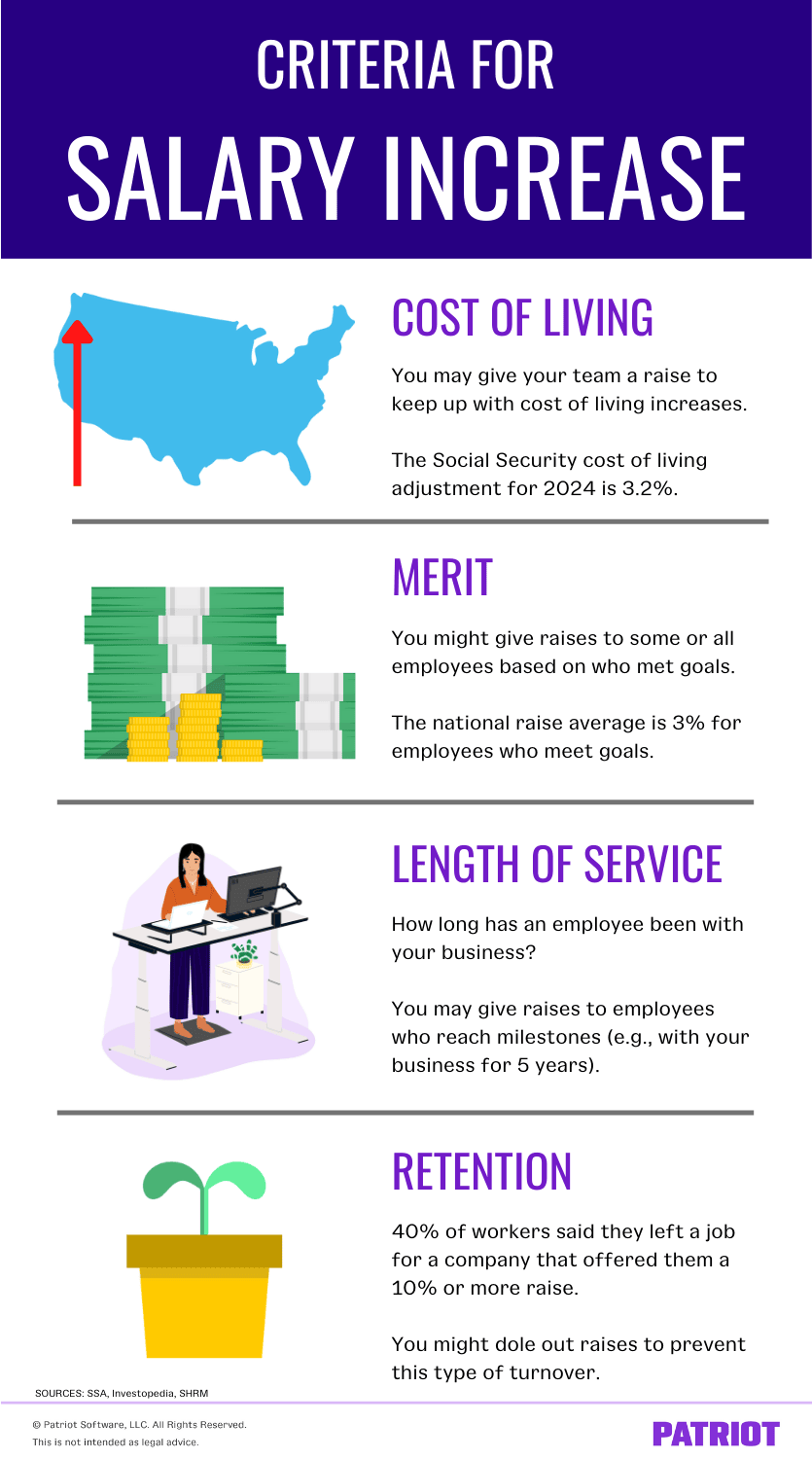
Lifestyle creep (or lifestyle inflation) occurs when your expenses rise in tandem with your income. If you get a $500 monthly raise and immediately upgrade your car lease for an extra $500, your net worth does not improve. While it is important to celebrate your success, financial experts suggest “splitting” the raise: allocate a small portion (e.g., 20%) to improving your lifestyle and the remaining 80% to debt repayment or investments.
Automating Your Savings and Investments
The most effective way to handle a salary increase is to “hide” it from yourself before you have the chance to spend it. If your take-home pay increases by $400 a month, set up an automatic transfer for $300 to your brokerage account or high-yield savings account the day your paycheck hits. By automating your financial growth, you ensure that your raise goes toward building long-term wealth rather than fleeting consumption.
Reassessing Your Long-Term Financial Goals
A salary increase is an excellent time to revisit your financial roadmap. Does this new income allow you to retire two years earlier? Can you now afford to increase your mortgage principal payments to save thousands in interest over the life of the loan? Use a financial calculator to project how your new salary, if invested wisely, changes your “FIRE” (Financial Independence, Retire Early) number or your children’s college fund.
The Business Perspective: How Employers Calculate Budget Pools
Understanding the “other side” of the table can give you a significant advantage. Companies do not have unlimited funds for raises; they operate within strict financial constraints and use specific metrics to allocate their “merit pools.”
Merit-Based Salary Matrices
Most mid-to-large-sized companies use a merit matrix to determine raises. This matrix typically crosses two factors: your performance rating and your position within your current pay grade.
If you are already at the top of your pay grade (the maximum the company is willing to pay for that specific role), your raise may be capped regardless of how well you perform. In this scenario, the calculation tells you that you need a promotion to a new pay grade, rather than just a merit increase, to see significant financial movement.
Compa-Ratio and Pay Grades
The “Compa-Ratio” is a common financial metric used by HR to measure how an employee’s pay compares to the midpoint of the market rate for their position.
Formula: (Actual Salary / Market Midpoint) × 100.
If your Compa-Ratio is 80%, you are being paid significantly below the market average. Employers often use this calculation to identify employees who are “flight risks” and may prioritize them for larger increases to bring them closer to the 100% midpoint. Knowing your Compa-Ratio can be a powerful lever in your salary negotiations.
Conclusion
Calculating a salary increase is more than a simple subtraction exercise. It is a comprehensive evaluation of your economic value, your tax liability, and your future financial potential. By understanding the math of raises, accounting for inflation, and strategically managing the surplus, you can transform a simple pay bump into a catalyst for lifelong financial security. Always remember: you are the CEO of your own career, and your salary is the revenue your business generates. Treat every increase with the analytical rigor it deserves.
aViewFromTheCave is a participant in the Amazon Services LLC Associates Program, an affiliate advertising program designed to provide a means for sites to earn advertising fees by advertising and linking to Amazon.com. Amazon, the Amazon logo, AmazonSupply, and the AmazonSupply logo are trademarks of Amazon.com, Inc. or its affiliates. As an Amazon Associate we earn affiliate commissions from qualifying purchases.