
In the world of finance, numbers are the fundamental language of communication. Whether you are analyzing a stock portfolio, calculating the interest on a mortgage, or determining the profitability of a side hustle, one mathematical concept stands above the rest: the percentage. Understanding how to find the percentage of two numbers is not merely an academic exercise; it is a critical skill for wealth management, investment analysis, and savvy consumer behavior.
When we talk about money, percentages provide the context that raw numbers lack. A $500 profit might sound significant, but its true value is only revealed when expressed as a percentage of the initial investment. By mastering these calculations, you gain the ability to compare disparate financial opportunities on an equal playing field. This guide explores the essential methods for calculating percentages within the “Money” niche, focusing on personal finance, business growth, and investment strategy.
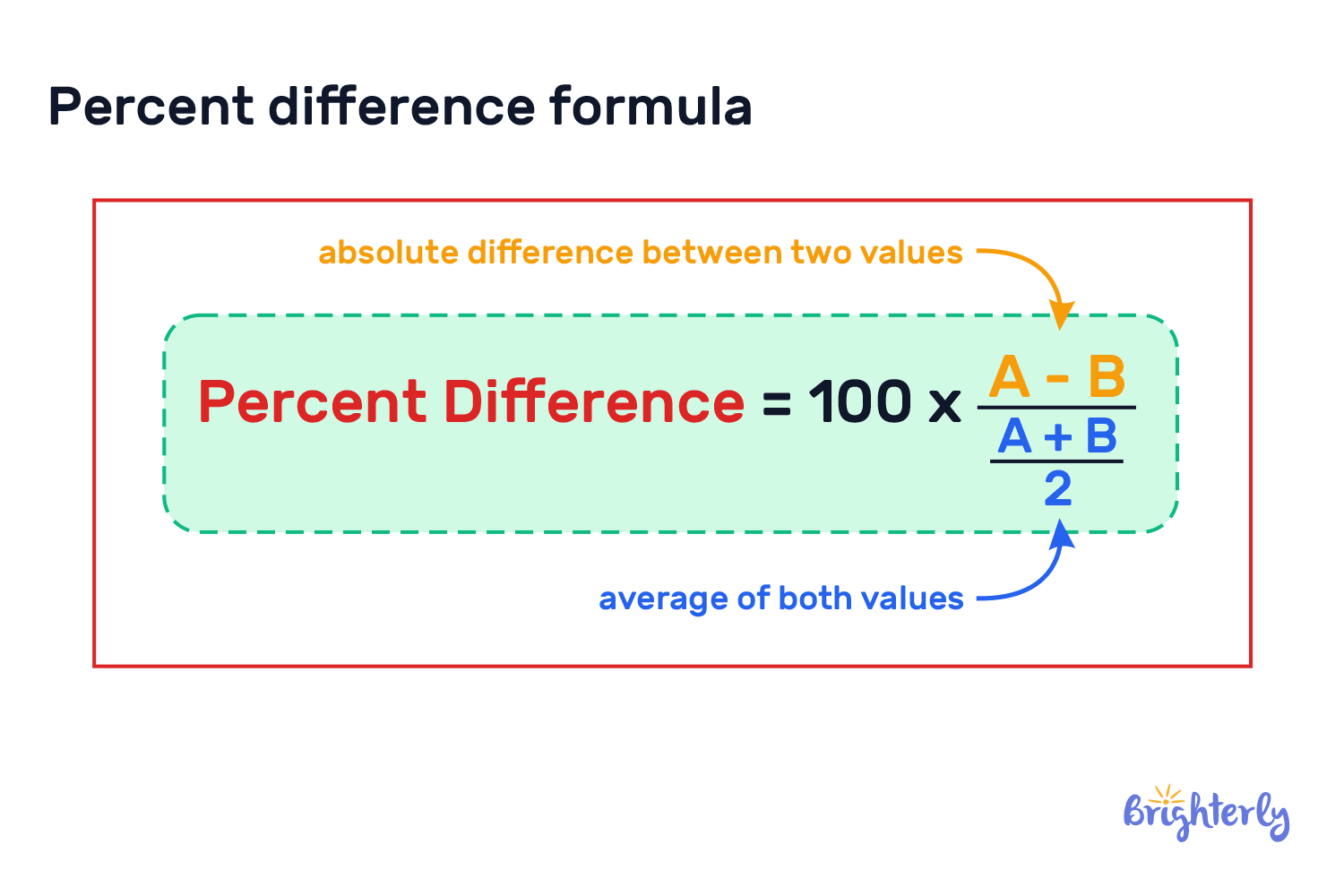
The Foundation of Financial Literacy: Understanding Basic Percentage Calculations
At its core, a percentage is a way of expressing a number as a fraction of 100. In financial terms, this allows us to see what “part” of our “whole” is being allocated to various categories. The basic formula for finding the percentage of two numbers is:
** (Part / Whole) × 100 = Percentage **
Determining Your Savings Rate
One of the most vital applications of this formula in personal finance is determining your savings rate. To find this, you divide your monthly savings (the part) by your total monthly take-home pay (the whole) and multiply by 100. For example, if you earn $5,000 a month and save $750, your savings rate is 15%. This percentage is a much more effective KPI (Key Performance Indicator) for your financial health than the raw dollar amount, as it scales with your income levels over time.
Calculating Sales Tax and Discounts
From a consumer perspective, calculating percentages helps you navigate the true cost of goods. When you see a “20% off” sign on a $150 item, you are finding a percentage of a number to determine the discount. Conversely, understanding how sales tax impacts your final bill requires you to add a percentage to the base price. Mastering these quick calculations ensures that you are never caught off guard at the register and can accurately compare “all-in” prices between different vendors.
Effective Budget Allocation
The popular “50/30/20” rule of budgeting—allocating 50% to needs, 30% to wants, and 20% to savings—is entirely dependent on your ability to calculate percentages of your total income. By converting your line-item expenses into percentages of your total budget, you can identify “lifestyle creep.” If your “wants” category has climbed from 30% to 45% over a year, the percentage reveals a trend that raw dollar amounts might obscure.
Measuring Investment Performance: ROI and Yield Analysis
In the realm of investing, percentages are the primary metric for success. Investors rarely ask “How many dollars did you make?” but rather “What was your return?” This is because percentages allow for the comparison of a $1,000 investment in a high-growth tech stock against a $100,000 investment in real estate.
Computing Total Return on Investment (ROI)
The Return on Investment (ROI) is perhaps the most famous percentage in the financial world. It represents the efficiency of an investment. To find the ROI, you take the current value of the investment, subtract the original cost, and then divide that gain by the original cost.
Formula: [(Current Value – Original Cost) / Original Cost] × 100
For instance, if you bought shares in an index fund for $10,000 and sold them for $12,500, your gain is $2,500. Dividing $2,500 by $10,000 gives you 0.25, or a 25% ROI. This percentage allows you to compare this gain against other benchmarks, such as the average annual return of the S&P 500.
Dividend Yield and Bond Interest
For income-focused investors, the “yield” is the most important percentage. The dividend yield tells you how much a company pays out in dividends relative to its share price. If a company pays $2.00 in annual dividends and the stock is trading at $50.00, the yield is 4%. This percentage is crucial for retirees or those seeking passive income, as it dictates the cash flow generated by every dollar invested. Similarly, bond “coupons” are expressed as percentages, representing the annual interest paid to the lender.
Understanding Expense Ratios
When investing in mutual funds or Exchange Traded Funds (ETFs), you must look at the expense ratio. This is the percentage of your investment that the fund management takes annually for administrative fees. While 0.5% and 1.5% might seem like small numbers, when calculated as a percentage of your total portfolio over 30 years, that 1% difference can cost an investor hundreds of thousands of dollars in lost compounding.
Profitability and Business Growth: Margins and Markups

For entrepreneurs and business owners, finding the percentage of two numbers is the difference between a thriving enterprise and a failing one. Percentages provide clarity on whether a business is actually making money after all expenses are paid.
Gross Profit Margin vs. Net Profit Margin
A common mistake in business finance is confusing revenue with profit. Profit margins, expressed as percentages, clarify this.
- Gross Profit Margin: Calculated by (Revenue – Cost of Goods Sold) / Revenue. This shows how efficiently a company produces its products.
- Net Profit Margin: Calculated by (Total Revenue – Total Expenses) / Total Revenue. This is the “bottom line” percentage.
If your business generates $1,000,000 in revenue but only $50,000 in net profit, your net margin is a slim 5%. This percentage tells you that your business is vulnerable to even minor increases in operating costs.
Year-Over-Year (YoY) Growth Percentages
To track the health of a business or a side hustle, you must calculate growth rates. This involves finding the percentage change between two time periods.
Formula: [(New Value – Old Value) / Old Value] × 100
If your online store made $2,000 last December and $3,000 this December, you didn’t just make $1,000 more; you achieved 50% Year-Over-Year growth. In the world of business finance and venture capital, consistent percentage growth is often more valuable than the current revenue figure, as it indicates the “velocity” and future potential of the business.
Markup vs. Margin: Avoiding the Entrepreneur’s Trap
Many new business owners use “markup” when they should be looking at “margin.” Markup is the percentage added to the cost to reach the selling price. Margin is the percentage of the selling price that is profit. If an item costs $70 and you sell it for $100, your markup is roughly 42.8% ($30 / $70), but your gross margin is only 30% ($30 / $100). Understanding how to calculate both ensures that you price your products high enough to cover overhead and realize a true profit.
Managing Personal Debt and Savings: The Ratios That Matter
Debt is often the biggest obstacle to wealth accumulation. Managing it effectively requires a deep understanding of how interest rates (which are percentages) and debt ratios impact your financial profile.
Debt-to-Income (DTI) Ratios
When you apply for a mortgage or a car loan, lenders look at your Debt-to-Income ratio. This is calculated by dividing your total monthly debt payments by your gross monthly income. Most lenders prefer a DTI ratio below 36%. If your debt is $1,800 and your income is $5,000, your DTI is 36%. Knowing how to calculate this percentage yourself allows you to see your “borrowing power” through the eyes of a bank before you ever submit an application.
Calculating Your Effective Interest Rate
In the world of credit cards and personal loans, the “advertised” rate isn’t always what you pay. If you have multiple debts with different interest rates, you should calculate a “weighted average interest rate” for your total debt. This involves finding what percentage of your total debt each individual loan represents. By understanding the weighted percentage, you can strategically decide whether to use the “Debt Avalanche” method (paying off the highest percentage interest rate first) or the “Debt Snowball” method.
Credit Utilization and Credit Scores
Your credit score is heavily influenced by your credit utilization ratio. This is the percentage of your total available credit that you are currently using. If you have a credit limit of $10,000 and a balance of $3,000, your utilization is 30%. Financial experts recommend keeping this percentage below 30% to maintain a high credit score. Monitoring this percentage is often more important for your credit health than simply looking at the total dollar amount of your debt.
The Impact of Inflation and Purchasing Power
Finally, understanding percentages is essential for grasping the macro-economic forces that affect your wallet, specifically inflation. Inflation is the percentage rate at which the general level of prices for goods and services is rising.
Real vs. Nominal Returns
If your savings account pays 4% interest (nominal return), but inflation is running at 5%, your “real” return is actually -1%. You are losing purchasing power despite the “part” of your money growing. Finding the percentage difference between your investment returns and the inflation rate is the only way to ensure your wealth is actually growing in terms of what it can buy.
The Rule of 72
A handy financial tool related to percentages is the Rule of 72. This is a shortcut to estimate how long it will take for your money to double at a given fixed annual percentage rate of interest. By dividing 72 by the annual rate of return, investors can get a rough estimate of how many years it will take for the initial investment to duplicate. For example, at a 10% return, your money doubles in about 7.2 years.

Conclusion: Data-Driven Financial Decisions
Whether you are a retail investor, a corporate CFO, or someone simply trying to get their personal budget under control, the ability to find the percentage of two numbers is your most valuable analytical tool. It strips away the noise of large, intimidating figures and reveals the underlying efficiency, growth, and health of your financial life. By applying these formulas to your ROI, your margins, and your debt ratios, you move from “guessing” about your money to making informed, data-driven decisions that build long-term wealth.
aViewFromTheCave is a participant in the Amazon Services LLC Associates Program, an affiliate advertising program designed to provide a means for sites to earn advertising fees by advertising and linking to Amazon.com. Amazon, the Amazon logo, AmazonSupply, and the AmazonSupply logo are trademarks of Amazon.com, Inc. or its affiliates. As an Amazon Associate we earn affiliate commissions from qualifying purchases.