
In the world of finance, numbers are the primary language, but percentages are the grammar that gives those numbers meaning. Whether you are analyzing a stock portfolio, managing a corporate budget, or simply trying to understand the impact of inflation on your savings, knowing how to find the percentage of something is an indispensable skill. Percentages allow us to normalize data, making it possible to compare a small-cap startup’s growth to a multinational corporation’s performance on an equal playing field.
This guide explores the mathematical foundations of percentage calculations and applies them specifically to the realms of personal finance, investment strategy, and business operations. By mastering these calculations, you move beyond basic numeracy into the realm of strategic financial literacy.
1. The Fundamentals of Percentage in Financial Contexts
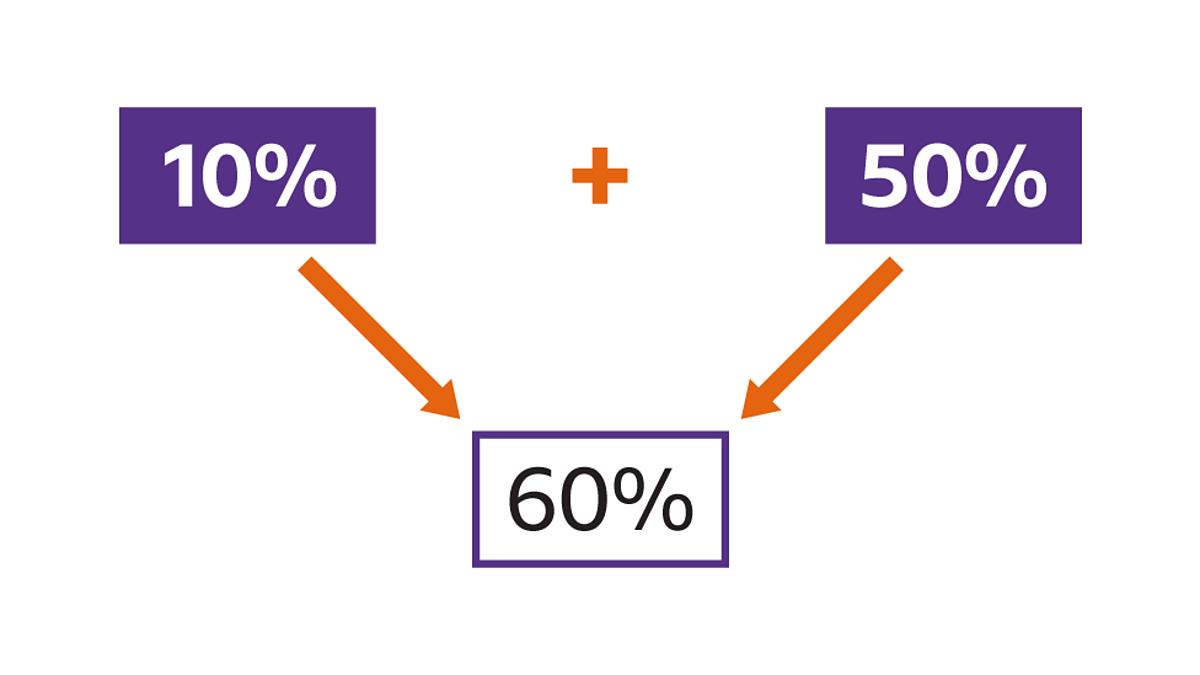
At its core, a percentage is a ratio that represents a fraction of 100. In finance, this “fraction” often represents growth, cost, risk, or allocation. To find the percentage of something, the basic formula is:
** (Part / Whole) × 100 = Percentage **
Understanding the “Whole” in Money Management
In personal finance, identifying the “whole” is the first step toward clarity. If you are creating a budget, the “whole” is your total net income. If you are calculating a tax rate, the “whole” is your gross taxable earnings. For example, if you earn $5,000 a month and spend $1,200 on rent, the percentage of your income dedicated to housing is ($1,200 / $5,000) × 100, which equals 24%.
The Role of Percentage Change
In the financial markets, we rarely look at static numbers. We look at movement. Percentage change tells us how much an asset has increased or decreased in value relative to its starting point. The formula for percentage change is:
** [(New Value – Old Value) / Old Value] × 100 **
This is vital for tracking the “Money” niche because a $10 move in a $50 stock is a significant 20% gain, whereas a $10 move in a $1,000 stock is a mere 1% fluctuation.
Decimal Conversions for Rapid Calculation
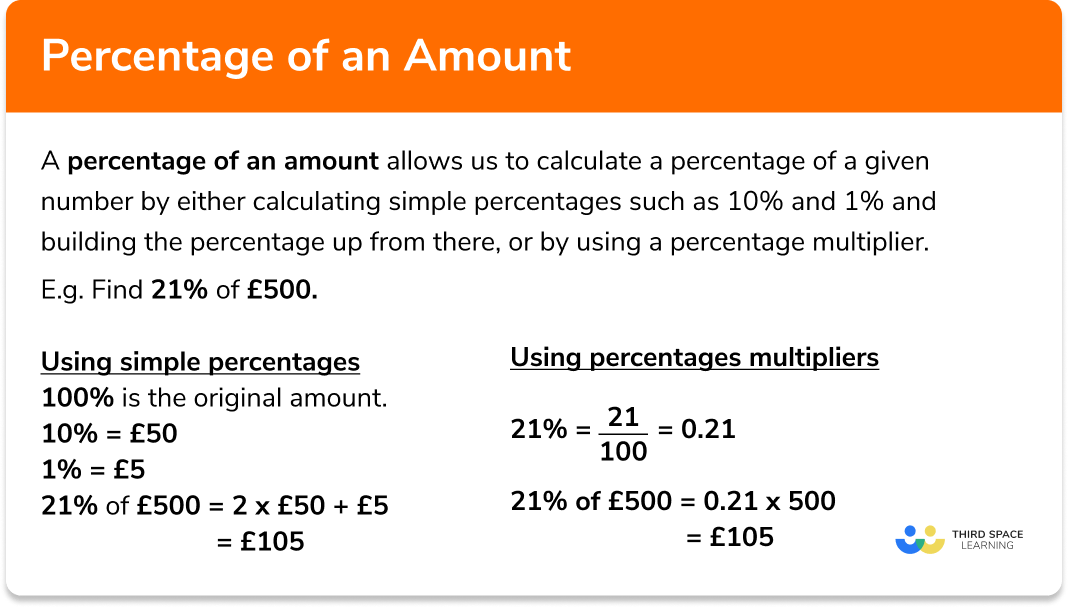
Financial professionals often bypass the “multiply by 100” step by working directly with decimals. Understanding that 5% is 0.05 and 120% is 1.2 is essential when using financial software or calculating interest rates manually. This mental agility allows for quicker assessments of deals and discounts during high-stakes negotiations.
2. Measuring Investment Performance and ROI
For investors, percentages are the ultimate yardstick for success. Raw dollar gains are secondary to the efficiency of the capital deployed. This is where Return on Investment (ROI) and other yield metrics become the focus of the calculation.
Calculating Return on Investment (ROI)
ROI is the most common percentage calculation in the “Money” niche. It measures the probability of gaining a profit from an investment. If you invest $10,000 in a mutual fund and sell it a year later for $11,500, your ROI is calculated as:
($11,500 – $10,000) / $10,000 = 0.15 or 15%.
This 15% figure is far more descriptive than the $1,500 gain because it allows you to compare the fund’s performance against other benchmarks, such as the S&P 500 or a high-yield savings account.
Yield and Dividend Percentages
For income-focused investors, the “Dividend Yield” is a critical percentage. It represents how much a company pays out in dividends each year relative to its stock price. If a stock costs $100 and pays an annual dividend of $4, the yield is 4%. Finding this percentage helps investors determine the cash-flow efficiency of their portfolio, especially when compared to the prevailing interest rates set by central banks.
Real vs. Nominal Returns: The Inflation Factor
A common mistake in financial planning is ignoring the percentage of inflation. If your investment grows by 8% (Nominal Return) but inflation is at 3%, your “Real Return” is actually roughly 5%. To find the true percentage of your purchasing power’s growth, you must subtract the inflation percentage from your nominal gains. This calculation is the difference between a portfolio that grows on paper and one that grows in real-world utility.
3. Business Profitability and Margin Analysis
In the corporate and entrepreneurial world, finding the percentage of profit is what separates sustainable businesses from those destined for bankruptcy. Business owners must constantly calculate margins to ensure their pricing models cover costs and generate surplus capital.
Gross Profit Margin vs. Net Profit Margin
Profit margin is expressed as a percentage of total revenue.
- Gross Profit Margin = [(Revenue – Cost of Goods Sold) / Revenue] × 100. This shows the efficiency of production.
- Net Profit Margin = (Net Income / Revenue) × 100. This shows what remains after all expenses—including taxes and interest—have been paid.
If a business has a high gross margin but a low net margin, the percentage calculation reveals that the company is efficient at making products but inefficient at managing administrative overhead.
The Markup Trap
Many new business owners confuse “margin” with “markup.” If you buy an item for $80 and sell it for $100, your markup is 25% (the $20 profit is 25% of the $80 cost). However, your profit margin is only 20% (the $20 profit is 20% of the $100 selling price). Understanding this distinction is vital for financial forecasting; if you aim for a 20% profit margin, you cannot simply mark up your items by 20%.
Break-even Analysis Percentages
Finding the “break-even point” often involves calculating the percentage of fixed costs relative to the contribution margin of each unit sold. For a business to scale, management must understand what percentage of every dollar earned goes toward “keeping the lights on” versus what percentage contributes to growth and expansion.
4. Personal Finance Applications: Interest, Debt, and Taxes
Outside of the stock market and corporate boardrooms, percentages dominate our daily interactions with money through debt and taxation.
Navigating APR and APY
When borrowing money, you encounter the Annual Percentage Rate (APR). When saving, you encounter the Annual Percentage Yield (APY). While they sound similar, the calculation of APY includes the effect of compounding interest—the process where interest earns interest. Knowing how to calculate the percentage impact of compounding over ten years versus one year can be the difference between retiring comfortably or struggling in later life.
The Impact of Tax Brackets
Progressive taxation is entirely based on percentages. However, many people misunderstand how to find their “Effective Tax Rate.” If you are in the 22% tax bracket, you do not pay 22% on all your income. You pay 10% on the first portion, 12% on the next, and 22% only on the final portion. Your effective tax rate is the percentage found by dividing your total tax paid by your total income. Calculating this percentage is the first step in efficient tax planning and wealth preservation.
Debt-to-Income Ratio (DTI)
Lenders use percentages to determine your creditworthiness. The Debt-to-Income ratio is calculated by dividing your monthly debt payments by your gross monthly income. A DTI of 36% or lower is generally considered healthy. If you find your DTI percentage creeping toward 50%, the numbers are signaling a high risk of financial insolvency, regardless of how high your absolute income might be.
5. Digital Tools and Strategies for Financial Calculation
While understanding the manual formulas is essential for conceptual clarity, modern financial management relies on digital tools to handle complex, multi-variable percentage calculations.
Leveraging Spreadsheets for Financial Modeling
Software like Microsoft Excel and Google Sheets is designed around percentage calculations. Using the “Percentage” format in a cell allows you to input “0.05” and have it display as “5%.” More importantly, functions like =PPMT (Principal Payment) and =IPMT (Interest Payment) allow you to break down what percentage of your monthly mortgage payment is going toward equity versus what percentage is being lost to interest.
Financial Calculators and AI Tools
Today, sophisticated financial calculators can solve for “what-if” scenarios. For instance, you can calculate what percentage increase in your monthly savings is required to reach a million-dollar goal by age 60, given a 7% average annual return. AI-driven financial tools now provide real-time percentage analysis of spending habits, flagging when a specific category (like dining out) represents a disproportionately high percentage of your total expenditure.

Conclusion: The Power of the Percent
Finding the percentage of something is more than a mathematical exercise; it is a diagnostic tool for financial health. In the “Money” niche, percentages provide the context necessary to make informed decisions. They strip away the “noise” of large numbers and reveal the underlying trends of growth, cost, and risk. Whether you are an individual saver or a corporate treasurer, the ability to calculate and interpret these percentages is the foundation of long-term fiscal success. By consistently applying these formulas to your ROI, profit margins, and debt ratios, you gain a level of control over your financial future that raw numbers alone can never provide.
aViewFromTheCave is a participant in the Amazon Services LLC Associates Program, an affiliate advertising program designed to provide a means for sites to earn advertising fees by advertising and linking to Amazon.com. Amazon, the Amazon logo, AmazonSupply, and the AmazonSupply logo are trademarks of Amazon.com, Inc. or its affiliates. As an Amazon Associate we earn affiliate commissions from qualifying purchases.