
Understanding how to figure out the percentage of money is one of the most vital skills in personal and business finance. Percentages are the universal language of the financial world; they represent interest rates, investment returns, tax brackets, discounts, and budget allocations. Without a firm grasp of these calculations, it is nearly impossible to navigate the complexities of wealth management or even simple daily transactions.
Whether you are calculating the tip at a restaurant, determining the return on a stock investment, or trying to understand how much of your paycheck is going toward housing, the math remains rooted in a few fundamental principles. This guide provides a deep dive into the mechanics of financial percentages, offering practical applications to help you master your money.
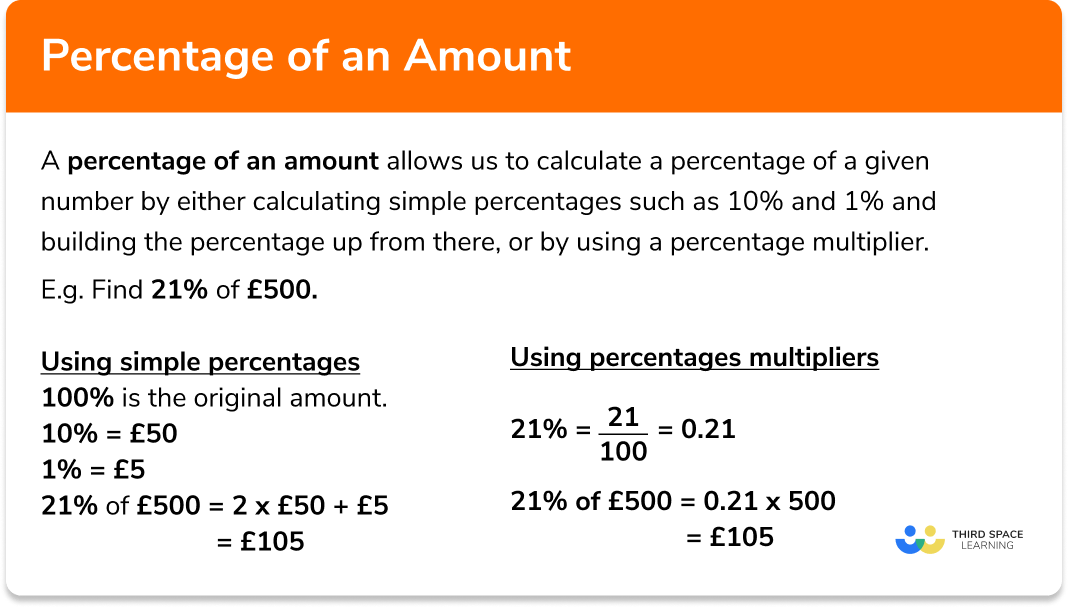
The Mathematical Foundations of Financial Percentages
Before applying percentages to complex investment portfolios or corporate balance sheets, one must master the basic arithmetic that governs these figures. At its core, “percent” means “per hundred.” When we talk about money in terms of percentages, we are essentially looking at a portion of a whole relative to 100.
The Basic Percentage Formula
To find the percentage of a specific amount of money, the formula is straightforward:
(Part / Whole) × 100 = Percentage.
For example, if you saved $200 out of a $1,000 paycheck, you would divide 200 by 1,000 to get 0.2. Multiplying 0.2 by 100 gives you 20%. Conversely, if you need to find a specific percentage of a total sum (e.g., what is 15% of $80?), you convert the percentage to a decimal and multiply: 0.15 × 80 = $12. Mastering this “decimal shift”—moving the decimal point two places to the left—is the quickest way to perform mental financial math.
Percentage Change: Increases and Decreases
In the world of finance, we rarely look at numbers in isolation. We look at how they move over time. Calculating percentage change is essential for tracking inflation, portfolio growth, or salary raises. The formula is:
[(New Amount – Old Amount) / Old Amount] × 100.
If your monthly rent increases from $1,200 to $1,350, the “New minus Old” is $150. Dividing $150 by the original $1,200 gives you 0.125, or a 12.5% increase. Understanding this distinction is critical because a 10% decrease followed by a 10% increase does not bring you back to your original starting point—a common pitfall in investment logic.
Percentage Points vs. Percentages
A common point of confusion in financial reporting is the difference between a “percentage” and a “percentage point.” If an interest rate moves from 3% to 4%, it has increased by one percentage point. However, in terms of the actual cost of the interest, it has increased by 33.3% (1 divided by 3). Distinguishing between these two concepts is vital when reading economic news or analyzing loan terms.
Applying Percentages to Budgeting and Personal Cash Flow
Budgeting is essentially the art of dividing 100% of your income into various “buckets.” By viewing your finances through the lens of percentages rather than raw dollar amounts, you can maintain a consistent lifestyle even as your income fluctuates.
The 50/30/20 Rule
One of the most popular personal finance frameworks is the 50/30/20 rule. This strategy suggests allocating your after-tax income into three percentage-based categories:
- 50% for Needs: Housing, utilities, groceries, and insurance.
- 30% for Wants: Dining out, travel, and hobbies.
- 20% for Financial Goals: Debt repayment, emergency funds, and retirement.
By calculating these percentages, you can quickly identify if you are “house poor” (spending more than 30-35% of your income on rent or mortgage) or if your lifestyle inflation is eating into your long-term security.
Calculating Your Savings Rate
Your savings rate is perhaps the most important percentage in your financial life. It is calculated by taking your total monthly savings and dividing it by your gross or net income. A high savings rate (typically 15% or higher) is a stronger predictor of future wealth than a high salary alone. If you earn $5,000 a month and save $750, your savings rate is 15%. Tracking this percentage monthly allows you to see if you are becoming more or less efficient with your capital.
Debt-to-Income Ratio (DTI)
Lenders use the Debt-to-Income ratio to determine your creditworthiness. To figure this out, you add up all your monthly debt payments (student loans, car notes, credit card minimums) and divide them by your gross monthly income. Most financial advisors suggest keeping your DTI below 36%. Knowing how to calculate this percentage yourself can help you determine how much home you can realistically afford before you ever step foot in a bank.

Mastering Percentages in Investment and Wealth Growth
When you move from saving money to investing it, percentages become the primary metric for success. Investors rarely ask “How many dollars did you make?” but rather “What was your percentage return?”
Return on Investment (ROI)
ROI is the ultimate measuring stick for any financial endeavor. To calculate ROI, you subtract the initial cost of the investment from its final value, then divide that number by the initial cost.
ROI = (Current Value – Cost) / Cost.
If you bought a stock for $1,000 and sold it for $1,200, your ROI is 20%. However, to truly understand the performance, you must also consider the time horizon, often referred to as the Annualized Return. A 20% return over one year is excellent; a 20% return over ten years is significantly less impressive as it may not even keep pace with inflation.
Understanding Compound Interest and APY
Interest is money paid to you (savings) or by you (loans). Annual Percentage Yield (APY) reflects the real rate of return on an account by taking into account the effect of compounding interest. Compounding happens when the interest you earn begins to earn interest on itself.
The formula for compound interest is: A = P(1 + r/n)^{nt}, where “r” is the interest rate and “n” is the number of times interest is compounded per year. While the formula looks daunting, understanding the underlying percentage mechanics allows you to visualize how a small percentage of growth can lead to exponential wealth over decades.
Dividend Yields and Expense Ratios
For stock market investors, two specific percentages are crucial:
- Dividend Yield: This is the annual dividend payment divided by the stock’s price. It tells you what percentage of “cash back” you are getting just for holding the asset.
- Expense Ratio: This is the percentage of your investment that goes to pay for a mutual fund or ETF’s management. A 1% expense ratio might sound small, but over 30 years, that 1% “fee” can eat up nearly 25-30% of your total potential portfolio value due to the loss of compounding.
Practical Money Scenarios: Discounts, Taxes, and Gratuity
Beyond high-level investing, we use financial percentages in our daily consumer lives. Being able to calculate these on the fly prevents overspending and ensures you are paying the correct amount for goods and services.
Deciphering “Sale” Math
Retailers often use percentages to trick the human brain. For instance, is “Buy One Get One 50% Off” better than a flat “25% Off” on two items? (The math is the same, but the psychological impact differs). To find a discounted price, subtract the discount percentage from 100% and multiply the total by the remainder. If a $200 jacket is 30% off, you are paying 70% of the price.
0.70 × 200 = $140.
Sales Tax and Gratuity
Sales tax is a percentage added to the subtotal. If your state tax is 8.25%, you multiply your total by 0.0825 and add it back, or simply multiply by 1.0825 to get the final total in one step.
When it comes to tipping, a quick shortcut for 20% (the standard for good service) is to find 10% by moving the decimal one place to the left, then doubling that number. For a $64.00 bill, 10% is $6.40. Double it to get $12.80.
Gross vs. Net Income
When you receive a job offer for $70,000, that is your “Gross” income. However, your “Net” income (take-home pay) is what remains after a percentage is taken for federal taxes, state taxes, FICA, and healthcare. Understanding your “effective tax rate”—the actual percentage of your total income that goes to the government—is essential for accurate financial planning.
Leveraging Tools for Financial Accuracy
While mental math is a great skill, complex financial planning requires precision. Utilizing technology can help you track these percentages with 100% accuracy.
The Power of Spreadsheets
Software like Microsoft Excel or Google Sheets is built on percentage logic. By using formulas like =SUM(A1/B1) and formatting the cell as a percentage, you can create dynamic budgets that update automatically. If your income increases, the spreadsheet can immediately show you how that shifts your percentage of spending on rent or leisure.
Online Financial Calculators
For more complex tasks like mortgage amortization or retirement projections, online calculators are indispensable. These tools take percentages (interest rates, inflation expectations, and expected market returns) and project them over decades. They allow you to run “what-if” scenarios: “What if I increase my 401(k) contribution by just 2%?” Seeing the long-term impact of a 2% shift can be the motivation needed to tighten a budget.

Conclusion: Math as a Financial Power Tool
Learning how to figure out the percentage of money is more than just a math exercise; it is an act of empowerment. When you understand percentages, you can see past marketing gimmicks, negotiate better salaries, and choose investments that truly align with your goals. By consistently applying these formulas to your budget, your debt, and your investments, you move from being a passive observer of your finances to an active, informed manager of your wealth. Percentages provide the clarity needed to turn financial goals into a mathematical reality.
aViewFromTheCave is a participant in the Amazon Services LLC Associates Program, an affiliate advertising program designed to provide a means for sites to earn advertising fees by advertising and linking to Amazon.com. Amazon, the Amazon logo, AmazonSupply, and the AmazonSupply logo are trademarks of Amazon.com, Inc. or its affiliates. As an Amazon Associate we earn affiliate commissions from qualifying purchases.