
In the realm of personal and business finance, percentages are the primary language used to measure growth, risk, and value. Whether you are calculating the return on an investment, determining the impact of inflation on your purchasing power, or negotiating a salary increase, the ability to figure out a percentage of a number is a fundamental skill. Understanding these figures is not merely an academic exercise; it is the cornerstone of financial literacy that allows individuals to move from passive observers of their bank accounts to active architects of their wealth.

When we talk about money, we are rarely talking about static numbers. We are talking about rates of change. To master your money, you must move beyond simple addition and subtraction and embrace the proportional logic of percentages. This guide explores the essential mechanics of percentage calculations and their critical applications across the spectrum of finance.
The Fundamentals of Percentage Calculations in Personal Finance
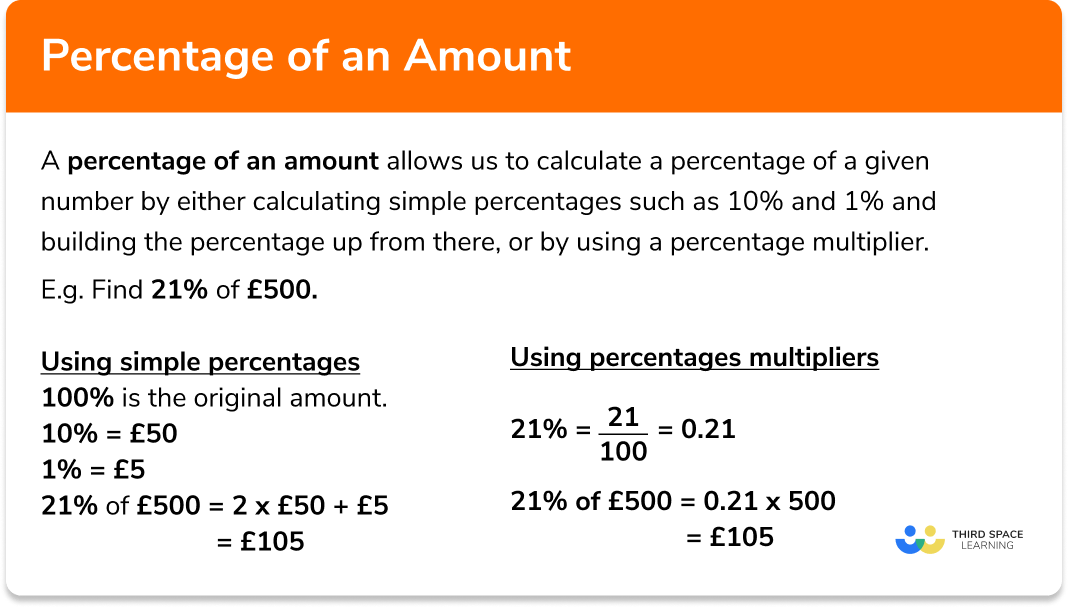
At its core, a percentage is a ratio that represents a fraction of 100. While the mathematical formula is straightforward, its application in daily financial life requires a shift in perspective. To find a percentage of a number, you essentially multiply the total amount by the decimal form of the percentage.
The Basic Formula for Daily Life
The most common way to calculate a percentage is the “Part over Whole” method. To find what percentage $X$ is of $Y$, you divide $X$ by $Y$ and multiply by 100. Conversely, to find a specific percentage of a number—for instance, a 15% tip on a $60 bill—you convert the percentage to a decimal (0.15) and multiply it by the total ($60 times 0.15 = $9$).
In a financial context, this is often used for “mental accounting.” For example, if you decide to save 20% of your $5,000 monthly income, you are calculating $5,000 times 0.20$, which equals $1,000$. Mastering this simple calculation allows you to automate your savings and ensure that your financial goals are met before you begin discretionary spending.
Understanding Percentages vs. Basis Points
In professional finance and high-level investing, the increments can become so small that using standard percentages becomes cumbersome. This is where “basis points” (BPS) come into play. One basis point is equal to 1/100th of 1 percent (0.01%).
For example, if the Federal Reserve raises interest rates by 50 basis points, they have increased the rate by 0.50%. While this may seem like a negligible difference to a casual observer, in the world of bond markets or mortgage lending, a few dozen basis points can represent thousands of dollars in interest over the life of a loan. Understanding how to convert these figures back into tangible percentages is a vital skill for anyone looking to manage large-scale debt or fixed-income portfolios.
Applying Percentages to Investment Growth and Portfolio Management
Investing is entirely predicated on the concept of percentage growth. When you analyze a stock, a mutual fund, or a piece of real estate, you are looking for the “yield” or the “return,” both of which are expressed as percentages of the initial capital invested.
Calculating Annualized Returns (ROI)
Return on Investment (ROI) is the most common metric used to judge the success of a financial venture. To calculate ROI, you take the net profit of the investment, divide it by the original cost, and multiply by 100.
If you bought a stock for $1,000 and sold it a year later for $1,200, your profit is $200. Dividing $200 by $1,000 gives you 0.20, or a 20% ROI. However, sophisticated investors look at the “annualized” return, which accounts for the time the money was held. Knowing how to calculate these percentages allows you to compare different asset classes—such as comparing a 7% return in the stock market against a 4% yield on a high-interest savings account—on an even playing field.
The Power of Compound Interest
Albert Einstein famously called compound interest the “eighth wonder of the world.” This is where the percentage of a number is recalculated over and over, with the “number” growing each time. If you earn a 10% return on $1,000, you have $1,100. The following year, you earn 10% on that $1,100, which is $110, bringing your total to $1,210.
Understanding the percentage-based nature of compounding is the difference between modest savings and significant wealth. Even a 1% difference in the annual percentage yield (APY) of a retirement account can result in hundreds of thousands of dollars in difference over a 30-year career. This highlights why it is crucial to calculate the “expense ratios” (the percentage fee charged by funds) when selecting investments, as a high percentage fee can eat away at your compounding growth.
Diversification and Asset Allocation Percentages
Strategic money management involves “Asset Allocation,” which is the process of dividing your investment portfolio among different categories, such as stocks, bonds, and cash. This is always done in percentages. A common aggressive strategy might be an “80/20” split (80% stocks, 20% bonds).
As the market fluctuates, these percentages will shift. If stocks perform well, they might grow to represent 90% of your portfolio. “Rebalancing” is the act of calculating these new percentages and selling or buying assets to return to your original percentage targets. Without a firm grasp of how to calculate these proportions, maintaining a balanced risk profile becomes nearly impossible.
Navigating Debt, Interest Rates, and Credit Costs
While percentages work in your favor in investing, they often work against you in the world of debt. Interest is simply the percentage price you pay for the privilege of using someone else’s money.
How APR Affects Your Monthly Payments
The Annual Percentage Rate (APR) is the most critical number to look at when taking out a loan or using a credit card. However, calculating the percentage of a number becomes more complex here because of “amortization” and “compounding frequency.”
For a credit card with a 24% APR, the interest isn’t just calculated once a year; it is often calculated daily based on a periodic rate ($24% / 365$). By understanding that your daily balance is being multiplied by this tiny percentage every single day, you can see why carrying a balance is so financially destructive. Figuring out the percentage of your monthly payment that goes toward interest versus principal is the first step in creating a debt-paydown strategy like the “Debt Avalanche” method.
Calculating the Real Cost of Loans
When people buy a car or a home, they often focus on the total price (the principal). However, the real cost of the asset is the principal plus the total interest paid over the life of the loan. By calculating the percentage of the total cost that is interest, buyers can make better decisions. For instance, on a 30-year mortgage at 7%, you may end up paying more in interest over three decades than the original cost of the house itself. Knowing how to run these percentage-based scenarios allows you to decide whether it is more beneficial to make a larger down payment or to pay off the loan early.
Business Finance: Margins, Markups, and Profitability
For those involved in business—whether it’s a multinational corporation or a side hustle selling handmade goods—percentages are the primary indicator of health. Revenue is a “vanity metric,” but profit margins are a “sanity metric.”
Gross Profit Margin vs. Net Profit Margin
A common mistake in business is confusing markup with margin. If you buy a product for $50 and sell it for $100, you have a 100% markup, but a 50% gross profit margin. To figure out your margin percentage, you take the profit ($50) and divide it by the selling price ($100).
Business owners must also calculate the “Net Profit Margin,” which is the percentage of revenue left after all expenses—taxes, rent, payroll, and marketing—have been paid. If your net margin is only 5%, your business is at high risk if costs increase by even a small percentage. Knowing these figures allows entrepreneurs to price their services correctly to ensure long-term sustainability.
Using Percentages for Scalable Side Hustles
For those looking to generate online income or start a side hustle, percentages help determine scalability. For example, if you are running paid advertisements on social media, you calculate your “Conversion Rate”—the percentage of visitors who actually make a purchase. If 1,000 people visit your site and 20 buy something, your conversion rate is 2%. By knowing this percentage, you can accurately predict how much you need to spend on advertising to reach your monthly income goals.
Tax Optimization and Budgeting with the 50/30/20 Rule
Finally, percentages are the most effective way to organize a personal budget and plan for the “tax man.” Fixed dollar amounts are difficult to adjust as your income changes, but percentage-based budgets scale with you.
Estimating Income Tax Brackets
In many countries, income tax is progressive, meaning different percentages of your income are taxed at different rates. Understanding your “effective tax rate”—the actual percentage of your total income that goes to the government—is vital for accurate financial planning. If you receive a bonus or a raise, you need to calculate what percentage of that new money will actually hit your bank account after taxes to avoid overspending.
The 50/30/20 Budgeting Framework
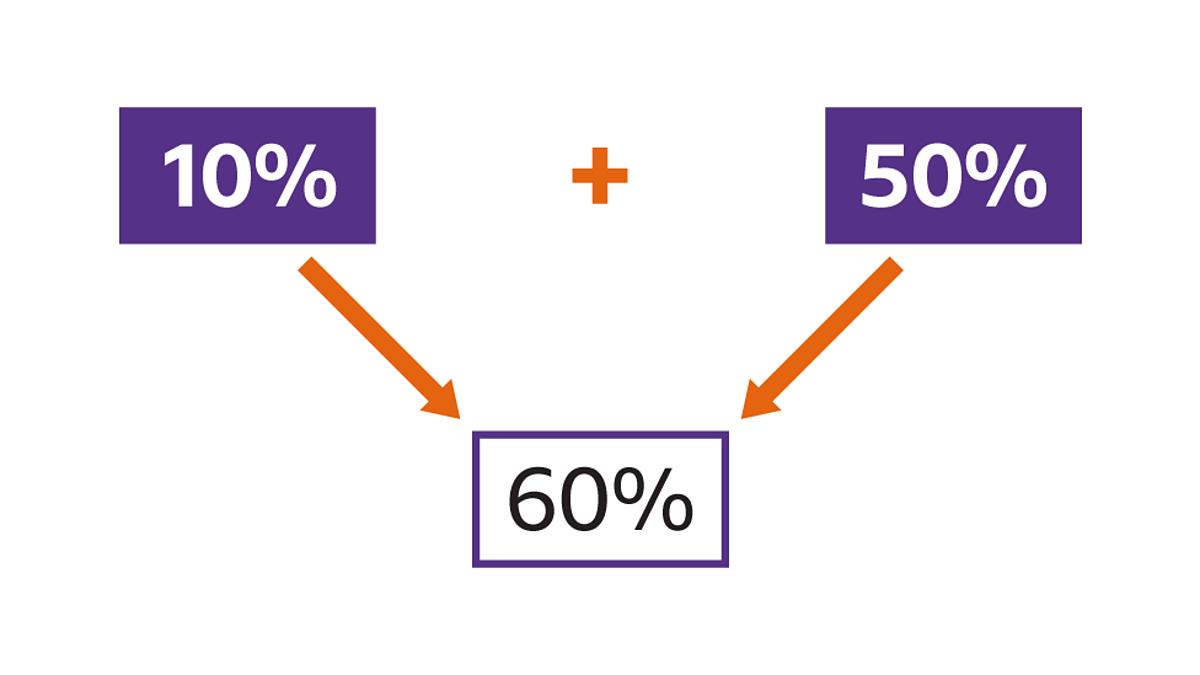
One of the most popular financial tools is the 50/30/20 rule. This framework suggests allocating your after-tax income into three percentage-based categories:
- 50% for Needs: Housing, groceries, utilities, and insurance.
- 30% for Wants: Dining out, hobbies, and travel.
- 20% for Financial Goals: Debt repayment, emergency funds, and retirement investments.
By viewing your money through the lens of these percentages rather than raw numbers, you create a flexible system. If your income goes up, your “Wants” budget increases proportionally, but your “Financial Goals” also receive a corresponding boost. This ensures that your lifestyle does not inflate faster than your savings.
In conclusion, the ability to figure out a percentage of a number is more than a mathematical trick; it is a vital tool for financial survival and prosperity. From the compounding interest in your 401(k) to the profit margins of your side business, percentages provide the clarity needed to make informed, professional, and strategic financial decisions. By mastering these calculations, you gain the ability to see the “big picture” of your financial health, ensuring that every dollar is working as efficiently as possible toward your long-term wealth.
aViewFromTheCave is a participant in the Amazon Services LLC Associates Program, an affiliate advertising program designed to provide a means for sites to earn advertising fees by advertising and linking to Amazon.com. Amazon, the Amazon logo, AmazonSupply, and the AmazonSupply logo are trademarks of Amazon.com, Inc. or its affiliates. As an Amazon Associate we earn affiliate commissions from qualifying purchases.