
In the world of personal finance and corporate strategy, numbers are the language of progress. Whether you are tracking the growth of a retirement portfolio, evaluating the success of a new revenue stream, or analyzing the impact of inflation on your purchasing power, the ability to calculate percentage increase is an essential skill. It is the fundamental metric that transforms raw data into actionable insights, allowing investors and business owners to move beyond simple dollar amounts and understand the actual velocity of their financial journey.
Understanding percentage increase is not merely an academic exercise in mathematics; it is a vital tool for financial literacy. It allows for “apples-to-apples” comparisons across different asset classes and timeframes. Without it, determining whether a $1,000 gain on a $5,000 investment is better than a $5,000 gain on a $50,000 investment would be a matter of guesswork rather than clinical analysis.
The Fundamentals of Percentage Increase in Finance
At its core, percentage increase measures the relative change between an initial value and a final value. In the context of money, this represents the growth of capital over a specific period. To navigate the complexities of the financial markets, one must first master the basic arithmetic that governs these changes.
The Standard Mathematical Formula
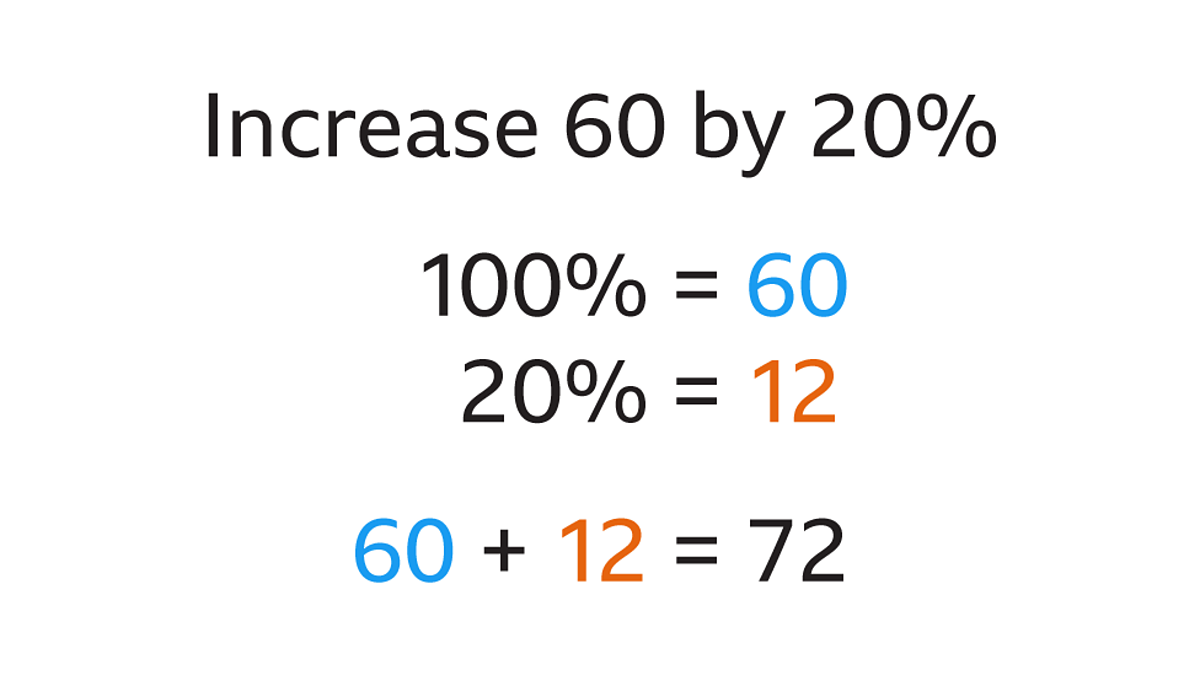
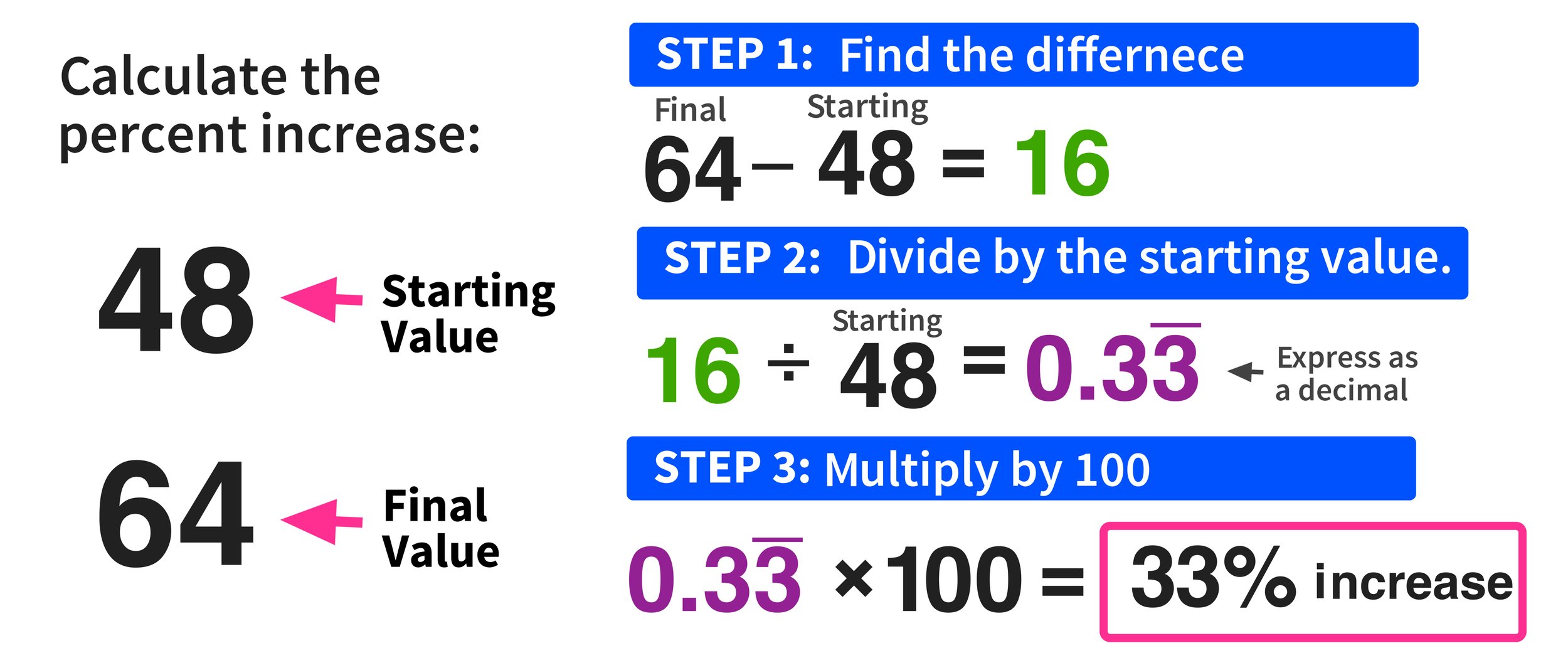
The process of figuring out percentage increase follows a reliable three-step formula. First, subtract the original value from the new value to find the “increase.” Second, divide that increase by the original value. Finally, multiply the result by 100 to convert the decimal into a percentage.
Mathematically, it looks like this:
((New Value – Old Value) / Old Value) x 100 = Percentage Increase
For example, if you purchased a share of a technology company for $150 and its market price rose to $210, your calculation would be:
($210 – $150) / $150 = 0.40.
0.40 x 100 = 40%.
Why Accuracy Matters in Money Management
In the financial sector, a small error in percentage calculation can lead to massive discrepancies in projected outcomes. Financial advisors and analysts rely on these figures to determine risk tolerance and asset allocation. When managing a business budget, a 5% increase in overhead costs might seem negligible, but when applied to a multi-million dollar operation, it represents a significant drain on liquidity. Precision in these calculations ensures that stakeholders are making decisions based on reality rather than intuition.
Measuring Investment Performance and Portfolio Growth
For the individual investor, the percentage increase is the ultimate barometer of success. It provides a clear picture of how hard your money is working for you. In the “Money” niche, we often refer to this as the “Rate of Return,” and it is the primary factor in determining whether an investment strategy is meeting its long-term goals.
Calculating Return on Investment (ROI)
ROI is perhaps the most common application of percentage increase in the financial world. It measures the efficiency of an investment. However, to get a true sense of ROI, one must include all variables, such as dividends and transaction fees. If you buy a rental property for $300,000 and sell it for $360,000 after two years, the raw percentage increase is 20%.
However, a sophisticated investor looks deeper. If that property also generated $24,000 in rental income during that time, the “New Value” in your formula should reflect the total return ($360,000 + $24,000), significantly boosting the percentage increase. Learning to calculate these nuances allows you to compare the profitability of real estate versus stocks or bonds accurately.
Tracking Compound Growth Over Time
While simple percentage increase measures growth from Point A to Point B, the concept of Compound Annual Growth Rate (CAGR) is what truly builds wealth. CAGR provides a smoothed annual rate of return, which is essential because investments rarely grow in a straight line. By understanding the percentage increase year-over-year, you can visualize the “snowball effect” of your investments. A 10% increase every year for seven years doesn’t just result in a 70% total increase; due to compounding, your money actually doubles. Recognizing this mathematical reality is often the catalyst that encourages disciplined, long-term saving.
Percentage Increase in Business Finance and Profitability
For entrepreneurs and corporate executives, the percentage increase is a Key Performance Indicator (KPI) that signals the health of a business. It is used to evaluate sales performance, market share, and operational efficiency. In a competitive landscape, staying stagnant is often synonymous with falling behind; therefore, tracking growth percentages is a daily necessity.
Analyzing Revenue Year-over-Year (YoY)
Raw revenue figures can be deceptive. A company might bring in $1 million in December, which sounds impressive, but if they brought in $1.2 million the previous December, the business is actually experiencing a 16.6% decrease.
Year-over-Year (YoY) analysis uses the percentage increase formula to compare a specific period with the same period from the previous year. This accounts for seasonality—such as the holiday rush in retail or the tax season for accounting firms—providing a much more accurate reflection of a company’s trajectory. Investors looking at a business’s financial statements prioritize these percentage trends over individual monthly totals because trends reveal the sustainability of the business model.
Understanding Margin Expansion
Profitability isn’t just about increasing sales; it’s about increasing the percentage of each dollar that the company keeps. This is known as margin expansion. If a business increases its prices by 10% while keeping its cost of goods sold (COGS) steady, its net profit margin will see a significant percentage increase.
Business owners use these calculations to decide when to scale. If the cost of customer acquisition is increasing at a higher percentage rate than the lifetime value of that customer, the business is heading toward a liquidity crisis. Monitoring these percentages allows for “pivoting” before the financial damage becomes irreversible.
Economic Context: Inflation and Purchasing Power
In the broader scope of personal finance, the percentage increase of your assets must always be measured against the percentage increase of the cost of living. This is the silent killer of wealth: inflation.
How Price Hikes Affect Your Budget
Inflation is essentially a percentage increase in the average price of goods and services. If the Consumer Price Index (CPI) shows a 5% increase over a year, your $100 today will only buy $95 worth of goods next year. To maintain your standard of living, your income must see a corresponding percentage increase.
This is why “cost of living adjustments” (COLA) are so vital in employment contracts. When negotiating a salary, understanding that a 3% raise in a 5% inflation environment is actually a 2% cut in “real” wages is a powerful realization. It changes the way you view your earnings and forces a more strategic approach to career growth and side hustles.
Adjusting for Real vs. Nominal Gains
In the “Money” niche, we distinguish between nominal returns (the raw percentage increase) and real returns (the increase after adjusting for inflation). If your savings account offers a 4% interest rate, but inflation is at 4%, your “Real Percentage Increase” is 0%. Your wealth is not actually growing; it is simply treading water. To truly build wealth, an individual must seek out investment vehicles where the percentage increase consistently outpaces the rate of inflation, such as equities or indexed commodities.
Practical Tools and Shortcuts for Financial Calculations
While the formula is simple, the application of percentage increase calculations in a fast-paced financial environment often requires the use of specialized tools and mental shortcuts.
Leveraging Excel and Financial Calculators
For complex portfolio tracking, manual calculations become cumbersome. Software like Microsoft Excel or Google Sheets utilizes specific functions to automate these tasks. By using the formula =(New_Cell - Old_Cell)/Old_Cell and formatting the cell as a percentage, you can track hundreds of assets simultaneously. Furthermore, dedicated financial calculators (like the HP 12C or digital equivalents) allow professionals to calculate “Percentage of Total” or “Percent Change” with dedicated hardware buttons, reducing the margin for human error during high-stakes negotiations.
Mental Math for Fast Decision Making
In the world of business finance, you don’t always have a spreadsheet in front of you. Being able to approximate percentage increases mentally is a “superpower” for investors. A quick trick is the “10% rule.” To find 10% of any number, simply move the decimal point one place to the left. If a stock is $42.00, 10% is $4.20. If the stock moves up by $8.40, you instantly know that is a 20% increase.
Mastering these mental shortcuts allows you to evaluate deals on the fly, whether you’re at a real estate auction or discussing a partnership over lunch. It demonstrates a level of financial fluency that commands respect and ensures you are never the least informed person in the room.

Conclusion: The Language of Wealth
Figuring out percentage increase is more than a math problem; it is the cornerstone of financial intelligence. From the micro-level of personal budgeting to the macro-level of global economic trends, this single calculation provides the clarity needed to navigate a complex financial world. By consistently applying the percentage increase formula to your investments, your business operations, and your career earnings, you gain the ability to measure your progress with surgical precision. In the pursuit of financial freedom, what you cannot measure, you cannot manage. Mastering the percentage increase ensures that you are always in control of your financial destiny.
aViewFromTheCave is a participant in the Amazon Services LLC Associates Program, an affiliate advertising program designed to provide a means for sites to earn advertising fees by advertising and linking to Amazon.com. Amazon, the Amazon logo, AmazonSupply, and the AmazonSupply logo are trademarks of Amazon.com, Inc. or its affiliates. As an Amazon Associate we earn affiliate commissions from qualifying purchases.