
In the realm of personal and business finance, the ability to calculate percentages is not merely a mathematical skill—it is a fundamental pillar of financial literacy. Whether you are evaluating the performance of a stock portfolio, determining the impact of inflation on your purchasing power, or calculating the interest owed on a high-yield savings account, percentages serve as the universal language of value. Understanding how to calculate the percentage of a number allows you to strip away the noise of raw data and reveal the underlying trends that dictate your financial health.
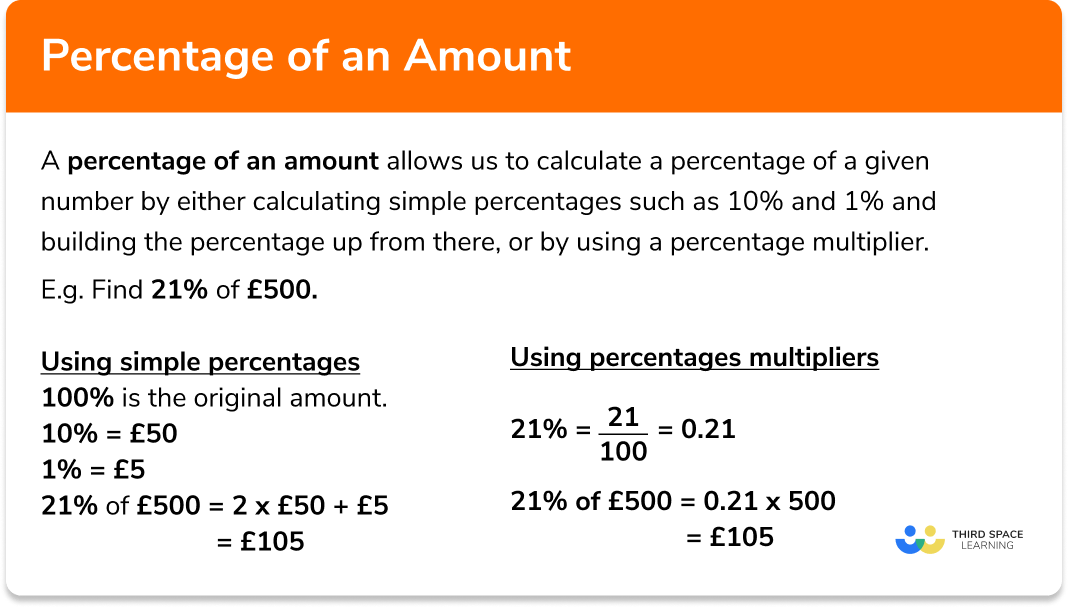
This guide explores the essential techniques for calculating percentages within the “Money” niche, providing you with the tools to navigate budgeting, investing, and debt management with professional precision.
1. The Core Fundamentals: Manual and Mental Calculation in Finance
Before diving into complex financial software, every savvy investor or budgeter should master the manual calculation of percentages. In finance, a percentage represents a fraction of 100, which allows for a standardized comparison between different sets of data, such as comparing the growth of a $1,000 investment versus a $100,000 investment.
The Standard Percentage Formula
The most basic way to find the percentage of a number is to multiply the “whole” amount by the percentage expressed as a decimal. The formula is:
Value = Total Amount × (Percentage / 100)
For example, if you want to set aside 15% of a $5,000 monthly commission for taxes, you would calculate:
$5,000 × 0.15 = $750.
Finding the Percentage Change
In the context of the stock market or business revenue, you often need to find the percentage of growth or decline between two numbers. This is known as the percentage change formula:
((New Value – Old Value) / Old Value) × 100
If a share price moves from $120 to $150, the calculation would be (($150 – $120) / $120) × 100, resulting in a 25% increase. Mastery of this formula is critical for assessing the volatility and performance of any asset class.
Professional Mental Math Shortcuts
In a boardroom or during a quick negotiation, you may not have a calculator. Financial professionals use the “10% rule” to estimate. To find 10% of any number, simply move the decimal point one place to the left. To find 5%, halve the 10% result. To find 20%, double it. These shortcuts allow for rapid assessment of tips, discounts, or commission splits.
2. Applying Percentages to Strategic Budgeting and Cash Flow
Effective money management relies heavily on the allocation of capital based on percentage-based frameworks. Unlike fixed-dollar budgeting, which can become obsolete as your income grows, percentage-based budgeting scales with your success, ensuring that your lifestyle doesn’t outpace your savings.
The 50/30/20 Rule
One of the most popular financial frameworks is the 50/30/20 rule. This strategy suggests allocating your after-tax income into three distinct percentage categories:
- 50% for Needs: Essential expenses like housing, utilities, and groceries.
- 30% for Wants: Discretionary spending such as dining out, hobbies, and travel.
- 20% for Savings and Debt Repayment: Building an emergency fund, contributing to retirement accounts, or paying down principal on loans.
By calculating these percentages monthly, you can identify “lifestyle creep”—the tendency for discretionary spending to increase as income rises—and redirect those funds toward wealth-building activities.
Calculating Your Savings Rate
Your savings rate is perhaps the most important percentage in your financial life. It is calculated by dividing your total monthly savings by your gross or net income. A high savings rate (e.g., 25% or higher) is a stronger predictor of long-term wealth than a high salary alone. If you earn $8,000 a month and save $2,000, your savings rate is exactly 25%. Monitoring this percentage helps you stay on track for early retirement or large-scale capital investments.
Debt-to-Income (DTI) Ratios
When applying for a mortgage or a business loan, lenders look at your Debt-to-Income ratio. This is the percentage of your gross monthly income that goes toward paying debts. To calculate it, divide your total monthly debt payments by your gross monthly income. Most lenders prefer a DTI ratio below 36%, with no more than 28% going toward housing costs. Knowing how to calculate this percentage beforehand allows you to optimize your balance sheet before seeking credit.
3. Investment Mathematics: Calculating ROI, Yields, and Compounding

In the world of investing, percentages are the primary metric for measuring success. Raw dollar gains are secondary to the percentage return relative to the risk taken.
Return on Investment (ROI)
ROI is the standard measure of an investment’s profitability. Whether you are flipping real estate or buying index funds, the formula remains the same:
ROI = (Net Profit / Cost of Investment) × 100
If you invest $10,000 in a business venture and receive $12,500 back after one year, your net profit is $2,500. Your ROI is ($2,500 / $10,000) × 100 = 25%. Comparing the ROIs of different assets allows you to allocate your capital toward the most efficient growth engines.
Understanding Dividend Yield and Interest Rates
For income-focused investors, the “yield” is the most relevant percentage. Dividend yield is calculated by dividing the annual dividend payment by the current share price. For example, if a stock costs $100 and pays an annual dividend of $4, its yield is 4%.
Similarly, when dealing with fixed-income assets like bonds or CDs, you must distinguish between the Nominal Interest Rate (the stated rate) and the Effective Annual Yield (EAY). The EAY accounts for the effects of compounding within the year. Calculating the percentage impact of compounding is vital; a 5% interest rate compounded monthly results in a higher effective yield than 5% compounded annually.
The Rule of 72
A professional shortcut used to estimate the power of percentage growth is the Rule of 72. By dividing 72 by your annual percentage rate of return, you can estimate how many years it will take for your initial investment to double. For instance, at a 7% return, your money doubles in approximately 10.2 years (72 / 7). This calculation highlights why even a 1% or 2% difference in investment fees or returns can have a massive impact over a 30-year horizon.
4. Navigating the Impact of Taxes and Interest on Wealth
Percentages can work for you (investments) or against you (debt and taxes). Understanding how to calculate the cost of “losing” percentages to external factors is essential for capital preservation.
Effective vs. Marginal Tax Brackets
Many taxpayers confuse their marginal tax bracket with their effective tax rate. If you are in the 24% tax bracket, it does not mean you pay 24% on your entire income. Taxes are progressive. Your Effective Tax Rate is the percentage of your total income that actually goes to the government:
(Total Tax Owed / Total Taxable Income) × 100
Calculating this percentage allows for better tax planning and helps you decide whether to utilize tax-advantaged accounts like a 401(k) or a Roth IRA.
The Real Cost of Debt: APR and Amortization
When you take out a loan, the Annual Percentage Rate (APR) represents the total cost of borrowing, including interest and fees. However, the way that percentage is applied to your balance—amortization—means you pay more interest at the beginning of the loan. By calculating the percentage of your monthly payment that goes toward interest versus principal, you can see the benefit of making extra payments to reduce the “interest drag” on your net worth.
Inflation and Real Rate of Return
To understand your true wealth growth, you must calculate the “Real Rate of Return,” which is your investment return minus the inflation percentage. If your portfolio grew by 8% last year, but inflation was 3%, your real rate of return was 5%. Failing to account for the percentage of value lost to inflation is a common mistake that can lead to a shortfall in retirement purchasing power.
5. Advanced Financial Tools and Automation for Precision
While manual calculations provide a conceptual foundation, modern financial management requires the use of digital tools to track percentages across complex data sets.
Utilizing Spreadsheet Formulas
Excel and Google Sheets are the industry standards for financial analysis. To calculate percentages automatically, you use specific syntax:
- To find a percentage:
=A1*0.15(finds 15% of cell A1). - To find the percentage of a total:
=A1/B1(then format the cell as a percentage). - To find percentage change:
=(New_Value - Old_Value) / Old_Value.
Building a personal finance dashboard using these formulas allows you to see real-time updates of your savings rate, portfolio allocation, and debt reduction progress.
Financial Calculators and AI Tools
For more complex scenarios, such as calculating the Internal Rate of Return (IRR) or the Net Present Value (NPV) of a business investment, specialized financial calculators or AI-driven fintech apps are invaluable. These tools handle the heavy lifting of percentage-based discounting, allowing you to focus on strategic decision-making rather than arithmetic.

Conclusion: The Strategic Advantage of Percentage Literacy
In the world of money, those who understand how to calculate and interpret percentages are the ones who stay in control. Whether you are identifying a 2% management fee that is eroding your retirement fund or calculating a 15% margin for a new business venture, the ability to work with percentages provides clarity and confidence. By mastering these calculations, you transform raw numbers into actionable insights, ensuring every dollar you earn is working as efficiently as possible for your future.
aViewFromTheCave is a participant in the Amazon Services LLC Associates Program, an affiliate advertising program designed to provide a means for sites to earn advertising fees by advertising and linking to Amazon.com. Amazon, the Amazon logo, AmazonSupply, and the AmazonSupply logo are trademarks of Amazon.com, Inc. or its affiliates. As an Amazon Associate we earn affiliate commissions from qualifying purchases.