
In the realm of finance, numbers are rarely as straightforward as they appear on a surface-level balance sheet. Whether you are an individual investor tracking the performance of a mutual fund, a small business owner calculating multi-tiered sales commissions, or a consumer trying to understand the impact of a discount on a taxed item, you will inevitably encounter the “percentage of a percentage” calculation.
Often referred to as a “compounded percentage” or a “nested rate,” this mathematical concept is a fundamental pillar of financial literacy. Understanding how to navigate these calculations ensures that you are not misled by marketing jargon and that your financial projections remain accurate. This guide provides a deep dive into the mechanics, applications, and strategic importance of calculating percentages of percentages within the world of money and business finance.
Understanding the Concept: Why It Matters in Finance
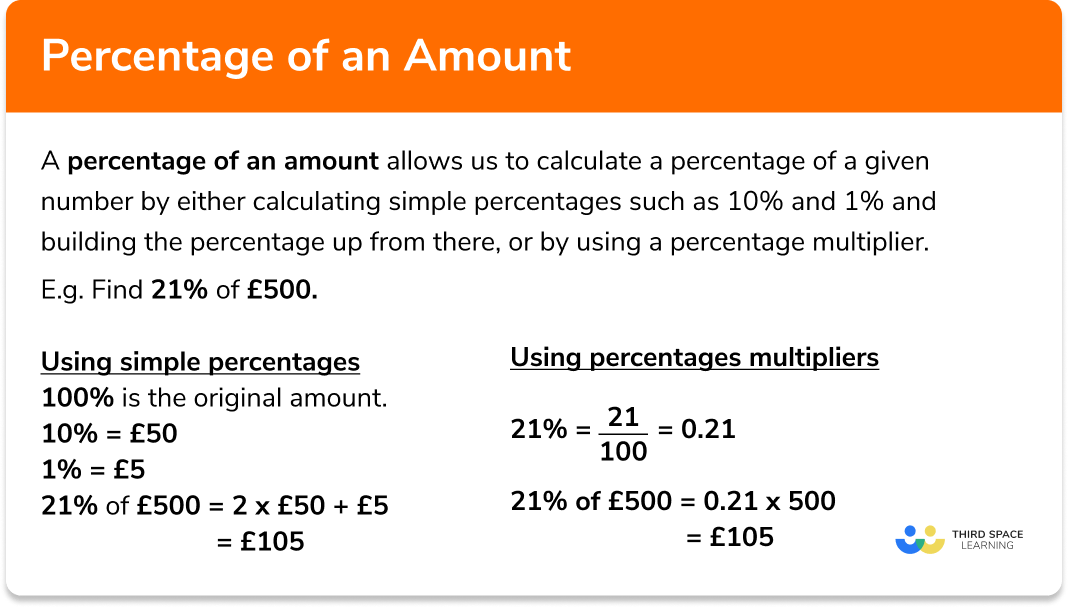
At its core, finding a percentage of a percentage is the process of determining a portion of a value that has already been adjusted. In the financial world, we rarely deal with static numbers; we deal with rates of change, interest, and margins. When these rates overlap, the math requires more than simple addition or subtraction.
The Core Formula: Multiplication is Key
The most common mistake people make when dealing with two percentages is adding them together. For instance, if a stock price rises by 10% and then rises by another 10%, the total increase is not 20%. It is actually 21%. This is because the second 10% is calculated based on the new, higher value.
To find a percentage of a percentage, the rule is simple: Multiply the two percentages.
The mathematical formula looks like this:
$(Percentage A / 100) times (Percentage B / 100) = text{Final Percentage}$
For example, to find 20% of 50%:
$0.20 times 0.50 = 0.10$ (or 10%).
Converting Percentages to Decimals
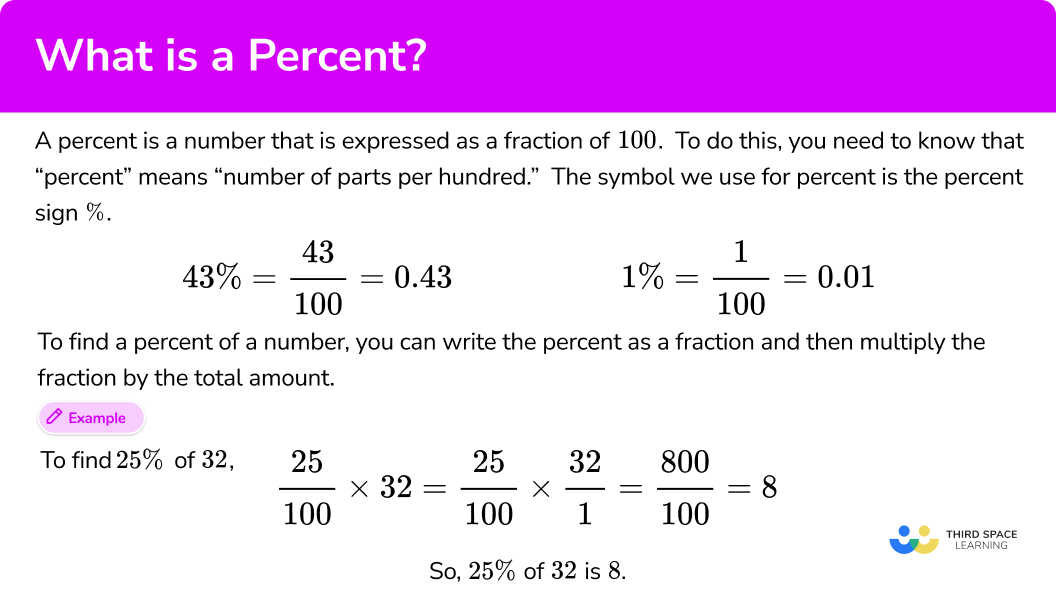
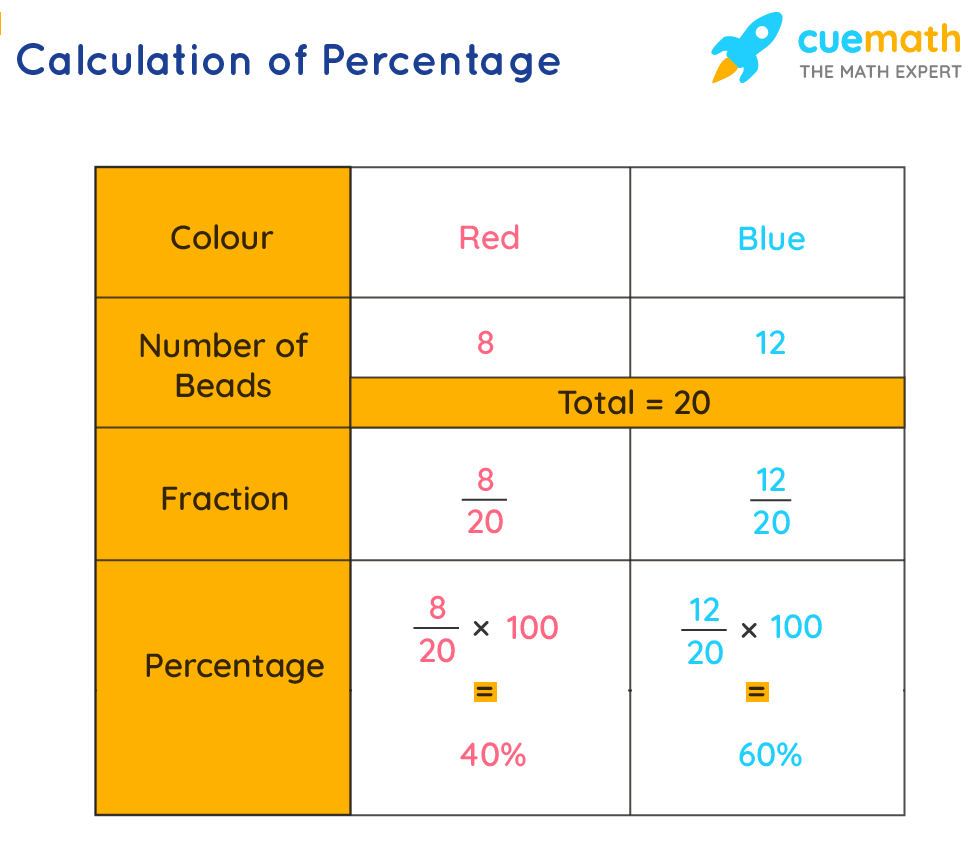
Before performing any calculation in a financial spreadsheet or on a calculator, it is vital to convert your percentages into decimals. This reduces the risk of “zero-tracking” errors. A percentage is simply a fraction of 100. Therefore, 5% becomes 0.05, and 85% becomes 0.85.
In business finance, this conversion is the first step in calculating everything from Value Added Tax (VAT) on discounted goods to the effective interest rate on a loan with origination fees. Mastering this mental shift from “percent” to “decimal” allows for much faster and more accurate financial analysis.
Real-World Applications in Personal Finance
In personal finance, the “percentage of a percentage” calculation is most frequently seen in investment management and taxation. Failure to understand these numbers can lead to “hidden” costs that eat away at your long-term wealth.
Calculating Investment Fees on Total Returns
One of the most critical areas where this math applies is in investment management fees, specifically with hedge funds or actively managed mutual funds. Consider the “2 and 20” fee structure often used in private equity. A firm might charge a 2% management fee on total assets and a 20% performance fee on the profits.
If your portfolio grows by 10%, and the firm takes a 20% performance fee on that gain, they are essentially taking 20% of the 10% growth.
$0.20 times 0.10 = 0.02$ (or 2%).
This means that 2% of your total portfolio value is being paid out as a performance fee, in addition to the base management fee. Understanding this allows an investor to calculate their “Net Return”—the money that actually stays in their pocket.
Tax-on-Tax Scenarios: Sales Tax and Value-Added Tax
In many jurisdictions, consumers encounter nested percentages when dealing with discounts and sales taxes. Suppose you are buying a piece of equipment for your business that costs $1,000. The item is on sale for 20% off, but you must also pay a 10% sales tax.
The tax is usually calculated on the discounted price, not the original price.
- The discount reduces the price to 80% of the original ($1,000 times 0.80 = $800).
- The tax is 10% of that 80%.
$0.10 times 0.80 = 0.08$ (or 8% of the original price).
By understanding that the tax is effectively 8% of the original price rather than 10%, a business owner can more accurately forecast their capital expenditures.
Strategic Business Finance: Margins and Commissions
For business owners, calculating a percentage of a percentage is a daily necessity for maintaining healthy profit margins and managing sales teams.
Multi-Tiered Commission Structures
Sales-driven organizations often use tiered commissions to incentivize high performance. A salesperson might earn a 10% commission on all sales, but the “Sales Manager” might earn an “override” of 5% on the salesperson’s total commission.
If a salesperson moves $100,000 worth of product:
- Salesperson commission: 10% of $100,000 = $10,000.
- Manager override: 5% of that $10,000.
$0.05 times 0.10 = 0.005$ (or 0.5% of the total sales volume).
While 0.5% sounds small, in high-volume industries like real estate or SaaS, these “percentages of percentages” represent millions of dollars in corporate overhead.
Profit Margins After Retailer Markups
Manufacturers must understand how percentages stack as a product moves through the supply chain. If a manufacturer wants to maintain a 30% profit margin, but they sell to a wholesaler who takes a 20% margin, and that wholesaler sells to a retailer who takes a 50% margin, the “percentage of a percentage” logic determines the final MSRP (Manufacturer’s Suggested Retail Price).
Each layer of the supply chain adds a percentage based on the previous layer’s price. If the manufacturer ignores this and simply adds percentages together (30+20+50), they will find that their product is priced out of the market or that their own 30% margin has been cannibalized by the intermediaries.
The Impact of Compounding: Percentage Growth Over Time
Perhaps the most famous application of this mathematical concept is compound interest, which Albert Einstein famously called the “eighth wonder of the world.” Compounding is, quite literally, finding a percentage of a percentage over and over again.
Compound Interest vs. Simple Interest
Simple interest calculates a percentage based only on the original principal. Compound interest, however, calculates a percentage based on the principal plus the interest already earned.
If you have an investment that grows by 5% every year, in the second year, you are earning 5% on the original 100% plus 5% on the previous year’s 5% gain.
$0.05 times 0.05 = 0.0025$ (or 0.25%).
While 0.25% seems negligible in Year 2, over 30 years, these “percentages of percentages” accumulate to create exponential growth. This is the fundamental mechanism of retirement planning and wealth building.
Inflation’s Effect on Real Purchasing Power
Investors must also use this calculation to determine their “Real Rate of Return.” If your investment portfolio grows by 8% in a year, but inflation is 3%, your real growth isn’t simply 5%. To be precise, you must account for the fact that the 3% inflation is eating into the entire new value of your portfolio.
Understanding the interaction between the percentage of growth and the percentage of inflation prevents investors from falling into the “money illusion,” where they feel wealthier because they have more nominal dollars, even though their actual purchasing power has decreased.
Advanced Tools and Financial Accuracy
In modern business, we rarely do these calculations on the back of a napkin. However, the logic remains the same even when using high-end software.
Avoiding Common Mathematical Pitfalls
The biggest pitfall in business finance is the “Reverse Percentage” error. This happens when someone tries to “undo” a percentage by applying the same percentage in reverse. For example, if a stock drops by 50%, it needs a 100% increase to return to its original value, not a 50% increase.
Why? Because 50% of 50% is only 25%. If you add 25% back to your 50% remains, you only have 75% of your original money. This is a classic “percentage of a percentage” trap that catches many novice investors off guard.
Leveraging Financial Software for Precision
For complex multi-percentage calculations, such as determining the Internal Rate of Return (IRR) or the weighted average cost of capital (WACC), professionals use tools like Excel or specialized financial modeling software.
In Excel, the formula for finding a percentage of a percentage is straightforward: = (Cell1 * Cell2). However, the strategic value lies in “Sensitivity Analysis”—changing one percentage (like a interest rate) to see how it flows through a nested series of other percentages (like tax rates and margins). By mastering the underlying logic of percentages of percentages, a financial analyst can build more robust models that survive the volatility of the real-world market.
Conclusion
Finding a percentage of a percentage is more than a middle-school math problem; it is a vital tool for financial survival and success. From the compounding interest in your 401(k) to the tiered margins in a global supply chain, this calculation governs how money moves and grows. By converting percentages to decimals and remembering to multiply rather than add, you can gain a clearer, more professional perspective on your finances, ensuring that every decimal point works in your favor.
aViewFromTheCave is a participant in the Amazon Services LLC Associates Program, an affiliate advertising program designed to provide a means for sites to earn advertising fees by advertising and linking to Amazon.com. Amazon, the Amazon logo, AmazonSupply, and the AmazonSupply logo are trademarks of Amazon.com, Inc. or its affiliates. As an Amazon Associate we earn affiliate commissions from qualifying purchases.