
In the vast landscape of personal finance, business management, and wealth creation, few mathematical concepts are as universally applied and fundamentally critical as percentages. From deciphering a sales discount to calculating investment returns, understanding your mortgage interest, or budgeting your monthly expenses, percentages are the silent language spoken by every financial decision. Yet, for many, the simple act of “figuring a percentage” can feel daunting, shrouded in the complexities of formulas and abstract numbers. This guide aims to demystify percentages, transforming them from a mathematical chore into an empowering financial skill. We’ll break down the core concepts, provide practical formulas, and illustrate their indispensable role across various financial scenarios, ultimately equipping you to confidently navigate your financial world.

The Foundational Importance of Percentages in Finance
At its core, a percentage is simply a way to express a number as a fraction of 100. The word “percent” literally means “per hundred.” This simple definition belies its immense power as a comparative tool, allowing us to understand proportions, changes, and relationships between different figures, irrespective of their absolute size. In finance, this comparative power is invaluable.
Understanding the Core Concept
Imagine you buy a shirt that originally cost $50 and is now on sale for $40. How much did you save? You saved $10. But what percentage did you save? This is where percentages become useful. They provide a standardized way to express that saving. Instead of just saying “$10,” which might seem small for a car but huge for a candy bar, a percentage tells you the proportion of the original price you saved, which is universally understandable. In this case, $10 is 20% of $50, a much more informative metric.
Why Financial Literacy Demands Percentage Fluency
Financial literacy is not just about knowing how to make money; it’s about understanding how money works, how to manage it, and how to make it grow. Percentages are the bedrock of this understanding. Without a grasp of percentages, interpreting interest rates on loans, comparing investment performance, understanding inflation’s erosion of purchasing power, or even correctly applying a discount code becomes a struggle. It’s a fundamental skill that empowers individuals to make informed decisions, avoid costly mistakes, and optimize their financial health. From comparing credit card APRs to assessing the annual yield on a savings account, percentages enable apples-to-apples comparisons crucial for sound financial judgment.
Everyday Applications: From Discounts to Taxes
Percentages permeate our daily financial lives. When you see a “25% off” sale, you’re engaging with percentages. When you pay sales tax, property tax, or income tax, percentages are at play. Your annual raise, your contribution to a retirement account, the tip you leave at a restaurant – all are expressed and understood through percentages. Even news headlines report economic indicators like GDP growth, inflation rates, or unemployment figures as percentages. Being able to quickly interpret and calculate these figures can save you money, help you budget more effectively, and ensure you’re never caught off guard by financial details.
Essential Formulas and Practical Calculations
While the concept is straightforward, applying percentages requires knowing a few key formulas. Don’t worry, they’re simpler than you think and form the basis for almost every percentage calculation you’ll encounter in finance.
Calculating a Percentage of a Number
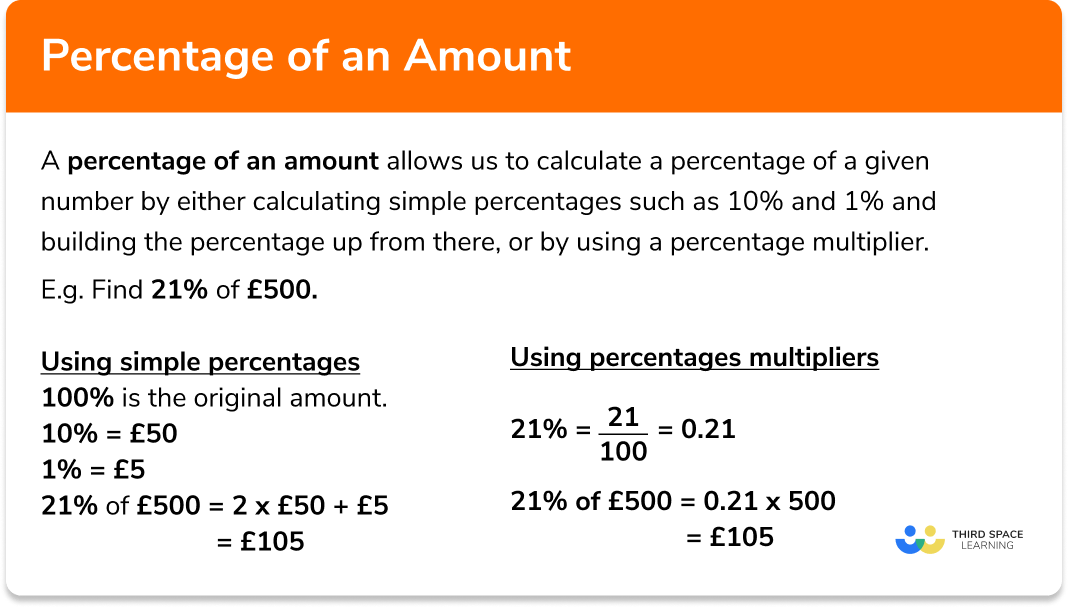
This is perhaps the most common calculation. You have a total value, and you want to find out what a certain percentage of that value is.
Formula: Percentage (as a decimal) × Total Amount = Part Amount
To convert a percentage to a decimal, divide it by 100. So, 20% becomes 0.20.
Example: You have a $300 bill, and you want to leave a 15% tip.
- Convert 15% to a decimal: 15 / 100 = 0.15
- Calculate the tip: 0.15 × $300 = $45
- Your tip is $45.
Finding What Percentage One Number Is of Another
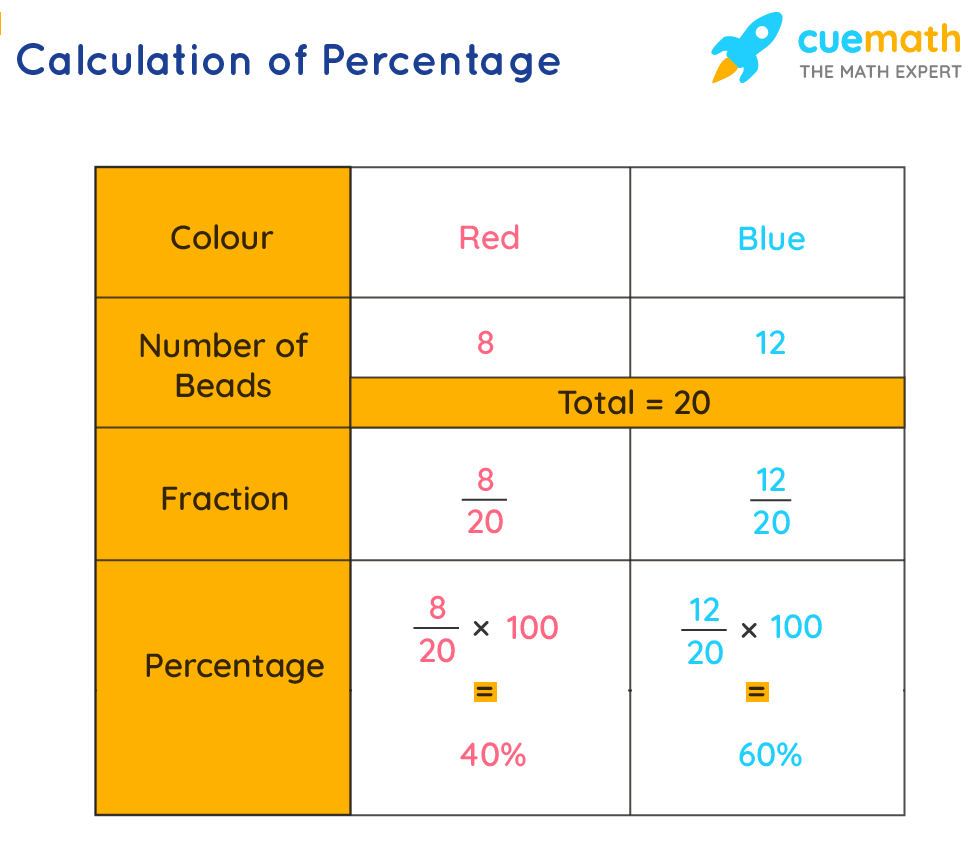
This formula helps you determine what proportion one number represents in relation to a larger total.
Formula: (Part Amount / Total Amount) × 100 = Percentage
Example: You earned $2,500 in a month, and you spent $500 on groceries. What percentage of your income went to groceries?
- Divide the part by the total: $500 / $2,500 = 0.2
- Multiply by 100 to get the percentage: 0.2 × 100 = 20%
- 20% of your income went to groceries.
Calculating Percentage Increase or Decrease
This is vital for tracking growth (or decline) in investments, income, or expenses.
Formula: ((New Value - Original Value) / Original Value) × 100 = Percentage Change
If the result is positive, it’s an increase; if negative, it’s a decrease.
Example (Increase): Your investment portfolio grew from $10,000 to $12,000. What’s the percentage increase?
- Calculate the change: $12,000 – $10,000 = $2,000
- Divide by the original value: $2,000 / $10,000 = 0.2
- Multiply by 100: 0.2 × 100 = 20% increase.
Example (Decrease): Your stock dropped from $50 per share to $45 per share. What’s the percentage decrease?
- Calculate the change: $45 – $50 = -$5
- Divide by the original value: -$5 / $50 = -0.1
- Multiply by 100: -0.1 × 100 = -10% decrease.
The Percentage Change Formula: A Versatile Tool
The percentage change formula is particularly useful for analyzing financial trends over time. It can be applied to evaluate revenue growth, expense reduction, inflation rates, or even changes in your personal net worth. Mastering this single formula unlocks a powerful analytical capability, allowing you to quickly quantify performance and identify significant shifts. This understanding helps in setting realistic financial goals and evaluating progress against them.
Percentages in Personal Finance Management
Beyond basic calculations, percentages become the language through which you manage your personal financial health. They provide structure, clarity, and actionable insights into your income, spending, and savings.
Budgeting and Expense Allocation
Budgeting is fundamentally about allocating percentages of your income to different categories. A popular rule is the 50/30/20 rule:
- 50% of your income goes to Needs (housing, utilities, groceries).
- 30% goes to Wants (entertainment, dining out, hobbies).
- 20% goes to Savings & Debt Repayment (emergency fund, investments, extra debt payments).
By thinking in percentages, you can quickly assess if your spending aligns with your financial goals, regardless of your income level. If your housing costs are 40% of your income, you immediately know you’re exceeding the 50% “Needs” allocation before even considering other essentials.
Debt Management: Interest Rates and Repayment
Every loan, from a credit card to a mortgage or student loan, comes with an Annual Percentage Rate (APR). Understanding what this percentage means is crucial. A higher APR means more of your payment goes towards interest rather than the principal, prolonging your debt and increasing its total cost. Calculating the percentage of your income dedicated to debt payments (often called the debt-to-income ratio) is a key metric lenders use and a vital personal indicator of financial stress. Reducing interest percentages, by refinancing or transferring balances, can save you significant money over the life of a loan.
Savings Goals and Progress Tracking
Setting a goal to save “10% of every paycheck” is far more actionable and flexible than aiming for a fixed dollar amount, especially if your income fluctuates. As your income grows, your 10% contribution automatically increases, accelerating your progress towards financial milestones like an emergency fund, a down payment for a home, or retirement. Tracking your savings as a percentage of your income or your net worth over time provides a clear visual of your financial journey and motivates consistent effort.
Understanding Your Paycheck: Deductions and Net Pay
Your gross pay is rarely what you take home. Various deductions, often calculated as percentages, reduce your gross income to your net (take-home) pay. These include federal and state taxes, Social Security, Medicare, and contributions to retirement plans (e.g., 401k or 403b). Knowing what percentage of your income goes to each deduction helps you understand your tax burden, the impact of pre-tax retirement contributions, and how to optimize your withholdings.
Percentages in Investing and Wealth Building
For those looking to grow their wealth, percentages are the primary metric for evaluating performance and making strategic decisions.
Measuring Investment Returns (ROI)
The Return on Investment (ROI) is perhaps the most fundamental percentage in investing. It tells you the profitability of your investment relative to its cost.
Formula: ((Current Value of Investment - Original Cost) / Original Cost) × 100 = ROI
Whether it’s a stock, a mutual fund, or a real estate property, ROI allows you to compare the efficiency and profitability of different investments. A 10% return on one investment is directly comparable to a 10% return on another, regardless of the initial capital invested.
Compound Interest: The Eighth Wonder of the World
Compound interest is the engine of long-term wealth building, and it operates entirely on percentages. It’s interest earned on both the initial principal and the accumulated interest from previous periods. Even a seemingly small annual percentage yield (APY) on savings or investments, compounded over decades, can lead to substantial growth. Understanding how percentages compound is key to appreciating the power of early investing and consistent contributions.
Portfolio Allocation and Risk Management
Financial advisors often speak of asset allocation in percentages: “60% stocks, 30% bonds, 10% cash.” This percentage-based approach to diversifying your investments helps manage risk and align your portfolio with your financial goals and risk tolerance. As market values change, these percentages shift, requiring rebalancing to maintain your desired allocation. Regularly reviewing your portfolio’s percentage breakdown is crucial for disciplined investing.
Analyzing Market Performance and Dividends
When you hear that “the S&P 500 rose by 1.5% today,” you’re observing market performance reported in percentages. Stock prices, bond yields, and dividend payments are often analyzed in terms of percentage changes or yields. A dividend yield, for instance, is the annual dividend per share divided by the share price, expressed as a percentage. This helps investors compare the income generation of different stocks.
Leveraging Technology and Tools for Percentage Calculations
While understanding the manual formulas is crucial for building intuition, modern financial management heavily relies on technological tools to simplify and automate percentage calculations, especially for complex scenarios.
Spreadsheets (Excel, Google Sheets) for Complex Analysis
For anyone managing personal finances or a small business, spreadsheets are indispensable. They allow you to set up budgets, track investments, calculate debt repayment schedules, and perform intricate “what-if” analyses using built-in percentage functions. You can create models that automatically update percentages as numbers change, offering dynamic insights into your financial situation. From calculating the percentage of your income going into each budget category to determining your annual investment return, spreadsheets empower detailed, organized financial analysis.
Financial Calculators and Online Tools
Numerous online calculators and dedicated financial calculators (like the HP 12c or TI BA II Plus) are designed specifically for complex financial computations involving percentages, such as loan amortization, future value of investments with compound interest, or internal rates of return. These tools are invaluable for quickly modeling scenarios and verifying calculations without needing to manually apply complex formulas. Many banking and investment websites also offer their own integrated percentage calculators for specific products like mortgage payments or retirement savings projections.
Mobile Apps for On-the-Go Calculations
In an increasingly mobile world, countless smartphone apps offer quick percentage calculations. From simple tip calculators to more sophisticated budgeting and investment tracking apps, these tools bring financial percentage literacy to your fingertips. Many personal finance apps automatically categorize your spending and display it as percentages, helping you visualize where your money goes without any manual calculation.
When to Use a Calculator vs. Mental Math
While technology is a powerful ally, developing a knack for quick mental percentage calculations for common scenarios (like 10%, 20%, 50%) can significantly enhance your financial agility. Being able to estimate a 15% tip or a 25% discount without pulling out your phone allows for faster decision-making and a deeper intuitive understanding of numbers. For more complex or critical calculations, however, relying on a calculator or spreadsheet ensures accuracy and reduces the risk of error.
Conclusion
Understanding how to figure percentages is far more than a basic math skill; it’s a cornerstone of financial independence and intelligent decision-making in the money world. From the daily act of budgeting and shopping to the long-term strategies of investing and wealth building, percentages provide the crucial framework for analysis, comparison, and progress tracking. By mastering these fundamental calculations and leveraging the right tools, you unlock the ability to accurately assess financial opportunities, navigate economic complexities, and ultimately, take confident control of your financial future. Embrace percentages as your financial superpower, and watch as clarity replaces confusion in every monetary transaction and strategic plan.
aViewFromTheCave is a participant in the Amazon Services LLC Associates Program, an affiliate advertising program designed to provide a means for sites to earn advertising fees by advertising and linking to Amazon.com. Amazon, the Amazon logo, AmazonSupply, and the AmazonSupply logo are trademarks of Amazon.com, Inc. or its affiliates. As an Amazon Associate we earn affiliate commissions from qualifying purchases.