
The stock market is often viewed as a complex, intimidating labyrinth of flashing numbers and rapid-fire shouting. However, at its core, the mechanism of the stock market is one of the most elegant and powerful engines for wealth creation ever devised. To understand how stocks work is to understand the fundamental building blocks of the modern economy. For the individual investor, this knowledge is the prerequisite for financial independence and successful long-term capital management.
In this guide, we will deconstruct the mechanics of the stock market, exploring how companies go public, what determines the price of a share, and how you can navigate this landscape to build a robust financial future.
The Mechanics of the Stock Market: From IPOs to Daily Trading
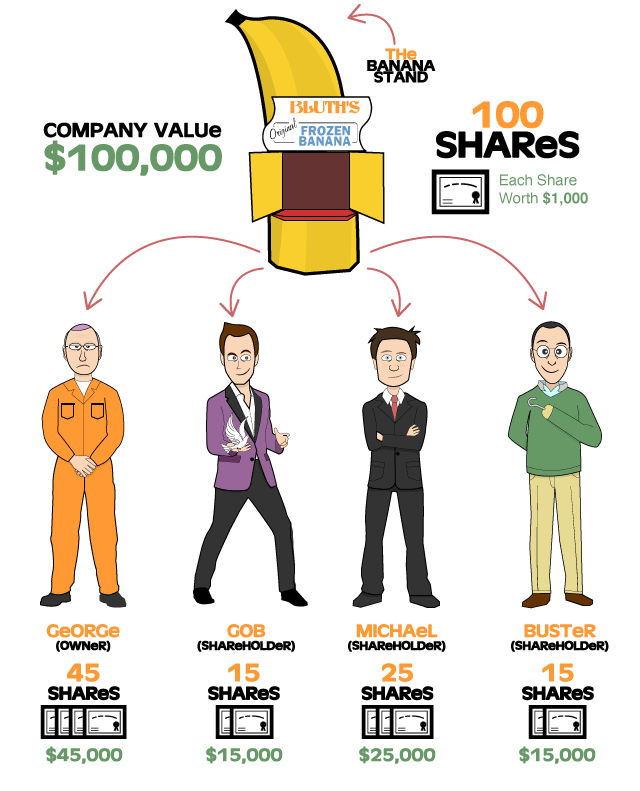
At the most basic level, a stock—also known as equity—represents a fractional piece of ownership in a corporation. When you buy a share, you are literally purchasing a portion of that company’s assets and future earnings. But how do these shares come into existence, and where do they go once they are born?
What is an Initial Public Offering (IPO)?
A company usually begins as a private entity, funded by its founders, “angel” investors, or venture capitalists. However, as a company grows, it often needs a massive infusion of capital to expand operations, fund research and development, or pay off debt. To raise this money without taking on the burden of a high-interest loan, the company may choose to “go public.”
The process of going public is known as an Initial Public Offering (IPO). During an IPO, the company creates new shares and sells them to the public for the first time. This is the “Primary Market.” Once the IPO is complete, the company has its cash, and the shares begin trading among investors on the “Secondary Market.”
Stock Exchanges: Where the Action Happens
If you want to buy a loaf of bread, you go to a grocery store. If you want to buy a share of Apple or Microsoft, you go to a stock exchange. The exchange is a centralized marketplace that facilitates the buying and selling of shares. The two most prominent exchanges in the United States are the New York Stock Exchange (NYSE) and the NASDAQ.
The exchange acts as a regulator and a facilitator, ensuring that trades are executed fairly and transparently. In the modern era, most of this happens electronically in milliseconds, but the principle remains the same: it is a hub where buyers and sellers meet.
Supply and Demand: How Prices Move
Why does a stock price go up one day and down the next? The answer lies in the law of supply and demand. If a company reports record-breaking profits, more people will want to buy the stock (demand increases), but current shareholders might want to hold onto their shares (supply decreases). This imbalance forces the price upward.
Conversely, if a company faces a lawsuit or a decline in sales, investors may rush to sell their shares. As the market becomes flooded with sellers and lacks buyers, the price must drop to find an equilibrium where someone is willing to buy.
Types of Stocks and Investment Vehicles
Not all stocks are created equal. Depending on your financial goals—whether you seek rapid growth or a steady stream of passive income—you will need to distinguish between the different categories of equity.
Common vs. Preferred Stock
When people talk about “stocks,” they are almost always referring to Common Stock. Common stockholders have voting rights at shareholder meetings and are entitled to dividends if the company chooses to pay them. However, they are last in line if the company goes bankrupt.
Preferred Stock acts somewhat like a hybrid between a stock and a bond. Preferred shareholders usually do not have voting rights, but they have a higher claim on assets and earnings. They receive dividends before common stockholders do, and those dividends are often fixed at a specific rate.
Growth Stocks vs. Value Stocks
Investors often categorize companies based on their stage of development. Growth stocks are companies expected to grow at a rate significantly above the average for the market. These companies usually reinvest all their profits into further expansion rather than paying dividends. Think of technology giants or biotech startups.
Value stocks, on the other hand, are companies that appear to be trading for less than they are worth based on their fundamentals (like earnings or sales). These are often mature, established companies—like utilities or consumer staples—that provide stability and regular dividends but may not see explosive price appreciation.

Dividends: Getting Paid to Own
A dividend is a distribution of a portion of a company’s earnings to its shareholders. For many investors, dividends are the “holy grail” of personal finance because they represent truly passive income. When a company is profitable and has excess cash, it can reward its owners by sending them a check (or depositing cash into their brokerage account) every quarter. Reinvesting these dividends can significantly accelerate the growth of your portfolio over time through the power of compounding.
Analyzing Stocks: Fundamental and Technical Approaches
Before putting your hard-earned money into a stock, you must have a methodology for determining if it is a good investment. Professional investors generally fall into two camps: fundamental and technical.
Fundamental Analysis: Looking Under the Hood
Fundamental analysis is the process of measuring a stock’s “intrinsic value.” This involves looking at the company’s financial statements—the balance sheet, income statement, and cash flow statement.
A fundamental analyst asks: Is the company profitable? Does it have too much debt? Is its management team competent? Is the industry growing? By answering these questions, the investor tries to determine if the current stock price is a fair reflection of the business’s actual health.
Technical Analysis: Reading the Tape
Technical analysis ignores the business itself and focuses entirely on the stock’s price movement and trading volume. Technical analysts believe that all known information is already “baked into the price,” and therefore, they look for patterns in charts to predict future price movements. While controversial among some long-term investors, technical analysis is widely used by short-term traders to time their entries and exits into the market.
Key Ratios Every Investor Should Know
To simplify the analysis process, investors use several key financial ratios:
- P/E Ratio (Price-to-Earnings): This tells you how much investors are willing to pay for every dollar of company earnings. A high P/E might mean the stock is overvalued, or that investors expect high growth in the future.
- Dividend Yield: This shows how much a company pays out in dividends relative to its share price.
- Debt-to-Equity: This measures a company’s financial leverage, indicating how much of its operations are funded by debt versus shareholder equity.
The Risks and Rewards of Equity Ownership
Investing in stocks is one of the most effective ways to build wealth, but it is not without peril. Understanding the risk-reward tradeoff is essential for maintaining the emotional discipline required for long-term success.
The Power of Compound Interest
Albert Einstein reportedly called compound interest the “eighth wonder of the world.” In the context of stocks, compounding happens when your investment generates returns, and those returns then generate their own returns. Over decades, this leads to exponential growth. For example, a $10,000 investment that grows at an average annual rate of 8% will be worth over $100,000 in 30 years—even if you never add another penny.
Market Volatility and Systematic Risk
The “price” you pay for those high returns is volatility. The stock market does not move in a straight line. There are “Bull Markets” (when prices are rising) and “Bear Markets” (when prices fall by 20% or more). Systematic risk refers to risks that affect the entire market—such as a recession, geopolitical conflict, or a global pandemic. You cannot avoid systematic risk; you can only endure it with a long-term perspective.
Diversification: The Only Free Lunch in Finance
The most dangerous way to invest is to put all your money into a single stock. If that company fails, your savings vanish. Diversification is the practice of spreading your investments across different companies, industries, and even geographical regions. By diversifying, you ensure that a failure in one area of your portfolio is offset by gains in another. This is why many financial advisors recommend Index Funds or Exchange-Traded Funds (ETFs), which allow you to own hundreds of stocks simultaneously.
Starting Your Investment Journey
The best time to start investing was twenty years ago; the second-best time is today. With the rise of digital financial tools, the barriers to entry have never been lower.
Choosing a Brokerage Platform
To buy stocks, you need a brokerage account. Modern platforms have eliminated trading commissions, making it affordable for anyone to start. When choosing a broker, consider their user interface, the educational resources they offer, and the types of accounts available (such as a standard taxable account or a tax-advantaged retirement account like an IRA).

Developing a Long-Term Strategy
Successful investing is less about “picking winners” and more about having a plan. Are you an active investor who enjoys researching individual companies? Or are you a passive investor who prefers to set up automatic contributions to a broad market index fund?
Regardless of your style, the most important factor is “time in the market,” not “timing the market.” By staying disciplined, avoiding emotional reactions to market dips, and consistently contributing to your portfolio, you harness the full power of the global economy to secure your financial future.
In conclusion, stocks are more than just symbols on a screen; they are instruments of ownership in the engines of global commerce. By understanding the mechanics of exchanges, the types of equity available, and the principles of risk management, you transform from a spectator into a participant in the world’s greatest wealth-building machine.
aViewFromTheCave is a participant in the Amazon Services LLC Associates Program, an affiliate advertising program designed to provide a means for sites to earn advertising fees by advertising and linking to Amazon.com. Amazon, the Amazon logo, AmazonSupply, and the AmazonSupply logo are trademarks of Amazon.com, Inc. or its affiliates. As an Amazon Associate we earn affiliate commissions from qualifying purchases.