
The stock market is often viewed through two extremes: a high-stakes casino where fortunes are lost overnight, or a complex labyrinth reserved only for Wall Street elites. In reality, stock investing is one of the most effective tools available for the average person to build long-term wealth, outpace inflation, and achieve financial independence. By purchasing a share of a company, you are becoming a partial owner of a business, entitled to its growth and, in many cases, a portion of its profits.
However, the journey from a novice saver to a successful investor requires more than just picking a “hot” stock. it requires a disciplined strategy, an understanding of market mechanics, and a temperament suited for the inevitable ups and downs of the global economy. This guide provides a comprehensive roadmap for navigating the world of equities, ensuring you build a portfolio that stands the test of time.

1. Understanding the Fundamentals of the Stock Market
Before committing your hard-earned capital, it is essential to understand the underlying structure of the equity markets. At its core, the stock market is a marketplace where institutional and individual investors come together to buy and sell shares of publicly traded companies.
What is a Stock?
A stock, or an equity, represents a claim on a part of a corporation’s assets and earnings. When a company wants to grow—perhaps to build a new factory or develop a new product—it may choose to “go public” by issuing shares through an Initial Public Offering (IPO). Once these shares are in the secondary market (exchanges like the NYSE or NASDAQ), they are traded among investors. As the company becomes more profitable or its future outlook improves, the value of those shares typically rises.
How the Market Functions
The price of a stock is determined by the law of supply and demand. If more people want to buy a stock than sell it, the price moves up. If more people are selling, the price moves down. These fluctuations are influenced by various factors, including corporate earnings reports, economic data (like inflation or interest rates), and even geopolitical events. It is important to remember that in the short term, the market can be driven by emotion and speculation, but in the long term, stock prices tend to follow the actual business performance of the companies they represent.
The Importance of Risk Tolerance
Every investment carries some level of risk. In the stock market, risk is generally defined as “volatility”—the frequency and intensity with which a stock’s price moves. Your risk tolerance is your ability and willingness to lose some or all of your original investment in exchange for the potential for higher returns. Factors influencing your risk tolerance include your age, your financial obligations, and your “sleep-at-night” factor. A young investor with 30 years until retirement can afford to weather a market crash, whereas someone nearing retirement may prioritize capital preservation.
2. Setting Your Financial Foundation Before Investing
Investing is the second step of a healthy financial life; the first step is stability. Entering the stock market while your financial house is in disarray is a recipe for disaster, as it may force you to sell your investments at the worst possible time.
Debt Management and Emergency Funds
Before buying your first share, you should address high-interest debt, such as credit card balances. The average annual return of the stock market is historically around 7% to 10% after inflation. If you are paying 20% interest on a credit card, you are effectively losing money by investing instead of paying off that debt. Furthermore, you should establish an emergency fund—typically three to six months of living expenses—in a high-yield savings account. This ensures that if you lose your job or face an unexpected medical bill, you won’t be forced to liquidate your stocks during a market downturn.
Defining Your Investment Goals
Why are you investing? The answer will dictate your strategy. If you are investing for retirement 40 years away, your portfolio should look very different than if you are saving for a house down payment in five years. Long-term goals allow for “aggressive” growth strategies, such as heavy exposure to small-cap or technology stocks. Short-term goals require “conservative” strategies, focusing on dividend-paying stocks or even shifting toward bonds and cash equivalents to protect the principal.
Active vs. Passive Investing Strategies
One of the most important decisions you will make is whether you want to be an active or passive investor. Active investing involves picking individual stocks in an attempt to “beat the market.” This requires significant time, research, and an understanding of financial statements. Passive investing, on the other hand, involves buying index funds or Exchange-Traded Funds (ETFs) that track the entire market. For the vast majority of people, passive investing is the more reliable path to wealth, as it minimizes the risk of picking a single failing company and lowers the cost of management fees.
3. The Practical Steps to Buying Your First Stock
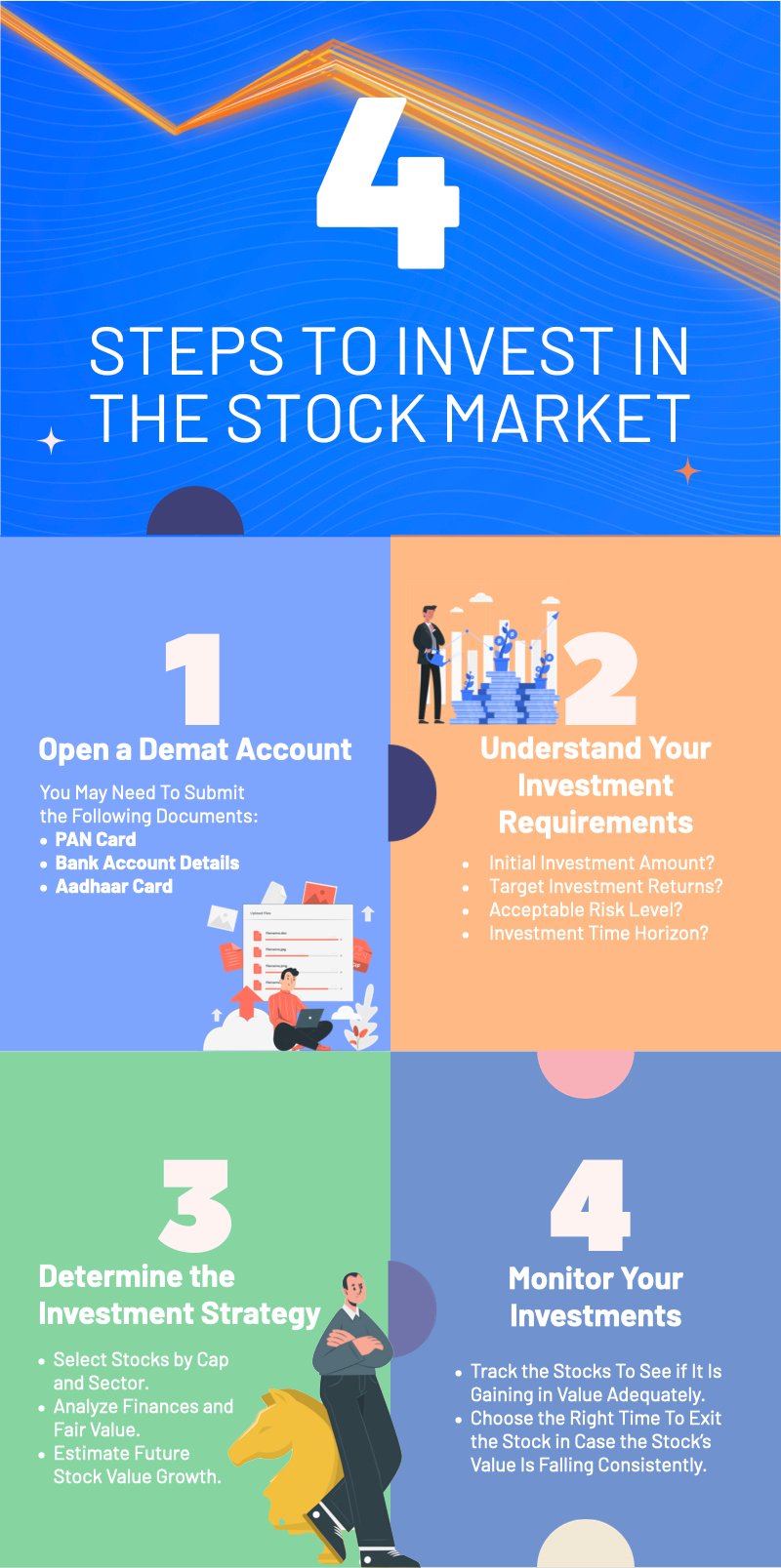
Once your foundation is set, the process of actually entering the market is more accessible today than ever before. Technology has democratized finance, removing many of the barriers that once kept small investors away.
Choosing the Right Brokerage Platform
A brokerage is an intermediary that allows you to buy and sell securities. When choosing one, look for platforms that offer $0 commissions on stock trades, a user-friendly interface, and robust educational resources. Popular options include traditional firms like Fidelity and Charles Schwab, or newer, mobile-first platforms. Ensure the brokerage is a member of the SIPC (Securities Investor Protection Corporation), which protects your assets if the brokerage firm itself fails.
Types of Investment Accounts
You must decide which “bucket” your money will sit in. For most, a tax-advantaged account is the best place to start. If your employer offers a 401(k) with a match, that should be your priority—it is essentially free money. Beyond that, Individual Retirement Accounts (IRAs) offer tax benefits; a Traditional IRA provides a tax deduction today, while a Roth IRA allows for tax-free withdrawals in retirement. If you have already maxed out these options, a standard taxable brokerage account offers the most flexibility, allowing you to withdraw funds at any time without penalty.
Executing a Trade: Market vs. Limit Orders
When you are ready to buy, you will encounter different “order types.” A Market Order tells the broker to buy the stock immediately at the best available current price. This is useful for highly liquid stocks where the price doesn’t swing wildly in seconds. A Limit Order allows you to set a maximum price you are willing to pay. If the stock price doesn’t hit your limit, the trade isn’t executed. Limit orders are safer for volatile stocks or for investors who want precise control over their entry price.
4. Diversification and Portfolio Management
The adage “don’t put all your eggs in one basket” is the golden rule of investing. Diversification is the only “free lunch” in finance, allowing you to reduce risk without necessarily sacrificing returns.
Mutual Funds, ETFs, and Individual Equities
While buying shares of a famous company like Apple or Disney is exciting, it exposes you to “concentration risk.” If that specific company faces a scandal or a product failure, your entire portfolio suffers. Mutual funds and ETFs solve this by pooling money from many investors to buy hundreds or thousands of different stocks. An S&P 500 index fund, for instance, gives you a tiny slice of the 500 largest companies in the United States. If one company fails, the impact on your total portfolio is negligible.
The Role of Asset Allocation
Asset allocation refers to how you divide your portfolio among different asset categories, such as stocks, bonds, and cash. Stocks are the “growth engine,” but they are volatile. Bonds are the “ballast,” providing steady income and price stability during market crashes. A common rule of thumb is “110 minus your age” to determine your stock percentage. If you are 30, you might hold 80% in stocks and 20% in bonds. As you age, you gradually shift toward bonds to lock in your gains.
Dollar-Cost Averaging (DCA)
One of the biggest mistakes investors make is trying to “time the market”—waiting for a “dip” to buy. In reality, even professional fund managers struggle to do this consistently. A more effective strategy is Dollar-Cost Averaging. This involves investing a fixed amount of money at regular intervals (e.g., $500 every month), regardless of whether the market is up or down. When prices are high, your $500 buys fewer shares; when prices are low, your $500 buys more. Over time, this lowers your average cost per share and removes the emotional stress of market timing.
5. Long-Term Mindset and Avoiding Common Pitfalls
The greatest hurdle to successful investing isn’t a lack of intelligence; it is a lack of emotional control. The stock market is a device for transferring money from the impatient to the patient.
Emotional Investing and Market Volatility
Market “corrections” (a drop of 10%) and “bear markets” (a drop of 20% or more) are a normal part of the economic cycle. However, when the headlines turn red, many investors panic and sell their holdings to “prevent further loss.” This is a mistake. Selling during a downturn turns a “paper loss” into a “realized loss” and often causes investors to miss the inevitable recovery. Successful investors view market drops as “sales” where they can buy great companies at a discount.
The Impact of Fees and Taxes
In the world of money, what you keep is more important than what you make. High management fees (expense ratios) can eat away hundreds of thousands of dollars over a lifetime. Aim for low-cost index funds with expense ratios below 0.20%. Additionally, be mindful of “capital gains taxes.” If you sell a stock for a profit after holding it for less than a year, you pay short-term capital gains tax (taxed at your regular income rate). Holding for more than a year qualifies you for long-term capital gains tax, which is significantly lower.

Periodic Portfolio Rebalancing
Over time, your portfolio will naturally drift. If you started with 70% stocks and 30% bonds, a great year in the stock market might leave you with 80% stocks. This makes your portfolio riskier than you intended. Rebalancing involves selling some of your “winners” and buying more of your “underperformers” once a year to bring your allocation back to your target. This forced discipline ensures you are effectively “selling high and buying low,” maintaining the risk profile that matches your long-term goals.
By following these principles—starting with a solid foundation, embracing diversification, and maintaining a long-term perspective—you can transform the stock market from a source of anxiety into a powerful engine for your personal financial growth. Investing is not about getting rich quick; it is about getting rich surely.
aViewFromTheCave is a participant in the Amazon Services LLC Associates Program, an affiliate advertising program designed to provide a means for sites to earn advertising fees by advertising and linking to Amazon.com. Amazon, the Amazon logo, AmazonSupply, and the AmazonSupply logo are trademarks of Amazon.com, Inc. or its affiliates. As an Amazon Associate we earn affiliate commissions from qualifying purchases.