
Acquiring an existing business is often a more viable path to entrepreneurship than starting a venture from scratch. You inherit an established customer base, proven cash flow, and operational systems that are already in motion. However, the primary hurdle for most aspiring “acquisition entrepreneurs” is capital. Securing a loan to buy a business is significantly different from obtaining a mortgage or a personal loan; it requires a deep understanding of leverage, risk assessment, and financial scrutiny.
In the world of business finance, lenders aren’t just looking at your credit score—they are looking at the health of the entity you wish to buy. This guide explores the sophisticated landscape of acquisition financing, providing a roadmap for securing the funds necessary to transition from an employee to an owner.

Understanding the Landscape of Acquisition Financing
Before approaching a lender, you must understand the different types of loans available. Business acquisition loans are generally categorized by the source of the funds and the level of government involvement.
SBA 7(a) Loans: The Gold Standard
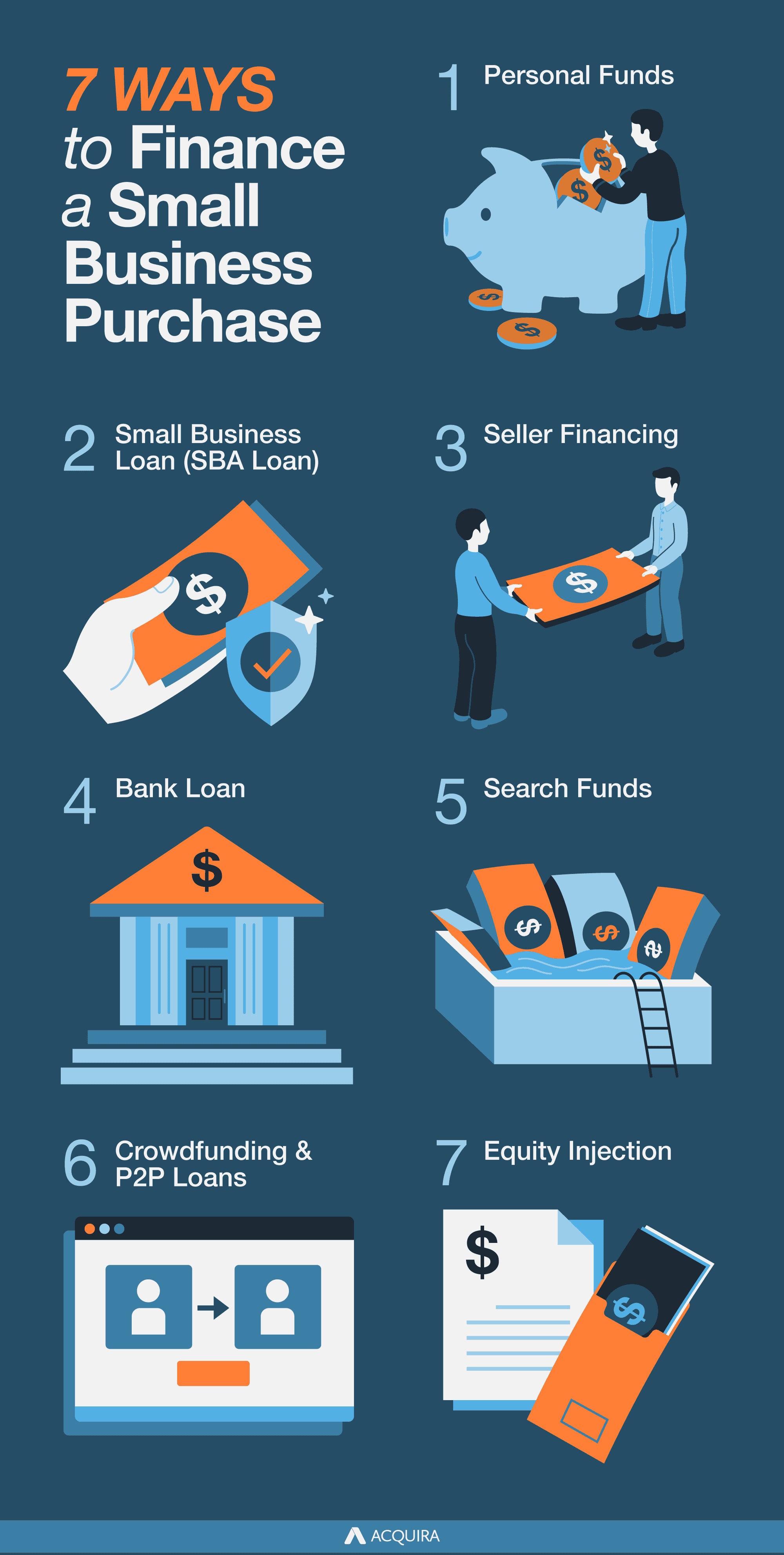
The Small Business Administration (SBA) 7(a) loan program is the most popular vehicle for buying a small to mid-sized business. It is important to note that the SBA does not lend money directly to you; instead, it guarantees a portion of the loan (usually up to 75-85%) provided by a private bank. This guarantee reduces the risk for the lender, making them more willing to provide capital to buyers who might not meet traditional lending criteria. These loans typically offer terms up to 10 years for business acquisitions and can cover up to $5 million.
Conventional Bank Loans
Conventional loans are not backed by a government guarantee. Because the bank carries 100% of the risk, the requirements are much more stringent. You will likely need a higher down payment (often 20-30%), a stellar credit history, and significant collateral. However, conventional loans can sometimes be processed faster than SBA loans and may have fewer restrictions on the type of business you can acquire.
Seller Financing: The Negotiator’s Secret
Seller financing occurs when the person selling the business agrees to take a portion of the purchase price in installments over time. In many acquisition deals, this is a “must-have” component. For example, if a business costs $1 million, the buyer might put down $100,000, get an SBA loan for $750,000, and have the seller “carry a note” for the remaining $150,000. Lenders love seller financing because it proves the seller has confidence in the business’s future ability to pay its debts.
Preparing Your “Borrower Profile”
Lenders view a business acquisition as a marriage between the buyer’s capability and the business’s profitability. To get approved, you must present yourself as a low-risk investment.
Creditworthiness and Financial History
While the business’s cash flow is the primary source of repayment, your personal financial health remains a critical factor. Most lenders look for a personal credit score of 680 or higher. They will also examine your “global cash flow”—meaning your ability to cover your personal living expenses while managing the new debt. Be prepared to provide at least three years of personal tax returns and a comprehensive personal financial statement (PFS).
Relevant Industry Experience
Lenders are hesitant to fund “absentee owners” or individuals moving into an industry where they have zero experience. If you are a software engineer trying to buy a heavy manufacturing plant, the lender will perceive a high operational risk. To mitigate this, emphasize your transferable skills, such as management, P&L responsibility, and business development. If you lack direct experience, consider retaining the seller as a consultant for 6-12 months post-closing to ensure a smooth transition.
The Equity Injection (The Down Payment)
“Skin in the game” is a non-negotiable requirement. For SBA loans, the minimum equity injection is typically 10% of the total project cost. This capital must be “sourced and seasoned,” meaning you need to prove where it came from (e.g., savings, 401k rollover, or a gift). Lenders want to see that you have enough liquidity left over after the down payment to handle unexpected expenses—this is known as “post-closing liquidity.”
Evaluating the Target Business Through the Lender’s Eyes
A lender’s primary concern is the Debt Service Coverage Ratio (DSCR). They want to know that after all operating expenses are paid, the business generates enough profit to cover the loan payments with a comfortable margin.

The Debt Service Coverage Ratio (DSCR)
Most lenders require a DSCR of at least 1.25x. This means that for every $1.00 of debt payment, the business should generate $1.25 in net operating income. If a business is barely breaking even or has inconsistent revenue, it will be nearly impossible to finance. When evaluating a target, focus on the “SDE” (Seller’s Discretionary Earnings) or “EBITDA” (Earnings Before Interest, Taxes, Depreciation, and Amortization) to determine if the cash flow supports the requested loan amount.
Quality of Earnings and Financial Transparency
Lenders require at least three years of the business’s federal tax returns and year-to-date interim financial statements (Profit & Loss and Balance Sheet). If a business owner has “under-reported” income to save on taxes, a lender cannot use that “hidden” income to justify a loan. Clean, CPA-reviewed or audited financials significantly increase your chances of approval.
Collateral and Asset Valuation
While the SBA 7(a) program allows for loans that are not fully collateralized, lenders will still take a lien on all business assets (equipment, inventory, accounts receivable). If the business has significant real estate or heavy machinery, the loan is considered “hard-asset backed,” which is highly favorable. If the purchase price is mostly “goodwill” (the value of the brand and customer list), the lender will scrutinize the cash flow even more intensely.
The Step-by-Step Loan Application Process
Securing a business loan is a marathon, not a sprint. The process typically takes 60 to 90 days from the initial application to the funding of the deal.
Phase 1: The Letter of Intent (LOI)
Once you find a business and agree on a price, you issue a Letter of Intent. This document outlines the terms of the deal and usually includes a “financing contingency,” which allows you to back out if you cannot secure a loan. Most lenders will not begin the formal underwriting process until a signed LOI is in place.
Phase 2: Submission and Underwriting
During underwriting, the lender’s credit department performs a “deep dive” into both you and the business. They will request a mountain of paperwork, including lease agreements, customer concentration reports, and an independent business appraisal. This is the stage where most deals fail due to “skeletons in the closet” found during due diligence.
Phase 3: Commitment Letter and Closing
If the underwriters are satisfied, the bank issues a Commitment Letter. This is a formal offer to lend, pending certain conditions (like a clean environmental report or a final site visit). Once conditions are met, the legal teams coordinate the closing, the loan documents are signed, and the funds are wired to the escrow agent or the seller.
Strategies to Increase Your Approval Odds
To stand out in a competitive lending environment, you should approach the process with professional rigor and a team of experts.
Build a Professional Advisory Team
Do not try to navigate this process alone. Hire a qualified business broker, a CPA with acquisition experience, and an attorney specializing in M&A (Mergers and Acquisitions). Lenders are more confident when they see that a buyer is supported by professionals who have vetted the deal’s tax implications and legal structure.
Develop a Robust Post-Acquisition Business Plan
A bank isn’t just funding the business as it exists today; they are funding your vision for it tomorrow. Provide a detailed 12-month pro-forma (financial forecast) and a narrative business plan. Explain how you intend to maintain current revenue and where you see opportunities for growth. If you can demonstrate a clear strategy for increasing efficiency or expanding the customer base, you reduce the lender’s perceived risk.
Address “Red Flags” Early
Every business has flaws. Perhaps there is a high customer concentration (one client makes up 50% of revenue) or the industry is facing new regulations. Instead of hiding these issues, address them head-on in your loan proposal. Explain the mitigating factors—for example, long-term contracts with that major client—to show the lender that you are a sophisticated manager who understands risk.
Conclusion
Getting a loan to buy a business is a rigorous exercise in financial analysis and persistence. By focusing on SBA-backed products, maintaining a strong personal financial profile, and selecting a target business with robust, verifiable cash flow, you can successfully leverage debt to build wealth. While the process is demanding, the reward is the acquisition of a cash-generating asset that provides a foundation for long-term financial independence. Treat the lender as a partner in your success, and provide them with the transparency and professional documentation they need to say “yes.”
aViewFromTheCave is a participant in the Amazon Services LLC Associates Program, an affiliate advertising program designed to provide a means for sites to earn advertising fees by advertising and linking to Amazon.com. Amazon, the Amazon logo, AmazonSupply, and the AmazonSupply logo are trademarks of Amazon.com, Inc. or its affiliates. As an Amazon Associate we earn affiliate commissions from qualifying purchases.