
In the world of entrepreneurship, a business plan is often mistaken for a mere creative manifesto or a visionary roadmap. However, from a fiscal perspective, a business plan is the definitive financial architecture of a venture. It is the document that translates abstract ideas into the language of capital, ROI, and liquidity. To devise a business plan that actually functions as a tool for growth, one must look past the prose and focus on the underlying economic engine. Whether you are seeking venture capital, a bank loan, or simply aiming to manage your own seed money effectively, your plan must serve as a rigorous stress test for your business’s financial viability.

Establishing the Economic Vision: Financial Objectives and Capital Requirements
The inception of any business plan must be rooted in a clear understanding of the financial goals the entity aims to achieve. This is not about the “mission” in a social sense, but the “mission” in an economic sense. Before a single dollar is spent, an entrepreneur must define what financial success looks like over a three-to-five-year horizon.
Defining Your Funding Milestones
A business plan should be structured around specific funding milestones. This involves identifying exactly how much capital is required to move from Phase A to Phase B. Are you looking for $50,000 to launch a minimum viable product, or $2 million to scale operations across a new region? Each milestone should be tied to a valuation inflection point. By articulating these milestones, you demonstrate to potential investors (and yourself) that you understand the relationship between capital injection and value creation.
The Executive Summary as a Financial Hook
While the executive summary covers the breadth of the business, its primary role in a money-focused plan is to highlight the “Bottom Line.” It should succinctly state the total capital requirement, the projected break-even point, and the anticipated Return on Investment (ROI). Investors often decide whether to read the rest of the plan based on these initial figures. If the numbers in the summary don’t suggest a profitable and scalable model, the most brilliant brand strategy in the world will not save the document.
Market Monetization: Analyzing Revenue Streams and Profit Margins
Once the vision is set, the plan must delve into the mechanics of how the business will actually generate wealth. This section moves beyond “who” the customer is and focuses on “how much” the customer is worth. This is the stage where you validate your revenue model against market realities.
Unit Economics and Scalability
At the heart of a robust business plan are the unit economics. You must be able to answer: What is the Customer Acquisition Cost (CAC) versus the Lifetime Value (LTV) of that customer? A business that spends $100 to acquire a customer who only spends $80 over their lifetime is a failing enterprise, regardless of how much “traction” it has. Your plan should detail the margins on every unit sold, accounting for Cost of Goods Sold (COGS), shipping, and transactional fees. This level of detail proves that the business model is inherently profitable and that scaling will increase total profit rather than just increasing total debt.
Competitive Financial Benchmarking
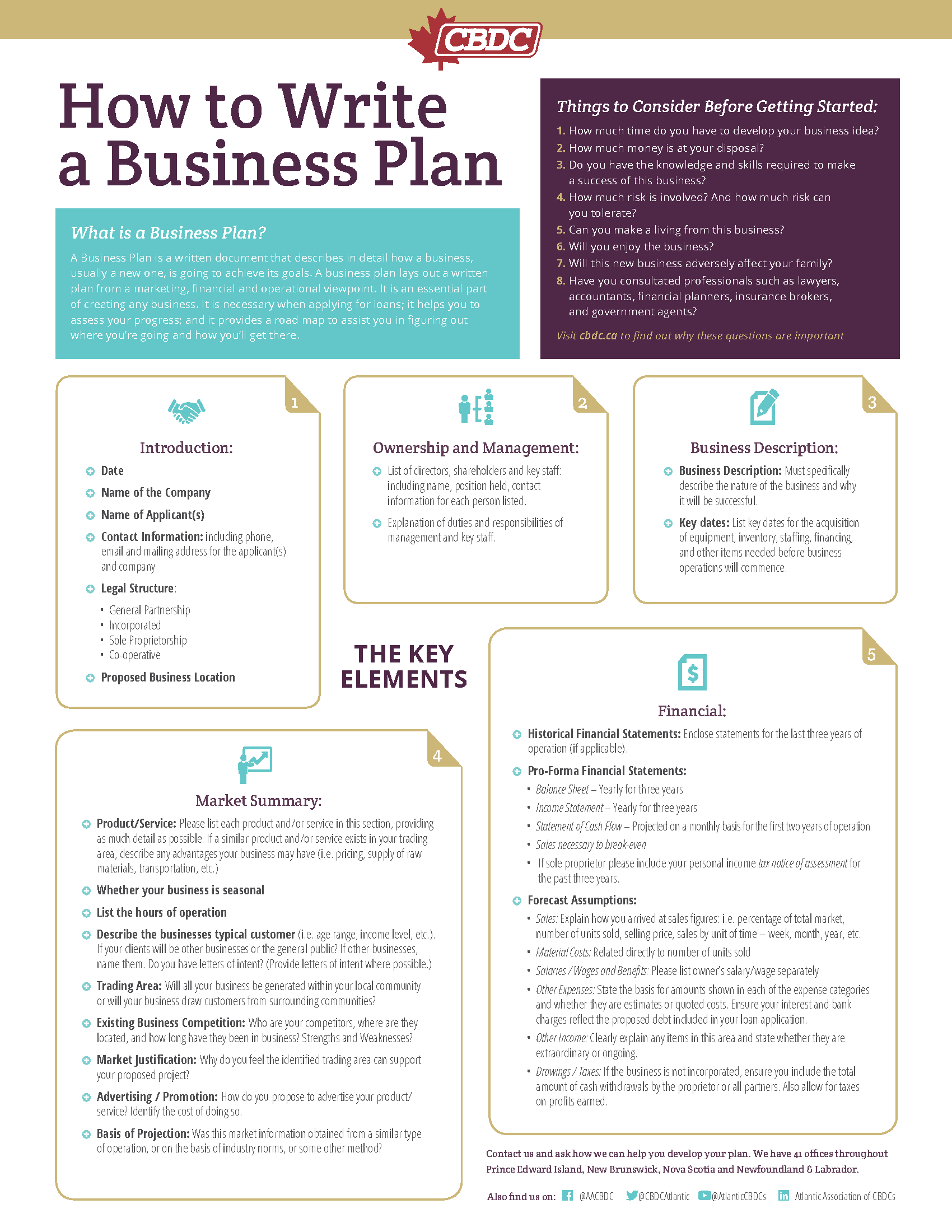
To devise a plan that resonates with financial analysts, you must include a comparative analysis of industry financial benchmarks. This involves looking at the profit margins, debt-to-equity ratios, and inventory turnover rates of established competitors. If your plan claims a 40% net profit margin in an industry where the average is 12%, you must provide a data-driven justification for such an outlier. Benchmarking provides a reality check and ensures that your financial projections are grounded in industry-standard performance metrics.
Quantitative Forecasting: Building the Three Core Financial Statements
The “Money” niche demands that a business plan be backed by a full suite of financial projections. These aren’t just guesses; they are calculated forecasts based on the research conducted in previous sections. These statements are the pulse of your business plan.
The Profit and Loss Statement (P&L)
The P&L statement is the most scrutinized part of a business plan. It outlines your projected revenues, costs, and expenses over a specific period. A professional plan typically includes a monthly P&L for the first year and an annual P&L for the subsequent three to five years. This statement reveals the “Gross Profit,” “Operating Income,” and “Net Income.” It is the primary indicator of whether the business can sustain its operations through its own revenue or if it will require constant external funding.
Mastering the Cash Flow Forecast
Profit is an accounting concept, but cash is a reality. Many profitable businesses fail because of “cash flow gaps”—periods where they have high revenue on paper but no liquid cash to pay their bills. Your business plan must include a detailed cash flow forecast that tracks the timing of cash inflows and outflows. This section is vital for identifying when the business will require a credit line or a secondary round of investment to bridge gaps between production costs and customer payments.
The Balance Sheet: Assessing Assets and Liabilities
The balance sheet provides a snapshot of the business’s financial health at any given point. It lists what the company owns (assets) versus what it owes (liabilities). For a new business, this highlights the equity held by the founders and investors. A strong balance sheet in a business plan shows a lean approach to liabilities and a strategic accumulation of assets that can be leveraged for future growth.
Strategic Resource Allocation: Budgeting and Operational Expenses
Knowing how much money you have is one thing; knowing how to spend it is another. A business plan must act as a blueprint for capital allocation. This section prevents the “spray and pray” approach to spending and ensures every dollar is an investment toward a specific objective.
Controlling the Burn Rate
For startups and early-stage companies, the “burn rate”—the rate at which the company loses money before reaching profitability—is a critical metric. Your plan should clearly outline your fixed costs (rent, salaries, software subscriptions) and variable costs (marketing, raw materials). A sophisticated business plan includes a “runway” calculation, telling the reader exactly how many months the business can survive with current capital before it must either become profitable or raise more money.
Reinvestment Strategies for Compounding Growth
A business plan isn’t just about the initial launch; it’s about the cycle of wealth. You should detail how profits will be reinvested into the company. Will you allocate 20% of net income to Research & Development? Will you buy back equity? Or will you build a cash reserve for future acquisitions? Explaining the logic behind your reinvestment strategy shows that you are thinking about long-term wealth creation rather than just short-term survival.
Risk Management and Exit Strategies: Protecting Your Capital
No financial plan is complete without a “Plan B.” Investors and founders alike need to know how the capital will be protected if things go wrong, and how it will be harvested if things go right. This final section of the business plan addresses the inherent uncertainty of the market.
Sensitivity Analysis and Contingency Planning
A “Sensitivity Analysis” (often called “What-If” analysis) is a vital component of a money-centric business plan. It calculates how your financial outcomes would change if key variables shifted—for example, if the cost of materials rose by 10% or if sales volume was 20% lower than expected. By presenting a “Best Case,” “Expected Case,” and “Worst Case” scenario, you demonstrate financial maturity. It shows that you have planned for market volatility and have established contingency funds to weather economic downturns.

Defining the Valuation and Exit Logic
Finally, a business plan must address the “Exit Strategy.” For an investor, the business plan is a journey toward a liquidity event. Whether that is an Initial Public Offering (IPO), an acquisition by a larger firm, or a management buyout, the plan should outline the intended exit route. This section should include current valuation methods (such as Discounted Cash Flow or EBITDA multiples) to give a clear picture of the potential payout. Even if you never intend to sell, defining an exit strategy forces you to build a business that is “salable”—meaning it is organized, profitable, and possesses value independent of the founder’s daily labor.
By focusing on these financial pillars, “devising a business plan” shifts from an exercise in creative writing to a rigorous discipline of financial engineering. A plan built on solid money principles doesn’t just describe a business; it proves that the business is a viable, scalable, and profitable asset.
aViewFromTheCave is a participant in the Amazon Services LLC Associates Program, an affiliate advertising program designed to provide a means for sites to earn advertising fees by advertising and linking to Amazon.com. Amazon, the Amazon logo, AmazonSupply, and the AmazonSupply logo are trademarks of Amazon.com, Inc. or its affiliates. As an Amazon Associate we earn affiliate commissions from qualifying purchases.