
The question of “what is the best business to start” is rarely about finding a revolutionary idea that has never been seen before. Instead, from a financial perspective, the “best” business is one that optimizes the relationship between capital investment, operational overhead, and scalable profit margins. In the modern economy, the barriers to entry have shifted, making it possible for individuals to launch ventures that yield high returns on investment (ROI) without requiring the massive debt traditionally associated with entrepreneurship.
To identify the best business for your specific financial goals, one must look past the hype and analyze the underlying cash flow models. Whether you are seeking a side hustle to supplement your primary income or a full-scale enterprise to build generational wealth, the following analysis breaks down the most financially viable business models currently available.
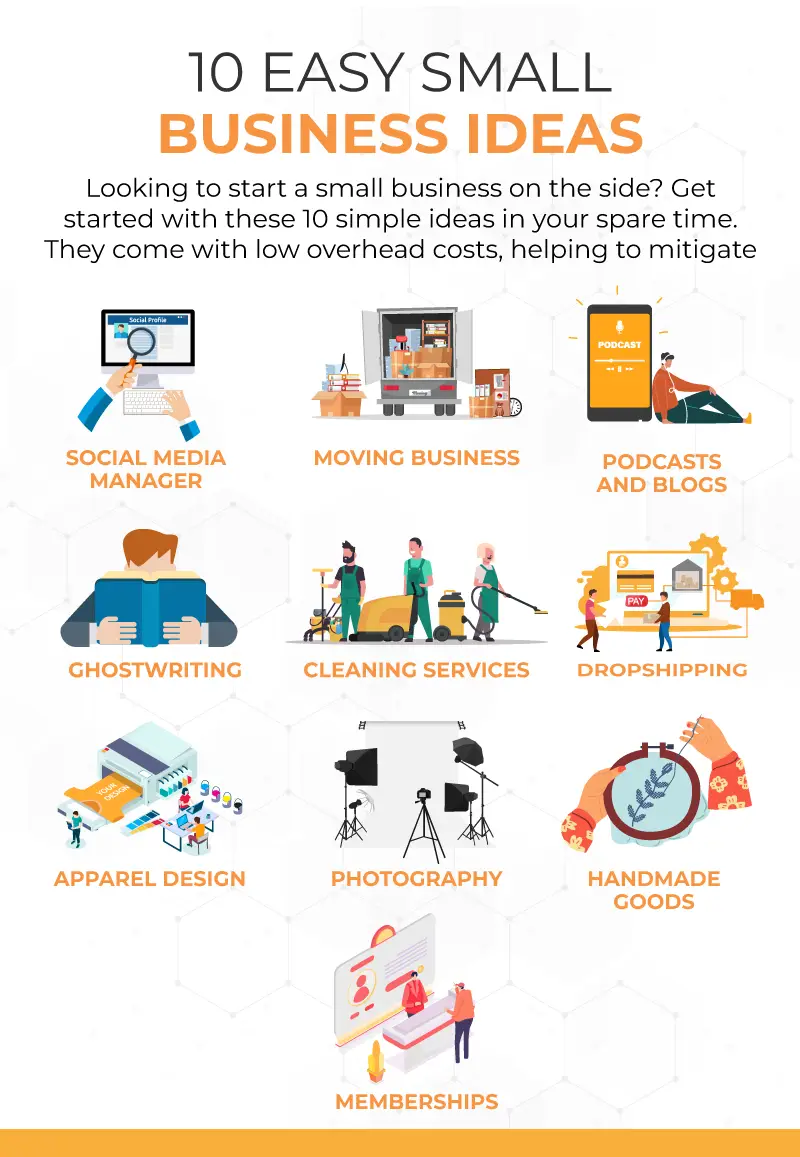
Evaluating Profitability: The Financial Framework of a “Best” Business
Before choosing a specific industry, it is essential to understand the financial metrics that define a successful startup. A business that generates $1 million in revenue but incurs $950,000 in expenses is often less desirable than a business that generates $200,000 in revenue with only $20,000 in expenses.
High Margins vs. High Volume
The most resilient businesses often fall into one of two categories: high-margin or high-volume. For a solo entrepreneur or a small team, a high-margin model is almost always the “best” choice. This involves selling products or services where the cost of goods sold (COGS) is minimal compared to the sale price. Digital products, specialized consulting, and software-as-a-service (SaaS) are prime examples. High-volume models, like traditional retail or grocery, require massive infrastructure and razor-thin margins, making them risky for beginners.
Low Initial Capital Requirements
The “best” business should ideally follow the principle of “leanness.” Starting a business that requires significant upfront capital—such as a physical manufacturing plant or a high-end restaurant—puts the founder in a “debt hole” from day one. Conversely, asset-light businesses allow for rapid experimentation. If the business fails, the financial loss is negligible; if it succeeds, the ROI is exponential because the initial investment was so low.
Scalability and Operating Leverage
Operating leverage occurs when a business can increase its output and revenue without a proportional increase in costs. For example, once a digital course is filmed, selling it to the 1,000th customer costs almost nothing more than selling it to the 1st. This is the ultimate goal of any money-focused entrepreneur: to decouple time from income.
Scalable Service-Based Models: Maximizing Income with Low Overhead
Service-based businesses remain the most accessible and financially sound starting point for most people. They allow you to monetize existing skills without the need for inventory or complex supply chains.
High-Ticket Consulting and Specialized Coaching
If you possess a specialized skill set—be it in corporate finance, legal compliance, or specific marketing strategies—consulting is the fastest path to high revenue. The financial advantage here is the “high-ticket” nature of the work. Rather than selling $20 items to thousands of people, you sell $5,000 to $10,000 packages to a handful of clients. This minimizes the cost of customer acquisition and maximizes the profit per hour worked.
Digital Agency and Managed Services
Moving one step beyond solo consulting is the agency model. In this scenario, you provide a recurring service to other businesses (B2B). Popular examples include managing digital ad spend, handling payroll/bookkeeping, or providing outsourced HR functions. The “best” part of this model is the recurring revenue. Monthly retainers provide financial stability and predictable cash flow, which is the lifeblood of any growing business.
Intermediate Skill Arbitrage
Many successful businesses are built on “arbitrage”—buying a service at one price and selling it at a higher price. In a service context, this might involve hiring freelance specialists to perform tasks while you manage the client relationship and strategy. As long as your sell price exceeds your labor costs and overhead, you are building a scalable “money machine.”
Passive Income Engines: Building Assets for Long-Term Wealth

While service businesses are excellent for generating immediate cash flow, the “best” businesses for long-term wealth are those that create passive or semi-passive income. These ventures involve building or acquiring assets that continue to produce revenue even when you are not actively working.
Digital Product Ecosystems
The creation of digital assets—such as e-books, templates, stock photography, or online workshops—represents a powerful financial shift. Once the asset is created, it becomes a “soldier” that works for you 24/7. The profit margins on digital products often exceed 90% after accounting for platform fees. By reinvesting these profits into paid traffic or SEO, you can create a self-sustaining financial loop.
Affiliate Marketing and Content Monetization
For those who enjoy research and communication, affiliate marketing offers a way to generate income without ever creating a product. By recommending financial tools, software, or consumer goods, you earn a commission on every sale. This model is highly attractive because it eliminates the financial risks of inventory management, shipping, and customer support. The “wealth” in this business lies in the ownership of the audience and the search engine rankings that drive traffic.
Licensing and Intellectual Property
Another often-overlooked “best” business is the licensing of intellectual property. If you develop a proprietary process, a unique design, or a specific piece of media, you can license the rights to larger corporations. This allows you to leverage their massive distribution networks while you collect royalty checks. It is a pure “Money” play that prioritizes capital efficiency.
Asset-Light E-commerce and Recurring Revenue Models
E-commerce has evolved. You no longer need a warehouse full of products to be successful. Modern e-commerce is about identifying niche markets and utilizing lean logistics.
Print-on-Demand and Dropshipping 2.0
Traditional dropshipping has become crowded, but “Dropshipping 2.0” focuses on high-quality, white-labeled products with domestic shipping. Print-on-demand (POD) is a similar model where items are only manufactured when a customer places an order. Financially, this is brilliant because you never pay for inventory that doesn’t sell. Your only real costs are marketing and the base cost of the item, which are only incurred after you’ve been paid by the customer.
Niche Subscription Boxes and Membership Sites
The “holy grail” of business finance is recurring revenue. Subscription-based businesses, whether they deliver physical goods (like specialized coffee) or digital content (like a premium investment newsletter), provide a predictable Monthly Recurring Revenue (MRR). This predictability makes the business significantly more valuable if you ever decide to sell it. Investors pay a premium for businesses where they can accurately forecast future earnings based on current subscription data.
Financial Risk Management for New Entrepreneurs
Starting the “best” business is not just about choosing the right model; it is about managing the financial risks associated with growth. Many businesses fail not because they lack customers, but because they mismanage their money.
Planning for Sustainable Cash Flow
Cash flow is the movement of money in and out of your business. A common pitfall for new businesses is “overtrading”—growing so fast that you run out of cash to fund new orders or payroll before your previous invoices are paid. To ensure your business stays the “best,” you must maintain a cash reserve and use financial tools to track your “burn rate” (how much money you spend each month) versus your “runway” (how long you can survive without new revenue).
Tax Efficiency and Business Structure
From a financial perspective, what you keep is more important than what you make. Choosing the right legal structure (such as an LLC or S-Corp in the United States) can save thousands of dollars in self-employment taxes. As your business grows, working with a tax strategist becomes a high-ROI activity in itself, as it protects your profits from unnecessary erosion.

Diversifying Income Streams
Even the best business can face market shifts. To build true financial resilience, successful entrepreneurs often use the profits from their first business to fund a second, non-correlated income stream. For instance, an agency owner might reinvest their profits into a portfolio of dividend-paying stocks or a small real estate holding. This “Money” strategy ensures that your personal wealth is not entirely dependent on a single market variable.
In conclusion, the best business to start is one that aligns with your financial capacity, offers high margins, and has the potential for scalability or recurring revenue. By focusing on service-based models for immediate cash, digital assets for passive wealth, and strict financial management, you can build a venture that serves as a powerful engine for personal financial freedom.
aViewFromTheCave is a participant in the Amazon Services LLC Associates Program, an affiliate advertising program designed to provide a means for sites to earn advertising fees by advertising and linking to Amazon.com. Amazon, the Amazon logo, AmazonSupply, and the AmazonSupply logo are trademarks of Amazon.com, Inc. or its affiliates. As an Amazon Associate we earn affiliate commissions from qualifying purchases.