
The question “how do i calculate” is the starting point for almost every significant financial journey. Whether you are looking to pay off debt, invest in the stock market, or retire early, the transition from ambiguity to clarity begins with a formula. In the realm of personal finance, calculation is the bridge between a vague dream and a concrete strategy.
Understanding your financial metrics is not merely about accounting; it is about empowerment. When you know exactly what your numbers are, you stop making decisions based on “gut feelings” and start making them based on data. This guide will break down the essential calculations required to master your money, from foundational net worth to the complex projections of long-term wealth.
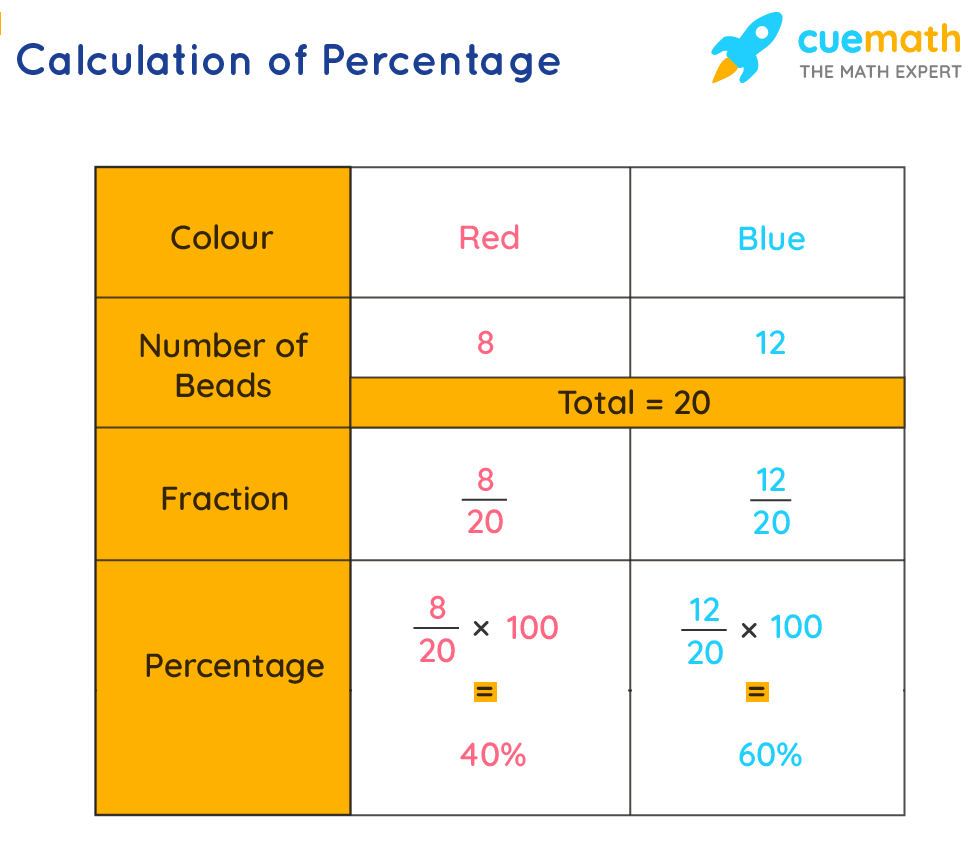
The Foundations: Calculating Your Current Financial Position
Before you can map out a route to a destination, you must first pinpoint your current location on the map. In money management, this is done through two primary calculations: Net Worth and Cash Flow.
Calculating Your True Net Worth
Your net worth is the most accurate “scoreboard” of your financial health. It is a snapshot in time that tells you what you actually own versus what you owe. To calculate this, you must list all your assets (what you own) and subtract your liabilities (what you owe).
The Formula:
Total Assets – Total Liabilities = Net Worth
Assets should include “liquid” cash (savings and checking accounts), invested assets (brokerage accounts, retirement funds), and physical assets (real estate equity, vehicles). Liabilities include your mortgage balance, student loans, credit card debt, and any other personal loans. Tracking this number quarterly allows you to see the macro-trend of your financial life, ensuring that your wealth is actually growing rather than just your income.
Determining Your Savings Rate
While net worth is a snapshot, your savings rate is a measure of velocity. It determines how quickly you can build wealth. Many people focus on how much they earn, but the “how do i calculate” of wealth building focuses on how much you keep.
The Formula:
(Monthly Savings + Monthly Investments) / Gross Monthly Income = Savings Rate
A 10% savings rate is traditional, but those seeking “Financial Independence, Retire Early” (FIRE) statuses often aim for 30% to 50%. By calculating this percentage, you can identify “lifestyle creep”—the tendency for expenses to rise alongside raises—and correct it before it stalls your progress.
Investment Metrics: Calculating Growth and Performance
Once you have a surplus of cash flow, the next step is putting that money to work. Calculating the efficiency of your investments ensures that you are taking an appropriate amount of risk for the reward you are receiving.
Return on Investment (ROI) vs. CAGR
The simplest way to look at a gain is the basic ROI. However, for long-term planning, the Compound Annual Growth Rate (CAGR) is a far more useful tool because it accounts for the passage of time.
ROI Formula:
(Current Value – Original Cost) / Original Cost x 100
CAGR Formula:
[(Ending Value / Beginning Value)^(1 / Number of Years)] – 1
CAGR is essential because it smoothes out the volatility of the stock market. If an investment grows 20% one year and drops 10% the next, your average return isn’t a simple mean; the CAGR gives you the actual geometric growth rate of your purchasing power over that period.
The Rule of 72
For a quick, “back-of-the-napkin” calculation, the Rule of 72 is an indispensable tool for every investor. It helps you estimate how long it will take for your money to double at a fixed annual rate of return.
The Calculation:
72 / Expected Annual Rate of Return = Years to Double
For example, if you expect an 8% return from an S&P 500 index fund, your money will double approximately every 9 years (72 / 8 = 9). This calculation is a powerful psychological tool; it reminds the investor that patience and time are often more important than the initial amount invested.
The Freedom Number: Calculating Your Retirement Needs
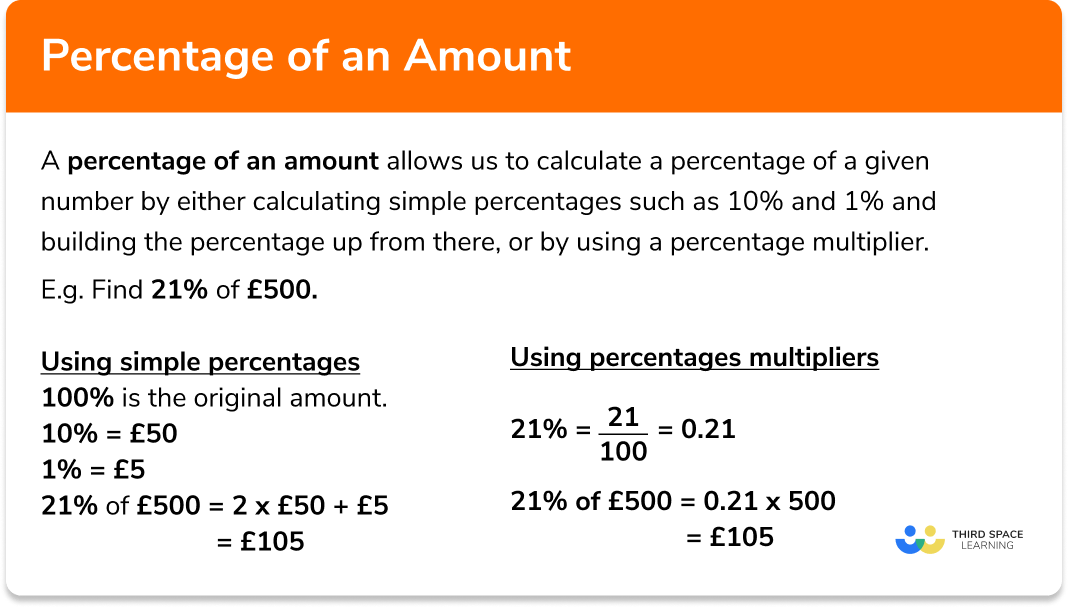
The ultimate “how do i calculate” question for most people is: “When can I stop working?” This requires calculating your “Financial Freedom Number,” also known as your “FI Number.”
The 25x Rule and the 4% Withdrawal Rate
Derived from the “Trinity Study,” a landmark piece of financial research, the 4% rule suggests that you can safely withdraw 4% of your portfolio’s value in the first year of retirement (adjusting for inflation thereafter) with a high probability that the money will last 30 years.
The Calculation:
Annual Expenses x 25 = Your Financial Freedom Number
If your lifestyle costs $60,000 per year, you need a portfolio of $1.5 million ($60,000 x 25). Calculating this number changes your perspective on spending. Suddenly, a $500 monthly car payment isn’t just $500; it represents an additional $150,000 you need to save before you can retire ($500 x 12 months = $6,000; $6,000 x 25 = $150,000).
Accounting for Inflation and “Real” Returns
One mistake many beginners make is calculating future wealth in today’s dollars without adjusting for the eroding power of inflation. If inflation averages 3% and your portfolio grows at 8%, your “real” rate of return is actually 5%.
When projecting your needs 20 years into the future, you must use the “Real Return” to ensure your freedom number maintains its purchasing power. Calculating your future needs using a 5% or 6% estimated return rather than 8% or 10% provides a necessary “margin of safety” for your financial plan.
Risk and Debt Management: Calculating the Cost of Borrowing
Wealth is not just about what you gain; it is also about what you avoid losing. High-interest debt is the “anti-investment.” Calculating the true cost of debt is vital for prioritizing your payments.
Debt-to-Income Ratio (DTI)
Lenders use this calculation to determine your creditworthiness, but you should use it to measure your own financial stress.
The Formula:
Total Monthly Debt Payments / Gross Monthly Income = DTI
A DTI above 36% is generally considered risky. If your DTI is high, your “how do i calculate” focus should shift toward the “Debt Avalanche” or “Debt Snowball” methods. In the Avalanche method, you calculate which debt has the highest interest rate and attack it first, mathematically minimizing the total interest paid over time.
The Opportunity Cost of Interest
To truly understand the impact of debt, you must calculate the opportunity cost. If you are paying $400 a month in interest on a credit card at 20%, you aren’t just losing $400. You are losing what that $400 could have become if invested.
Over 30 years, $400 invested monthly at a 7% return grows to over $480,000. Therefore, the “calculation” of that credit card interest isn’t $400—it is nearly half a million dollars in lost future wealth. Visualizing debt through this lens provides the motivation needed to eliminate it aggressively.
Strategic Allocation: Calculating Asset Distribution
The final pillar of financial calculation involves how you distribute your capital across different asset classes—stocks, bonds, real estate, and cash. This is known as asset allocation.
The “Age-Based” Calculation
A traditional rule of thumb for asset allocation is subtracting your age from 100 or 110 to determine the percentage of your portfolio that should be in equities (stocks).
The Calculation:
110 – Your Age = Percentage in Stocks
If you are 30 years old, this suggests a 80% stock allocation. However, modern financial theory suggests that this calculation should be adjusted based on your “Risk Capacity” (how much risk you can take) and “Risk Tolerance” (how much risk you want to take).
Rebalancing Formulas
Over time, your portfolio will “drift.” If stocks perform well, they may grow from 80% of your portfolio to 90%. To maintain your risk profile, you must calculate the “Rebalancing Requirement.” This involves selling a portion of the overperforming asset and buying the underperforming one to return to your target percentages. This forced calculation effectively automates the most difficult rule of investing: “Buy low, sell high.”

Conclusion: Turning Math into Momentum
Calculating your financial metrics is the first step toward mastery, but the math is only as good as the action it inspires. When you ask, “how do i calculate my net worth” or “how do i calculate my retirement needs,” you are essentially asking for a mirror to be held up to your habits.
The numbers do not lie. They reveal where you are disciplined and where you are drifting. By consistently running these calculations—monthly for cash flow, quarterly for net worth, and annually for retirement projections—you replace anxiety with a sense of control. Financial freedom is not a matter of luck; it is a matter of mathematics. Once you have the formulas, the only remaining variable is your own consistency.
aViewFromTheCave is a participant in the Amazon Services LLC Associates Program, an affiliate advertising program designed to provide a means for sites to earn advertising fees by advertising and linking to Amazon.com. Amazon, the Amazon logo, AmazonSupply, and the AmazonSupply logo are trademarks of Amazon.com, Inc. or its affiliates. As an Amazon Associate we earn affiliate commissions from qualifying purchases.