
The journey toward financial independence often begins with a single, pivotal question: “How do I invest my money?” In an era of constant market fluctuations, complex financial products, and an overwhelming amount of information, the prospect of putting your hard-earned capital to work can feel daunting. However, investing is not a pursuit reserved exclusively for the wealthy or those with advanced degrees in finance. It is a disciplined process of allocating resources today to generate a greater return in the future.
Successfully navigating the investment landscape requires a blend of strategic planning, risk management, and psychological fortitude. By understanding the core principles of asset allocation and the mechanics of various investment vehicles, you can transition from a passive saver to an active builder of wealth. This guide outlines a structured approach to investing, from laying the groundwork to managing a sophisticated portfolio.

Establishing a Strong Financial Foundation
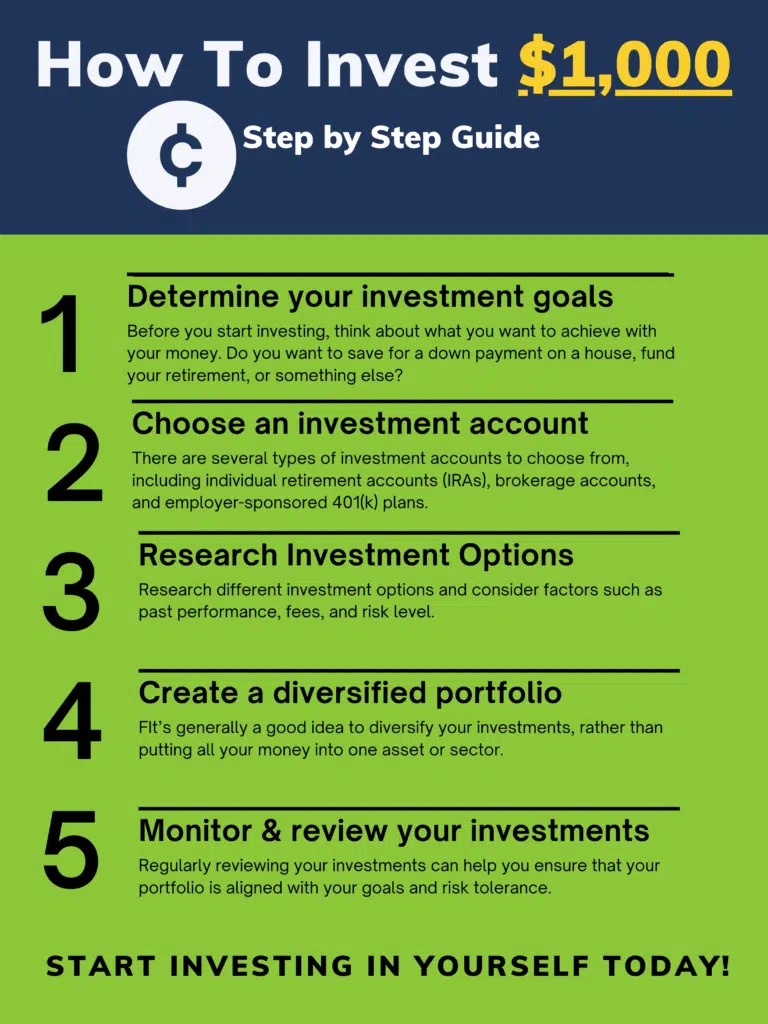
Before purchasing a single share of stock or a fractional interest in real estate, it is imperative to secure your financial base. Investing involves risk, and the last thing any investor wants is to be forced to liquidate their holdings during a market downturn because of an unforeseen personal expense.
The Emergency Fund Priority
An emergency fund is the bedrock of a sound financial plan. This is a liquid reserve—typically held in a high-yield savings account—that covers three to six months of essential living expenses. Its purpose is to act as a buffer against life’s uncertainties, such as medical emergencies or sudden job loss. By having this safety net in place, you ensure that your long-term investments remain untouched, allowing compound interest to work its magic without interruption.
Managing High-Interest Debt
Not all debt is created equal, but high-interest debt, such as credit card balances, is a significant impediment to wealth creation. If you are paying 20% interest on a credit card while the stock market historically returns around 10% annually, you are effectively losing money by investing instead of paying off the debt. Prioritize the elimination of high-interest liabilities to “guarantee” a return equal to the interest rate you are no longer paying.
Defining Your Investment Horizons
Investing is a goal-oriented activity. Are you saving for a down payment on a home in three years, or are you building a nest egg for a retirement that is three decades away? Your time horizon dictates your risk tolerance. Short-term goals require capital preservation and liquidity, whereas long-term goals allow for the volatility associated with higher-growth assets.
Navigating the Core Asset Classes
To answer “how to invest,” one must understand “what to invest in.” Asset classes are categories of financial instruments that behave differently under various market conditions. A diversified portfolio typically contains a mix of these classes to balance risk and reward.
The Growth Potential of Equities
Equities, or stocks, represent ownership in a corporation. When you buy a stock, you are betting on the future profitability and growth of that company. Historically, equities have offered the highest potential for long-term returns, though they come with higher volatility. Investors can choose between individual stocks—which require deep research—or diversified funds that hold hundreds of companies at once.
Fixed-Income Securities and Stability
Bonds and other fixed-income securities are essentially loans made by an investor to a borrower, such as a government or a corporation. In exchange for the loan, the borrower pays the investor periodic interest (coupons) and returns the principal at maturity. Bonds are generally considered safer than stocks and serve as a stabilizing force in a portfolio, providing a predictable income stream and protecting against major equity market crashes.
Alternative Assets and Diversification
Beyond stocks and bonds, alternative assets offer a way to further diversify. This category includes real estate (either through physical property or Real Estate Investment Trusts – REITs), commodities like gold, and private equity. These assets often have a low correlation with the stock market, meaning they may rise when stocks fall, providing a hedge against systemic economic shifts.
Strategic Approaches to Portfolio Management

Once you understand the assets, the next step is determining how to assemble them. A random collection of stocks is not a strategy; a portfolio is a cohesive unit designed to achieve specific outcomes.
The Power of Index Funds and ETFs
For the majority of individual investors, trying to “beat the market” by picking individual stocks is a losing game. Instead, many financial experts recommend low-cost index funds or Exchange-Traded Funds (ETFs). These funds track a specific market index, such as the S&P 500, providing instant diversification across many companies. Because they are passively managed, they carry much lower fees than actively managed mutual funds, ensuring that more of your returns stay in your pocket.
Understanding Asset Allocation and Risk Tolerance
Asset allocation is the process of deciding what percentage of your portfolio goes into stocks versus bonds or cash. This is arguably the most important decision an investor makes. Your “risk tolerance”—your ability to stomach a temporary drop in portfolio value—should guide this. A common rule of thumb is subtracting your age from 100 or 110 to determine your stock percentage, though this should be adjusted based on personal comfort and financial stability.
The Discipline of Dollar-Cost Averaging
Market timing—trying to buy at the bottom and sell at the top—is notoriously difficult, even for professionals. Dollar-cost averaging (DCA) is a strategy where you invest a fixed amount of money at regular intervals, regardless of the price. When prices are low, your fixed investment buys more shares; when prices are high, it buys fewer. Over time, this lowers the average cost per share and removes the emotional stress of trying to time the market’s “perfect” entry point.
Tax-Advantaged Accounts and Vehicles
Where you hold your investments is often as important as what you hold. The government provides several “wrappers” or account types designed to encourage saving by offering significant tax benefits.
Leveraging Employer-Sponsored Plans
The 401(k) or 403(b) is often the first entry point for many investors. Many employers offer a “match”—for example, contributing 50 cents for every dollar you contribute up to a certain percentage of your salary. This is essentially a 50% immediate return on your investment. Contributions are typically made pre-tax, reducing your taxable income in the present year.
The Benefits of Individual Retirement Accounts (IRAs)
IRAs come in two primary flavors: Traditional and Roth. In a Traditional IRA, contributions may be tax-deductible, and growth is tax-deferred until withdrawal. In a Roth IRA, you contribute after-tax dollars, but your investments grow entirely tax-free, and qualified withdrawals in retirement are also tax-free. Choosing between them often comes down to whether you think your tax rate will be higher now or in the future.
Tax-Loss Harvesting and Efficiency
In taxable brokerage accounts, savvy investors use a strategy called tax-loss harvesting. This involves selling a security that has experienced a loss to offset capital gains taxes earned from other investments. While this shouldn’t drive your investment decisions, being mindful of “tax drag” ensures that your net returns are as high as possible.
The Psychological Aspect of Long-Term Investing
The greatest threat to an investment portfolio isn’t usually market volatility—it’s the investor’s own behavior. Success in investing is 10% math and 90% temperament.
Overcoming Emotional Bias in Market Volatility
The “herd mentality” often leads investors to buy when the market is euphoric (and expensive) and sell when the market is crashing (and cheap). To combat this, one must develop a “stay the course” mindset. Recognizing that market cycles are natural and that historical trends favor those who remain invested through the lows is crucial for long-term success.
The Importance of Rebalancing
Over time, certain assets will outperform others, causing your original asset allocation to drift. If your target was 70% stocks and 30% bonds, a strong year in the stock market might push your portfolio to 80% stocks. Rebalancing is the process of selling a portion of your winners and buying more of your underperforming assets to return to your target. This forced discipline ensures you are “selling high” and “buying low,” keeping your risk profile in check.
Conclusion: Starting the Journey
Investing is a marathon, not a sprint. The most valuable asset any investor has is time. Because of the power of compounding, a small amount invested in your 20s can grow to be significantly larger than a much larger amount invested in your 40s.
By focusing on a solid foundation, choosing diversified and low-cost assets, utilizing tax-advantaged accounts, and maintaining emotional discipline, you can answer the question of “how do I invest” with confidence. The goal is not to find a “get-rich-quick” scheme, but to build a robust financial engine that supports your lifestyle and secures your future. Start today, stay consistent, and let the markets work for you.
aViewFromTheCave is a participant in the Amazon Services LLC Associates Program, an affiliate advertising program designed to provide a means for sites to earn advertising fees by advertising and linking to Amazon.com. Amazon, the Amazon logo, AmazonSupply, and the AmazonSupply logo are trademarks of Amazon.com, Inc. or its affiliates. As an Amazon Associate we earn affiliate commissions from qualifying purchases.