
For the modern investor, the sudden realization that the stock market is closed can be a moment of forced reflection. In an era defined by 24/7 digital connectivity, high-frequency algorithmic trading, and the instant gratification of mobile banking, the periodic silence of the world’s major stock exchanges—such as the New York Stock Exchange (NYSE) and the NASDAQ—serves as a reminder that the world of high finance is still governed by traditional calendars, regulatory frameworks, and human-centric schedules.
Understanding why the market is closed today requires looking beyond a simple date on a calendar. It involves understanding the intersection of national heritage, economic stability, and the structural requirements of global liquidity. For those in the “Money” niche—investors, financial planners, and business owners—these closures are not merely “days off”; they are strategic pauses that influence volatility, settlement cycles, and investment psychology.
Understanding the Structure of Global Market Schedules
The primary reason a market is closed on any given weekday is the observance of statutory or federal holidays. These breaks are institutionalized to provide a standardized schedule for banks, clearinghouses, and brokerage firms. Without a synchronized schedule, the financial system would face significant “settlement risk,” where money moves but the underlying assets cannot be cleared due to banking closures.
Federal Holidays and Statutory Observances
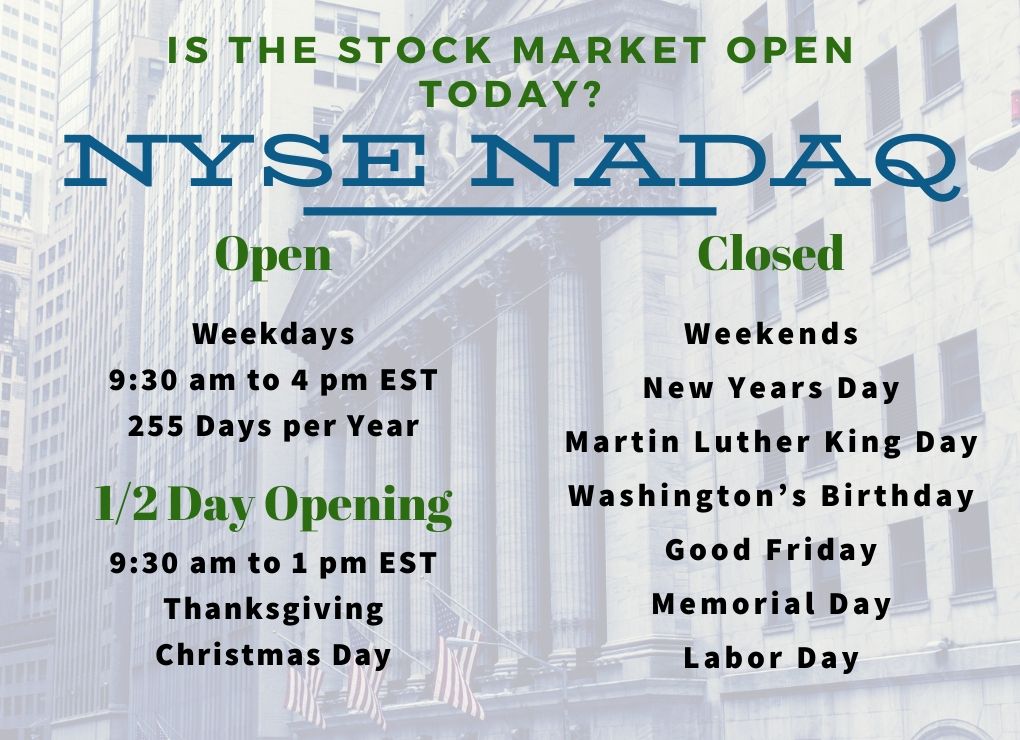
In the United States, the equity markets typically follow the federal holiday schedule, though there are notable exceptions (such as Good Friday). Common closures include New Year’s Day, Martin Luther King Jr. Day, Presidents’ Day, Memorial Day, Juneteenth National Independence Day, Independence Day, Labor Day, Thanksgiving, and Christmas.
These closures are essential for the “plumbing” of the financial world. When the Federal Reserve’s Fedwire system or major commercial banks are closed, the movement of fiat currency stops. Since stock trades require the exchange of cash for equity, a market cannot effectively function if the banking system is offline.
Special Observances and Extraordinary Closures
Beyond the annual calendar, markets may close for non-routine reasons. Historically, the NYSE has closed for periods of national mourning, such as the funeral of a sitting or former U.S. President. More critically, “emergency closures” can occur due to catastrophic events. The most famous modern example is the four-day closure following the attacks on September 11, 2001.
Additionally, markets may experience “circuit breaker” halts. While not a full-day closure, these are mandatory pauses triggered by extreme volatility (e.g., a 7%, 13%, or 20% drop in the S&P 500). These mechanisms are designed to prevent panic selling and allow investors to digest information, ensuring that when the market is “open,” it is operating under orderly conditions.
The Economic and Psychological Impact of Market Closures
One might wonder why, in an age of AI and automation, markets don’t simply trade 24/7 like the cryptocurrency markets. The decision to maintain traditional “opening” and “closing” bells is rooted in both economic theory and the practicalities of human psychology.
Maintaining Liquidity and Orderly Trading
Liquidity is the lifeblood of the financial markets. It refers to the ease with which an asset can be bought or sold without affecting its price. If markets were open 24/7, trading volume would be spread thin across 168 hours a week rather than concentrated into the standard 32.5 to 40 hours.
When trading volume is thin—such as in the middle of the night or on a low-participation holiday—”bid-ask spreads” widen. This means it becomes more expensive for an average investor to trade, as the gap between what a buyer offers and a seller asks increases. By closing the market on weekends and holidays, global exchanges ensure that when the doors open, there is a “critical mass” of participants ready to provide liquidity, leading to fairer pricing for everyone.
The Human Element: Mitigating Burnout and Error
Despite the rise of bots, the financial industry is still driven by human decision-makers: fund managers, analysts, risk officers, and retail investors. Constant exposure to market volatility without a break can lead to “decision fatigue.”
Market closures provide a necessary “cooling-off” period. They allow participants to step back, re-evaluate their portfolios without the pressure of a ticking clock, and process information that may have been overlooked during the heat of a trading session. For the professional sector, these breaks are vital for maintaining mental acuity, which in turn reduces the likelihood of “fat-finger” errors or emotionally charged trading blunders that can destabilize the broader economy.
Planning Your Investment Strategy Around Market Holidays
For the savvy investor, a market closure is not a day to ignore their finances; it is a day to perform the administrative and strategic work that a live market often distracts from. Managing “Money” effectively requires a proactive approach to the calendar.
Handling Limit Orders and Stop-Losses
One of the most important technical aspects of a market closure is how it affects pending orders. If you have a “Day Order” placed, it will typically expire at the end of the previous trading session. However, “Good ‘Til Canceled” (GTC) orders remain in the system.
It is crucial to remember that news does not stop just because the exchange does. If a major geopolitical event occurs over a long holiday weekend, the market may “gap” up or down when it reopens. For example, if you have a stop-loss set at $100, and the market opens at $90 after a holiday break due to bad news, your shares will be sold at $90, not $100. Understanding these “blind spots” is a hallmark of sophisticated personal finance management.
Volatility Patterns Before and After Long Weekends
Statistically, the days leading up to and immediately following a market holiday exhibit unique behaviors. Many institutional traders “square their positions” (close out risky trades) before a long weekend to avoid “weekend risk”—the possibility of an unmanageable event occurring while they cannot trade.
This often leads to lower volatility in the hours before a holiday, but potentially higher volatility on the morning of the reopening. Investors who understand this “holiday effect” can use the closure to set their buy or sell targets, avoiding the trap of reacting emotionally to the opening-bell surge.
24/7 Alternatives: Where the Money Never Sleeps
While the equity markets take their scheduled breaks, the modern financial landscape offers several avenues for those who require constant movement. For someone managing a diverse “Money” portfolio, it is important to know which sectors remain active when the NYSE is dark.
Digital Assets and Decentralized Exchanges
The most prominent example of a 24/7/365 market is the cryptocurrency space. Unlike traditional stocks, Bitcoin, Ethereum, and other digital assets do not rely on centralized clearinghouses or banking hours. They operate on decentralized ledgers (blockchains) that never pause.
While this offers unparalleled access, it also presents a different set of risks. Without the “circuit breakers” or “holiday pauses” found in traditional markets, crypto volatility can be relentless. For a traditional investor, the weekend or holiday closure of the stock market is often a time to check in on their digital asset allocations, which may be moving independently of the broader equity trends.
The Foreign Exchange (Forex) and Global Arbitrage
The Forex market is another “nearly 24/7” environment, operating 24 hours a day, five and a half days a week. Because currency is traded globally, the sun is always up on at least one major financial center—from London to New York to Tokyo.
When the U.S. market is closed for a specific national holiday (like Thanksgiving), international markets in Europe and Asia remain open. Professional traders often look to these “overseas” signals to gauge how the U.S. market might react when it finally reopens. Monitoring the FTSE 100 in London or the Nikkei 225 in Tokyo during a U.S. holiday can provide valuable insights into global sentiment and capital flows.
Conclusion: The Value of the Pause
In the fast-paced world of money and investing, it is easy to view a closed market as a hindrance or an inconvenience. However, these scheduled pauses are foundational to the health of the global financial system. They ensure that banks can settle accounts, that liquidity remains concentrated and efficient, and that investors have the time to move from reactive impulse to proactive strategy.
The next time you find the market closed today, use the opportunity to step back from the flickering red and green tickers. Review your long-term financial goals, adjust your risk parameters, and remember that wealth is built not just through the trades you make, but through the discipline you maintain during the moments when the world of commerce stands still. The market may be closed, but the path to financial literacy and growth is always open.
aViewFromTheCave is a participant in the Amazon Services LLC Associates Program, an affiliate advertising program designed to provide a means for sites to earn advertising fees by advertising and linking to Amazon.com. Amazon, the Amazon logo, AmazonSupply, and the AmazonSupply logo are trademarks of Amazon.com, Inc. or its affiliates. As an Amazon Associate we earn affiliate commissions from qualifying purchases.