
Understanding the daily fluctuations of the stock market can often feel like trying to decipher a complex, multi-language puzzle. When the major indices—the S&P 500, the Dow Jones Industrial Average, and the Nasdaq—finish the day in the green, investors and casual observers alike ask the same question: Why did stocks go up today?
While the media often points to a single “headline” event, the reality of a market rally is usually a confluence of macroeconomic data, corporate performance, and the invisible hand of investor psychology. To navigate the world of personal finance and investing effectively, one must look beneath the surface of the daily closing numbers to understand the structural drivers of market momentum.

The Macroeconomic Catalyst: Interest Rates and Inflation
The most powerful force in modern finance is the cost of money, which is dictated by central banks—most notably the Federal Reserve in the United States. When stocks surge, it is frequently because the market has received a signal that the “macro” environment is becoming more favorable for valuations.
Interest Rate Expectations and Fed Sentiment
The relationship between interest rates and stock prices is generally inverse. When interest rates are high, borrowing becomes expensive for companies, and the “discount rate” used to value future cash flows increases, making stocks less attractive. Conversely, when the Federal Reserve hints at a “pivot” toward lower rates, or if data suggests that the hiking cycle has peaked, stocks tend to rally. Today’s upward movement is often a reaction to a “dovish” tone from central bank officials or a realization that the economy can handle current rates without falling into a deep recession.
Inflation Data: CPI and PPI Reports
Inflation is the primary enemy of the bull market. When the Consumer Price Index (CPI) or the Producer Price Index (PPI) comes in lower than analysts expected, it signals that the economy is cooling just enough to keep prices stable without requiring further aggressive intervention from the Fed. A “cool” inflation report is essentially a green light for investors. It suggests that corporate margins will not be further squeezed by rising input costs and that consumers will maintain their purchasing power, fueling the broader economy.
Corporate Earnings and Fundamental Strength
While the macro environment sets the stage, individual company performance provides the script. The stock market is, at its core, a collection of businesses. When those businesses perform better than expected, the indices naturally follow.
The Power of Forward Guidance
During earnings season, the market reacts less to what a company did in the last three months and more to what it says it will do in the next twelve. This is known as forward guidance. If a bellwether company—think of the “Magnificent Seven” tech giants or major industrial players—beats earnings estimates and raises its future outlook, it creates a ripple effect. Investors interpret this as a sign of systemic resilience. When stocks go up, it is often because corporate leadership has expressed confidence that they can navigate upcoming challenges, prompting analysts to revise their price targets upward.
Sector-Specific Momentum and the “Halo Effect”
Sometimes, a rally isn’t universal but is driven by a specific sector that carries the rest of the market. We often see this in the technology or energy sectors. For instance, a breakthrough in artificial intelligence or a surprise surge in semiconductor demand can send tech stocks soaring. Because these companies carry such heavy weight in market-cap-weighted indices like the S&P 500, their success creates a “halo effect,” lifting the broader market regardless of how smaller, unrelated sectors are performing.

Market Sentiment and Technical Factors
Not every market move is rooted in hard economic data or earnings reports. Often, stocks go up because of the internal mechanics of the trading floor—both human and algorithmic.
Short Squeezes and Algorithmic Trading
In the modern era, a significant portion of daily trading volume is executed by high-frequency trading (HFT) algorithms. These programs are designed to identify patterns and “breakouts.” If a stock index clears a certain technical resistance level (like a 200-day moving average), algorithms may trigger a massive wave of buying orders.
Additionally, we must consider the “short squeeze.” When many investors bet against a stock (shorting it) and the price begins to rise, those investors are forced to buy back shares to cover their positions and limit losses. This forced buying creates a feedback loop that accelerates the upward movement, often leading to those dramatic late-afternoon rallies that leave observers wondering where the sudden demand came from.
Geopolitical Stability and Reduced Uncertainty
The stock market hates uncertainty more than it hates bad news. When a looming geopolitical conflict finds a diplomatic path, or when a contentious legislative battle (such as a debt ceiling negotiation) reaches a resolution, the “risk premium” associated with stocks decreases. Today’s rally might simply be the result of a “sigh of relief.” When the “tail risk”—the chance of a catastrophic outlier event—diminishes, institutional investors feel more comfortable moving capital out of “safe-haven” assets like gold or Treasury bonds and back into the equity markets.
Behavioral Finance: The Psychology of the Rally
Finally, we cannot ignore the human element. Investing is as much about social psychology as it is about mathematics. The way investors feel about the future dictates where they put their money today.
FOMO and the “Wait-and-See” Money
There is a massive amount of capital always sitting on the sidelines in “money market” funds or cash equivalents. When the market shows even a slight trend of sustained growth, the Fear Of Missing Out (FOMO) begins to take hold. Professional fund managers, who are judged against the performance of the S&P 500, cannot afford to be left behind during a rally. As the market ticks upward, “sideline money” begins to flow back into equities to chase the gains, creating a self-fulfilling prophecy of rising prices.
Institutional Rebalancing and Window Dressing
At certain times of the month or quarter, large pension funds and mutual funds engage in “rebalancing.” If their mandate requires a 60/40 split between stocks and bonds, and bonds have outperformed recently, they must sell bonds and buy stocks to return to their target allocation. Furthermore, “window dressing” occurs when fund managers buy winning stocks toward the end of a reporting period so that their holdings look attractive to clients. These institutional flows are massive and can provide the necessary liquidity to push the market higher even in the absence of major news.
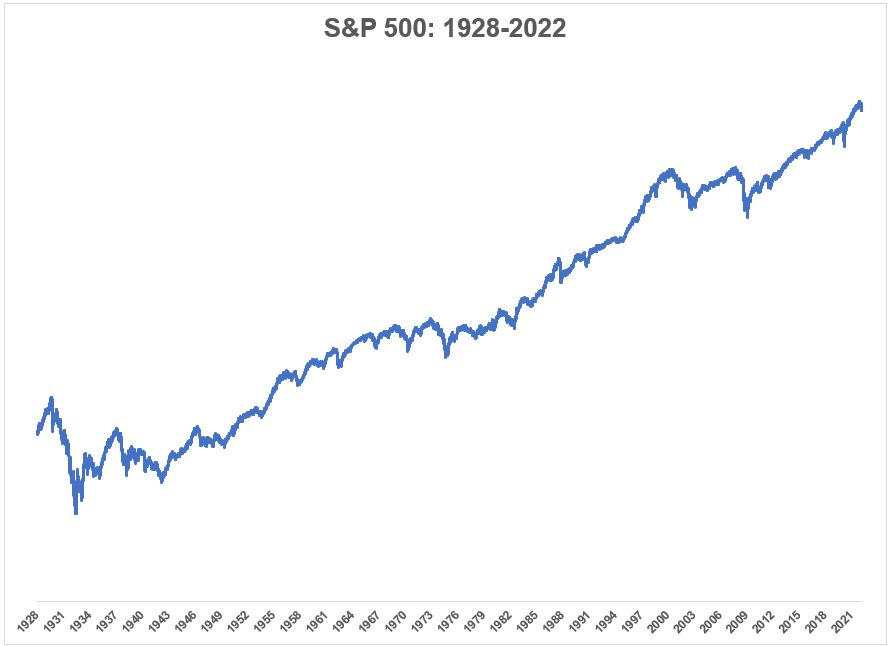
Conclusion: The “Why” is Rarely Singular
When you ask, “Why did stocks go up today?” the answer is rarely found in a single news clip. It is the result of a complex interplay between the Federal Reserve’s policy shifts, the fundamental health of global corporations, the technical triggers of automated trading systems, and the collective psyche of millions of investors.
For the individual investor, the daily “noise” of the market is less important than the underlying trends. However, understanding these drivers allows you to distinguish between a “dead cat bounce”—a temporary recovery in a falling market—and a sustained bull run. By focusing on macroeconomic stability, corporate earnings quality, and market sentiment, you can better position your portfolio to capitalize on the days when the bulls take charge. The market is a forward-looking machine; today’s gains are simply the world’s collective bet that tomorrow will be slightly better than yesterday.
aViewFromTheCave is a participant in the Amazon Services LLC Associates Program, an affiliate advertising program designed to provide a means for sites to earn advertising fees by advertising and linking to Amazon.com. Amazon, the Amazon logo, AmazonSupply, and the AmazonSupply logo are trademarks of Amazon.com, Inc. or its affiliates. As an Amazon Associate we earn affiliate commissions from qualifying purchases.