
The sight of a sea of red across trading terminals can be a jarring experience for seasoned investors and novices alike. When the major indices—the S&P 500, the Dow Jones Industrial Average, and the Nasdaq—begin a synchronized slide, the immediate reaction is often one of concern. However, the stock market is a complex machine influenced by a myriad of levers, ranging from microscopic data points to sweeping global events. Understanding why stocks are dropping today requires a deep dive into the macroeconomic, technical, and psychological factors that drive price action.
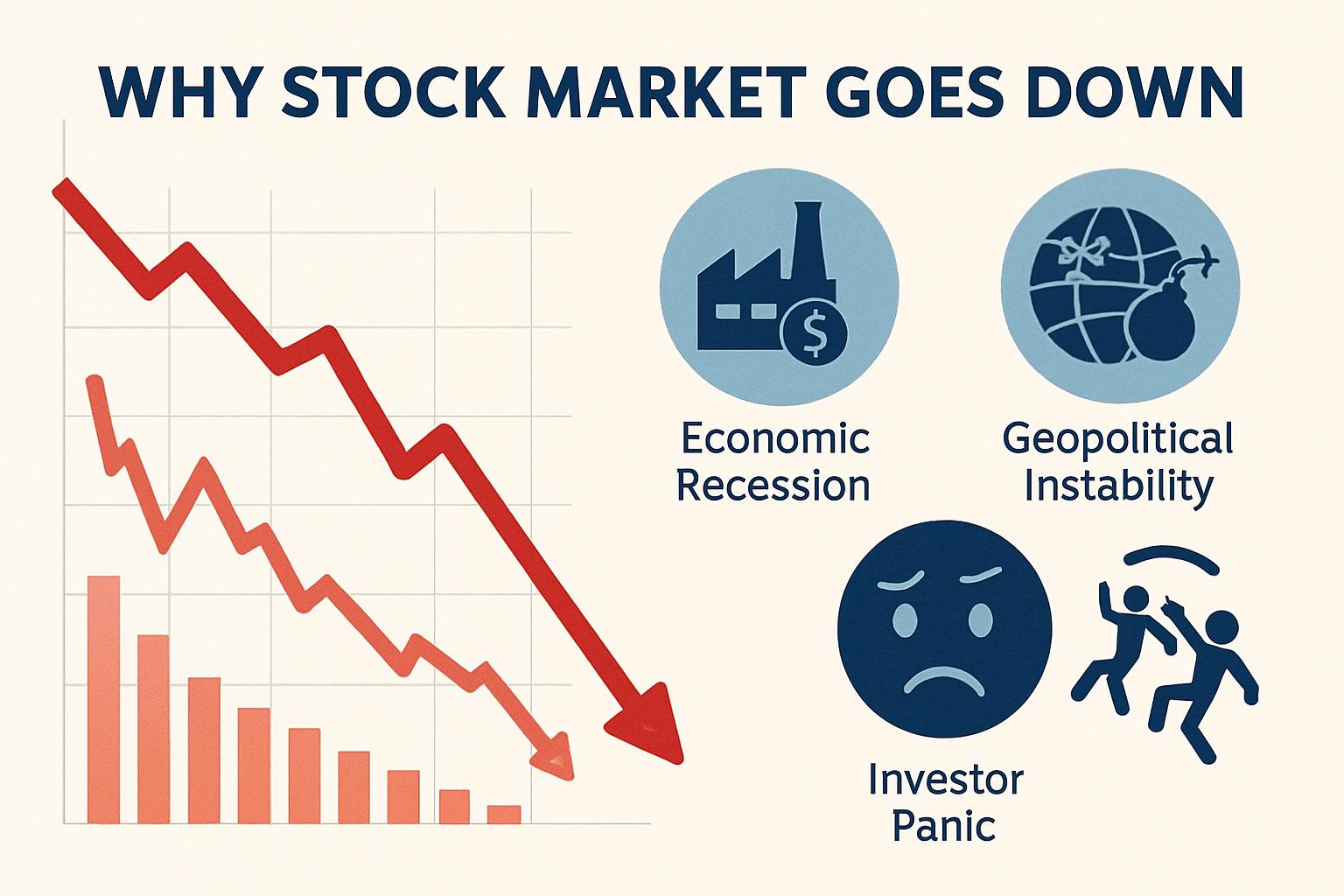
In the world of finance, volatility is not just a risk; it is a fundamental characteristic of the marketplace. While bull markets build wealth over years, corrections and pullbacks often happen with startling speed. To navigate these periods effectively, an investor must look beyond the ticker tape and analyze the underlying catalysts that shift the balance from buying pressure to selling momentum.
The Macroeconomic Catalyst: Interest Rates and Inflationary Pressure
The most significant driver of stock market performance in the modern era is the cost of capital. When the economy experiences shifts in its fundamental health, the stock market is usually the first to react.
The Federal Reserve and the “Risk-Free” Rate
Central banks, particularly the Federal Reserve in the United States, wield immense power over equity valuations. When the Fed raises interest rates to combat inflation, it effectively increases the “risk-free” rate of return found in government bonds. As bond yields rise, stocks become relatively less attractive. Investors who were previously forced into the “riskier” stock market to find yield may pivot back to the safety of fixed-income assets. Furthermore, higher interest rates increase borrowing costs for corporations, which can eat into profit margins and slow down expansion plans.
Inflationary Expectations and Consumer Spending
Inflation is a double-edged sword for the stock market. While a moderate amount of inflation suggests a growing economy, runaway inflation erodes purchasing power. If consumers are spending more on “needs” like gas, groceries, and rent, they have less “discretionary” income to spend on the products sold by publicly traded companies. When inflation data—such as the Consumer Price Index (CPI)—comes in higher than expected, the market often drops in anticipation of tighter monetary policy and a potential slowdown in consumer demand.
The Inverted Yield Curve and Recession Fears
One of the most watched indicators in business finance is the yield curve. Traditionally, long-term bonds pay more than short-term bonds. When this relationship flips—an inverted yield curve—it is historically a harbinger of an upcoming recession. If investors believe a recession is on the horizon, they begin pricing in lower future earnings today, leading to a widespread sell-off in cyclical stocks like travel, retail, and manufacturing.
Corporate Earnings and the Valuation Correction
Stocks represent partial ownership in a business. Ultimately, the value of a stock is the present value of all future cash flows that the business will generate. When those expectations are challenged, stock prices must adjust.
The Gap Between Expectations and Reality
Wall Street runs on expectations. During earnings season, it is not enough for a company to be profitable; it must be more profitable than analysts predicted. If a bellwether company reports strong earnings but provides “weak guidance”—suggesting that the next quarter or year might be difficult—the stock will often plummet. Because many large-cap stocks are heavily weighted in major indices, a few “misses” from tech giants or retail behemoths can drag down the entire market.
The De-Rating of High-Growth Stocks
In periods of “easy money” (low interest rates), investors are willing to pay a premium for growth, even if a company isn’t currently profitable. These are often referred to as high P/E (Price-to-Earnings) stocks. However, when the economic climate shifts toward uncertainty, investors undergo a process called “de-rating.” They become unwilling to pay high multiples for future growth and instead flock to “value” stocks—companies with steady dividends and established balance sheets. This rotation often causes the tech-heavy Nasdaq to drop more significantly than the Dow Jones.
Supply Chain Disruption and Margin Compression
Even if demand for a product is high, a company cannot make money if it cannot produce or ship its goods. Factors such as international trade disputes, logistics bottlenecks, or labor shortages can increase the “Cost of Goods Sold” (COGS). If a company cannot pass these costs on to the consumer, its profit margins shrink. Investors keep a close eye on these margins; a slight contraction can lead to a significant revaluation of the stock’s price.
Geopolitical Instability and Global Uncertainty
The stock market hates uncertainty more than it hates bad news. While bad news can be quantified and priced in, uncertainty creates a “risk-off” environment where investors sell first and ask questions later.
Energy Prices and Global Conflict
Geopolitical tensions in oil-producing regions can lead to spikes in energy prices. Since energy is a primary input for almost every sector—from transportation to plastic manufacturing—rising oil prices act as a “tax” on the global economy. When geopolitical instability threatens the flow of commodities, the market reacts by pricing in the potential for higher operating costs and lower consumer spending power.
Trade Policy and International Relations
The global economy is deeply interconnected. Changes in trade policy, such as the implementation of new tariffs or the breakdown of trade agreements between major economies, create friction in the market. When two major economic powers engage in trade disputes, it disrupts the “just-in-time” manufacturing models that many corporations rely on, leading to increased volatility in the equity markets.
The “Black Swan” Events
Occasionally, stocks drop due to “Black Swan” events—unforeseeable occurrences that have an extreme impact. These could include global health crises, sudden banking failures, or major cyberattacks on financial infrastructure. Because these events are not “priced in,” the initial market reaction is usually a sharp, vertical drop as the world tries to assess the long-term implications.
The Technical and Psychological Drivers of Market Declines
While fundamentals like earnings and interest rates set the long-term trend, the “why” of a specific day’s drop is often found in the mechanics of the market itself and the psychology of the people (and algorithms) trading it.
Algorithmic Trading and Cascading Sell Orders
A significant portion of daily trading volume is driven by high-frequency trading (HFT) and algorithms. These systems are programmed to sell when certain “technical levels” are broken. For example, if the S&P 500 falls below its 200-day moving average, it may trigger a wave of automated sell orders. This can create a “waterfall effect,” where one drop triggers another, leading to a much deeper decline than the fundamentals might suggest.
The VIX and the Fear Index
The CBOE Volatility Index (VIX) is often called the “fear gauge.” It measures the market’s expectation of volatility over the next 30 days. When the VIX spikes, it indicates that investors are buying “put options” to protect their portfolios against further declines. This increase in hedging often correlates with a drop in stock prices, as the cost of insurance against a crash becomes more expensive, leading some to liquidate positions entirely.
Margin Calls and Forced Liquidation
In a bull market, many investors use “margin”—borrowed money from their broker—to buy more stocks. However, if the value of those stocks drops below a certain level, the broker issues a “margin call,” requiring the investor to deposit more cash or sell their holdings immediately. During a sharp market downturn, forced liquidations from margin calls can add extra selling pressure, accelerating the downward momentum.
Strategic Perspective: Navigating the Downturn
For the individual investor, understanding why stocks are dropping is the first step in avoiding emotional decision-making. While the headlines may feel apocalyptic, market corrections are a recurring part of the financial cycle.
The Importance of Asset Allocation
The most effective way to weather a market drop is through proper asset allocation. An investor who is 100% in high-growth tech stocks will feel a market drop much more acutely than one who has a diversified portfolio of equities, bonds, real estate, and commodities. Diversification ensures that while one part of a portfolio is declining, another may be holding steady or even rising.
Dollar-Cost Averaging as a Psychological Tool
Trying to “time the bottom” is a notoriously difficult task that even professional fund managers struggle with. Instead, many successful investors utilize dollar-cost averaging (DCA)—investing a fixed amount of money at regular intervals regardless of the price. When stocks are dropping, your fixed investment buys more shares. Over the long term, this lowers the average cost per share and removes the emotional stress of trying to pick the perfect day to buy.
Rebalancing Opportunities
A market drop is often an opportunity to rebalance. If an investor’s target allocation was 60% stocks and 40% bonds, a stock market crash might leave them with 50% stocks and 50% bonds. Rebalancing involves selling some of the “safe” assets (bonds) to buy the “discounted” assets (stocks). This disciplined approach forces investors to “buy low and sell high,” which is the cornerstone of long-term wealth creation.
Conclusion
Stocks drop for a multitude of reasons—ranging from the high-level shifts in Federal Reserve policy to the microscopic movements of trading algorithms. While a sea of red on your screen can be unsettling, it is essential to remember that the market is a forward-looking mechanism. Today’s drop is the market’s way of digesting new information and resetting valuations for the future. By focusing on fundamental business health and maintaining a long-term perspective, investors can view these downturns not as a crisis, but as a natural and necessary part of the investment journey.
aViewFromTheCave is a participant in the Amazon Services LLC Associates Program, an affiliate advertising program designed to provide a means for sites to earn advertising fees by advertising and linking to Amazon.com. Amazon, the Amazon logo, AmazonSupply, and the AmazonSupply logo are trademarks of Amazon.com, Inc. or its affiliates. As an Amazon Associate we earn affiliate commissions from qualifying purchases.