
The financial markets are a dynamic, ever-shifting landscape, and few indicators capture the pulse of the American economy quite like the Dow Jones Industrial Average (DJIA), affectionately known as “the Dow.” For investors, economists, and even casual observers, understanding the Dow’s daily movements isn’t just about tracking numbers; it’s about gaining insight into broader economic trends, corporate health, and investor sentiment. “What’s the Dow doing right now?” is a question that resonates with urgency, reflecting the constant need to gauge market direction and make informed financial decisions.
At its core, the Dow represents a snapshot of thirty significant, publicly owned companies based in the United States. These aren’t just any companies; they are giants of industry, leaders in their respective sectors, whose performance is believed to reflect the overall health of the U.S. stock market and, by extension, the economy. From tech behemoths to consumer goods staples, the composition of the Dow offers a unique lens through which to view the economic engine of the nation. Monitoring its real-time fluctuations, whether minute-by-minute or day-by-day, provides crucial data for those managing personal finances, making investment choices, or simply seeking to understand the economic narrative unfolding around them.

Decoding the Dow: A Snapshot of Market Performance
When we ask, “What’s the Dow doing right now?”, we’re seeking immediate answers to a complex picture. The Dow’s performance isn’t just a random walk; it’s the culmination of countless economic forces, corporate decisions, and investor perceptions. Understanding its current position requires looking beyond the raw numbers to the underlying context.
The Dow Jones Industrial Average Explained
The Dow Jones Industrial Average is a price-weighted index, meaning that stocks with higher share prices have a greater impact on the index’s value than those with lower share prices, regardless of their market capitalization. This distinction is important, as it contrasts with market-cap-weighted indexes like the S&P 500. The thirty companies included in the Dow are selected by the editors of The Wall Street Journal and are meant to be representative of the broader U.S. economy. While its methodology has faced criticism for not being a perfect economic barometer due to its limited number of companies and price-weighting scheme, its historical significance and widespread recognition make it an indispensable benchmark for market watchers. It offers a quick, albeit sometimes narrow, read on the sentiment towards large-cap American industrial and service companies.
Current Market Sentiment and Recent Movements
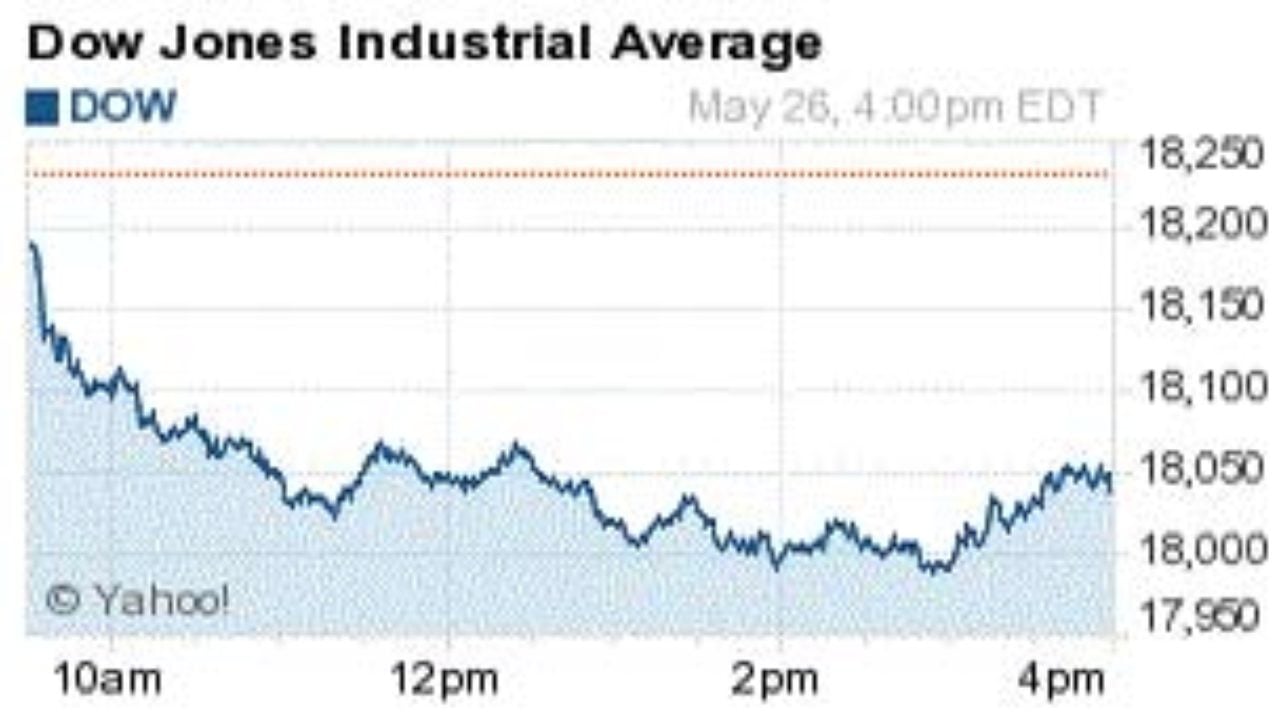
While specific real-time numbers are beyond the scope of this analysis, we can generalize about typical market behaviors. Often, a “right now” moment for the Dow might involve either upward momentum driven by positive earnings reports from its constituent companies, optimistic economic data releases (like strong employment figures or robust manufacturing output), or a general sense of investor confidence. Conversely, a downward trend could be influenced by fears of inflation, rising interest rates, geopolitical tensions, or disappointing corporate outlooks. Periods of sideways trading often reflect market uncertainty, where investors are weighing competing signals, leading to limited net movement. The “right now” could signify a surge in specific sectors within the Dow, such as technology or financials, or a broader market reaction to significant global events. Understanding this immediate sentiment requires constant vigilance and an appreciation for the factors that typically move markets.
Key Drivers Behind Today’s Fluctuations
The Dow’s minute-by-minute dance is orchestrated by a multitude of factors. Corporate news, such as mergers and acquisitions, new product launches, or leadership changes within the thirty Dow companies, can cause immediate shifts. Broader economic data releases from government agencies – think Consumer Price Index (CPI), Gross Domestic Product (GDP) reports, or jobless claims – consistently move the needle. Additionally, global events, from supply chain disruptions to international trade agreements or conflicts, ripple through the market, influencing investor behavior and, consequently, the Dow’s performance. Analyst upgrades or downgrades of individual Dow stocks also contribute to intraday volatility, reflecting changing expert opinions on a company’s prospects.
Factors Influencing the Dow’s Trajectory
Beyond the immediate news cycle, several structural and cyclical factors dictate the Dow’s long-term and short-term trajectory. These are the underlying currents that shape the market’s direction, demanding careful consideration from any serious investor.
Economic Indicators and Corporate Earnings
The health of the economy is inextricably linked to the performance of the stock market. Key economic indicators provide crucial insights. Strong GDP growth often signals a robust economy where businesses are thriving, leading to higher corporate profits and, subsequently, higher stock prices. Low unemployment rates indicate a healthy labor market, which generally translates to stronger consumer spending – a significant driver of corporate revenue. Conversely, rising inflation can erode purchasing power and corporate margins, putting downward pressure on stock valuations. Perhaps most critical are corporate earnings reports. When the thirty Dow companies release their quarterly results, the market scrutinizes revenues, profits, and future guidance. Strong earnings beats or optimistic forecasts often propel the Dow higher, while misses or pessimistic outlooks can trigger declines. The aggregate health of these corporate giants is a direct reflection of the broader economic environment they operate within.
Geopolitical Events and Global Markets
The Dow does not operate in a vacuum. Geopolitical developments around the world can have profound and immediate effects on U.S. stock markets. Trade disputes, political instability in major economic regions, wars, or even shifts in international alliances can introduce uncertainty, disrupt global supply chains, and impact investor confidence. For instance, rising tensions in critical shipping lanes can increase commodity prices, affecting manufacturing costs for Dow components. A slowdown in China’s economy, as another example, can reduce demand for goods and services from U.S. multinational corporations, weighing on their earnings. The interconnectedness of today’s global economy means that events far from American shores can directly influence the profitability and outlook of Dow companies, thereby impacting the index’s value.
Interest Rates and Central Bank Policies
One of the most powerful levers influencing the stock market is interest rates, primarily set by central banks like the U.S. Federal Reserve. When the Fed raises interest rates, borrowing becomes more expensive for businesses and consumers. This can slow down economic growth, dampen corporate investment, and reduce consumer spending, all of which typically have a negative impact on stock prices. Higher rates also make fixed-income investments (like bonds) more attractive relative to stocks, causing some investors to shift their capital. Conversely, lower interest rates stimulate borrowing and spending, often boosting economic activity and corporate profits, which tends to support higher stock valuations. The market constantly anticipates and reacts to signals from the Fed regarding future rate changes, with every hint of monetary policy adjustment causing a ripple effect across the Dow.
What Dow Movements Mean for Investors
For the individual investor, the daily ebb and flow of the Dow Jones Industrial Average is more than just news; it’s a critical piece of information for managing their financial well-being. Understanding the implications of these movements is key to making sound investment decisions.
Short-Term Volatility vs. Long-Term Trends
It’s easy to get caught up in the minute-by-minute drama of the Dow, but savvy investors know to distinguish between short-term volatility and long-term trends. A single day’s, week’s, or even month’s movement in the Dow, whether up or down, doesn’t necessarily dictate the overall direction of the market or the future performance of a diversified portfolio. Short-term volatility is driven by immediate news, sentiment, and technical factors, often leading to rapid, unpredictable swings. Long-term trends, however, are typically dictated by fundamental economic growth, corporate earnings expansion, and technological innovation. For most long-term investors, focusing on the broader trend and not panicking over daily fluctuations is a cornerstone of successful investing. The Dow has historically shown an upward bias over extended periods, reflecting the general growth of the American economy.
Diversification and Risk Management
Relying solely on the Dow as a measure of an entire portfolio’s health can be misleading. A well-diversified investment strategy involves spreading investments across various asset classes (stocks, bonds, real estate), different industries, and geographies. While the Dow’s 30 companies are significant, they represent only a fraction of the investable universe. A diversified portfolio hedges against the risk of any single company or sector performing poorly. For instance, if a few Dow components face industry-specific headwinds, a diversified portfolio might still perform well due to strengths in other sectors or asset classes not represented in the index. Risk management also involves aligning investments with one’s personal financial goals, time horizon, and risk tolerance, ensuring that short-term Dow movements don’t derail a carefully constructed plan.
The Importance of a Long-Term Perspective
Perhaps the most crucial lesson for investors observing the Dow is the power of a long-term perspective. Historically, market downturns, even significant ones, have been followed by recoveries. Investing with a long-term horizon (many years or decades) allows investors to ride out market volatility and benefit from the compounding returns generated by economic growth and corporate profitability. Attempting to time the market by buying and selling based on daily Dow movements is exceedingly difficult and often leads to missed opportunities and suboptimal returns. Instead, consistent investing, regardless of market conditions, and focusing on sound fundamentals, is a strategy that has repeatedly proven successful. The Dow’s journey over decades, despite numerous recessions and crises, has been one of consistent upward progression, illustrating the resilience of the economy and the stock market.
Navigating Market Uncertainty: Strategies for Investors
In an environment where the Dow can fluctuate wildly based on news, sentiment, or economic data, navigating market uncertainty requires discipline, strategy, and a clear understanding of personal financial goals.
Staying Informed and Avoiding Emotional Decisions
One of the best defenses against market uncertainty is knowledge. Staying informed about economic indicators, corporate news, and geopolitical developments provides context for market movements. However, being informed is different from reacting impulsively. Emotional decisions – buying out of euphoria or selling out of fear – are often detrimental to long-term wealth creation. Developing a disciplined investment plan and sticking to it, even when the Dow is experiencing significant swings, is paramount. This often involves setting clear investment objectives, defining risk parameters, and having a systematic approach to portfolio adjustments.
Rebalancing Your Portfolio
Market movements, including those of the Dow, can cause your portfolio’s asset allocation to drift from its original targets. For example, if stocks have performed exceptionally well, their percentage weight in your portfolio might grow larger than intended, increasing your overall risk exposure. Periodically rebalancing your portfolio involves selling off assets that have grown disproportionately and buying more of those that have lagged, bringing your allocation back to your desired percentages. This disciplined approach ensures that your risk level remains consistent with your financial plan and can even lead to buying low and selling high, albeit systematically rather than speculatively.
Consulting Financial Professionals
For many individuals, navigating the complexities of the stock market and understanding the nuances of the Dow’s movements can be challenging. This is where the expertise of financial professionals becomes invaluable. A qualified financial advisor can help assess your personal financial situation, define your goals, determine your risk tolerance, and construct a diversified investment strategy tailored to your needs. They can also provide guidance during periods of market volatility, helping you avoid emotional pitfalls and stay focused on your long-term objectives. While the Dow offers a crucial daily pulse of the market, integrating its insights into a comprehensive financial plan often benefits from professional guidance.
In conclusion, “What’s the Dow doing right now?” is a question laden with significance for anyone engaged with the financial world. It serves as a real-time barometer, reflecting the immediate impact of economic news, corporate performance, and global events on a select group of America’s leading companies. While its daily fluctuations can be a source of anxiety or excitement, a deeper understanding reveals that these movements are part of a larger, more complex economic narrative. For investors, the key lies not in chasing every tick of the index, but in using its insights to inform a well-diversified, long-term investment strategy, tempered by patience and guided by professional advice, ensuring their financial journey remains on a steady and ultimately rewarding course.
aViewFromTheCave is a participant in the Amazon Services LLC Associates Program, an affiliate advertising program designed to provide a means for sites to earn advertising fees by advertising and linking to Amazon.com. Amazon, the Amazon logo, AmazonSupply, and the AmazonSupply logo are trademarks of Amazon.com, Inc. or its affiliates. As an Amazon Associate we earn affiliate commissions from qualifying purchases.