
In the world of personal finance and global investing, few terms are uttered with as much frequency or gravity as “The Dow.” When news anchors ask, “What is the current Dow?” or headlines scream about a 500-point drop, they are referring to the Dow Jones Industrial Average (DJIA). For the modern investor, the Dow is more than just a number on a screen; it is a pulse check for the American economy, a historical benchmark, and a critical tool for portfolio management. To understand the current state of the Dow is to understand the collective health of 30 of the most significant “blue-chip” companies in the United States.
Understanding the Dow Jones Industrial Average (DJIA)
The Dow Jones Industrial Average is one of the oldest and most followed equity indices in the world. Established by Charles Dow and Edward Jones in 1896, it was originally designed to track the performance of the industrial sector of the American economy. Today, while the name retains the word “Industrial,” the index has evolved to include companies from nearly every major sector, excluding transportation and utilities.
The Methodology of Price-Weighting
Unlike many other major indices, such as the S&P 500, which are market-capitalization-weighted, the Dow is a price-weighted index. This means that companies with a higher share price have a greater impact on the index’s total value than those with lower share prices. For example, a stock trading at $200 per share will exert more influence on the Dow’s movement than a stock trading at $50, regardless of the actual size or “market cap” of the company.
This methodology is often a point of debate among financial professionals. Critics argue that share price is an arbitrary metric for influence, while proponents suggest it offers a unique perspective on the movement of high-value corporate giants.
The “30 Blue-Chip” Components
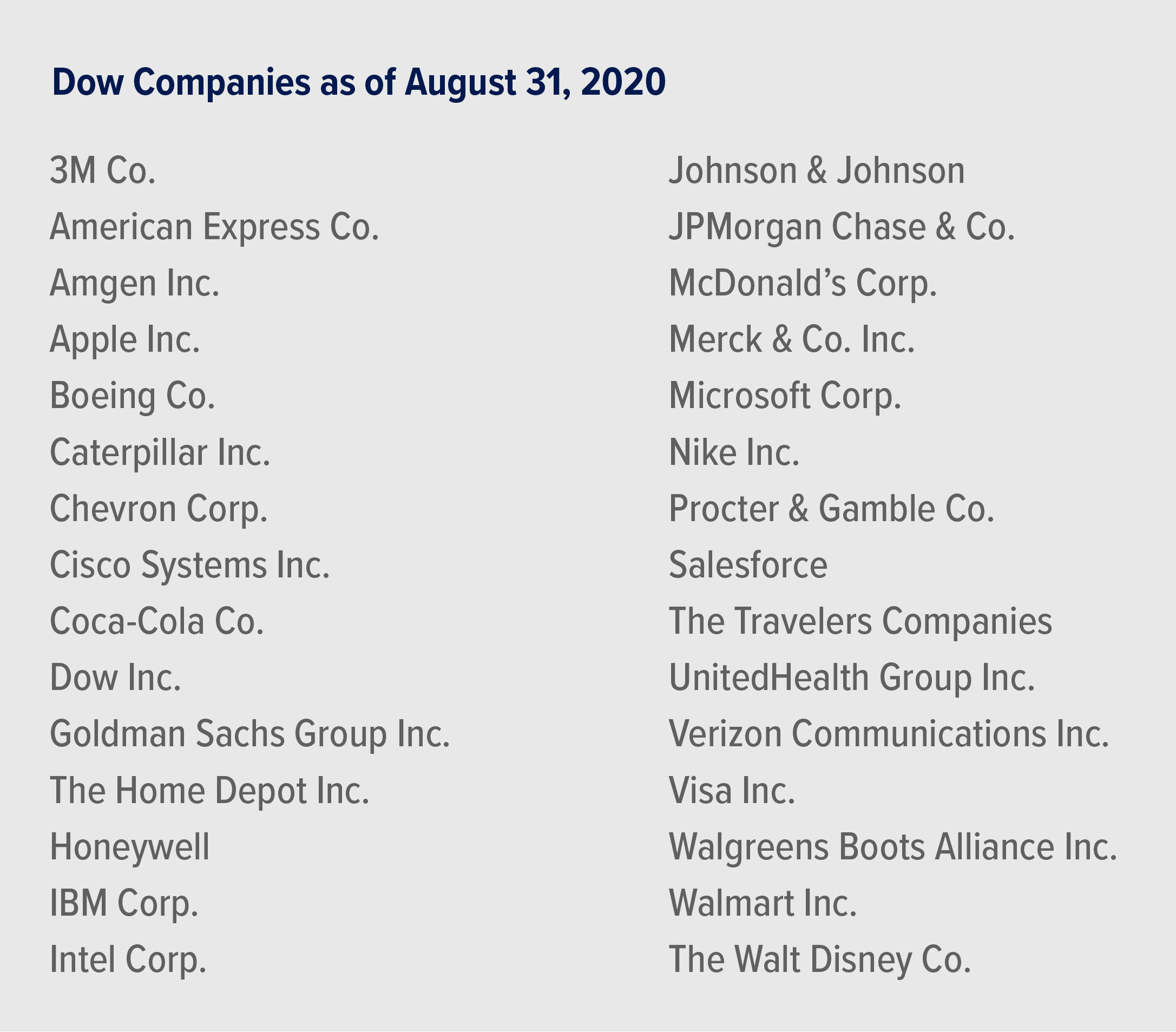
The Dow is comprised of 30 prominent companies listed on stock exchanges in the United States. These companies are selected by the editors of the Wall Street Journal, and they represent a broad cross-section of the economy. These aren’t just any companies; they are “blue-chip” stocks—established, stable, and financially sound industry leaders.
Current components include household names like Apple, Microsoft, Coca-Cola, and Visa. Because the index is limited to only 30 companies, every change to the roster is a major financial event, signaling a shift in the American economic landscape.
The Role of the Dow Divisor
One might wonder how 30 stocks with varying prices can result in a five-digit number like 35,000 or 38,000. This is handled by the “Dow Divisor.” The divisor is a mathematical constant used to smooth out the effects of stock splits, dividends, and other structural changes. It ensures that the historical continuity of the index remains intact, allowing investors to compare the “current Dow” to prices from decades ago with accuracy.
Factors Influencing the Current State of the Dow
When investors ask what the Dow is doing today, they are really asking about the macroeconomic forces acting upon the market. The index does not move in a vacuum; it reacts sharply to policy changes, consumer behavior, and global events.
Federal Reserve Policy and Interest Rates
The single most significant driver of the Dow in the current era is the Federal Reserve. When the Fed adjusts the federal funds rate, the ripple effects are felt instantly across the 30 Dow components. High interest rates generally increase the cost of borrowing for corporations, which can eat into profit margins and lead to a “cooling” of the index. Conversely, when rates are low, capital is cheaper, often leading to expansion and higher stock valuations. Investors closely watch “Fed Speak” and FOMC meetings to predict the Dow’s next major move.
Corporate Earnings and Profitability
Every quarter, the companies within the Dow release their earnings reports. Because there are only 30 companies, a significant miss or beat by a heavy hitter like Goldman Sachs or UnitedHealth Group can single-handedly move the entire index. Investors look at “Earnings Per Share” (EPS) and revenue guidance to determine if the current valuation of the Dow is justified. In a bull market, earnings growth is the engine that keeps the Dow climbing; in a bear market, shrinking margins are often the culprit for its decline.
Inflation and Consumer Sentiment
Since many Dow components are consumer-facing—such as Walmart, Disney, and Home Depot—the index is highly sensitive to inflation. When the cost of goods rises, these companies may face higher input costs. If they can pass those costs on to consumers, their stocks may remain stable. However, if consumer sentiment drops and spending slows down, the Dow often reflects this contraction. The “Current Dow” is essentially a mirror of how much faith the public has in the immediate financial future.
The Dow vs. Other Market Indicators
To truly grasp the value of the Dow, it must be compared to its peers: the S&P 500 and the Nasdaq Composite. While the Dow is the most famous, it is often viewed by institutional investors as a narrower view of the market.
Diversification vs. Focus
The S&P 500 tracks 500 of the largest U.S. companies, providing a much broader diversification than the Dow’s 30. Because the S&P 500 is market-cap weighted, it is often considered a more accurate representation of the total U.S. equity market. The Nasdaq, meanwhile, is heavily tech-weighted.
The Dow’s strength lies in its focus on “value” and “stability.” While the Nasdaq might soar during a tech boom, the Dow often remains more resilient during market corrections because its components are diversified across traditional sectors like healthcare, finance, and consumer goods.
Historical Performance and Volatility
Historically, the Dow tends to be less volatile than the Nasdaq but can sometimes lag behind the S&P 500 during periods of rapid growth in mid-cap companies. However, for the conservative investor, the Dow represents “Old Guard” stability. When the “Current Dow” is performing well, it signals that the fundamental pillars of the American economy—the banks, the manufacturers, and the retailers—are on solid ground.
How Investors Use the Dow for Portfolio Strategy
Understanding the current Dow is not just for economists; it is a vital part of personal wealth management. Knowing how to interpret its movements can help an investor decide when to buy, hold, or rebalance.
Using the Dow for Long-Term Wealth Building
Many investors gain exposure to the Dow through Exchange-Traded Funds (ETFs) like the SPDR Dow Jones Industrial Average ETF Trust (ticker: DIA), often referred to as “Diamonds.” By investing in the Dow, an individual is essentially betting on the long-term success of the American corporate elite. Because these 30 companies are industry leaders, they often pay consistent dividends, making the Dow a favorite for those seeking income-focused “Money” strategies.
The Dow as a Sentiment Indicator
For the active trader, the Dow serves as a sentiment indicator. If the Dow is hitting all-time highs while other indices are struggling, it suggests a “flight to quality,” where investors are moving money out of risky startups and into the safety of established blue-chips. Monitoring the Dow’s “support” and “resistance” levels can help individuals manage their risk and protect their capital during turbulent financial cycles.
Future Outlook: The Evolution of the Industrial Average
As we look toward the future, the Dow continues to adapt. It is not a static list; it is a living entity that changes to reflect the modern world.
Changing the Components to Reflect Tech and Services
In recent years, the Dow has moved away from its “smokestack” origins. The removal of old-school industrial giants in favor of tech leaders like Salesforce and Amazon shows that the index is evolving. This shift ensures that the Dow remains relevant in a digital-first economy. When you ask “What is the current Dow,” you are now asking about the performance of cloud computing and e-commerce just as much as you are asking about oil and manufacturing.

The Global Impact of the American Dow
While the DJIA tracks American companies, these firms are global powerhouses. A significant portion of the revenue for Dow components comes from international markets. Therefore, the “Current Dow” is also a reflection of global trade health. As emerging markets grow and international trade policies shift, the Dow will continue to be the primary barometer that investors worldwide watch to gauge the health of the global financial system.
In conclusion, the Dow Jones Industrial Average remains the most iconic symbol of the financial markets. Whether you are a seasoned investor or someone just starting to manage your personal finances, understanding the mechanics, components, and influences of the Dow is essential. It is more than just a number; it is the story of industrial progress, corporate resilience, and the ongoing pursuit of economic growth. Keeping an eye on the “current Dow” is, in many ways, keeping an eye on the future of money itself.
aViewFromTheCave is a participant in the Amazon Services LLC Associates Program, an affiliate advertising program designed to provide a means for sites to earn advertising fees by advertising and linking to Amazon.com. Amazon, the Amazon logo, AmazonSupply, and the AmazonSupply logo are trademarks of Amazon.com, Inc. or its affiliates. As an Amazon Associate we earn affiliate commissions from qualifying purchases.