
In the world of high-stakes finance, timing is often as critical as the asset itself. For many novice investors, the stock market is defined by the ringing of the bell at 9:30 AM and 4:00 PM Eastern Time. However, for those who trade futures, the clock operates on a much more grueling and expansive schedule. The futures market is often referred to as “the market that never sleeps,” providing a 23-hour-a-day gateway into global price discovery.
Understanding exactly when the futures market opens is not merely a matter of logistics; it is a fundamental component of risk management. Because futures contracts track everything from the S&P 500 to barrels of crude oil and bushels of wheat, their trading hours are influenced by global time zones, exchange-specific rules, and the underlying assets they represent.
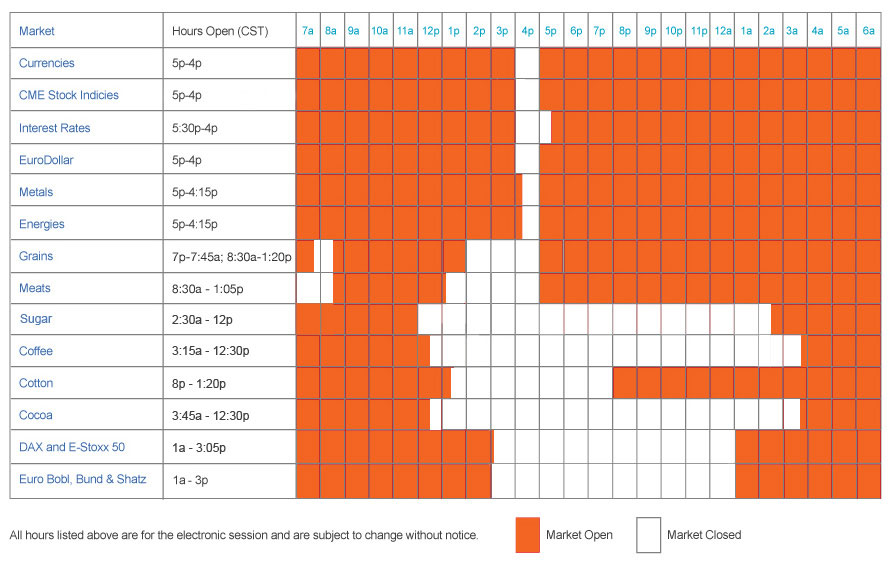
Understanding the Global Futures Market Cycle
The futures market operates primarily through electronic trading platforms, the most prominent being the CME Group (Chicago Mercantile Exchange). Unlike the equity markets, which are largely localized to their respective national exchanges, futures are designed to allow global participants to hedge risk and speculate on price movements around the clock.
The Standard 23/5 Trading Week
For the vast majority of financial and commodity futures, the trading week begins on Sunday at 6:00 PM Eastern Time (ET) and concludes on Friday at 5:00 PM ET. This schedule is often referred to as “23/5” because the market remains open 23 hours a day, five days a week.
The daily one-hour break, typically occurring between 5:00 PM and 6:00 PM ET, serves as a crucial maintenance window. During this hour, clearinghouses settle trades, and electronic systems undergo necessary resets. While the market is closed during this time, it is a period of intense preparation for traders looking at the “Asia Open” which follows immediately at 6:00 PM.
Major Exchanges and Their Influence
While the CME Group is the titan of the industry, other exchanges like the Intercontinental Exchange (ICE) and Eurex also play pivotal roles. Each exchange may have slightly different opening times based on the products they list. For example, ICE Futures US, which handles many agricultural and currency contracts, may follow a schedule that aligns more closely with specific physical market hours. Knowing which exchange houses your contract is the first step in mastering the trading clock.
The Role of Electronic Trading Platforms (Globex)
The shift from open outcry pits to electronic trading via platforms like CME Globex has standardized the “opening” of the market. In the past, you had to wait for traders to physically enter a pit in Chicago or New York. Today, the “open” is a digital flick of a switch that allows a trader in Singapore, London, and New York to interact simultaneously at 6:00 PM ET on a Sunday evening.
Specific Market Opening Times by Asset Class
Not all futures are created equal. Depending on whether you are trading equity indices, energy, or agricultural products, the “opening” time and the liquidity available can vary significantly.
Equity Index Futures (S&P 500, Nasdaq, Dow)
Equity index futures, such as the E-mini S&P 500 (ES) and the E-mini Nasdaq-100 (NQ), are among the most liquid instruments in the world. They follow the standard CME schedule:
- Sunday Open: 6:00 PM ET
- Monday – Thursday Close: 5:00 PM ET (with a 60-minute break before reopening at 6:00 PM ET)
- Friday Close: 5:00 PM ET
These markets are particularly active during the “crossover” periods—when the European markets open (around 3:00 AM ET) and when the U.S. cash market opens (9:30 AM ET).
Energy and Metals (Crude Oil, Gold, Silver)
Commodities like WTI Crude Oil and Gold are traded on the NYMEX and COMEX divisions of the CME. Their hours are nearly identical to equity futures, opening at 6:00 PM ET on Sunday. However, the volatility in these markets is often driven by geopolitical events occurring in time zones outside of the U.S., making the Sunday night open a high-volatility event for energy traders.
Agricultural Futures (Corn, Soybeans, Wheat)
Agricultural futures are the exception to the 23-hour rule. Because these markets are more closely tied to physical grain elevators and shipping schedules, they often have “split sessions.” For example, many CBOT (Chicago Board of Trade) grain futures trade from 8:00 PM to 8:45 AM ET, and then have a second session from 9:30 AM to 2:20 PM ET. These mid-day breaks are essential for traders to digest USDA reports and physical market data without the constant pressure of a moving screen.
The Significance of the Sunday Open and Overnight Gaps

For a futures trader, Sunday evening is one of the most important times of the week. This is when the market reacts to all the news, geopolitical shifts, and economic data that accumulated over the weekend when the markets were closed.
The “Sunday Gap”
A “gap” occurs when the opening price on Sunday night is significantly higher or lower than the closing price on Friday afternoon. These gaps happen because the world continues to move even when the exchange is paused. If a major geopolitical conflict erupts on a Saturday, the S&P 500 futures might “gap down” 50 points the moment the market opens at 6:00 PM ET on Sunday. Professional traders watch these gaps closely, as they often set the tone for the entire trading week.
Price Discovery and Global Participation
The Sunday open marks the beginning of the Asian trading session. As Tokyo, Hong Kong, and Sydney begin their business day, they provide the first layer of liquidity. While the volume is typically lower than the New York session, the price discovery that happens during these overnight hours is vital. It allows investors to hedge their portfolios against weekend risks before the New York Stock Exchange opens on Monday morning.
Managing Risk During Illiquid Periods
It is important to note that just because the market is “open” doesn’t mean it is always safe to trade. The hours between 5:00 PM and 6:00 PM ET (the daily halt) and the early hours of the Sunday open often see “thin” liquidity. In a thin market, the spread between the bid and the ask price widens. This means it can be more expensive to enter and exit trades, and prices can experience “slippage,” where your order is filled at a less desirable price than expected.
Trading Sessions and Volatility Peaks
While the market may be open 23 hours a day, the quality of trading varies wildly depending on the hour. Smart money typically focuses on specific windows where volatility and liquidity intersect.
The New York/London Overlap
The most significant period for futures trading is the overlap between the London and New York sessions, roughly from 8:00 AM ET to 12:00 PM ET. During this four-hour window, the world’s two largest financial hubs are both active. This is when the highest volume of contracts changes hands, and it is usually when the most significant price trends are established.
The Impact of Economic Releases
The timing of the futures market open is also designed to accommodate major economic “drops.” In the United States, most key data—such as the Non-Farm Payrolls report or Consumer Price Index (CPI) numbers—are released at 8:30 AM ET. Because futures are already trading at that time (unlike the cash stock market), they provide an immediate vehicle for the market to price in the new information. This makes the 8:30 AM ET period a “second open” of sorts, characterized by extreme volatility and massive volume.
The “After-Hours” Environment
From 4:00 PM ET (the close of the stock market) to 5:00 PM ET (the futures daily halt), the market often goes through a “settlement” phase. During this time, institutional investors are balancing their books. While the market is open, the movement can be erratic as it is no longer tethered to the live movements of individual stocks on the NYSE or Nasdaq.
Practical Strategies for Navigating Market Hours
To succeed in futures trading, you must align your strategy with the clock. Trading the “open” requires a different mindset than trading the “mid-day lull.”
Choosing the Right Window for Your Lifestyle
One of the greatest benefits of the futures market’s hours is flexibility. For a trader with a full-time day job, the Sunday open or the Asian/European sessions provide an opportunity to trade when the traditional stock market is closed. However, one must be aware that “night trading” requires a different strategy, often focusing on mean reversion or smaller price targets due to lower volume.
Tools for Monitoring Global Hours
Professional traders use specialized clocks and dashboards to track the various opens and closes. It is not enough to know the time in your local city; you must know when the Frankfurt DAX opens, when the London fix occurs, and when the CME daily halt begins. Many modern trading platforms, such as NinjaTrader or Thinkorswim, offer “session highlighting” tools that visually shade different parts of your chart based on which global market is currently active.
The Importance of the Daily Halt
Always be aware of the 5:00 PM ET daily halt. If you are a day trader, you generally do not want to hold a high-leverage position through this hour-long break. If a major news event breaks during that 60-minute window, you will be unable to exit your position until the 6:00 PM ET reopen, at which point the market may have gapped significantly against you. Managing your “flat” time—the time when you have no open positions—is just as important as managing your active trading time.
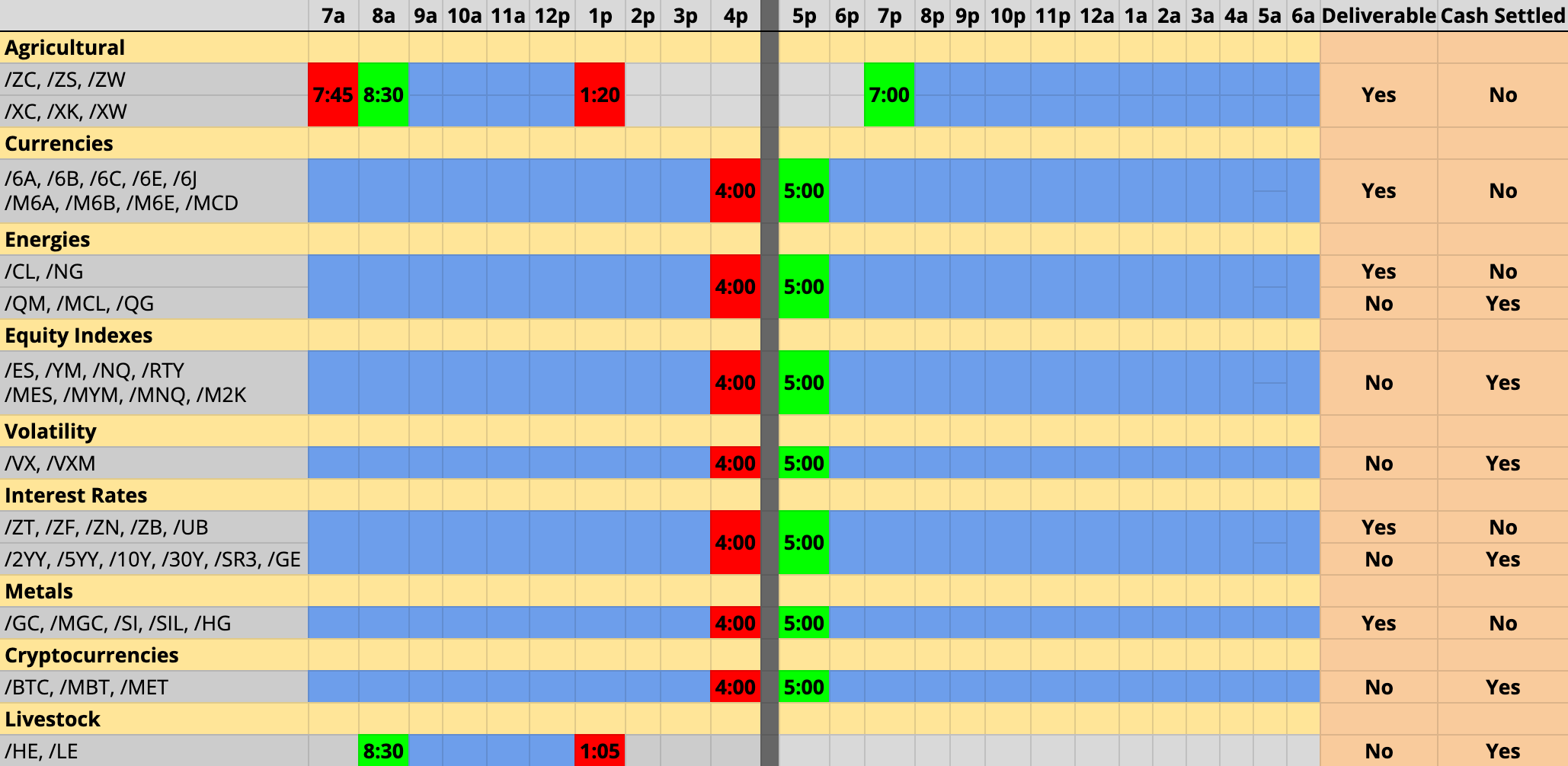
Conclusion: Mastering the Clock
The question “when does the futures market open” is the gateway to a broader understanding of global finance. For the investor, the futures market represents the ultimate transparency: a 23-hour window into the world’s collective valuation of risk, reward, and economic health.
By understanding the 6:00 PM Sunday open, the nuances of different asset classes, and the peaks of liquidity during session overlaps, a trader transforms from a passive observer into a strategic participant. In the futures market, the clock is not just a tool for telling time—it is a map for navigating the flow of global capital. Whether you are hedging a multi-million dollar portfolio or trading a single micro-contract, your success depends on knowing not just what to trade, but exactly when the doors to the global marketplace swing open.
aViewFromTheCave is a participant in the Amazon Services LLC Associates Program, an affiliate advertising program designed to provide a means for sites to earn advertising fees by advertising and linking to Amazon.com. Amazon, the Amazon logo, AmazonSupply, and the AmazonSupply logo are trademarks of Amazon.com, Inc. or its affiliates. As an Amazon Associate we earn affiliate commissions from qualifying purchases.