
The Dow Jones Industrial Average (DJIA), often simply referred to as “the Dow,” is perhaps the most iconic stock market index in the world. When news anchors report that “the market is up today,” they are frequently referring to the movement of these 30 specific companies. For any investor focused on personal finance or business strategy, understanding which companies are in the Dow Jones—and why they are there—is fundamental to grasping the health of the broader economy.
Unlike other indices that track hundreds or thousands of stocks, the Dow is an exclusive club of just 30 “blue-chip” companies. These are the titans of industry, the household names that have demonstrated long-term stability, profitability, and leadership. In the world of money and investing, the Dow serves as a barometer for the institutional strength of the American corporate landscape.
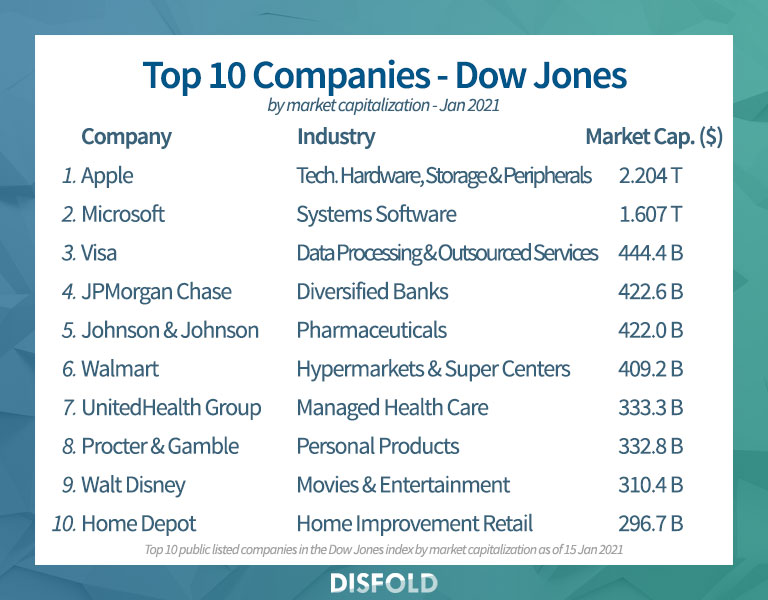
The Anatomy of the Dow: How the 30 Stocks are Chosen
The Dow is unique not just for its exclusivity, but for its methodology. Unlike the S&P 500, which is market-capitalization-weighted (meaning larger companies have a bigger impact), the Dow Jones is a price-weighted index. This means that companies with a higher stock price exert more influence over the index’s daily fluctuations than those with lower stock prices, regardless of the company’s actual total valuation.
The Selection Process: Beyond the Numbers
There is no rigid mathematical formula for entering the Dow. Instead, the selection is managed by the Averages Committee at S&P Dow Jones Indices. The committee looks for companies that have an excellent reputation, demonstrate sustained growth, and are of interest to a large number of investors. To be included, a company must be incorporated and headquartered in the United States and derive a plurality of its revenue from domestic operations.
Price-Weighting and Its Financial Implications
In a price-weighted system, if a stock priced at $300 moves 1%, it has a much larger impact on the “points” of the Dow than a stock priced at $30 moving 1%. This quirk of the Dow’s construction often leads to “stock splits” being a major event for the index. When a company like Apple or Amazon splits its stock to make it more affordable for retail investors, its weight within the Dow Jones decreases significantly, even though the company’s market value remains the same.
The Evolution of the “Industrial” Label
Originally, the Dow was composed entirely of industrial companies—railroads, cotton, oil, and gas. Today, the word “Industrial” is largely a historical vestige. The modern Dow represents the shift in the global economy toward technology, healthcare, and consumer services. The committee frequently rotates companies out of the index to ensure it accurately reflects the current state of the U.S. financial ecosystem.
A Sector-by-Sector Breakdown of Current Components
To understand “what companies are in the Dow Jones,” it is helpful to view them through the lens of their respective sectors. This provides a snapshot of where the “big money” is currently concentrated in the American economy.
Technology and Communications: The Modern Growth Engines
Technology has become the dominant force in the Dow. Current heavyweights include:
- Microsoft (MSFT): A cornerstone of enterprise software and cloud computing.
- Apple (AAPL): The world’s leader in consumer electronics and services.
- Salesforce (CRM): Representing the shift toward SaaS (Software as a Service) and CRM platforms.
- Nvidia (NVDA): A recent addition (replacing Intel) that highlights the critical importance of AI and semiconductors in the modern financial era.
- Amazon (AMZN): Included to represent the convergence of retail and cloud technology (AWS).
Financial Services and Insurance: The Pillars of Capital
The Dow remains heavily influenced by the banking and credit sectors, which are essential for liquidity and business finance:
- Goldman Sachs (GS): The premier name in investment banking.
- JPMorgan Chase (JPM): The largest consumer and commercial bank in the U.S.
- American Express (AXP) and Visa (V): The gatekeepers of global consumer spending and payment processing.
- Travelers (TRV): A representative of the massive insurance and risk management industry.
Consumer Discretionary and Staples: The Pulse of the Public
These companies track how Americans spend their paychecks, providing insights into consumer confidence:
- Walmart (WMT): The king of retail and a bellwether for the “value” consumer.
- Home Depot (HD): Reflecting the health of the housing and DIY markets.
- McDonald’s (MCD): A global leader in the food service industry.
- Coca-Cola (KO) and Procter & Gamble (PG): The “staples” that remain profitable regardless of the economic climate.
Healthcare and Industrials: Stability and Infrastructure
- UnitedHealth Group (UNH): Currently one of the highest-priced stocks in the Dow, giving it massive influence over the index.
- Johnson & Johnson (JNJ): A healthcare and pharmaceutical giant.
- Boeing (BA): Representing aerospace and defense.
- Caterpillar (CAT): The primary indicator for global construction and mining activity.

Why the Dow Matters to Your Portfolio
For the individual investor, the Dow Jones isn’t just a number on the news; it is a tool for benchmarking and a source of reliable income. Because the Dow consists of established, profitable companies, it serves as a “safe haven” during periods of extreme market volatility.
A Benchmark for Stability
When the tech-heavy Nasdaq is experiencing a “correction,” investors often look to the Dow to see if the traditional economy is still holding up. The companies in the Dow are rarely the ones that will provide 1,000% returns in a single year, but they are also less likely to go bankrupt. They represent “quality” investing—the practice of buying businesses with strong balance sheets and sustainable competitive advantages.
Dividend Reliability and Income
A significant number of Dow components are “Dividend Aristocrats” or “Dividend Kings”—companies that have paid and increased their dividends for decades. For those focused on retirement planning or passive income, the Dow list is essentially a “who’s who” of reliable dividend payers. Companies like 3M, Coca-Cola, and Procter & Gamble provide consistent cash flow to shareholders, making the index a favorite for income-focused portfolios.
The Psychology of the Market
Money is driven by sentiment. Because the Dow is the oldest and most recognized index, its performance dictates the mood of the investing public. When the Dow hits a new milestone (such as 40,000 points), it triggers a psychological effect that can lead to increased “FOMO” (Fear Of Missing Out) or a renewed sense of confidence in the American business model.
Historical Context: How the Dow Evolves Over Time
The Dow is not a static list. It is a living entity that sheds underperforming or outdated companies to make room for the future. Studying the changes in the Dow provides a masterclass in economic history and the shift in where wealth is created.
Out with the Old: The Decline of Energy and Traditional Retail
In the mid-20th century, the Dow was dominated by oil companies and department stores. Recently, we have seen the removal of companies like ExxonMobil and Walgreens Boots Alliance. These removals signaled a shift away from traditional fossil fuels and brick-and-mortar pharmacy models toward more high-margin, tech-integrated businesses.
In with the New: The Cloud and AI Era
The recent inclusion of Amazon and Nvidia marks a turning point for the Dow. For years, the index was criticized for being “too old-fashioned” and missing out on the tech boom. By adding these giants, the Dow has re-aligned itself with the current drivers of corporate profit: data, cloud infrastructure, and artificial intelligence. This ensures the index remains relevant for the next generation of investors.
The Modern Face of the Global Economy
Today’s Dow companies are no longer just American companies; they are global conglomerates. While they are listed in the U.S., a significant portion of the revenue for companies like Apple, Nike, and McDonald’s comes from overseas. Thus, the Dow has transitioned from being a map of the American factory floor to a map of the global consumer’s wallet.
How to Invest in the Dow Jones Companies
For those looking to put their money where the index is, there are several strategic ways to approach investing in these 30 giants.
Individual Stock Picking vs. Index Funds
An investor can choose to buy shares of individual Dow components, such as Disney (DIS) or Chevron (CVX), if they believe a specific sector is undervalued. However, for most people, the most efficient way to gain exposure is through an Exchange-Traded Fund (ETF) that tracks the index. The most famous of these is the SPDR Dow Jones Industrial Average ETF Trust (DIA), often called “the Diamonds.”
Strategic Allocation and “The Dogs of the Dow”
A popular investment strategy within this niche is known as the “Dogs of the Dow.” This involves buying the 10 highest-yielding dividend stocks in the Dow at the beginning of each year. The theory is that these companies are temporarily undervalued, and their high dividend yield provides a cushion while the investor waits for the stock price to recover. It is a classic “value investing” tactic that has historically performed well against the broader market.

Long-Term Compounding
The ultimate lesson of the Dow Jones is the power of compounding. By staying invested in these 30 leaders, investors benefit from the collective ingenuity and resilience of the world’s most successful corporations. While the list of companies will continue to change, the underlying principle remains the same: the Dow is the gold standard for representing the profitable heart of the business world. Whether you are a seasoned trader or just starting your journey in personal finance, keeping a close eye on the Dow is essential for navigating the complex waters of the global market.
aViewFromTheCave is a participant in the Amazon Services LLC Associates Program, an affiliate advertising program designed to provide a means for sites to earn advertising fees by advertising and linking to Amazon.com. Amazon, the Amazon logo, AmazonSupply, and the AmazonSupply logo are trademarks of Amazon.com, Inc. or its affiliates. As an Amazon Associate we earn affiliate commissions from qualifying purchases.