
The Dow Jones Industrial Average (DJIA), often referred to simply as “the Dow,” is perhaps the most recognized financial index in the world. For over a century, it has served as a primary pulse-taker for the American economy and a cornerstone of the global financial markets. When news anchors report that “the market is up,” they are frequently referring to the movement of these 30 elite companies. But what exactly are the companies in the Dow, and how does this select group represent the broader landscape of modern business finance and investing?
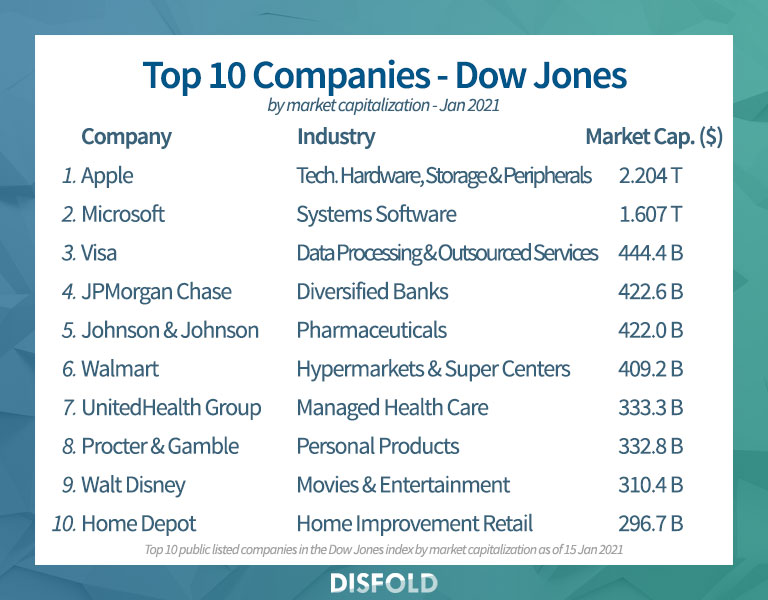
Understanding the composition of the Dow is essential for any investor, whether you are a seasoned portfolio manager or a newcomer to personal finance. Unlike other indices that track hundreds or thousands of stocks, the Dow is concentrated, focusing on 30 “blue-chip” companies that are leaders in their respective industries. These are the titans of commerce—firms with massive market caps, long histories of profitability, and a significant influence on the daily lives of consumers worldwide.
Understanding the Dow Jones Industrial Average (DJIA)
To understand which companies are in the Dow, one must first understand the unique architecture of the index itself. Founded by Charles Dow and Edward Jones in 1896, the index originally tracked only 12 companies, primarily in the industrial sector. Today, the “Industrial” moniker is largely vestigial; the index now spans technology, healthcare, finance, and retail, reflecting the evolution of the American economy from a manufacturing powerhouse to a service and data-driven engine.
The Evolution of the Index
The Dow is not a static list. It is a living entity that changes to reflect the shifting tides of the global market. Over the decades, companies that were once the backbone of the economy—such as U.S. Steel or General Electric—have been replaced by modern giants like Apple and Microsoft. The goal of the index is to provide a snapshot of the U.S. equity market by selecting companies that are leaders in their sectors and possess a “reputation for sustained growth.”
The Price-Weighted Methodology
One of the most critical aspects of the Dow from a financial perspective is that it is a price-weighted index. Unlike the S&P 500, which is market-cap-weighted (where larger companies have a bigger impact), the Dow’s movements are dictated by the share price of its component stocks. This means a company with a $300 share price will have a greater influence on the index’s daily movement than a company with a $50 share price, regardless of their total market valuation. This unique structure is a frequent topic of debate among financial analysts, but it remains a primary metric for measuring market sentiment.
The Current Roster of the Dow 30
As of 2024, the Dow 30 represents a diversified cross-section of the global economy. These companies are categorized into various sectors, ensuring that the index remains a balanced indicator of economic health.
Technology and Communication Leaders
In the modern era, technology is the driving force behind market growth. The Dow includes some of the most influential tech companies on the planet. Microsoft (MSFT) and Apple (AAPL) are the heavy hitters in this category, representing the shift toward software, cloud computing, and consumer electronics. These companies often carry significant weight in the index due to their robust share prices and massive influence on global productivity. Other tech-adjacent firms include Salesforce (CRM), which highlights the importance of cloud-based enterprise software, and Intel (INTC), representing the semiconductor industry. Cisco Systems (CSCO) and IBM (IBM) provide the networking and infrastructure backbone that rounds out the tech sector within the Dow.
Financial Institutions and Healthcare Giants
The financial sector is a cornerstone of the Dow, representing the flow of capital and the health of the banking system. JPMorgan Chase (JPM), the largest bank in the U.S., is a primary component, along with Goldman Sachs (GS) and American Express (AXP). These firms represent everything from consumer banking to high-stakes investment and credit services. In the healthcare space, UnitedHealth Group (UNH) is a major player, often having a significant impact on the index due to its high share price. It is joined by pharmaceutical legends like Johnson & Johnson (JNJ), Merck & Co. (MRK), and Amgen (AMGN), reflecting the vital role of biotech and medicine in the economy.
Consumer Goods, Retail, and Industrial Mainstays
The “Industrial” part of the Dow is still well-represented by companies that build, move, and sell physical goods. Boeing (BA) remains a critical component, representing aerospace and defense, while Caterpillar (CAT) serves as a proxy for the construction and mining industries. Retail is dominated by Walmart (WMT), the world’s largest retailer, and The Home Depot (HD). Consumer staples are represented by Coca-Cola (KO) and Procter & Gamble (PG), companies that tend to remain stable even during economic downturns. Most recently, the inclusion of Amazon (AMZN) has signaled a major shift in how the index views the intersection of retail and technology.
Criteria for Inclusion: How Companies Join the Dow
A common question among investors is: how does a company actually get into the Dow? Unlike the S&P 500, which has strict quantitative rules regarding market cap and liquidity, the Dow’s selection process is somewhat more subjective and is managed by a committee.
The Role of the Selection Committee
The Dow 30 is maintained by the S&P Dow Jones Indices. A committee of analysts and editors from The Wall Street Journal and S&P Global decides which companies should be included or removed. There is no set schedule for these changes; the committee acts when they feel the index no longer accurately reflects the American economy. When a company’s influence wanes or its industry becomes less central to the GDP, it is replaced by a rising star.
Reputation and Economic Significance
To be considered for the Dow, a company generally must be incorporated in the U.S. and have a majority of its revenue generated domestically. However, the committee also looks for “excellent reputation, sustained growth, and interest to a large number of investors.” This is why the Dow is often called the “Blue Chip” index—it is reserved for the most reputable, stable, and significant corporations in the country. A company must be a leader in its industry to even be considered for the 30-spot roster.
Why the Dow Matters for Your Investment Portfolio
While some modern traders focus on high-volatility growth stocks or the tech-heavy Nasdaq, the Dow remains a vital tool for the average investor’s financial strategy. It serves as a benchmark for “safe” or “stable” investing.
Measuring Market Sentiment and Stability
Because the Dow consists of established, profitable companies, it is often seen as a measure of “market quality” rather than just “market size.” During periods of economic uncertainty, investors often look to the Dow to see how the most stable companies are faring. If the Dow is holding steady while other indices are falling, it suggests that “big money” is moving into defensive positions—a crucial indicator for anyone managing a retirement fund or a personal brokerage account.
The Dow as an Investment Vehicle
Most investors do not buy all 30 stocks individually. Instead, they use financial tools like the SPDR Dow Jones Industrial Average ETF Trust (Ticker: DIA). This ETF (Exchange-Traded Fund) seeks to provide investment results that, before expenses, correspond generally to the price and yield performance of the DJIA. For a personal finance enthusiast, owning the “Diamonds” (as the DIA is affectionately called) offers an easy way to gain exposure to 30 of the most successful companies in history with a single transaction.
Recent Changes and the Future Outlook
The Dow is constantly adapting to the “New Economy.” The most recent significant change occurred in early 2024, when Amazon (AMZN) replaced Walgreens Boots Alliance (WBA). This move was monumental in the world of business finance.
The Amazon/Walgreens Swap
The removal of Walgreens and the addition of Amazon highlighted two major trends: the decline of traditional brick-and-mortar retail pharmacies and the absolute dominance of e-commerce and cloud services. By adding Amazon, the Dow committee acknowledged that the consumer discretionary sector is now led by digital-first platforms. This change also helped rebalance the index’s sector weightings, ensuring that the Dow remains relevant in a world where technology and retail are increasingly inseparable.

The Dow in the Next Decade
As we look toward the future, the Dow will likely continue to integrate companies that lead in Artificial Intelligence, renewable energy, and advanced logistics. While the number of companies remains fixed at 30, the “identity” of the Dow will continue to shift. For investors, staying informed about who is in the Dow is more than just a trivia exercise; it is a way to track where the world’s most successful capital is flowing and which industries are defining the future of the global economy.
In conclusion, the companies in the Dow represent the elite tier of American business. From the software in our computers to the medicine in our cabinets and the banks that hold our savings, the Dow 30 are woven into the fabric of the financial world. By understanding these companies and the index that tracks them, investors can better navigate the complexities of the market and build more resilient, informed financial futures.
aViewFromTheCave is a participant in the Amazon Services LLC Associates Program, an affiliate advertising program designed to provide a means for sites to earn advertising fees by advertising and linking to Amazon.com. Amazon, the Amazon logo, AmazonSupply, and the AmazonSupply logo are trademarks of Amazon.com, Inc. or its affiliates. As an Amazon Associate we earn affiliate commissions from qualifying purchases.