
For decades, the world of investing was perceived as an exclusive club reserved for Wall Street elites, high-frequency traders, and individuals with a penchant for reading complex balance sheets. However, the landscape shifted dramatically with the democratization of the stock market, and at the center of this revolution lies a single, powerful financial instrument: the S&P 500 index fund.
Often cited by legendary investors like Warren Buffett as the best investment the average person can make, the S&P 500 index fund is designed to mirror the performance of 500 of the largest publicly traded companies in the United States. It offers a blend of simplicity, low cost, and historical reliability that few other financial products can match. To understand why this vehicle has become the bedrock of millions of retirement portfolios, we must look at what it is, how it functions, and the strategic role it plays in wealth creation.

Decoding the S&P 500 Index: The Foundation of the Fund
Before one can understand the fund, one must understand the index it tracks. The S&P 500, or the Standard & Poor’s 500 Index, is a market-capitalization-weighted index that serves as the primary barometer for the health of the U.S. economy and the broader equity market.
What Is the S&P 500?
Managed by S&P Dow Jones Indices, the S&P 500 isn’t just a list of the 500 “biggest” companies in terms of employees or physical footprint. Instead, it includes 500 of the leading U.S. companies that meet specific criteria regarding liquidity, size, and profitability. While it represents about 80% of the total value of the U.S. stock market, it is widely considered the best single gauge of large-cap U.S. equities. When news anchors report that “the market is up today,” they are almost always referring to the movement of the S&P 500.
Market Capitalization Weighting Explained
The S&P 500 is “market-cap weighted,” meaning that companies with a higher total market value (share price multiplied by the number of outstanding shares) have a larger impact on the index’s performance. For example, a 1% move in a trillion-dollar tech giant like Apple or Microsoft affects the index much more than a 1% move in a smaller constituent like a regional utility company. This structure ensures that the index reflects the actual economic weight of the companies within it, favoring the winners of the modern economy.
The “Gold Standard” of Performance
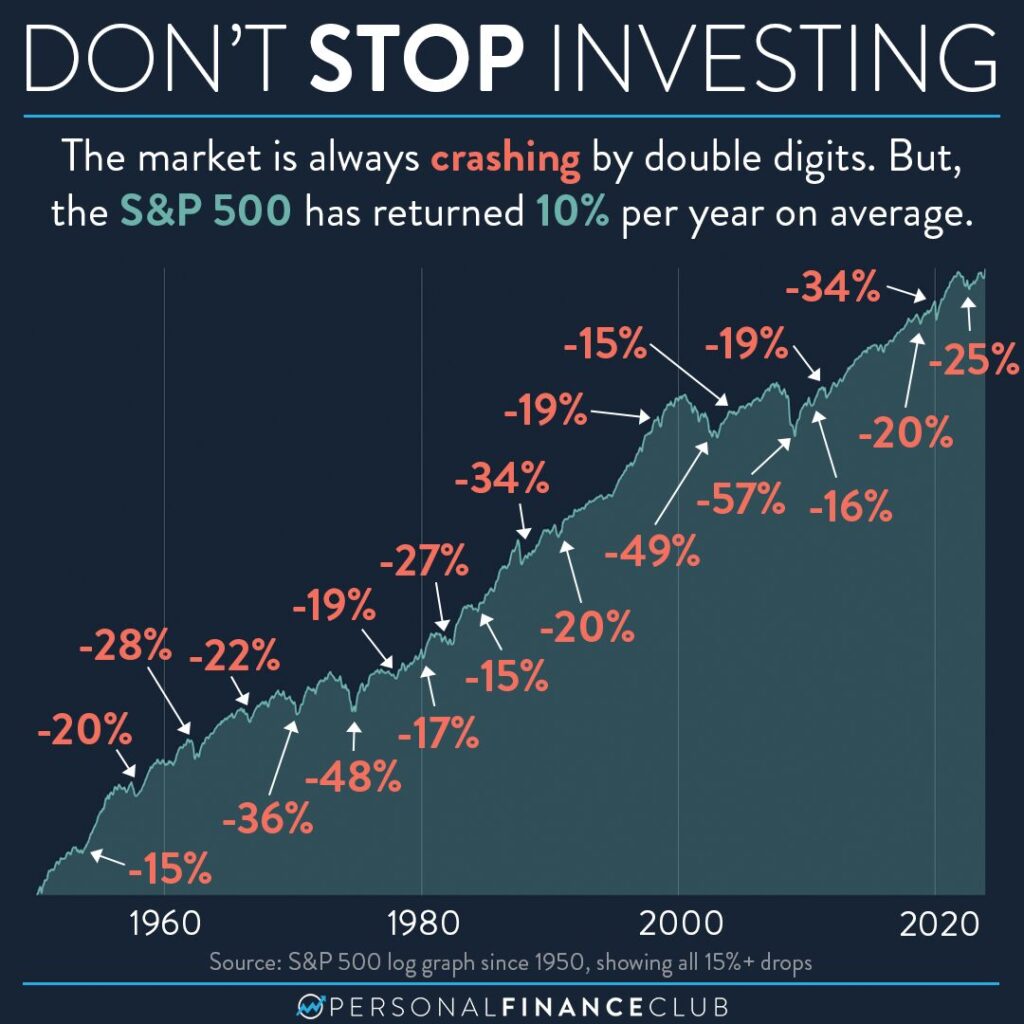
Because the index contains companies from all 11 major sectors—including technology, healthcare, financials, and consumer staples—it provides a diversified snapshot of American corporate life. Historically, the S&P 500 has delivered an average annual return of approximately 10% before inflation. While this doesn’t happen every year, the long-term upward trajectory of the index has made it the benchmark against which professional fund managers are judged.
Mechanics: How an S&P 500 Index Fund Operates
An S&P 500 index fund is a type of mutual fund or Exchange-Traded Fund (ETF) that seeks to replicate the performance of the S&P 500 Index. It does this by buying all 500 stocks in the index in the exact same proportions as they appear in the index itself.
Passive Management vs. Active Management
The core philosophy of an index fund is “passive management.” In an actively managed fund, a professional portfolio manager tries to “beat the market” by picking specific stocks to buy and sell. This requires extensive research and frequent trading, which leads to high fees. In contrast, an S&P 500 index fund doesn’t try to beat the market; it is the market. By simply holding the components of the index, the fund minimizes the need for expensive human intervention, resulting in significantly lower costs for the investor.
Tracking the Market and Minimizing “Tracking Error”
The goal of the fund manager (such as Vanguard, BlackRock, or Fidelity) is to ensure the fund’s performance matches the index as closely as possible. The slight difference between the fund’s return and the actual index’s return is known as “tracking error.” In a high-quality S&P 500 fund, this error is negligible, usually caused only by the small fees the fund charges or the timing of dividend distributions.
Dividends and Total Return
When the 500 companies in the index pay dividends to their shareholders, the index fund collects those payments. Investors in the fund then receive these dividends, usually on a quarterly basis. Most investors choose to “reinvest” these dividends, buying more shares of the fund. This process of compounding—earning returns on your returns—is one of the most powerful wealth-building mechanisms in the financial world.
The Core Advantages for Personal Finance
The popularity of S&P 500 index funds isn’t just a trend; it’s rooted in mathematical and practical advantages that benefit everyone from college students to retirees.

Instant Diversification
One of the cardinal rules of investing is “don’t put all your eggs in one basket.” Investing in a single company is risky; if that company fails, your investment disappears. By buying an S&P 500 index fund, you are instantly buying a “basket” of 500 different companies. Even if a few companies in the index face bankruptcy or decline, their impact is mitigated by the growth of the hundreds of other companies in the portfolio.
Unmatched Cost Efficiency
Fees, known in the industry as “expense ratios,” can quietly erode your wealth over time. Many actively managed funds charge 1% or more of your total investment every year. S&P 500 index funds, however, are famous for their rock-bottom costs. Some of the most popular funds have expense ratios as low as 0.03%. To put that in perspective, for every $10,000 invested, you might only pay $3 a year in fees. Over 30 years, this difference in fees can result in hundreds of thousands of dollars in extra savings.
Accessibility and Simplicity
You don’t need to be a financial expert to succeed with an S&P 500 fund. There is no need to analyze price-to-earnings ratios or keep up with daily financial news. Because the index is self-cleansing—underperforming companies are eventually dropped and replaced by rising stars—the fund handles the “stock picking” for you automatically.
Evaluating the Risks and Market Realities
While the S&P 500 index fund is a formidable tool, it is not without risk. A responsible approach to money management requires an understanding of the potential downsides.
Market Volatility and Systematic Risk
An index fund is 100% invested in the stock market. This means that when the market crashes, the fund crashes with it. During the 2008 financial crisis or the 2020 pandemic onset, the S&P 500 saw significant double-digit declines. Unlike a savings account or a government bond, your principal is not guaranteed. Investors must have the stomach to stay invested through periods of high volatility.
The Concentration Conundrum
In recent years, the S&P 500 has become increasingly “top-heavy.” Because it is market-cap weighted, a handful of massive technology companies now make up a significant percentage of the total index. While this has led to spectacular gains during tech booms, it also means that the index is less diversified than it appears on the surface. If the tech sector faces a specific regulatory or economic headwind, the entire S&P 500 can be dragged down.
The Opportunity Cost of Passive Investing
By definition, an S&P 500 index fund will never outperform the market—it will only match it. If you have the skill (or the luck) to identify the next “Amazon” or “Tesla” before it becomes a giant, you would make far more money by investing in that specific stock. However, data consistently shows that over long periods, more than 90% of professional fund managers fail to beat the S&P 500. For most people, the “average” return of the index is actually superior to the “below-average” return of trying to beat it.
Implementation: How to Build Your Portfolio
If you decide that an S&P 500 index fund is right for your financial goals, the next step is implementation.
ETFs vs. Mutual Funds
You can access the S&P 500 through two main vehicles: Exchange-Traded Funds (ETFs) and Index Mutual Funds.
- ETFs (e.g., VOO, SPY, IVV): These trade like stocks on an exchange. You can buy or sell them throughout the day at fluctuating prices. They are often more tax-efficient and have no minimum investment beyond the price of a single share.
- Mutual Funds (e.g., VFIAX, FXAIX): These are priced once a day at the end of the market session. They often allow for automatic recurring investments, making them ideal for “set-it-and-forget-it” investors, though some require a minimum initial investment (e.g., $3,000).
Choosing the Right Provider
Since most S&P 500 funds do the exact same thing, your primary goal is to find the one with the lowest expense ratio. Major providers like Vanguard, BlackRock (iShares), and Fidelity offer high-quality, low-cost options that are virtually identical in performance.
The Power of Dollar-Cost Averaging
The most successful S&P 500 investors don’t try to “time the market.” Instead, they use a strategy called dollar-cost averaging. This involves investing a fixed amount of money at regular intervals (e.g., $500 every month), regardless of whether the market is up or down. This disciplined approach ensures that you buy more shares when prices are low and fewer shares when prices are high, ultimately lowering your average cost per share over the long term.
Conclusion
The S&P 500 index fund represents the ultimate intersection of simplicity and power in the world of personal finance. By owning a piece of the 500 most successful companies in the United States, an investor hitches their wagon to the engine of global capitalism. While it requires patience and the emotional fortitude to weather market storms, the historical track record of the S&P 500 suggests that for the long-term investor, it remains one of the most effective paths toward financial independence. Whether you are just starting your career or looking to streamline your retirement strategy, understanding and utilizing the S&P 500 index fund is a vital step in mastering the language of money.
aViewFromTheCave is a participant in the Amazon Services LLC Associates Program, an affiliate advertising program designed to provide a means for sites to earn advertising fees by advertising and linking to Amazon.com. Amazon, the Amazon logo, AmazonSupply, and the AmazonSupply logo are trademarks of Amazon.com, Inc. or its affiliates. As an Amazon Associate we earn affiliate commissions from qualifying purchases.