
The rise of Robinhood Markets, Inc. (NASDAQ: HOOD) represented a seismic shift in the landscape of retail investing. By pioneering commission-free trading, the platform democratized access to the stock market, inviting millions of first-time investors into an arena previously dominated by high-net-worth individuals and institutional titans. However, as the company transitioned from a disruptive Silicon Valley startup to a publicly traded financial giant, the question of “who owns Robinhood” became increasingly complex.
Understanding the ownership structure of Robinhood is not merely an exercise in corporate trivia; it is a vital component of financial literacy for anyone tracking the intersection of fintech and capital markets. To understand who pulls the strings, one must look past the user interface and delve into the layers of founder control, institutional holdings, and the significant influence of venture capital.
The Founders and the Architecture of Control
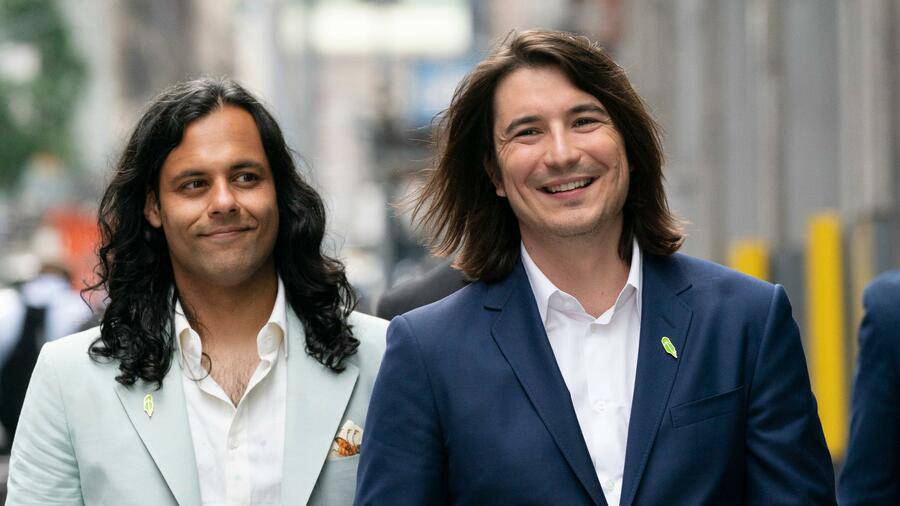
At the heart of Robinhood’s story are its co-founders, Vlad Tenev and Baiju Bhatt. Meeting at Stanford University, the duo launched several high-frequency trading firms before identifying a gap in the retail market. While the company is now public, the founders have maintained a firm grip on its strategic direction through a dual-class share structure—a common practice in modern tech-finance firms.
Vlad Tenev and Baiju Bhatt’s Super-Voting Power
In the world of business finance, “ownership” and “control” are not always synonymous. While Tenev and Bhatt own a minority percentage of the total economic interest in Robinhood, they hold a significant majority of the voting power. This is achieved through Class B common shares, which typically carry ten votes per share, compared to the one vote per share granted to Class A stockholders (the shares traded by the public).
As of the most recent filings, the co-founders collectively control a majority of the voting power. This ensures that even if external investors or activists disagree with the company’s direction—such as its expansion into volatile cryptocurrencies or its handling of the “meme stock” era—the founders retain the final word on board appointments and major corporate decisions.
From Private Vision to Public Accountability
Before the 2021 Initial Public Offering (IPO), ownership was concentrated among a tight-knit group of founders and early employees. The transition to the NASDAQ necessitated a shift in transparency. While Tenev and Bhatt remain the faces of the company, their “ownership” is now scrutinized by the Securities and Exchange Commission (SEC) and a global community of analysts. For the founders, their wealth is inextricably tied to the “HOOD” ticker, making them some of the most visible individual stakeholders in the fintech ecosystem.
Institutional Heavyweights: The Major Shareholders
While the founders control the votes, institutional investors own the largest slices of the economic pie. These entities—ranging from passive index funds to aggressive hedge funds—provide the liquidity and market stability required for a multi-billion-dollar financial firm.
The Role of Passive Giants: Vanguard and BlackRock
If you look at the cap table of almost any major American corporation, two names invariably appear at the top: The Vanguard Group and BlackRock. Robinhood is no exception. These institutions do not “own” Robinhood in the sense of active management; rather, they hold the stock on behalf of millions of individual investors through mutual funds and ETFs.
As Robinhood was added to various indices (such as the Russell 1000), these passive managers were required to purchase shares to match their fund compositions. This creates a baseline of “institutional ownership” that stabilizes the stock price, even during periods of retail volatility.
Venture Capital Roots: Index Ventures and Ribbit Capital
Before it was a household name, Robinhood was fueled by venture capital (VC). Firms like Index Ventures, Ribbit Capital, and New Enterprise Associates (NEA) took massive risks on the commission-free model when it was still unproven.

Even after the IPO, several of these VC firms retained substantial holdings. Their involvement is a testament to the “Money” niche’s focus on growth equity. These firms aren’t looking for steady dividends; they are looking for the next decade of financial disruption. Their presence on the list of owners signals a belief in Robinhood’s long-term potential to move beyond stocks and into a “single-money app” for the masses.
The Influence of ARK Invest and Cathie Wood
A notable institutional owner that has frequently adjusted its position in Robinhood is ARK Investment Management, led by Cathie Wood. Known for her focus on “disruptive innovation,” Wood has often categorized Robinhood as a leader in the digital wallet and decentralized finance (DeFi) space. When ARK buys or sells significant blocks of HOOD, it often triggers a ripple effect across the market, highlighting how specific “Money” managers can influence the public perception of ownership.
The Business Model of Ownership: How Robinhood Generates Value
To understand who owns the company, one must understand what they actually own. Robinhood’s value proposition has evolved from a simple trading app to a multifaceted financial services provider. The owners are essentially betting on the sustainability of several key revenue streams.
Payment for Order Flow (PFOF)
A significant portion of Robinhood’s revenue—and thus the value owned by shareholders—comes from Payment for Order Flow. Instead of charging users a commission, Robinhood routes orders to market makers like Citadel Securities or Virtu Financial. These market makers pay Robinhood a small fee for the privilege of executing those trades.
While this model has faced regulatory scrutiny, it remains the engine of the company’s profitability. Shareholders are, in effect, owners of a sophisticated data-routing machine that monetizes the collective activity of millions of retail traders.
Diversification into Crypto and Robinhood Gold
Ownership value is also increasingly tied to Robinhood’s expansion. By offering cryptocurrency trading and “Robinhood Gold” (a subscription service offering premium research, lower margin rates, and higher interest on uninvested cash), the company has diversified its income. For investors, this reduces the risk associated with fluctuating trade volumes and aligns the company more closely with traditional fintech banking models.
Public Ownership: The Role of the Retail Investor
The most poetic aspect of Robinhood’s ownership is the participation of the retail investors themselves. Unlike traditional firms where the “owners” are distant billionaires, a significant portion of Robinhood’s Class A shares is held by the very people who use the app.
The Irony of the “Robinhood” Brand in the Public Market
The name “Robinhood” implies taking from the rich to give to the poor. In a financial context, the IPO was a literal manifestation of this, allowing retail traders to own a piece of the “Sheriff of Nottingham’s” gold. However, the reality of the stock market is often harsher. Retail owners of HOOD have faced significant price swings, particularly following the 2021 bull market.
Insider Selling and Market Sentiment
In the “Money” niche, analysts closely monitor “insider selling.” When executives or early investors sell their shares, it can signal a lack of confidence or simply a desire for liquidity. Following the expiration of “lock-up periods” after the IPO, several early owners liquidated portions of their holdings. For the retail investor, tracking who is selling is just as important as tracking who is buying, as it dictates the supply and demand dynamics of the stock.

Conclusion: The Evolving Identity of Corporate Ownership
So, who owns Robinhood? The answer is a tiered hierarchy of stakeholders. At the top sit Vlad Tenev and Baiju Bhatt, who own the majority of the voting power and dictate the company’s vision. Below them are the institutional titans like Vanguard and BlackRock, who provide the capital backbone. Scattered throughout are the venture capitalists who saw the potential early on, and the millions of retail investors holding fractional shares in their own Robinhood accounts.
As Robinhood continues to navigate the complexities of the financial world—from SEC regulations to the integration of AI-driven financial planning—its ownership structure will continue to shift. For those in the world of personal finance and investing, the story of Robinhood is a masterclass in how modern equity works: a blend of founder control, institutional weight, and the democratic, yet volatile, participation of the public. Understanding this structure is essential for any investor looking to gauge the long-term viability of the platform that changed the way the world thinks about money.
aViewFromTheCave is a participant in the Amazon Services LLC Associates Program, an affiliate advertising program designed to provide a means for sites to earn advertising fees by advertising and linking to Amazon.com. Amazon, the Amazon logo, AmazonSupply, and the AmazonSupply logo are trademarks of Amazon.com, Inc. or its affiliates. As an Amazon Associate we earn affiliate commissions from qualifying purchases.