
The narrative of Tesla, Inc. is often distilled into the singular persona of Elon Musk. However, looking at Tesla through the lens of pure technology reveals a much more complex origin story—one rooted in Silicon Valley’s engineering culture rather than Detroit’s traditional manufacturing. To understand who “invented” the Tesla car is to understand a fundamental shift in automotive architecture: the transition from a mechanical machine to a software-defined computer on wheels.
The Architects of the Electric Revolution: Martin Eberhard and Marc Tarpenning
While Elon Musk is the face of the modern company, the initial “invention” of the Tesla concept belongs to Martin Eberhard and Marc Tarpenning. In 2003, these two engineers sought to solve a technical paradox: why was high-performance electric propulsion being ignored by major automakers despite the rapid advancement of lithium-ion battery technology?

Discarding the Internal Combustion Engine
Eberhard and Tarpenning’s primary technical breakthrough was not the electric motor itself—which has existed for over a century—but the realization that the internal combustion engine (ICE) had reached a plateau of thermal efficiency. They approached the car as a systems-integration challenge. By analyzing the energy density of various fuel sources, they concluded that lithium-ion batteries, then primarily used in laptops, had reached a critical threshold. They didn’t just want to build a “green” car; they wanted to build a car that was technologically superior in torque, response time, and energy conversion.
The Silicon Valley Approach to Automotive Engineering
Unlike traditional automotive giants that relied on incremental hardware changes, the founders applied the principles of Moore’s Law to transportation. They established Tesla Motors with the intent of creating a modular tech stack. Their first prototype, based on the AC Propulsion tzero, proved that a series of small, commodity battery cells could be wired together to provide massive power output without the weight of traditional lead-acid batteries. This shifted the “invention” of the car from a feat of metallurgy to a feat of electrical engineering and thermal management.
The Core Innovation: Battery Management and Propulsion Systems
The true “invention” within a Tesla isn’t just the battery, but the proprietary Battery Management System (BMS). When Tesla launched the Roadster, the engineering community was skeptical. Critics argued that thousands of laptop batteries wired in parallel would be unstable and prone to thermal runaway.
The Lithium-Ion Breakthrough
Tesla’s engineering team developed a sophisticated liquid-cooling system that regulated the temperature of each individual cell. This was a landmark tech achievement. By keeping the cells within a narrow temperature band, they extended the lifespan and safety of the battery pack, solving the primary hurdle that had killed previous electric vehicle attempts like the GM EV1. This cooling architecture remains a cornerstone of Tesla’s intellectual property, allowing for high-speed “Supercharging” without degrading the battery chemistry.
Software-Defined Power Distribution
In a Tesla, the relationship between the accelerator pedal and the motor is mediated by high-speed silicon. The power electronics—specifically the inverters—convert the DC power from the battery into the AC power required by the induction or permanent magnet motors. Tesla’s engineers pioneered the use of Silicon Carbide (SiC) power modules, which reduce energy loss during conversion. This level of power efficiency means that a Tesla can extract more miles per kilowatt-hour than almost any other EV on the market, a testament to their lead in power electronics engineering.
Autonomous Intelligence: The Role of AI and Neural Networks
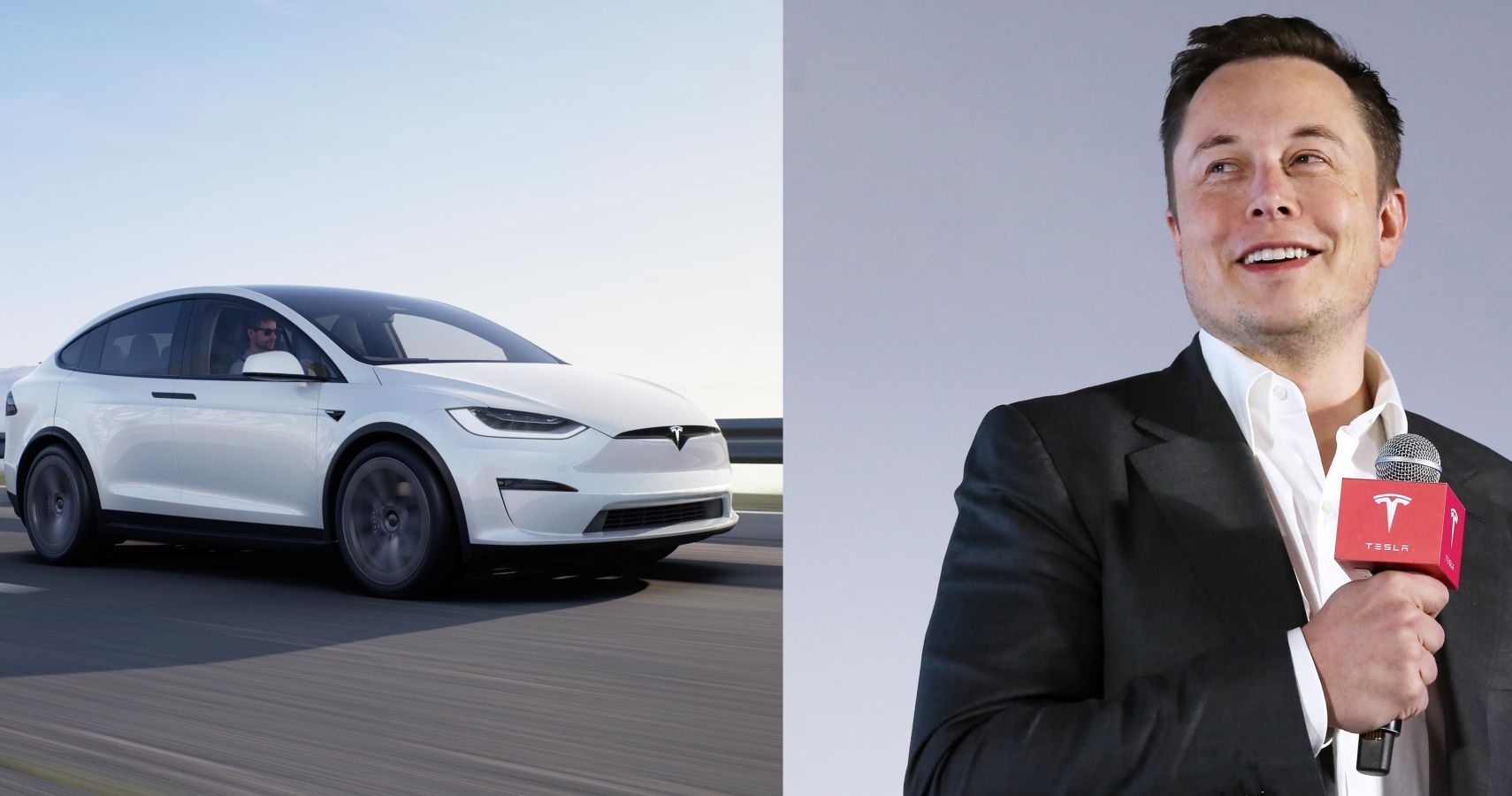
As the company evolved under Elon Musk’s leadership, the definition of the “Tesla car” shifted from an electric vehicle to an autonomous robot. The invention of the “Full Self-Driving” (FSD) computer marked Tesla’s transition into a top-tier AI and chip-design firm.
Vision-Based Navigation vs. LiDAR
One of the most debated technological paths Tesla has taken is the “Vision Only” approach. While competitors like Waymo and Cruise rely on expensive LiDAR (Light Detection and Ranging) sensors to “see” the world, Tesla’s engineering philosophy is built on the belief that biological vision (eyes) can be replicated through high-resolution cameras and neural networks. This required the invention of a custom AI inference chip—the FSD Computer—capable of processing 2,300 frames per second. By treating the car as a mobile edge-computing device, Tesla has created a feedback loop where millions of vehicles send data back to a central supercomputer (Dojo) to train the driving algorithms.
Over-the-Air (OTA) Updates: The Smartphone on Wheels
Perhaps the most disruptive tech feature Tesla introduced was the robust Over-the-Air (OTA) update system. Before Tesla, a car’s features were static from the moment it left the factory. Tesla’s centralized software architecture—where a single “brain” controls everything from the brakes to the infotainment—allows the company to “invent” new features for existing cars overnight. Whether it is improving the braking distance via a software patch or increasing motor efficiency through a code update, the Tesla car is a living piece of hardware that evolves, much like a smartphone or a laptop.
Scalable Infrastructure: The Supercharger Network and Grid Integration
An invention is only as useful as its utility. Tesla realized early on that the electric car was a “brick” without a high-speed charging ecosystem. This led to the engineering of the Supercharger network, a specialized DC fast-charging technology that bypassed the slow onboard chargers of the car.
DC Fast Charging Engineering
The Supercharger was a massive leap in electrical infrastructure tech. By delivering up to 250kW of power directly to the battery, Tesla’s engineers managed to reduce charging times from hours to minutes. This required the development of liquid-cooled charging cables—a necessity because the amount of current flowing through the wire would otherwise generate enough heat to melt the insulation. This focus on the “outer” tech of the car (the charger) was just as vital as the “inner” tech of the motor.
V2G (Vehicle-to-Grid) and the Future of Energy Storage
Modern Tesla engineering is now looking toward the integration of the car into the wider energy grid. Through the development of the “Powerwall” and “Megapack” (which share the same battery tech as the cars), Tesla is essentially inventing a decentralized utility company. Future iterations of Tesla hardware are expected to feature bidirectional charging, allowing the car to power a home during a blackout or stabilize the electrical grid during peak demand. This transforms the car from a transport tool into a node in a massive, distributed energy network.
The Technological Legacy: How Tesla Redefined Modern Hardware
The question of “who invented the Tesla car” ultimately finds its answer in a collaborative lineage of Silicon Valley innovators. It began with Eberhard and Tarpenning’s vision of a lithium-ion powered sports car, was scaled by Elon Musk’s drive for mass-market production, and is sustained by thousands of software and hardware engineers.
Vertical Integration and the Gigafactory Model
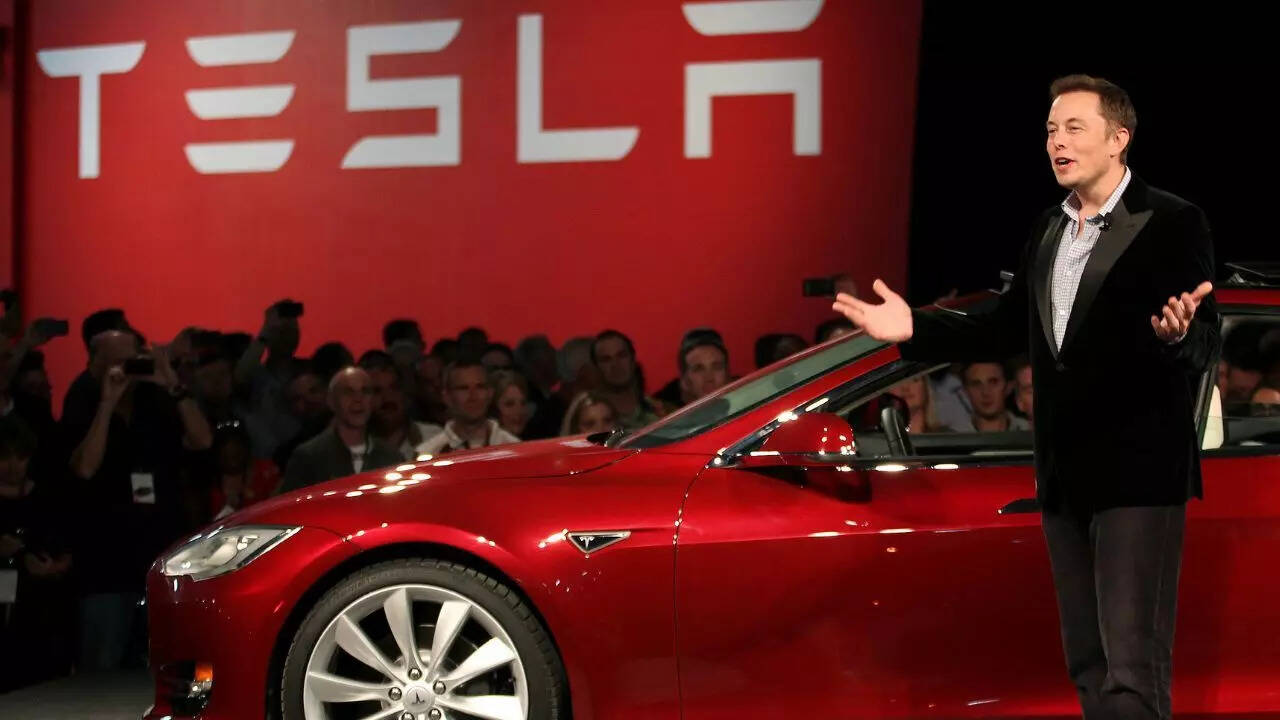
Tesla’s most underrated technological “invention” is the Gigafactory. By vertically integrating the production of battery cells, drivetrains, and full vehicles under one roof, Tesla solved the “hell” of manufacturing. They pioneered the use of the “Giga Press”—the world’s largest casting machine—which allows them to cast the front and rear underbodies of the car as single pieces of aluminum. This reduces the part count by hundreds, lowers weight, and increases structural integrity. This is mechanical engineering at its most radical, proving that how you build the car is as important as what the car can do.
The Shift Toward Sustainable Micro-Mobility
Today, the “Tesla car” serves as a blueprint for the entire automotive industry. Every major manufacturer—from Porsche to Ford—is now adopting Tesla’s NACS (North American Charging Standard) and pivoting toward software-defined architectures. The invention of the Tesla car was the catalyst for the end of the internal combustion era. It proved that sustainability did not have to come at the cost of performance and that the future of transportation lies in the marriage of advanced chemistry, high-performance silicon, and artificial intelligence.
In conclusion, the Tesla car was not invented by a single stroke of genius, but through a series of iterative technological breakthroughs. From the initial spark of Eberhard and Tarpenning to the AI-driven vision of the current engineering team, Tesla has redefined what it means to build a vehicle. It is no longer just a mode of transport; it is a high-performance computer that happens to have wheels.
aViewFromTheCave is a participant in the Amazon Services LLC Associates Program, an affiliate advertising program designed to provide a means for sites to earn advertising fees by advertising and linking to Amazon.com. Amazon, the Amazon logo, AmazonSupply, and the AmazonSupply logo are trademarks of Amazon.com, Inc. or its affiliates. As an Amazon Associate we earn affiliate commissions from qualifying purchases.